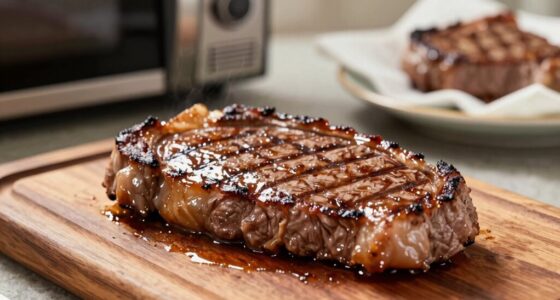
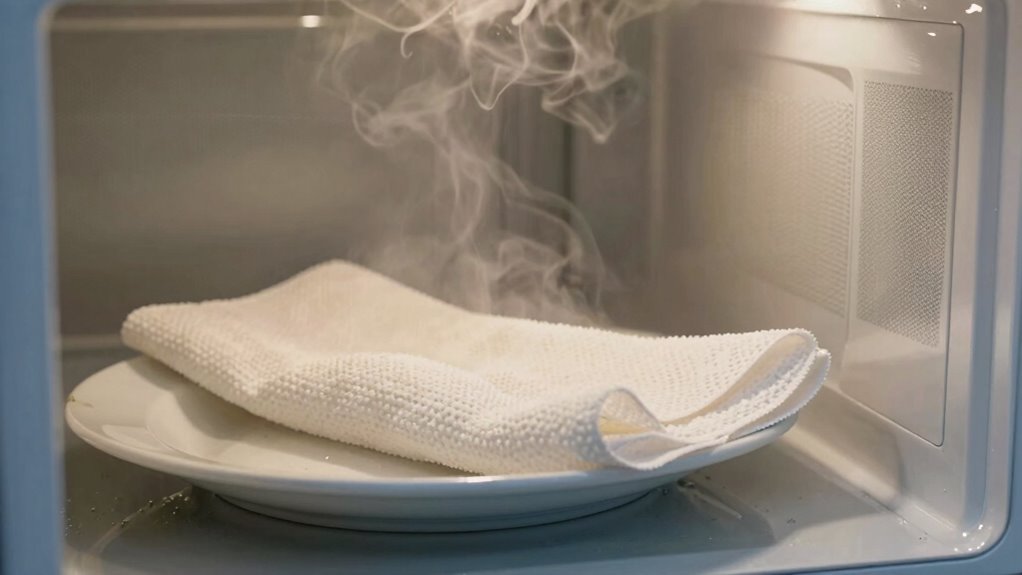
The paper towel trick works by covering your food with a damp paper towel to absorb splatters and lock in moisture during reheating. This simple hack keeps leftovers moist, prevents messy splatters, and promotes even heating. Make sure the towel is damp, not soaking wet, and place your food on a microwave-safe plate before covering. For more tips on perfect reheating, keep exploring how this trick can improve your microwave experience.
Key Takeaways
- Cover leftovers with a damp, microwave-safe paper towel to contain splatters and keep food moist during reheating.
- Ensure the paper towel is slightly damp—not soaked—to trap steam without creating messes.
- Arrange food evenly in a microwave-safe dish and leave space for proper heat circulation.
- Stir or rotate food halfway through reheating for uniform temperature distribution.
- Use eco-friendly, dye-free, or unbleached paper towels for safety and optimal moisture retention.
What Are the Common Microwave Reheating Problems and How the Paper Towel Hack Fixes Them
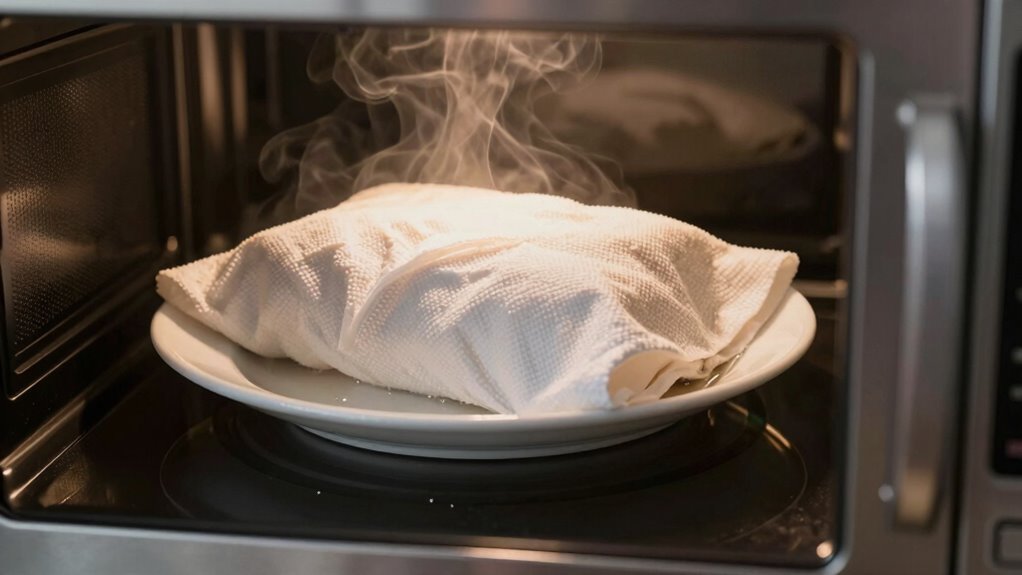
One of the most common microwave reheating problems is food splattering, making a mess and creating uneven heating. This not only complicates cleaning but also poses microwave safety risks by potentially damaging the appliance. Spills can cause lingering odors or even fire hazards if not cleaned properly. Additionally, splattering affects food preservation, as it can dry out or overcook portions while leaving others underheated. Using a paper towel as a cover helps contain splatters, maintaining a cleaner microwave and ensuring more consistent heating. This simple hack also helps preserve the texture and moisture of your food, preventing it from drying out or becoming overly soggy. Incorporating a microwave-safe cover with proper heat distribution can further improve reheating results. Proper ventilation during microwaving can help release steam and prevent pressure buildup, making the process safer and more effective. Using appropriate materials like paper towels designed for microwave use can enhance safety and effectiveness. Understanding the science of microwave heating can help you optimize your reheating techniques. Additionally, using techniques like covering food properly can help evenly distribute heat and reduce the risk of hot spots. Overall, it’s an easy way to improve safety, keep your microwave clean, and extend the life of your leftovers.
How a Damp Paper Towel Keeps Food Moist When Reheating
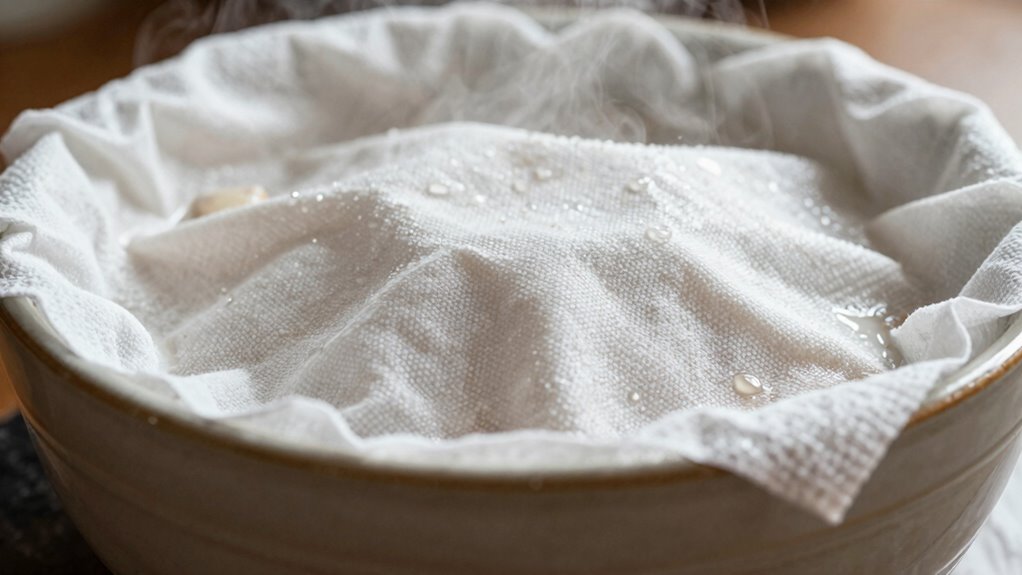
Have you ever wondered how to keep your food from drying out when reheating in the microwave? Using a damp cloth or paper towel creates a moist technique that traps steam around your food. When you cover your dish with a damp paper towel, the moisture evaporates slowly, preventing the food from becoming dry and tough. This method helps retain natural juices and flavors, ensuring your leftovers stay tender. The dampness acts as a barrier, balancing heat and moisture transfer. As a result, your reheated food stays moist and enjoyable. Just make sure your paper towel is slightly damp—not soaking wet—to optimize the moist technique without creating a mess. Additionally, understanding moisture retention can help you better control the reheating process for optimal results. Proper heat distribution can further enhance the effectiveness of this method, ensuring even warming and moisture preservation. Maintaining good airflow around the dish can also prevent excess moisture buildup and promote even reheating. Incorporating microwave safety practices ensures your reheating process remains safe and effective. Being mindful of microwave power settings can help you fine-tune the heating process for better moisture control. This simple trick transforms reheating into a quick, effective way to preserve your food’s quality.
Simple Steps to Prepare Your Food and Paper Towel for Perfect Reheating
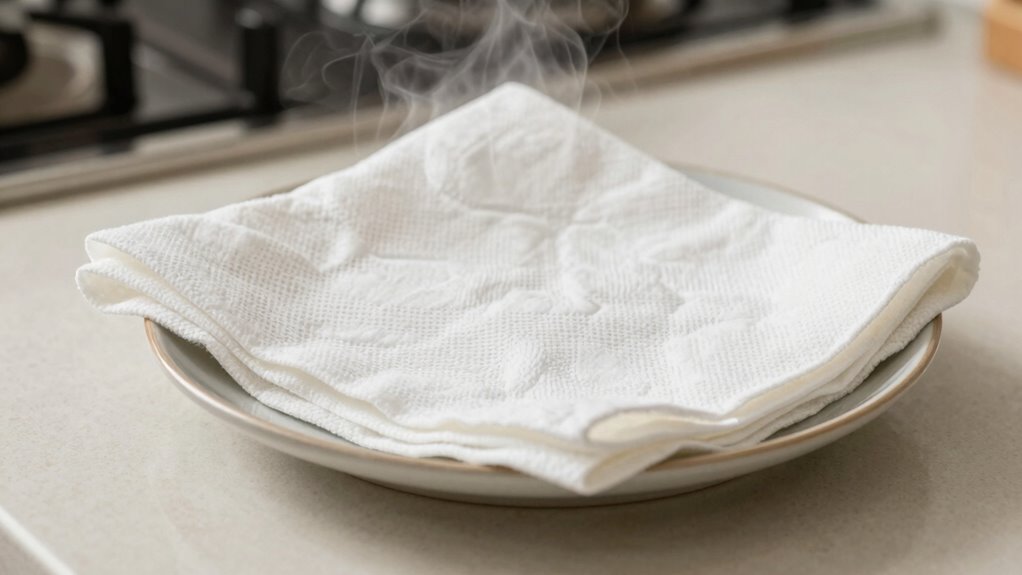
To guarantee your food reheats evenly, place it in the center of your microwave-safe dish. Use a damp paper towel to cover your food, allowing steam to keep it moist. Properly positioning your food and using the right paper towel technique helps achieve perfect reheating results. Incorporating passive voice detection into your editing process can further enhance clarity and readability. Additionally, understanding kitchen organization can help you organize your kitchen tools more efficiently, even in small spaces. Mastering microwave safety practices ensures your reheating process remains safe and effective.
Proper Food Placement
Ever wonder how to guarantee your food heats evenly in the microwave? Proper food placement is key. Arrange your leftovers or meals in a single, even layer to promote consistent heating. Avoid piling items or overcrowding the dish, which can create cold spots and uneven warming. Make sure to leave space around the food for microwaves to circulate freely. Keep food safety in mind—rearranged or unevenly heated food can harbor bacteria, so ensure it reaches a safe internal temperature. Be aware of your microwave wattage; higher wattage heats faster but can cause uneven spots if not monitored. Placing food correctly helps prevent undercooked sections and reduces the risk of foodborne illness. Utilizing smart appliance technology can help monitor and optimize heating times for better results. Proper placement is a simple step to achieve safe, evenly heated leftovers every time. Additionally, understanding your microwave’s power level can enhance heating accuracy and prevent overcooking. Knowing how to adjust heating settings can further improve your reheating outcomes and energy efficiency. Incorporating microwave-safe containers can also contribute to more even heating and prevent accidents or damage. To further improve your reheating process, consider preheating your dish slightly before microwave use to promote even warmth distribution.
Effective Paper Towel Usage
Proper food placement helps guarantee even heating, but using a paper towel can further improve your microwave results. To make certain effective paper towel usage, start by covering your food completely with a clean, moisture-absorbent towel. This prevents splatters and helps retain moisture, leading to more uniform reheating. If you’re environmentally conscious, opt for reusable alternatives like cloth towels or silicone covers, which are safe and eco-friendly for microwave safety. When choosing paper towels, look for those labeled microwave-safe to avoid chemicals or unwanted odors. Always confirm the paper towel isn’t too thick or layered excessively, as this can trap steam and affect heating. Proper preparation guarantees better results and minimizes waste, making your reheating process both efficient and eco-conscious. Additionally, selecting microwave-safe materials ensures safe heating and helps maintain the integrity of your food and environment. Incorporating vintage kitchenware and retro-themed accessories can also add charm and style to your kitchen while supporting eco-friendly practices. Using proper cover techniques can further enhance your reheating success and prevent messes. Moreover, choosing the right type of absorbent materials can optimize moisture retention and heat distribution during reheating.
How to Reheat Food Using the Paper Towel Technique

Reheating food in the microwave can sometimes lead to splatters and uneven heating, but using a paper towel can help prevent these issues. To do it right, place your food on a microwave-safe plate, then cover it with a clean paper towel. This simple step keeps your microwave cleaner and promotes food safety by reducing cross-contamination. Make sure to select the right kitchen tools, like a microwave-safe plate and fresh paper towels, to avoid any accidents.
Cover your food with a paper towel before microwaving to prevent splatters and ensure even heating.
Here’s how to do it:
- Spread the food evenly to ensure consistent heating
- Cover with a paper towel to absorb moisture and prevent splatters
- Monitor and stir halfway through for even reheating
This technique is quick, effective, and keeps your microwave tidy.
Foods That Reheat Best With a Paper Towel Cover
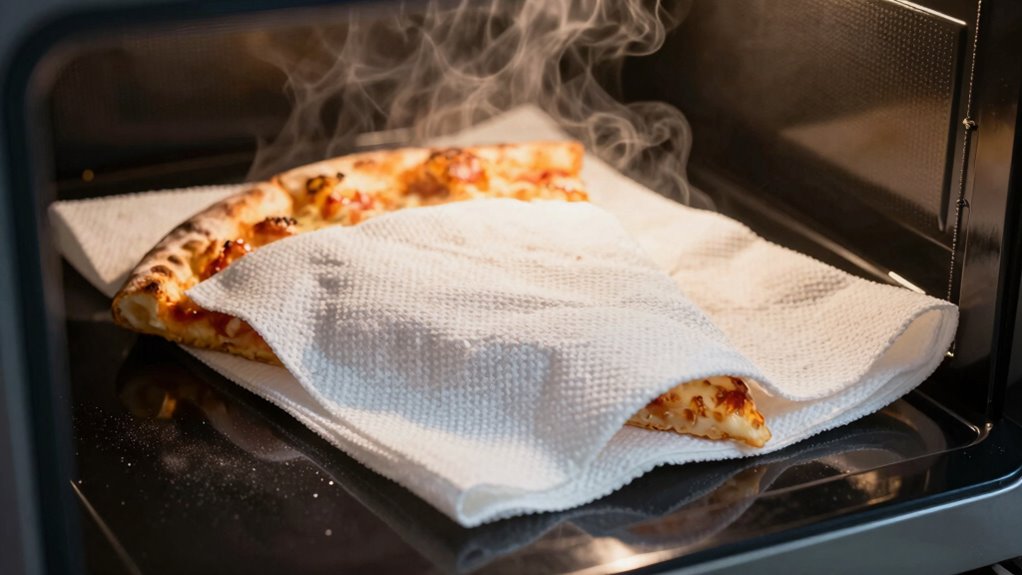
Certain foods reheat more effectively when covered with a paper towel because it helps trap moisture and prevents splattering. This simple step guarantees your microwave remains clean and your food stays moist. Foods like bread, pizza slices, and cooked vegetables reheat well under a paper towel, maintaining their texture without becoming soggy or dry. Using a paper towel also supports microwave safety by reducing messes and hot splashes. Keep these kitchen essentials handy for quick, effective reheating. Here’s a quick comparison:
| Food Type | Why It Works |
|---|---|
| Bread | Keeps it soft and prevents drying out |
| Pizza | Stops cheese from splattering and dries out |
| Vegetables | Traps moisture, retains crunch |
| Rice or Pasta | Prevents over-drying and splattering |
This trick is a simple way to get better results every time.
Tips to Avoid Mistakes and Get Even, Moist Microwave Reheating
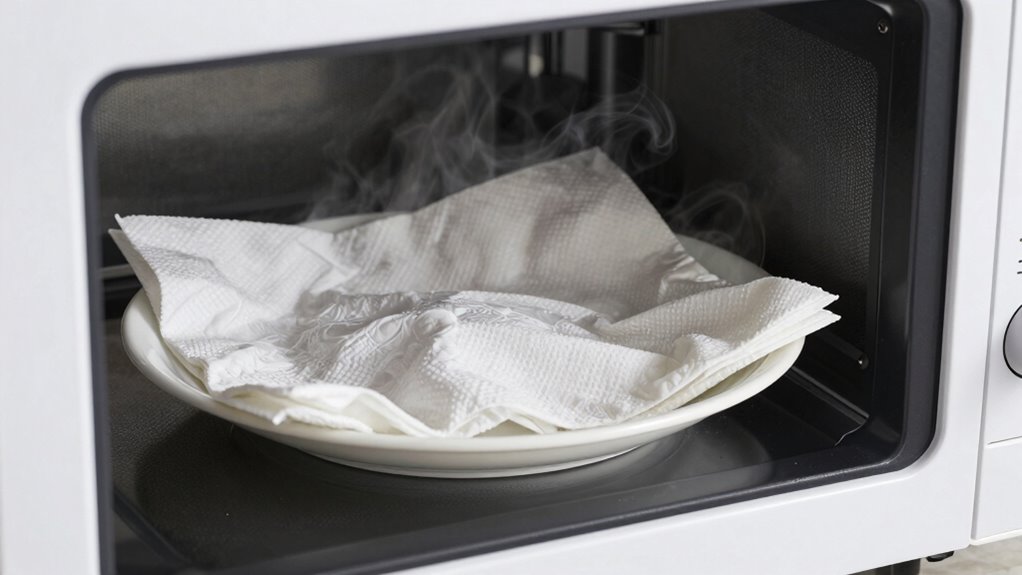
To get even, moist reheating, start by choosing the proper paper towel that won’t tear or stick. Cover your food with a damp towel to trap moisture and prevent drying out. Make sure to arrange the food evenly so heat distributes uniformly for the best results.
Use Proper Paper Towel
Choosing the right paper towel is essential for microwave reheating because it helps prevent messes and guarantees even, moist results. Use a thick, absorbent paper towel to avoid leaks and ensure your food stays moist. Always prioritize paper towel safety—avoid recycled or heavily dyed options that could release chemicals when heated. If you’re eco conscious, look for eco-friendly alternatives made from sustainably sourced materials, which are just as effective.
Consider these tips:
- Select sturdy, high-quality paper towels for better heat resistance.
- Check for unbleached or dye-free options to reduce chemical exposure.
- Use biodegradable or recycled paper towels to be environmentally friendly.
With the right paper towel, you’ll enjoy safer, cleaner, and more sustainable reheating.
Cover With Damp Towel
Ever wonder how to guarantee your leftovers stay moist and heat evenly in the microwave? Using a damp towel is key. Dampen a clean towel slightly so it’s moist but not dripping. Drape it over your food to create a barrier that traps moisture and promotes moist heat. This prevents your leftovers from drying out and helps heat distribute more evenly. The moist heat generated by the damp towel ensures your food warms through without becoming rubbery or tough. Just make sure not to use a soaking wet towel, as excess water can cause splatters and mess. Keep the towel lightly damp for best results. This simple step makes a noticeable difference, keeping your reheated food tender and evenly heated every time.
Arrange Food Evenly
Arranging your food properly before reheating can make a big difference in achieving even, moist results. When you spread out your leftovers, heat distributes more uniformly, reducing cold spots. Use microwave-safe containers and avoid overcrowding, which can hinder heat circulation. For best results, consider the paper towel types you use—thinner ones promote better steam circulation, while thicker towels may trap too much moisture. Keep food in a single, even layer whenever possible to prevent uneven heating. Stir or rotate your food halfway through to ensure all parts warm evenly. Proper arrangement not only improves microwave safety but also enhances the quality of your reheated meal. By taking these simple steps, you’ll enjoy moist, evenly heated leftovers every time.
Troubleshooting: What to Do When the Paper Towel Hack Isn’t Working
If your paper towel microwave trick isn’t working, don’t worry—it’s often just a small issue that can be fixed quickly. First, confirm you’re using oven-safe paper towels, as some materials may not withstand microwave heat or might trap too much moisture, preventing proper steaming. If the paper towel isn’t effective, try alternative coverings like microwave-safe lids, silicone covers, or microwave-safe plates with a damp cloth. These options can help retain moisture and prevent splatters while allowing steam to escape safely. Also, check your microwave’s power level; sometimes, reheating at a lower setting improves results. Remember, always prioritize oven safety. Proper coverings will help you reheat food evenly without risking damage to your microwave or creating messes.
Final Tips for Moist, Even Microwave Reheating Every Time

To guarantee your leftovers stay moist and heat evenly, it’s essential to follow a few simple but effective tips. First, always use microwave-safe paper towel materials to prevent any safety hazards. Second, cover your food with a paper towel to trap moisture and avoid splatters, ensuring consistent heating. Third, stir or rotate your food midway to promote even heat distribution. Keep in mind that using a clean, dry paper towel helps maintain hygiene and prevents sogginess. Additionally, always opt for microwave-safe containers to avoid melting or chemical leaks. By following these tips, you’ll maximize the paper towel trick’s effectiveness, keep your leftovers moist, and enjoy evenly reheated meals every time. Proper technique makes all the difference in microwave safety and results.
Frequently Asked Questions
Can I Use Any Type of Paper Towel for Microwave Reheating?
You shouldn’t use any type of paper towel for microwave reheating. Opt for microwave-safe paper towels, which are designed to handle heat without catching fire or releasing harmful chemicals. Look for eco-friendly options that are biodegradable and dishwasher safe, so you can reuse them safely. Avoid regular paper towels that aren’t labeled microwave-safe, as they may pose safety risks or damage your microwave.
Is It Safe to Reuse a Paper Towel for Multiple Reheats?
You shouldn’t reuse a paper towel for multiple reheats, as its durability decreases each time. Over time, it can tear or become weakened, risking potential hazards. Reuse safety guidelines advise against reusing because bacteria can transfer or residues can build up. Visualize the paper towel’s fibers breaking down, making it less effective and safe. For best results, use a fresh towel each time to guarantee safety and ideal reheating.
How Do I Prevent Paper Towels From Catching Fire in the Microwave?
To prevent paper towels from catching fire in the microwave, you should always use microwave-safe paper towels and avoid over-drying them. Keep an eye on your food while reheating to reduce microwave hazards, and never leave the microwave unattended. Make certain your microwave isn’t malfunctioning or emitting sparks, and avoid using heavily printed or recycled paper towels, which can increase fire safety risks. Following these tips helps keep you safe from fire hazards.
Can the Paper Towel Trick Be Used for Reheating Liquids?
Yes, you can use the paper towel trick for liquid reheating. Place a paper towel over your mug or bowl to absorb excess moisture and prevent splattering. The paper towel helps contain heat and steam, making the reheating process cleaner and reducing mess. Just make sure the towel isn’t too thick or crumpled, so it doesn’t interfere with microwave safety or cause overheating. This method keeps liquids warm and minimizes spills effectively.
Does the Paper Towel Method Work for Reheating Large or Bulky Foods?
Yes, the paper towel method can work for reheating large portions or bulky foods, but you’ll need to adapt it. Cover the food with a paper towel to prevent splatters, and consider reheating in smaller, more manageable sections if the portion is very big. This helps ensure even heating and prevents messes. Just make sure to check the food’s temperature regularly to avoid uneven reheating.
Conclusion
Using a damp paper towel is a simple trick that can improve your microwave reheating results markedly. In fact, studies show that moisture loss is a common reason for dry, uneven food when reheating. By covering your food properly, you can retain up to 20% more moisture, ensuring your leftovers stay moist and delicious. Give this hack a try—you’ll be surprised at how much better your reheated meals taste every time!