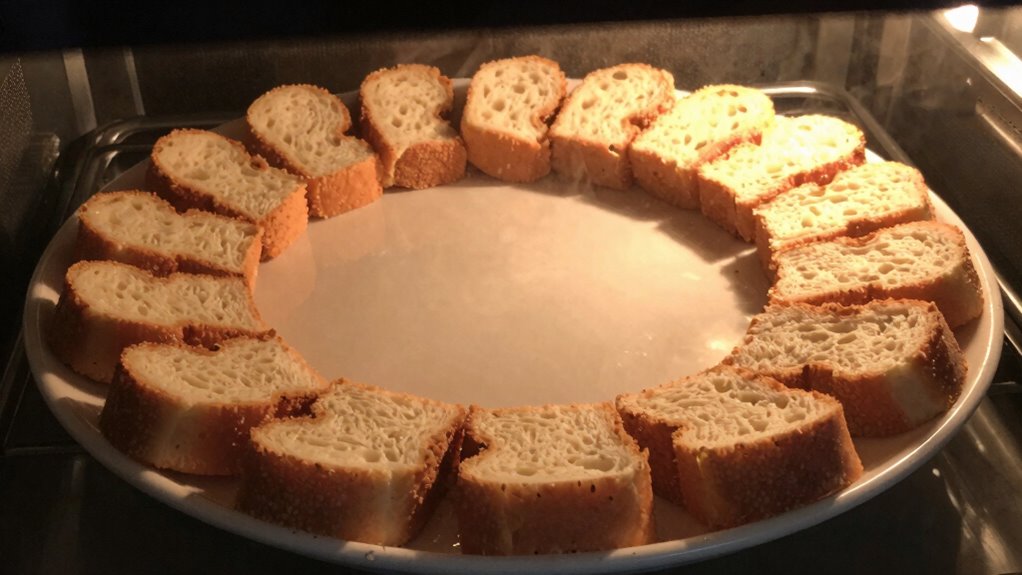

To fix uneven microwave heating, try arranging your food in a donut or ring shape on the plate. This allows microwaves to reach all sides more evenly, reducing cold spots and hotspots. Keep pieces separated with about an inch of space and rotate your dish during cooking for better results. Proper placement, combined with tips like using the right power level, can make a noticeable difference—discover more ways to improve your hot spots fix here.
Key Takeaways
- Arranging food in a ring or donut shape helps microwave energy reach all sides evenly, reducing hotspots.
- Proper spacing (at least 1 inch apart) allows better heat circulation and minimizes uneven heating.
- Using a turntable and repositioning food during cooking improves energy distribution and avoids cold spots.
- Covering food and venting properly enhances heat transfer and prevents cold or hot spots caused by steam buildup.
- Combining the donut shape with stirring and resting periods optimizes overall microwave heating uniformity.
Why Do Microwave Hot and Cold Spots Happen?
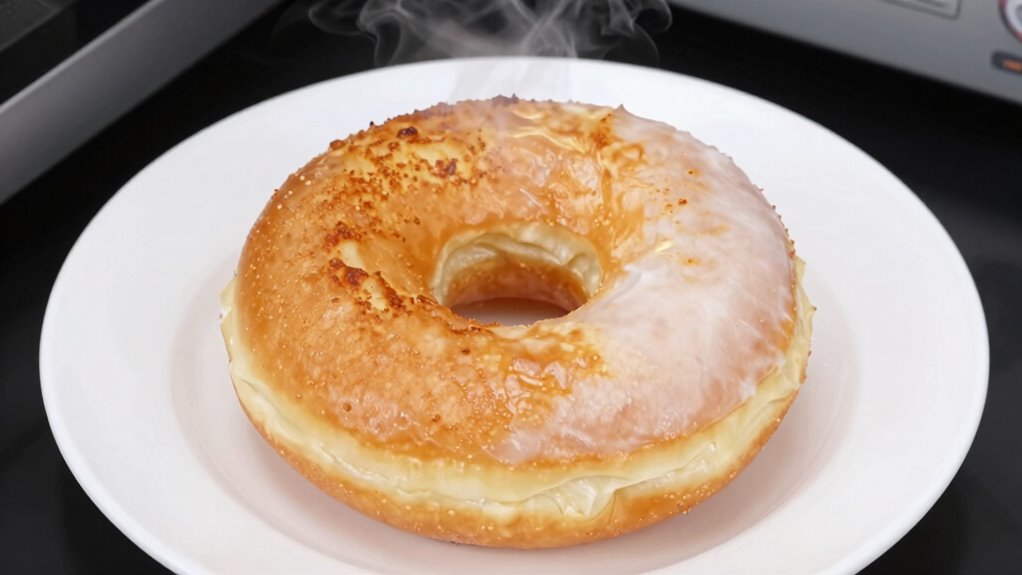
Microwave hot and cold spots occur because the microwave oven doesn’t heat food evenly. This uneven heating results from microwave physics, specifically how microwaves generate and distribute energy. Microwaves produce electromagnetic waves that excite water, fat, and sugar molecules, creating heat through agitation. However, the distribution of these waves inside the oven isn’t uniform. Certain areas receive more energy, causing hotspots, while others get less, leading to cold spots. The shape and design of the microwave cavity, along with the placement of the turntable, influence heat distribution. As a result, some parts of your food heat faster than others. microwave physics plays a crucial role in how energy is emitted and distributed, affecting the overall heating pattern. Additionally, standing waves can form inside the microwave, reinforcing uneven heating and making hotspots more pronounced. To mitigate these effects, techniques like arranging food in a donut shape can help promote more even heating by distributing the energy more uniformly.
How the Donut Shape Helps Your Food Heat Evenly
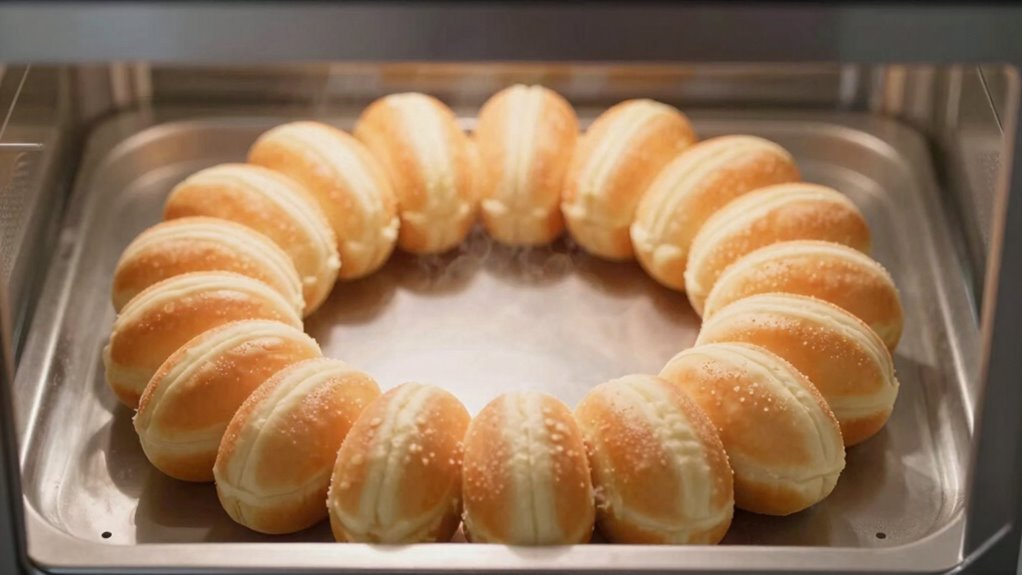
Have you ever noticed that food shaped like a donut tends to heat more evenly in the microwave? This shape improves microwave efficiency by allowing heat to distribute more uniformly. The hollow center helps microwaves reach all sides, reducing hot spots and cold spots. Plus, it enhances food presentation, making your dish look appealing. To visualize this, consider the following:
| Donut Shape Benefits | Microwave Efficiency | Food Presentation |
|---|---|---|
| Even heat distribution | Less hot/cold spots | Looks attractive |
| Faster heating | Better heat transfer | Impressive plating |
| Reduces uneven cooking | More consistent results | Eye-catching display |
How to Arrange Your Food in a Donut Shape : Step-by-Step
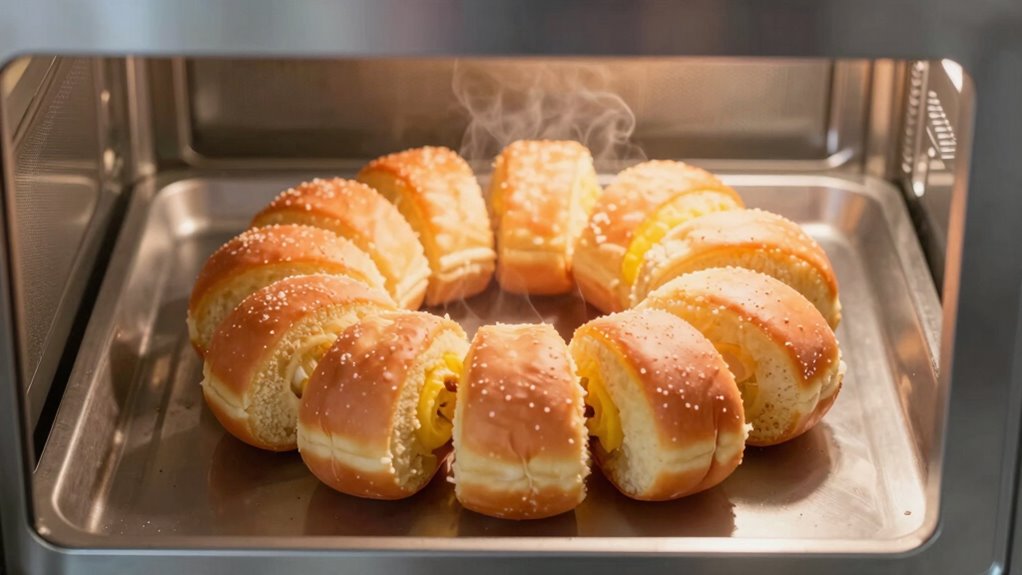
To make certain your food heats evenly in the microwave, arranging it in a donut shape is key. Start by placing your food in the center of the plate, forming a ring around the edges. Use a proper plate arrangement that allows space between pieces, preventing overcrowding and promoting even heat distribution. If you’re heating multiple items, layer them so they’re spread out in a circular pattern, with larger pieces on the outer edge and smaller ones toward the center. Keep food pieces separated enough to avoid hot spots. This food layering technique ensures microwave energy reaches all parts uniformly. Additionally, precise placement can significantly enhance heat distribution and reduce cold spots. By carefully arranging your food in a donut shape, you encourage consistent heating and reduce cold spots, making your microwave meals more enjoyable. Proper food arrangement also helps prevent overheating certain areas while leaving others cold, leading to more satisfactory results.
What If the Donut Shape Still Causes Cold Spots? Troubleshooting Tips
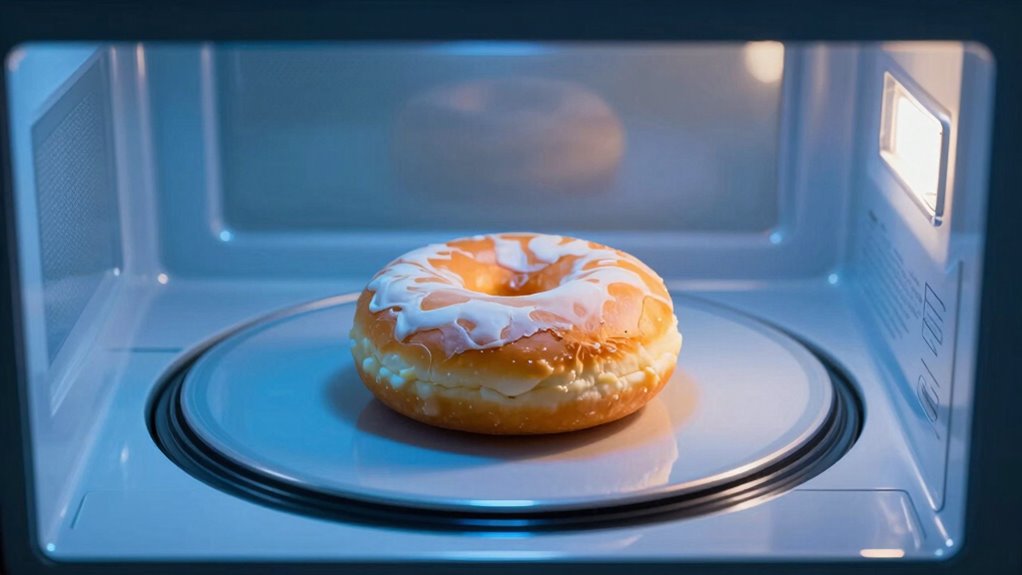
If your donut-shaped setup still results in cold spots, start by checking your microwave’s power levels and modify them as needed. You can also try changing how you position your food to ensure even heating, and covering it with a microwave-safe lid to promote uniform warmth. These simple steps can help you troubleshoot and improve your heating results effectively. Additionally, adjusting your microwave’s power settings can make a significant difference in achieving even heating. Being aware of microwave energy distribution can help you better understand how to optimize your setup for more consistent results. Understanding microwave oven design can also contribute to troubleshooting uneven heating issues. Recognizing how hot and cold spots form within the microwave is key to developing effective placement strategies. Paying attention to food placement techniques can further enhance your chances of avoiding uneven heating.
Check Microwave Power Levels
Wondering why your donut still has cold spots even at high microwave power? It’s possible your microwave settings aren’t optimized. Check the power level indicator and verify it’s set to the maximum or high setting. Some microwaves have adjustable power levels, so if you’re using a lower setting, food might not heat evenly. Try a power adjustment to see if that improves heat distribution. Also, consult your microwave’s manual to confirm the recommended power levels for reheating items like donuts. If your microwave offers a “high” or “full power” setting, use it for more consistent heating. Remember, simply turning up the power isn’t always enough—make sure the microwave is functioning correctly and that you’re not using preset functions that might limit power output. Additionally, understanding microwave power levels can help you optimize heating for various foods. Being aware of microwave wattage can also assist in achieving more even heating results, especially for items prone to cold spots. Proper placement and food positioning inside the microwave can further improve heating uniformity, ensuring your donuts heat evenly throughout. Moreover, paying attention to power level adjustments can help prevent uneven heating and cold spots in different dishes.
Adjust Food Placement Strategies
When your donut’s shape causes cold spots despite using high microwave power, adjusting how you place it can make a difference. Start by carefully arranging your food on the plate, ensuring even spacing and positioning. Placing the donut so that the hole faces the center of the plate can promote more uniform heating. Additionally, consider how the plate is oriented within the microwave. Since most microwaves rotate the turntable, positioning the donut to maximize exposure to microwave energy helps prevent cold spots. If you notice persistent uneven heating, try repositioning the food during cooking, rotating the plate manually if needed. Using proper food arrangement and understanding microwave rotation can considerably improve heating consistency, reducing cold spots and ensuring your food heats evenly. Incorporating best microwave practices can further enhance your results and prevent uneven heating issues. To optimize heat distribution, using microwave-safe cookware and covering your food can also help minimize cold spots and promote even heating. Employing microwave turntable techniques can also be beneficial in achieving more uniform heat distribution. Additionally, understanding how microwave energy distribution works can help you better troubleshoot persistent uneven heating.
Use Food Cover Techniques
Covering your donut with a microwave-safe lid or microwave-safe plastic wrap can help trap steam and distribute heat more evenly. Using a food cover prevents hot spots and cold spots by creating a more consistent cooking environment. Make certain the cover is microwave-safe to avoid melting or chemical leaching. When applying the cover, leave a small vent or corner open to allow steam to escape, preventing pressure buildup. This technique helps heat penetrate the donut uniformly, reducing the chances of cold spots caused by uneven microwave energy. If you notice uneven heating despite using a cover, check that the cover is properly vented and that your microwave is functioning correctly. Employing proper microwave techniques can further enhance heating performance and ensure more consistent results. Additionally, choosing the right microwave-safe cover material can impact heat distribution and safety. Using a cover is a simple, effective way to improve heating results without risking food safety, especially when combined with other microwave safety practices. Being aware of microwave energy distribution can help troubleshoot persistent uneven heating issues and optimize your approach.
Extra Tips for Better Microwave Heating With the Donut Method
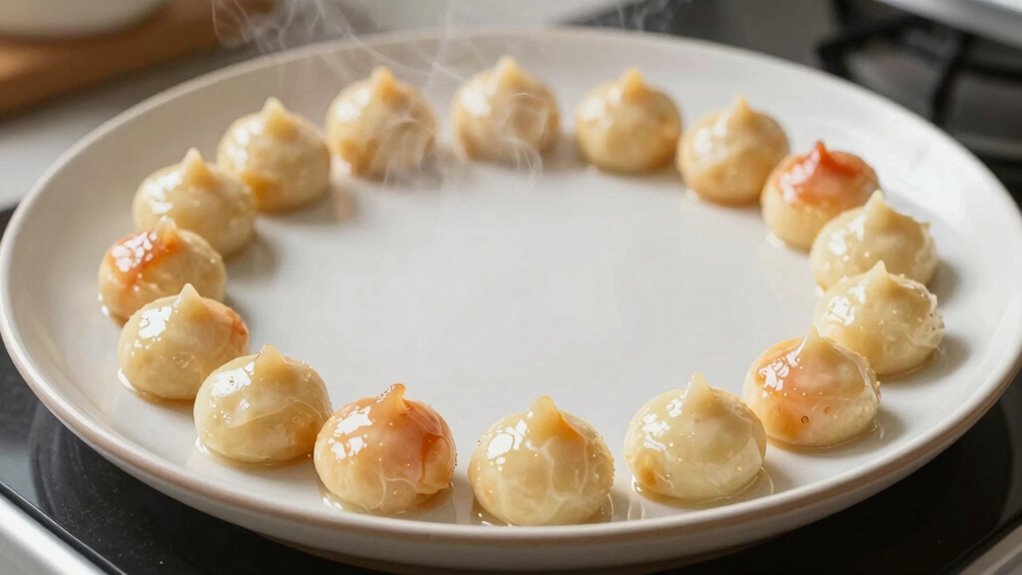
To improve microwave heating with the donut method, make sure you arrange your food evenly in the dish. Keep proper spacing between pieces so heat can distribute more uniformly. By paying attention to these details, you’ll reduce cold spots and heat your food more effectively.
Arrange Food Evenly
Arranging food in a circular pattern using the donut method helps guarantee even microwave heating. Spreading your food evenly around the plate ensures consistent heat distribution, which helps maintain the food’s desired texture. When food heats uniformly, it’s less likely to become soggy or overcooked in certain areas, preserving its original food texture. Additionally, this method helps retain flavor by preventing hot spots that can cause uneven cooking or burning. Proper arrangement minimizes the need for stirring or additional adjustments, saving you time and effort. Keep smaller or more delicate pieces towards the center and larger pieces around the edges for balanced heating. Overall, an even layout helps you enjoy your meal with ideal flavor and perfect consistency.
Use Proper Spacing
Proper spacing between food pieces is essential for maximizing microwave efficiency with the donut method. When you leave enough room, heat distributes evenly, reducing cold spots and preventing overheating. To achieve this, keep in mind:
- Place food items at least 1 inch apart, avoiding crowding.
- Ensure larger pieces are spaced so heat can circulate freely around them.
- Use microwave-safe containers that support proper air circulation and facilitate safe food storage.
Maintaining proper spacing not only improves heating but also enhances microwave safety by preventing splatters and spills. It also helps you avoid the need for frequent stirring or repositioning. By paying attention to spacing, you ensure your food heats evenly, stays safe, and reduces cleanup time.
When Should You Use the Donut Shape Technique and Its Limits

The donut shape technique is most effective when you’re heating irregularly shaped or dense foods that tend to develop hot spots in a microwave. Use it for items like thick soups, dense casseroles, or unevenly shaped leftovers. However, it has limits—this method isn’t ideal for delicate foods or those requiring precise microwave safety, like eggs or seafood. Overusing the technique might alter food texture negatively or cause uneven heating. To optimize results, combine the donut shape with stirring or resting periods.
| When to Use | When to Avoid |
|---|---|
| Dense or irregularly shaped foods | Delicate or sensitive foods |
| Thick soups or casseroles | Eggs or seafood |
| When uneven heating occurs | Foods requiring strict microwave safety |
Frequently Asked Questions
Can I Use the Donut Shape for All Types of Food?
You can’t use the donut shape for all types of food, as it works best for items with consistent textures like leftovers or small portions. Plating techniques involving this shape help with even heating, but delicate or uneven-textured foods may not benefit. Adjust your placement based on the food’s texture, and remember that the goal is to promote even heating and ideal food texture, rather than forcing a specific shape on every dish.
Does the Microwave Size Affect the Effectiveness of the Donut Method?
Did you know that over 60% of microwave users experience uneven heating? The size of your microwave’s capacity definitely impacts the effectiveness of the donut method. Larger microwaves with more space may distribute heat more evenly, while smaller ones can make it trickier. So, if you’re using a compact microwave, you might need to modify your food shape or placement to guarantee thorough heating every time.
How Long Should I Heat Food in a Donut Shape?
You should microwave food in a donut shape for about 30 seconds to 2 minutes, depending on the amount and type of food. Use microwave timing in short intervals and check for heating consistency often. Rotate or stir the food midway to guarantee even heat distribution. This helps prevent cold spots and promotes uniform heating, making your meal safer and more enjoyable. Adjust the time as needed for best results.
Can This Technique Prevent All Cold Spots Completely?
While the donut shape helps reduce cold spots, it can’t eliminate all uneven heating. You might still encounter areas that are cooler, especially with thicker or denser foods. For microwave safety, always stir or check your food to make sure it’s heated thoroughly. This technique improves food texture by promoting even heat distribution, but it’s not foolproof. Combining it with stirring and short additional heats gives you the best chance at evenly warmed, safe, and delicious meals.
Is the Donut Method Suitable for Reheating Liquids?
The donut method isn’t ideal for reheating liquids because it’s designed for solid foods, not liquids. When you try liquid reheating, the liquid can splash or heat unevenly, defeating the purpose of the technique. Instead, stir the liquid halfway through, use a microwave-safe cover, and heat in short intervals to promote even heating. The donut method works best for solid foods that benefit from a central hole for even heat distribution.
Conclusion
Did you know that uneven microwave heating affects about 90% of users? By arranging your food in a donut shape, you can substantially reduce cold spots and heat your meals more evenly. This simple trick not only saves you time but also improves your food’s taste and safety. Give it a try next time you microwave, and enjoy perfectly heated meals every time! It’s a small change that makes a big difference in your microwave experience.