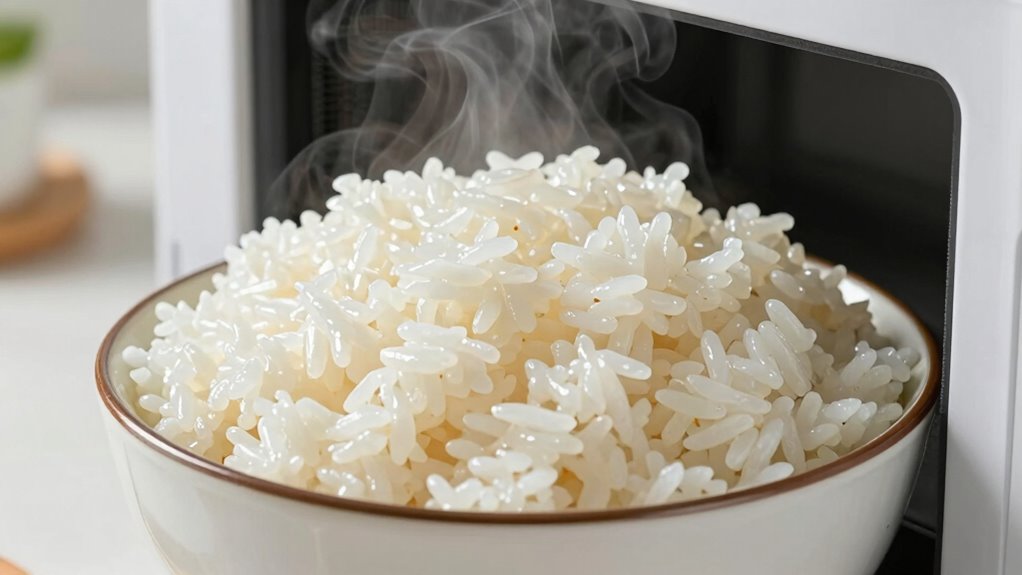

To reheat rice without dry spots, start by adding a splash of water or broth and covering it with a microwave-safe lid or damp paper towel to trap moisture. Use a shallow, wide dish for even heating and stir halfway through to distribute warmth. Reheat in short bursts at medium power, then let it rest for a minute. For more tips on keeping your rice moist and perfect, keep exploring.
Key Takeaways
- Use a shallow, wide microwave-safe container to promote even heat distribution.
- Cover rice with a damp paper towel or lid to trap moisture and prevent drying out.
- Add a splash of water or broth before reheating to maintain moisture levels.
- Reheat in short intervals (about 30 seconds), stirring halfway to distribute heat evenly.
- Let the rice rest for a minute after reheating to allow moisture to settle and prevent dryness.
Why Does Rice Heat Unevenly in the Microwave?
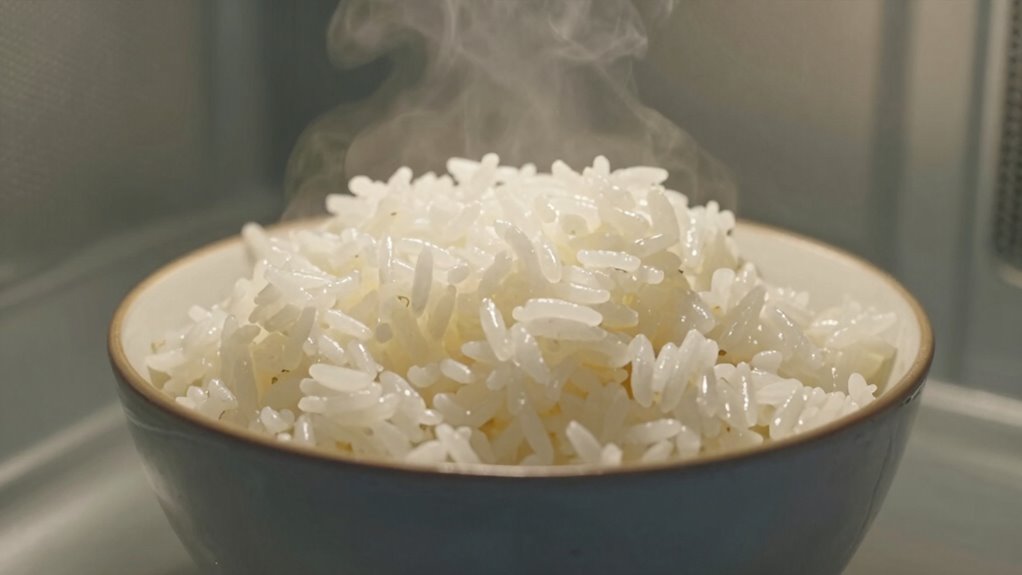
When you microwave rice, it often heats unevenly, which can be frustrating. This uneven heating happens because microwaves heat food by causing water molecules to vibrate, but rice tends to have inconsistent moisture distribution. Poor rice storage can also lead to dry patches that heat differently, increasing the likelihood of hot and cold spots. To improve reheating results, using energy-efficient microwave techniques can help distribute heat more evenly. For microwave safety, it’s important to cover rice properly to trap moisture and ensure even heating. If rice is stored improperly or left out too long, bacteria can develop, making reheating unsafe. Additionally, uneven heating may occur if you don’t stir the rice during reheating. Understanding how microwave energy interacts with rice and practicing good storage habits help prevent hot spots and promote safe, evenly heated leftovers.
How to Prepare Rice for Even Reheating
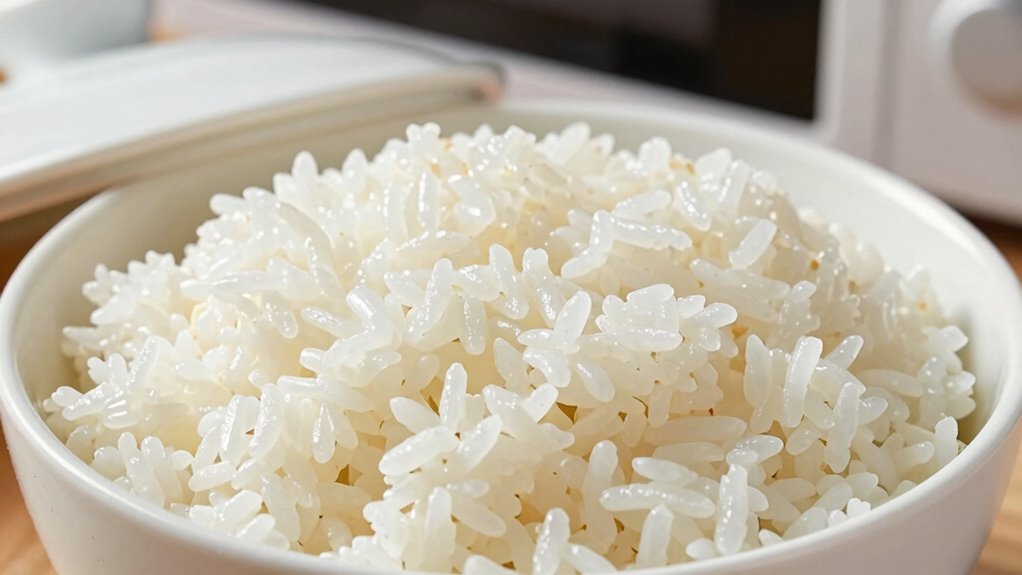
To guarantee your rice reheats evenly, start by rinsing and draining it thoroughly to remove excess starch. Use a microwave-safe container that distributes heat well, and add a splash of water or broth before reheating. These steps help maintain moisture and prevent hot spots, making your rice perfect every time. Incorporating proper storage techniques can also help preserve rice quality and ensure it reheats more evenly. Additionally, selecting a microwave with even heat distribution features can further improve reheating results.
Rinse and Drain Properly
Rinsing and draining rice properly is essential for even reheating because excess moisture and surface starch can cause clumping or uneven heating. Before storing, rinse your cooked rice under cold water to remove surface starch, which helps prevent sticky clumps. Use a fine-mesh strainer or colander over your storing containers to drain excess water thoroughly. Proper draining ensures the rice retains its freshness without lingering moisture that could lead to uneven reheating or sogginess. If rice isn’t drained well, it may develop dry spots or become overly moist during reheating. Taking this step helps maintain the right texture and promotes even heat distribution, making your reheated rice fluffy and avoiding dry patches or cold spots. Always rinse and drain just before storing to keep your rice at its best. Additionally, understanding field‑of‑view and imaging‑scale concepts can help you better assess your kitchen setup for optimal reheating results. Ensuring your rice is evenly reheated also depends on moisture content, which can be affected by how thoroughly you drain it. Proper temperature control during reheating is also crucial for achieving consistent results. Being aware of heat distribution can further help in adjusting your microwave settings for the best outcome.
Use a Suitable Container
Choosing the right container plays a key role in guaranteeing your rice reheats evenly. Opt for a container with good container quality that is microwave-safe to prevent any risk of melting or warping. A shallow, wide dish allows heat to distribute more uniformly. Avoid containers that are too deep or narrow, as they can trap cold spots. Ensure the container has a lid or cover to retain moisture and prevent splatters. Glass or BPA-free plastic containers are ideal for microwave safety and durability. Using the proper container helps maintain rice texture and prevents uneven heating. Always check for microwave-safe labels to ensure safe reheating. Selecting the right vessel makes a significant difference in achieving perfectly reheated rice without dry spots. Proper container selection is an important aspect of microwave reheating that ensures safety and consistent results. Additionally, choosing containers made from microwave-safe materials can further improve heating performance and safety. Being aware of container material safety can help prevent chemical leaching or damage during reheating. Moreover, using appropriate container sizes minimizes the risk of uneven heat distribution and dry patches.
Add Moisture Before Reheating
Adding moisture before reheating is essential to guarantee your rice from drying out and to ensure even heating. Moisture retention plays a crucial role in preventing dry spots and maintaining the rice’s texture. To achieve this, sprinkle a small amount of water or broth over the rice, or place a damp paper towel over it before microwaving. These reheating techniques help trap steam and distribute heat evenly throughout the rice. Be careful not to add too much liquid, which can make the rice soggy. Covering the container with a microwave-safe lid or wrap also aids in holding in moisture. Using microwave-safe containers designed for steaming can further improve moisture retention and heat distribution. Properly container selection can help maintain the rice’s moisture and texture during reheating. Additionally, understanding filtration systems can help you choose the best containers or covers that retain moisture effectively. Incorporating moisture retention techniques can further ensure the rice stays tender and evenly heated throughout the reheating process. Employing heat distribution methods ensures the entire portion heats uniformly, preventing cold spots.
Best Techniques to Reheat Rice in Microwave Without Dry Spots
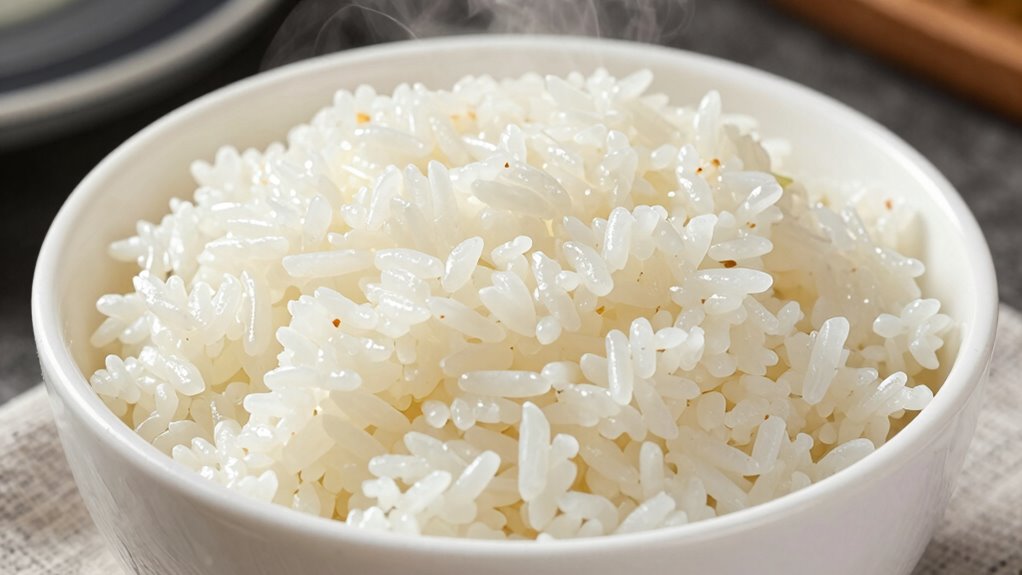
To reheat rice evenly, use a moisture barrier like a damp paper towel or microwave-safe lid to trap steam. Cover the rice and stir it halfway through heating to distribute heat and prevent dry spots. These simple steps help keep your rice moist and evenly reheated every time. Additionally, allowing the rice to rest for a minute after microwaving helps maintain moisture and ensures even heating throughout. Using AI-powered tools can further improve your reheating technique by providing tailored tips based on your specific microwave model and rice type. Incorporating connected kitchen appliances that monitor temperature and humidity can optimize the reheating process for perfect results. To further improve the reheating process, consider using natural ingredients that can enhance flavor and texture while keeping the rice moist. Understanding microwave heating principles can also help you achieve more consistent results and avoid common reheating pitfalls.
Use a Moisture Barrier
When reheating rice in the microwave, using a moisture barrier can make a significant difference in preventing dry spots. Wrapping your reheating containers with a damp cloth or placing a microwave-safe lid over them helps trap steam, maintaining moisture throughout the rice. This method guarantees even heating and keeps the rice tender. To maximize effectiveness, consider these tips:
- Use microwave-safe reheating containers with tight-fitting lids
- Place a damp paper towel over the rice before microwaving
- Add a small splash of water or broth to boost moisture
- Cover the container loosely to allow steam to escape safely
- Avoid overfilling containers to ensure even heat distribution
- Incorporate proper reheating techniques to further prevent moisture loss during heating
Incorporating moisture barriers is a simple yet powerful way to keep your rice moist and delicious.
Cover and Stir Regularly
Covering your rice with a microwave-safe lid or plate while reheating helps trap steam and distribute heat evenly. This prevents dry spots and keeps your rice moist. Additionally, stirring techniques are key—pause halfway through reheating to stir the rice gently. Regular stirring ensures heat reaches all areas uniformly, avoiding cold patches. Use a spatula or spoon to fold the rice gently without breaking grains. For best results, cover and stir every 30-60 seconds until thoroughly heated. Here’s a quick overview:
| Step | Action |
|---|---|
| 1 | Cover rice with a lid |
| 2 | Reheat for 30 seconds |
| 3 | Stir rice gently |
| 4 | Repeat until hot |
| 5 | Let it rest briefly |
Following these techniques guarantees evenly heated, moist rice every time.
How Covering and Moisture Help Keep Rice Moist When Reheating
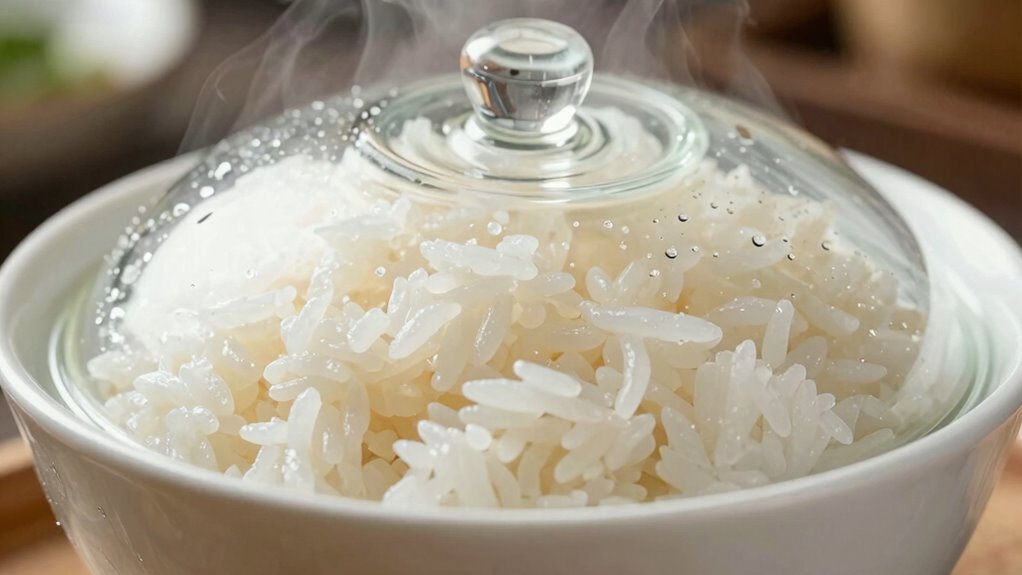
Covering rice while reheating traps steam and prevents moisture from escaping, helping it stay tender. Proper covering techniques are essential for moisture retention, ensuring your rice doesn’t turn dry or chewy. When you use a microwave-safe lid or plastic wrap, you create a barrier that locks in steam and heat. This method maintains the rice’s original texture and flavor. To maximize moisture retention, make sure the cover fits snugly and doesn’t leave gaps. Adding a small splash of water or broth before reheating can also boost moisture levels. Keep in mind that different coverings may influence how well moisture stays in, so choose the right one for your needs. Effective covering techniques make reheating rice quick, easy, and deliciously moist every time.
- Use a microwave-safe lid or plastic wrap tightly fitted over the rice
- Add a splash of water or broth before reheating
- Avoid leaving gaps or loose coverings during reheating
- Use a vent or small hole if using plastic wrap to prevent pressure build-up
- Reheat in short intervals to monitor moisture and prevent drying
Common Mistakes That Cause Dry Spots When Reheating Rice
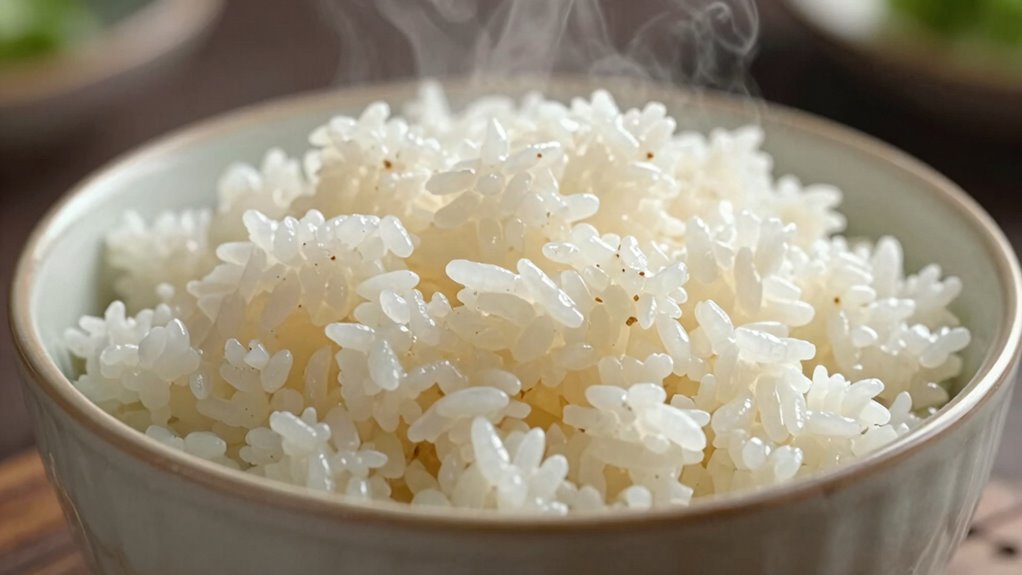
One common mistake that leads to dry spots when reheating rice is neglecting proper moisture management. If you don’t store rice correctly, it can lose moisture and develop an uneven rice texture, making reheating tricky. For example, storing rice in airtight containers helps retain moisture, preventing dryness. When reheating, skipping the step of adding a little water or covering the rice tightly allows moisture to escape, resulting in dry patches. Also, reheating large portions without stirring can cause uneven heat distribution, creating dry spots. Always ensure your rice is stored properly and reheated with sufficient moisture. Using the right storage methods and techniques during reheating helps maintain a consistent rice texture and prevents those undesirable dry spots.
Troubleshooting Tips for Perfectly Reheated Rice Every Time
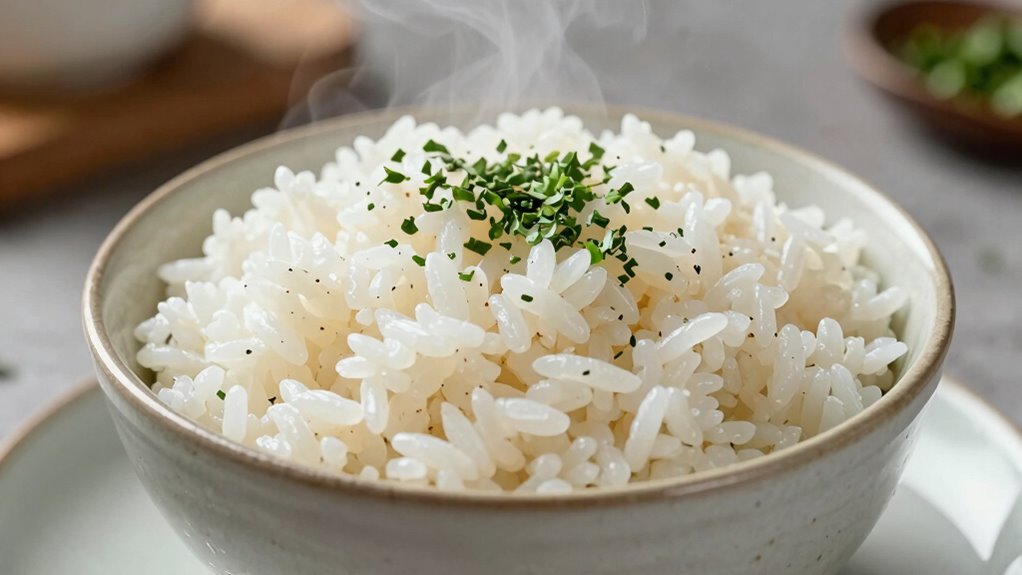
To achieve perfectly reheated rice every time, paying attention to a few key troubleshooting tips can make all the difference. First, ensure proper storage tips by transferring leftover rice to an airtight container and refrigerating within two hours. When reheating, add a splash of water or broth to help restore moisture and preserve flavor. Cover the rice with a microwave-safe lid or damp paper towel to trap steam and prevent dryness. Stirring halfway through reheating promotes even heat distribution. If rice still turns out dry or uneven, check your microwave’s power settings and adjust accordingly. Lastly, always consume reheated rice promptly to maximize flavor preservation and avoid spoilage. These simple troubleshooting tips will help you enjoy moist, flavorful rice every time.
Frequently Asked Questions
Can I Reheat Rice Multiple Times Without Losing Quality?
Yes, you can reheat rice multiple times, but be cautious about food safety. Each reheating increases bacteria risk, so make certain you reheat thoroughly to at least 165°F. To preserve texture, store rice properly in airtight containers and reheat with a splash of water to maintain moisture. Avoid reheating more than once or twice, as repeated heating can compromise quality and safety.
What Type of Microwave Container Is Best for Reheating Rice?
Imagine uncovering the perfect container that keeps your rice moist and flavorful. You should choose microwave-safe containers made of glass or BPA-free plastic, ensuring microwave safety and container hygiene. These materials heat evenly, preventing dry spots, and are easy to clean, reducing bacteria buildup. With the right container, you can reheat rice confidently, knowing it’ll stay delicious and safe to eat, every time.
How Do Different Types of Rice Affect Reheating Techniques?
Different types of rice require slightly different reheating techniques due to texture differences and moisture retention. For example, fluffy long-grain rice benefits from a gentle heat with added moisture, while sticky rice needs careful steaming to prevent drying out. You should adjust reheating times and add a splash of water or broth accordingly, ensuring you maintain the rice’s original texture and moisture without overcooking or drying out.
Is It Safe to Reheat Rice in the Microwave Overnight?
Reheating rice overnight in the microwave isn’t safe because bacteria like Bacillus cereus can grow if rice isn’t stored properly. To keep food safe, quickly cool leftover rice, store it in an airtight container in the fridge within two hours, and reheat it thoroughly before eating. Following proper storage tips, like keeping rice chilled and reheating evenly, guarantees you avoid foodborne illnesses and enjoy your leftovers safely.
Can Adding Oil or Butter Improve Reheating Results?
Adding oil or butter can definitely improve your reheating results. Oil addition helps keep the rice moist and prevents dryness, while butter enhancement adds flavor and richness. When you reheat, mix in a small amount of oil or butter before microwaving, covering the rice with a damp paper towel to maintain moisture. This simple step guarantees evenly heated, tasty rice without dry spots, making your leftovers much more enjoyable.
Conclusion
Now that you know how to reheat rice without drying it out, you’re all set to serve fluffy, moist leftovers every time. Just remember, the key is to keep things covered and add moisture when needed—don’t leave it to chance. With these tips, you’ll avoid dry spots and keep your rice tasting just as good as when it was first cooked. It’s a small effort for big results—so don’t let this secret slip through your fingers!