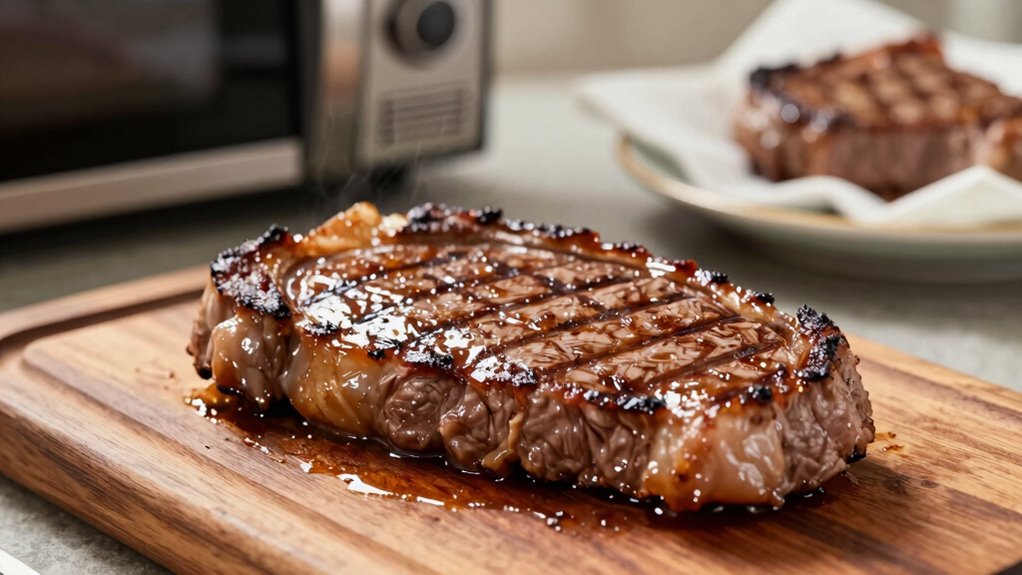

To reheat steak without making it tough, use a microwave on low or medium power to warm it gradually, then let it rest loosely covered with foil for 3-5 minutes to lock in juices and evenly distribute heat. This combination prevents dryness and toughness while maintaining flavor and tenderness. Properly reheated steak stays juicy and delicious, so follow these steps and you’ll preserve the quality—more tips are just ahead.
Key Takeaways
- Reheat steak on low or medium power to ensure even heating and prevent drying out.
- Cover the steak lightly with a microwave-safe lid or damp paper towel during reheating to retain moisture.
- Reheat in short intervals, checking frequently to avoid overcooking and toughness.
- Let the steak rest for 3-5 minutes after microwaving to allow juices to redistribute.
- Add a splash of broth or butter during reheating to boost moisture and flavor retention.
Why Reheating Steak Properly Keeps It Juicy and Tender
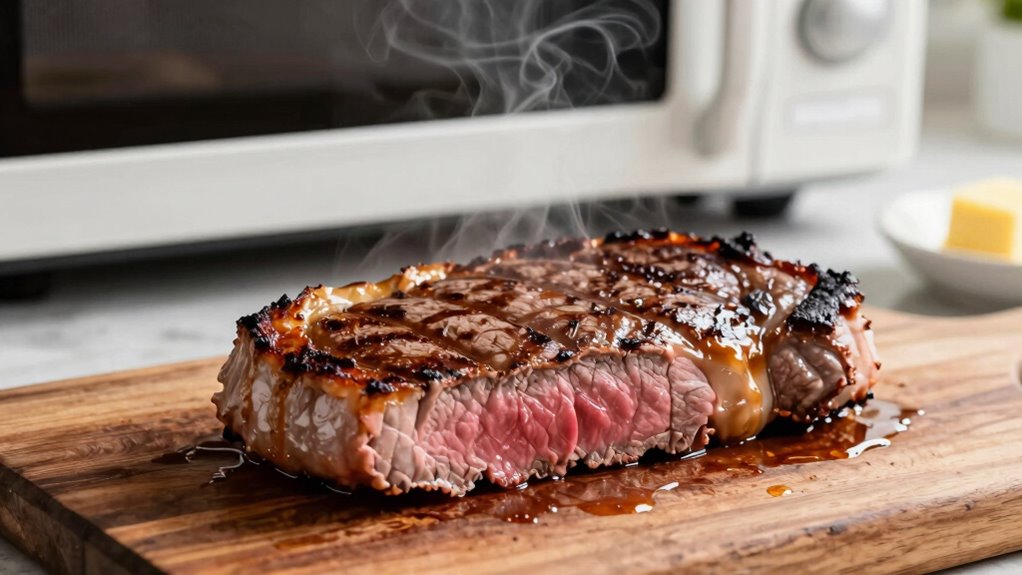
Reheating steak properly is essential because it helps preserve its juicy, tender texture. When you marinate leftovers before reheating, you boost flavor and keep the meat moist, preventing it from drying out. Proper reheating methods, like gentle warming, ensure the steak retains its original juiciness and tenderness. Additionally, seasoning enhancement during reheating can revive flavors that might fade over time. By carefully controlling temperature and technique, you prevent overcooking, which causes toughness. This careful approach allows the steak to stay delicious and satisfying, just as it was when first cooked. Incorporating proper temperature control during reheating further minimizes the risk of dryness and toughness. Using the right reheating tools, such as a microwave with even heat distribution, can make a significant difference in maintaining the steak’s quality. Employing temperature probes can help monitor internal temperatures to avoid overcooking. Additionally, understanding the importance of gradual warming helps ensure the steak heats evenly without becoming tough. Being aware of reheating safety precautions is also vital to prevent bacterial growth and ensure the meat remains safe to eat. Ultimately, reheat your steak thoughtfully to enjoy every bite, preserving its quality and flavor, and making your leftover steak taste just as good as fresh.
Why Microwave + Rest Is the Best Way to Reheat Steak
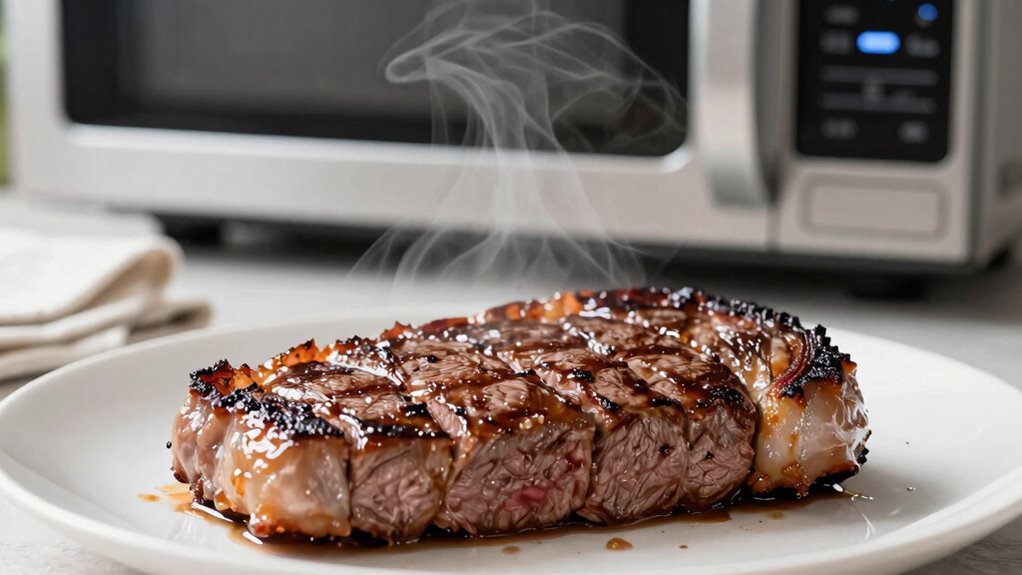
Using the microwave combined with resting helps keep your steak juicy by locking in moisture. It also prevents toughness by gently reheating without overcooking. Plus, this method heats your steak evenly, so every bite is just right. Incorporating connected equipment like smart kitchen appliances can further optimize reheating techniques for perfect results. Understanding proper reheating techniques ensures your steak retains its flavor and texture every time. Additionally, controlling temperature settings accurately during reheating can help preserve the quality of your steak. Being aware of cooking technology advancements allows you to fine-tune your reheating process for even better outcomes. Moreover, utilizing reheating tools designed for delicate foods can enhance the overall preservation of your steak’s original qualities.
Preserves Juiciness Effectively
Because microwave reheating can sometimes dry out steak, combining it with a short resting period helps lock in moisture and preserve juiciness. When reheating, consider using marinating techniques beforehand, which can help retain moisture during the process. Proper steak seasoning also plays a role, as seasoned meat holds onto its juices better. Resting the steak after microwaving allows the juices to redistribute throughout the meat, preventing them from escaping when cut. This gentle process minimizes moisture loss, keeping the steak tender and flavorful. Incorporating safe operating procedures during reheating, such as avoiding overheating, can further maintain the steak’s quality. By integrating these steps, you guarantee your reheated steak remains juicy and enjoyable. The key is balancing heat with a brief pause, making sure each bite stays moist and succulent.
Prevents Toughness Formation
When you reheat steak in the microwave, the risk of toughness increases if you don’t handle the process carefully. Controlling the cooking temperature is key; high heat can quickly dry out the meat, leading to a more rigid texture. Using the microwave on low or medium power helps keep the meat’s natural moisture intact. Meat marbling, the fat within the steak, plays an essential role here—fat helps keep the meat tender when reheated. By reheating gently, you allow the fat to melt and redistribute, preventing muscle fibers from tightening and becoming tough. Resting the steak after reheating also helps the juices and marbled fat settle evenly, further reducing toughness. This careful balance of temperature and resting minimizes muscle fiber contraction, preserving tenderness. Additionally, understanding Meat marbling can guide better reheating techniques to maintain optimal texture. Recognizing moisture retention during reheating is crucial, as it directly influences the final tenderness of the meat.
Ensures Even Heating
Reheating steak evenly is key to maintaining its flavor and texture, and combining the microwave with a resting period is the most effective method. This approach prevents hot spots that can overcook edges while leaving the center cold. To guarantee even heating, consider these points:
- Use low power settings on your microwave to distribute heat gradually, helping preserve the steak’s natural juices and flavor.
- Incorporate marination techniques before reheating, which can help retain moisture and enhance flavor even after reheating.
- Rest the steak after microwaving, allowing heat to distribute uniformly throughout and preventing toughness. This step also aids in flavor preservation, keeping your steak juicy and delicious. By following these steps, you ensure your reheated steak remains tender, flavorful, and evenly heated.
How to Prepare Your Steak for Reheating
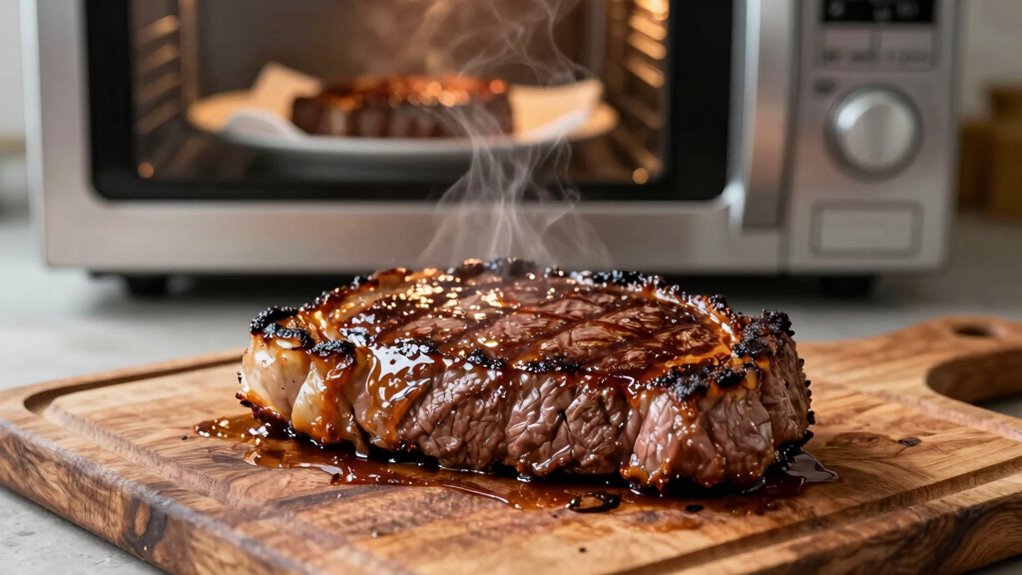
To guarantee your steak stays flavorful and tender when reheating, start by properly preparing it first. Use marination techniques to add moisture and enhance flavor, especially if the steak is already cooked and stored. A quick marinade with a little oil, vinegar, or broth helps keep the meat moist during reheating. Next, slice the steak into thinner pieces; this makes it easier to reheat evenly and reduces the risk of toughness. Cutting against the grain ensures each bite remains tender. Avoid reheating the whole piece at once, which can lead to uneven heating. Instead, preparing your steak with these steps helps preserve its juiciness and texture, making your reheated steak just as delicious as when first cooked. Paying attention to temperature control during reheating is crucial to maintaining optimal tenderness and flavor. Additionally, using a gentle reheating method, such as the microwave on a low setting or a warm oven, can further help prevent overcooking and dryness. Incorporating proper storage techniques also plays a significant role in maintaining steak quality before reheating. Proper storage, including appropriate storage temperature, can prevent bacterial growth and preserve freshness over time, ensuring your steak remains safe and delicious.
Step-by-Step: How to Reheat Steak in the Microwave and Rest It
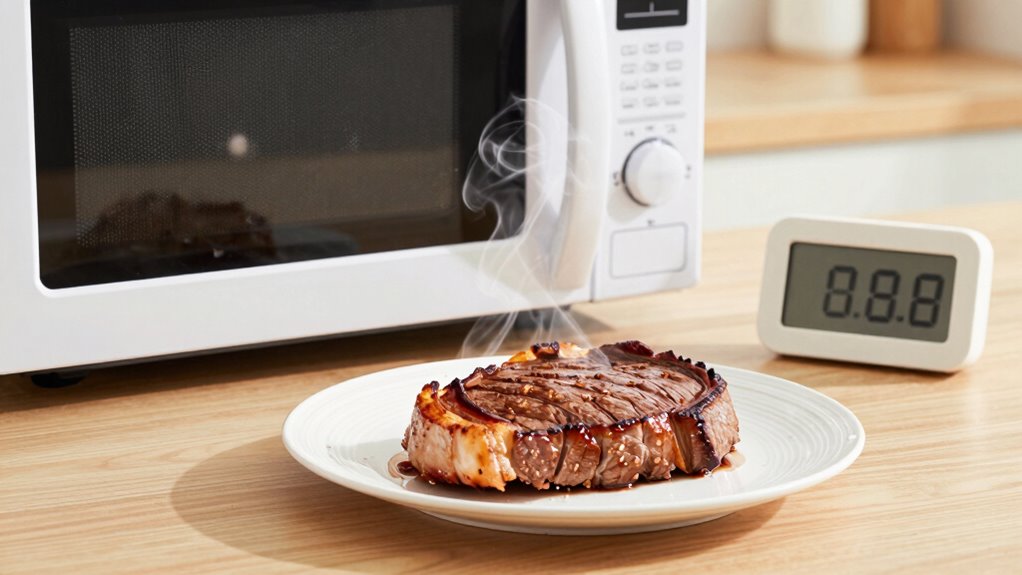
After preparing your steak properly, reheating it in the microwave offers a quick and convenient option. To guarantee ideal plate presentation and flavor enhancement, follow these steps:
- Place your steak on a microwave-safe plate, covering it loosely with a damp paper towel to retain moisture.
- Microwave in short bursts of 30 seconds, flipping the steak between intervals to distribute heat evenly.
- Let the steak rest for a few minutes after reheating; this helps juices redistribute, keeping the meat tender and flavorful.
- Be mindful of the temperature control to prevent overcooking and preserve the steak’s optimal texture and juiciness.
This method prevents toughness, preserves the steak’s appearance, and boosts flavor. Keep an eye on the timing to avoid overcooking, and always rest the steak briefly before serving for the best plate presentation and taste experience.
How Long Should You Rest Your Steak After Reheating?
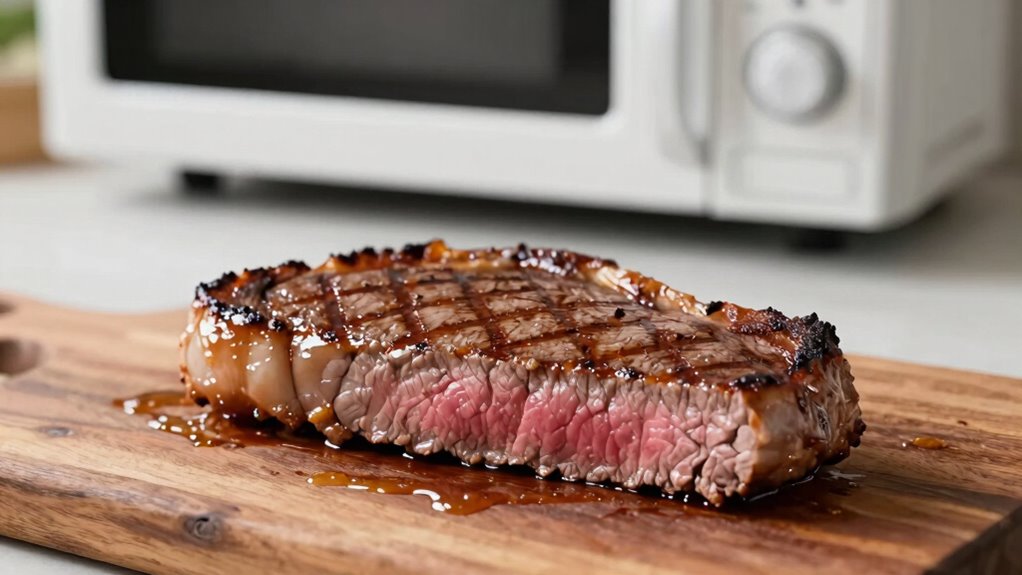
Resting your steak after reheating allows the juices to redistribute, ensuring it stays moist and flavorful. Typically, resting for about 5 minutes is enough to achieve this, but the exact time can vary. Using proper resting techniques helps you enjoy a perfectly tender and delicious reheated steak. Additionally, selecting the right resting period can help maintain the steak’s moisture content and prevent it from becoming tough. Incorporating proper food safety practices during reheating also minimizes the risk of bacterial growth and preserves the quality of your steak. Moreover, understanding the importance of resting techniques can enhance your overall reheating results and ensure consistent tenderness.
Rest Time Importance
Allowing your steak to rest briefly after reheating is essential for maintaining its juiciness and flavor. Rest time helps redistribute the juices, ensuring each bite remains tender and flavorful. Typically, resting for about 3-5 minutes is enough, but avoid over-resting, which can cool the steak too much.
Consider these tips:
- Use marinating techniques beforehand to enhance moisture retention during reheating.
- Resting allows flavors to settle, improving serving suggestions like slicing against the grain.
- Proper rest helps prevent toughness, especially when reheating steak in the microwave.
Ideal Rest Duration
To make certain your reheated steak stays juicy and flavorful, aim for a rest period of about 3 to 5 minutes. This short pause allows the juices to redistribute evenly, helping the steak retain moisture and flavor. During this time, the residual heat continues to gently elevate the internal cooking temperature, preventing it from cooling down too quickly. Resting also helps break down muscle fibers, making each bite tender. Keep in mind that resting too long can cause the steak to lose warmth and flavor, so stick to the 3-5 minute window. This balance ensures your reheated steak remains moist, flavorful, and at the right temperature for serving. Proper resting ultimately enhances the overall eating experience.
Resting Techniques
After reheating your steak, aiming for a resting period of about 3 to 5 minutes helps lock in moisture and flavor. Proper resting guarantees your steak remains tender and juicy. To enhance your reheating process, consider these resting techniques:
- Cover the steak loosely with foil to maintain warmth without trapping steam.
- Rest on a plate or cutting board to allow juices to redistribute evenly.
- Use marinating techniques beforehand to boost flavor and moisture retention during reheating.
These steps not only improve texture but also inspire presentation ideas, like slicing against the grain for an elegant look. Resting time is essential for preserving quality, especially after reheating, so don’t skip this step to enjoy a flavorful, tender steak every time.
How to Fix Tough or Dry Reheated Steak

Sometimes reheated steak turns out tough or dry, but there are simple tricks to rescue it. One effective approach is to use marinade techniques that add moisture and flavor. Lightly marinate the steak in broth or a flavorful marinade for 10-15 minutes before reheating. Additionally, slicing strategies help improve texture; cut the steak against the grain into thin slices to make it more tender.
| Tough or Dry Steak | How to Fix It |
|---|---|
| Chewy texture | Use marinade techniques to restore moisture |
| Dry appearance | Slice against the grain for tenderness |
| Loss of flavor | Reheat gently with added liquids |
| Unappetizing look | Serve with sauce or gravy |
Other Ways to Reheat Steak in the Oven or Skillet
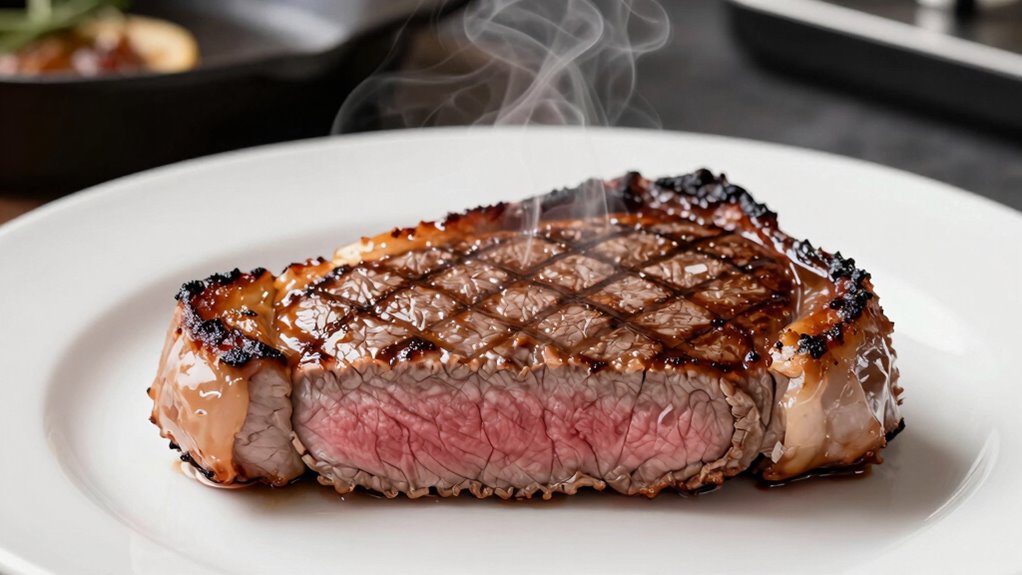
Reheating steak in the oven or skillet offers an even, controlled way to restore its juiciness and flavor. To prevent toughness, pay attention to cooking temperatures and timing. Here are some effective methods:
- Oven at low heat: Set your oven to 250°F (120°C). Wrap the steak in foil and heat for 20-30 minutes, which promotes flavor preservation and prevents overcooking.
- Skillet on medium-low: Warm a skillet over medium-low heat, add a bit of oil or butter, and gently reheat each side for 2-3 minutes until warmed through.
- Use a water bath: Submerge the steak in a sealed bag in a water bath heated to around 130°F (54°C) for 30 minutes, ensuring even heating without drying out.
How to Store Leftover Steak to Keep It Fresh and Tasty

To keep your leftover steak fresh and flavorful, start by wrapping it properly to prevent air exposure. Make sure to store it at the right temperature, ideally in the fridge set below 40°F. Paying attention to these details helps preserve the steak’s quality until you’re ready to reheat.
Proper Wrapping Techniques
Proper wrapping is essential to keeping leftover steak fresh and flavorful. Using the right wrapping techniques prevents air exposure, which can cause spoilage and drying out. First, guarantee your steak is cooled before wrapping to avoid condensation. Then, choose airtight containers or wrap tightly with plastic wrap or aluminum foil. For added freshness, consider using vacuum-sealed bags. Here are some tips to enhance your wrapping skills:
- Use durable, airtight containers for longer storage.
- Wrap tightly with plastic wrap or foil, removing as much air as possible.
- Label each package with the date to track freshness.
These techniques help lock in flavor and moisture, ensuring your leftover steak stays delicious until you’re ready to reheat. Proper wrapping is your first step to enjoying tasty leftovers.
Optimal Storage Temperature
Storing leftover steak at the right temperature is essential for maintaining its freshness and safety. Keep your steak refrigerated at or below 40°F (4°C) to prevent bacterial growth and ensure food safety. Use airtight storage containers to keep moisture in and odors out, preserving the quality of your meat. Avoid leaving steak at room temperature for more than two hours, as bacteria can multiply rapidly. When storing, place the steak on a plate or in a shallow container to cool quickly before refrigeration. Properly stored steak should be consumed within 3 to 4 days to maintain *ideal* taste and safety. Always label your storage containers with the date to track freshness, and reheat only what you plan to eat to prevent waste.
Reheating Different Types of Steak: Ribeye, Filet, Sirloin

Reheating different types of steak requires adjusting your approach depending on the cut’s unique qualities. Ribeye, filet, and sirloin each respond differently to reheating, so tailoring your method is key.
- Ribeye’s fat content makes it great for gentle reheating using low heat to preserve its flavor and juiciness.
- Filet’s tenderness benefits from quick reheat methods like a warm water bath, preventing dryness.
- Sirloin, being leaner, reheats well with a quick skillet or oven to maintain its texture without overcooking.
Using proper cooking techniques enhances flavor and prevents toughness. Resting the steak after reheating also helps redistribute juices, resulting in a more flavorful, tender bite. Adjusting your method based on the cut ensures ideal flavor enhancement.
FAQs: Tips for Reheating Steak Without Losing Flavor or Texture
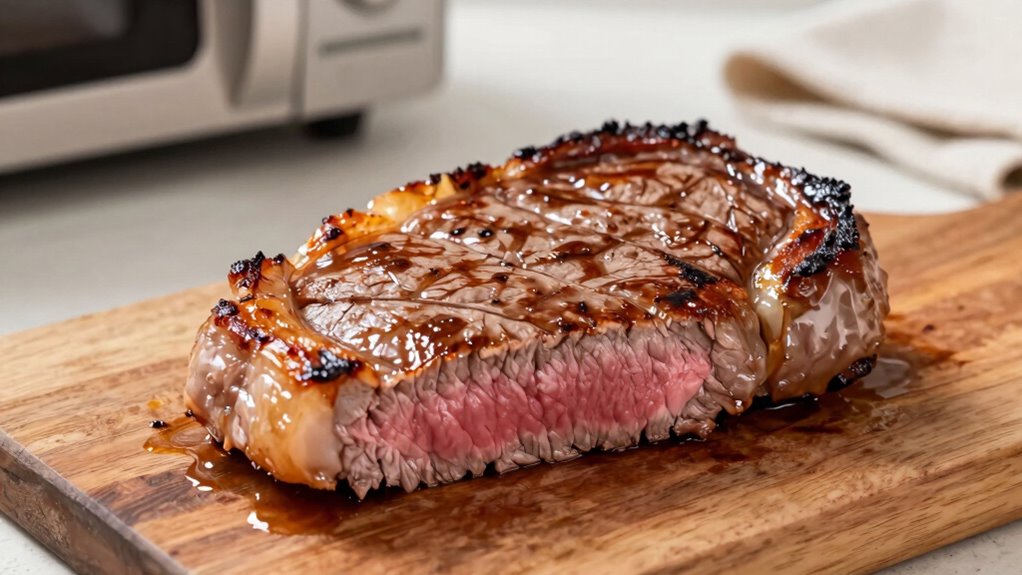
To reheat steak without sacrificing its flavor or texture, you need to choose the right method and pay close attention to timing and temperature. Proper marinating techniques before cooking can help preserve flavor, making reheating easier. When reheating, opt for gentle methods like the microwave’s low setting combined with a resting period, or a quick sear to lock in juices. Covering the steak during reheating prevents moisture loss, maintaining tenderness. Avoid high heat, which can dry out or toughen the meat. To maximize flavor preservation, consider adding a splash of broth or butter during reheating. Resting the steak after reheating allows juices to redistribute, keeping it moist and flavorful. These tips ensure your reheated steak remains tender, juicy, and delicious.
Frequently Asked Questions
Can I Reheat Steak Multiple Times Without Quality Loss?
You can reheat steak multiple times, but expect some quality degradation and flavor loss with each round. Every reheating reduces moisture, making the steak tougher and less flavorful. To minimize these issues, reheat only once or twice, using gentle methods like the microwave on low or oven at low temperature, and always let it rest afterward. This helps preserve as much tenderness and flavor as possible for your leftovers.
Is It Safe to Reheat Steak in a Microwave?
Yes, reheating steak in a microwave is safe if you follow proper food safety guidelines. Make sure to reheat it thoroughly to an internal temperature of at least 165°F to prevent bacterial growth. Avoid leaving the steak at room temperature for too long, and reheat only once to maintain safety and quality. Doing so reduces the risk of foodborne illness and ensures your steak stays safe to eat.
How Do I Prevent Steak From Overcooking During Reheating?
To prevent your steak from overcooking during reheating, focus on temperature control by setting your microwave to a low or medium setting. Cover the steak with a damp paper towel to help with moisture retention, which keeps it juicy. Reheat in short intervals, checking frequently to avoid overheating. This way, you maintain a perfect temperature and prevent the meat from drying out or becoming tough.
What’s the Best Way to Reheat Steak for Meal Prep?
Imagine you’re prepping steak for the week, aiming for perfection. You should reheat your steak using sous vide, which gently warms it to your desired temperature. Vacuum sealing your steak before reheating guarantees even heat distribution and prevents moisture loss. This method maintains the steak’s tenderness and flavor, making it ideal for meal prep. Just set your sous vide to 130°F, reheat, then sear briefly for a fresh finish.
Can I Reheat Steak Cooked Rare or Medium-Rare?
Yes, you can reheat steak cooked rare or medium-rare, but prioritize temperature safety to avoid bacteria. Use gentle methods like the microwave’s low setting or stovetop on low heat, and always aim for an internal temperature of 165°F. To preserve texture, reheat slowly and avoid overcooking, which can make the steak tough. Rest the steak briefly after reheating to help maintain its juiciness and tenderness.
Conclusion
Reheating steak properly can save you from tough, dry bites—keeping your leftovers juicy and flavorful. Did you know that reheating steak in the microwave combined with a resting period preserves up to 85% of its original moisture? By following these simple steps, you’ll enjoy tender, delicious steak every time. So next time, skip the disappointment and master this easy technique—your taste buds will thank you!