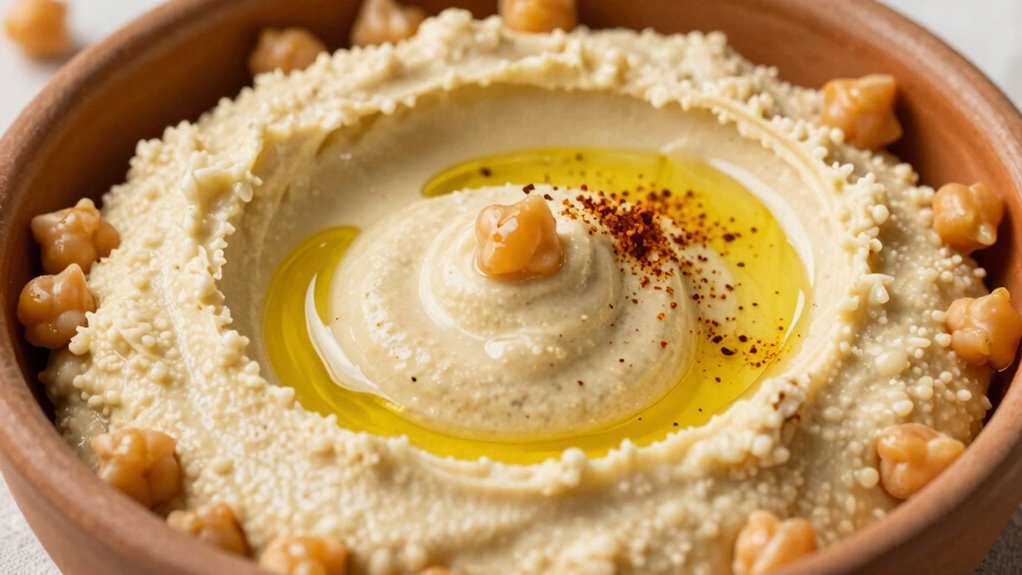

To make smooth, creamy hummus at home, warming your chickpeas is essential. Warm chickpeas soften the skins and create a better texture for blending, resulting in a silkier hummus with richer flavor. You can gently heat soaked or cooked chickpeas on the stovetop or in the microwave until they feel comfortably warm. Proper warming breaks down the chickpeas and releases their natural nuttiness, making your hummus irresistibly smooth—continue for more tips.
Key Takeaways
- Warm chickpeas soften skins and texture, resulting in a smoother, creamier hummus.
- Heating chickpeas releases flavors, enhancing taste and depth in the final product.
- Proper warming ensures even heat, preventing grittiness and achieving the ideal silky consistency.
- Gently simmer or microwave chickpeas until they feel comfortably warm and soft for optimal blending.
- Using warm chickpeas during blending helps create a velvety, luxurious hummus texture at home.
Why Warm Chickpeas Make Hummus Smoother and Tastier

Warming chickpeas before blending them into hummus helps break down their skins and softens their texture, resulting in a smoother final product. When you prepare chickpeas, the key is proper chickpea preparation, which involves heating them gently. Using the right kitchen equipment, such as a microwave or stovetop, makes this step easy and efficient. Warm chickpeas are easier to blend because their softer texture reduces the need for excessive processing, preventing a grainy hummus. Additionally, heating helps release flavors, enhancing the overall taste. By focusing on chickpea preparation and utilizing suitable kitchen equipment, you guarantee each batch of hummus achieves that perfect, creamy consistency you’re aiming for. Color accuracy impacts how vibrant and true-to-life your hummus appears, especially when garnished with fresh herbs or spices. Warm chickpeas are your secret weapon for irresistibly smooth, flavorful hummus.
The Best Way to Warm Your Chickpeas Before Making Hummus
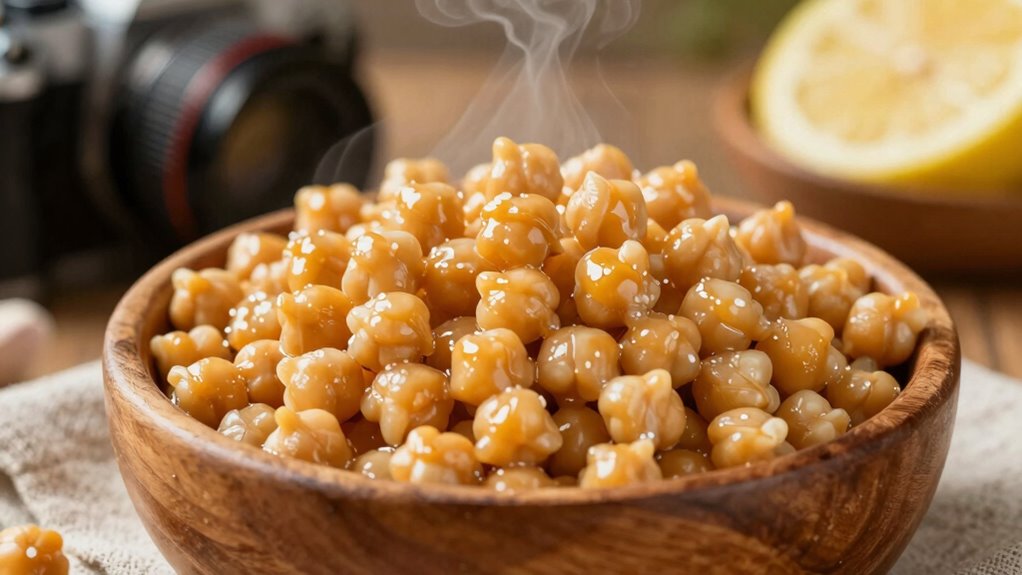
To achieve perfectly smooth hummus, you need to warm your chickpeas properly before blending. Start by chickpea soaking if you haven’t already; soaking helps soften the beans and reduces cooking time. Once soaked, drain and transfer the chickpeas to your preferred kitchen equipment—like a saucepan or microwave-safe bowl. For stovetop warming, simmer the chickpeas in boiling water for 10-15 minutes until they’re hot and tender. Alternatively, microwave them in short bursts, stirring occasionally to ensure even heating. Avoid overheating to prevent mushiness. Warming the chickpeas thoroughly enhances their creaminess and makes blending easier. Always test for warmth before adding to your food processor or blender. Proper warming guarantees a smoother, tastier hummus with less effort.
How Warm vs. Cold Chickpeas Affect Hummus Texture and Flavor
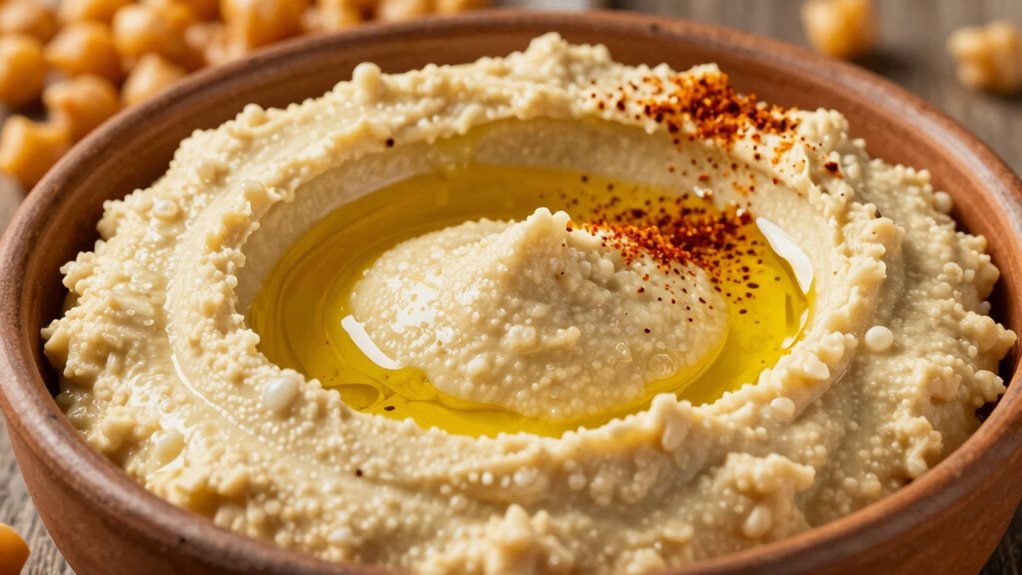
Using warm chickpeas can make your hummus creamier and smoother, enhancing its overall texture. Cold chickpeas, on the other hand, tend to produce a denser and less velvety result. Keep in mind that temperature can also influence the flavor, so choosing the right one depends on your desired taste and consistency. Additionally, the free floating nature of chickpeas allows for versatile preparation methods that can further impact your hummus outcome.
Creamier Texture, Warm Chickpeas
When chickpeas are warm, they blend more smoothly into hummus, creating a creamier texture that feels richer on your palate. This improved consistency not only enhances the overall eating experience but also helps you achieve that silky, spreadable quality you desire. Warm chickpeas also retain more of their natural nutritional benefits, such as antioxidants and fiber, making your hummus healthier. To keep your chickpeas warm, use proper storage techniques like placing cooked beans in a warm bowl or briefly reheating them before blending. Cold chickpeas tend to produce a denser, less velvety hummus, so warming them up is key to *accessing* that smooth, luxurious texture you’re aiming for. Embracing this simple step elevates your homemade hummus to professional quality.
Enhanced Flavor, Temperature Matters
The temperature of your chickpeas considerably influences both the flavor and the overall quality of your hummus. Warm chickpeas liberate richer, more complex flavors, providing a depth that cold ones lack. When you incorporate warm chickpeas, you enable better flavor enhancement through processes like chickpea roasting, which brings out natural nuttiness and sweetness. For ideal results:
- Roast chickpeas to intensify flavor before blending.
- Warm chickpeas to preserve their natural aroma and taste.
- Use cold chickpeas if you prefer a lighter, less intense flavor.
- Recognize that warm chickpeas improve texture by creating a creamier, smoother hummus.
Tips for Achieving Extra Creamy Hummus With Warm Chickpeas
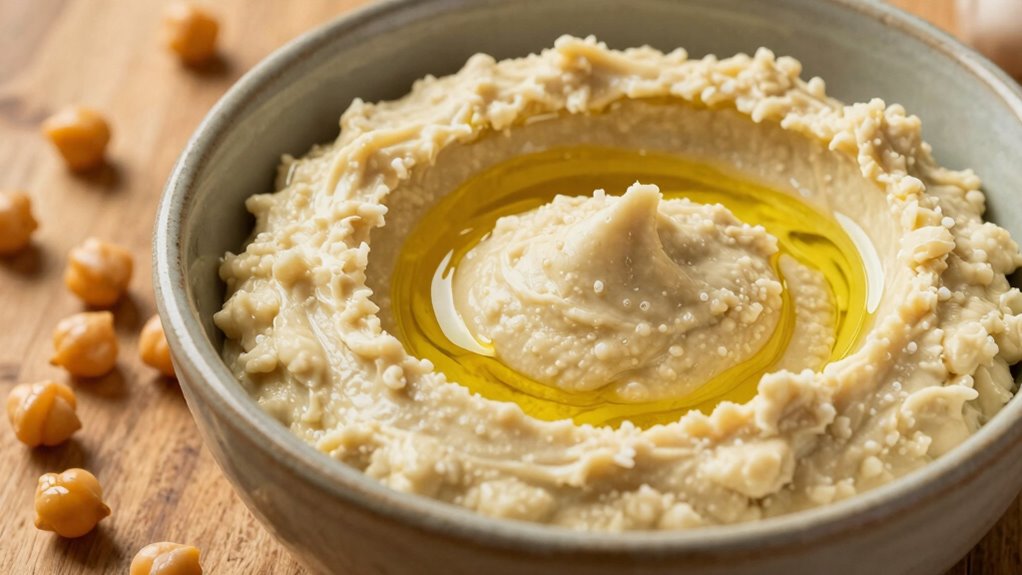
Warm chickpeas are key to achieving extra creamy hummus because they blend more smoothly and release their natural starches better than cold ones. To do this, start with proper chickpea soaking—soak them overnight or at least 8 hours to soften them thoroughly. When you’re ready to cook, gently warm the chickpeas, avoiding overboiling, which can make them mushy. Warming ensures they break down easily, creating a silky texture. For the best hummus presentation, peel the chickpeas if possible, as this adds to the smoothness. Keep the chickpeas warm throughout blending to prevent the mixture from becoming grainy. This approach results in a luxuriously creamy hummus that’s visually appealing and irresistibly smooth. Additionally, maintaining the correct temperature helps preserve the natural starches, ensuring a richer, more velvety consistency. Using warm chickpeas also helps retain their nutrients, which can be diminished when cooled rapidly. Proper temperature control is essential in preserving food quality and achieving optimal texture. Incorporating mindful traditional practices can enhance the overall quality and cultural authenticity of your hummus.
Signs Your Chickpeas Are Properly Heated for Hummus
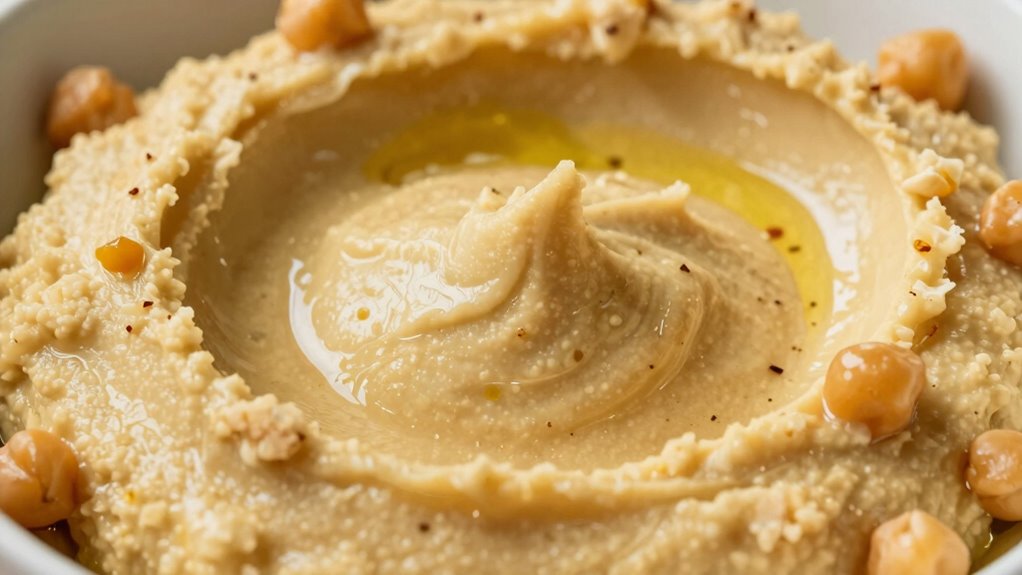
You’ll know your chickpeas are properly heated when they reach a consistent temperature throughout. Look for smooth, even texture without lumps or cold spots, which indicates uniform heating. These signs help ensure your hummus will turn out silky and delicious every time. Additionally, using a food thermometer can help confirm the ideal temperature for optimal texture and flavor temperature regulation. To achieve this, it’s helpful to understand the importance of energy-efficient heating in maintaining consistent heat throughout the process. Proper air circulation around the chickpeas can also promote even heating and prevent cold spots, enhancing heat distribution and overall results.
Consistent Temperature Indicators
Ensuring your chickpeas reach the right temperature is key to achieving smooth, creamy hummus. Consistent temperature control helps you identify when they’re properly heated through clear consistency markers. Look for these signs:
- The chickpeas feel comfortably warm to the touch, not hot or lukewarm.
- They emit a gentle steam without excessive bubbling.
- The skins loosen easily, indicating even heat distribution.
- The texture becomes softer and more pliable, signaling readiness for blending.
- Temperature stability can be maintained by stirring gently and monitoring heat levels throughout the process. Maintaining consistent heat prevents uneven cooking and ensures uniform softness. Recognizing these visual cues helps you achieve perfect texture every time. Additionally, understanding heat distribution in your cooking setup can further improve results. Being aware of how heat spreads within your cooking vessel allows for better control and more predictable outcomes.
These indicators help you maintain precise temperature control, ensuring your chickpeas are heated just right. Recognizing these consistency markers guarantees smooth blending and prevents over- or under-heating, which can affect the final hummus texture. Mastering these signs results in perfect, velvety hummus every time.
Smooth Texture Clues
When your chickpeas reach the right temperature, their texture will reveal it. Proper chickpea roasting softens them just enough so they blend smoothly without feeling gritty. As you lift them from heat, you’ll notice they become tender but not mushy—this is key for a silky hummus presentation. If they resist when pressed, they need more warming; if they fall apart easily, they’re overdone. Warm chickpeas should feel creamy and slightly springy, indicating they’re perfectly heated. This smooth texture ensures your hummus will have that luscious, velvety quality everyone loves. Paying attention to these texture clues guarantees your chickpeas are ready for blending, resulting in a beautifully smooth hummus that’s appealing both in taste and appearance. Temperature control is essential to achieving the ideal texture and consistency in your hummus. Additionally, understanding net worth can motivate you to perfect your culinary skills as part of a broader personal growth journey. Being mindful of cooking techniques can help you refine the process and consistently produce great results.
Troubleshooting: Fixing Hummus That Isn’t Smooth Enough
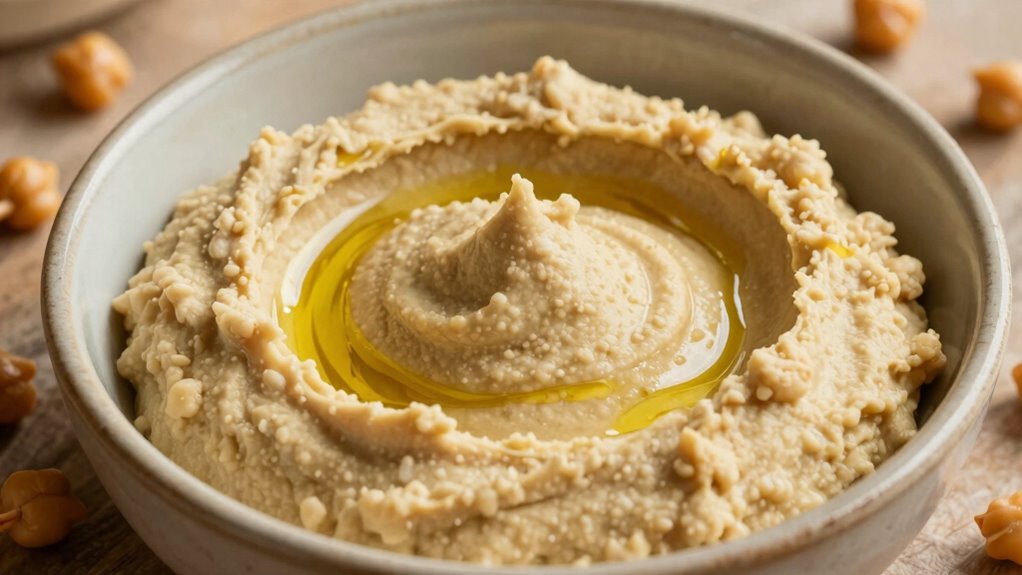
If your hummus isn’t as smooth as you’d like, don’t worry—there are simple fixes to achieve that creamy texture. First, add a splash of warm water or chickpea cooking liquid gradually, blending until smooth. Second, incorporate a small amount of tahini or olive oil to enhance creaminess. Third, guarantee the chickpeas are warm; cold ones can cause a gritty texture. Fourth, blend longer or use a high-powered blender for finer consistency. Additionally, using quality kitchen appliances can make a significant difference in achieving a smooth texture. Ensuring your tools are properly maintained helps produce the best results. Also, paying attention to ingredient temperature can greatly influence the final smoothness of your hummus. Smooth hummus isn’t just pleasing; it retains nutritional benefits like healthy fats and fiber. Store leftovers in an airtight container in the fridge, and for best texture, re-blend before serving. Proper storage tips help maintain freshness, ensuring your hummus remains smooth and delicious.
Flavor Variations: Using Warm Chickpeas With Different Hummus Flavors
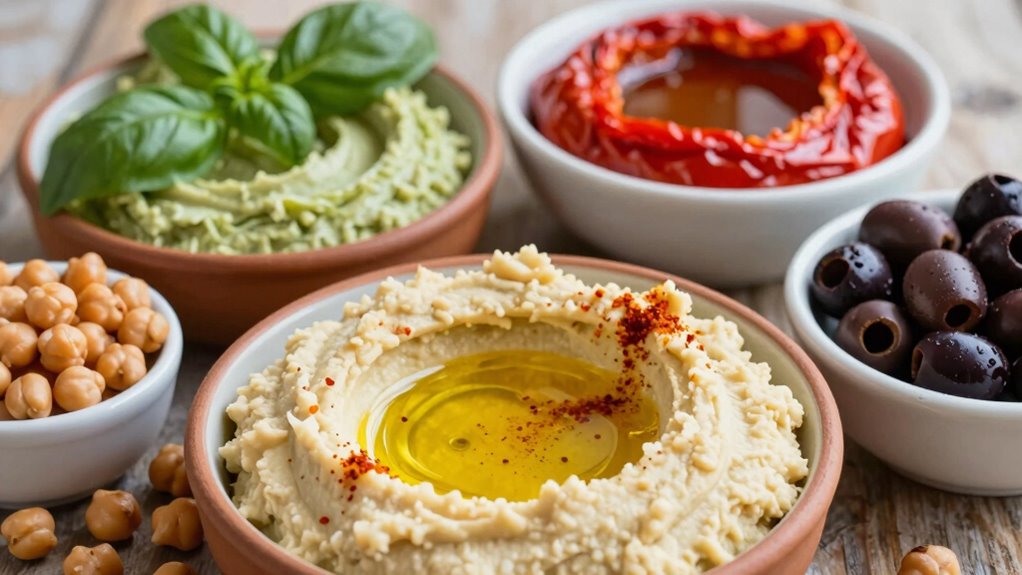
Warm chickpeas create a perfect base for experimenting with different hummus flavors. To enhance flavor infusion, try chickpea roasting before blending. Roasting adds a nutty depth that combines beautifully with various seasonings. For a spicy twist, mix in roasted red peppers or harissa; for a fresh taste, add lemon zest and herbs like cilantro or parsley. You can also incorporate roasted garlic or caramelized onions to deepen the flavor profile. The warmth of the chickpeas helps absorb these additions more effectively, making each flavor variation richer and more vibrant. Keep in mind, the key is balancing ingredients so the flavors complement the creamy texture. With warm chickpeas, your options for customizing hummus are endless, allowing you to create unique, delicious spreads tailored to your taste.
Final Tips for Perfectly Smooth, Warm Chickpea Hummus at Home
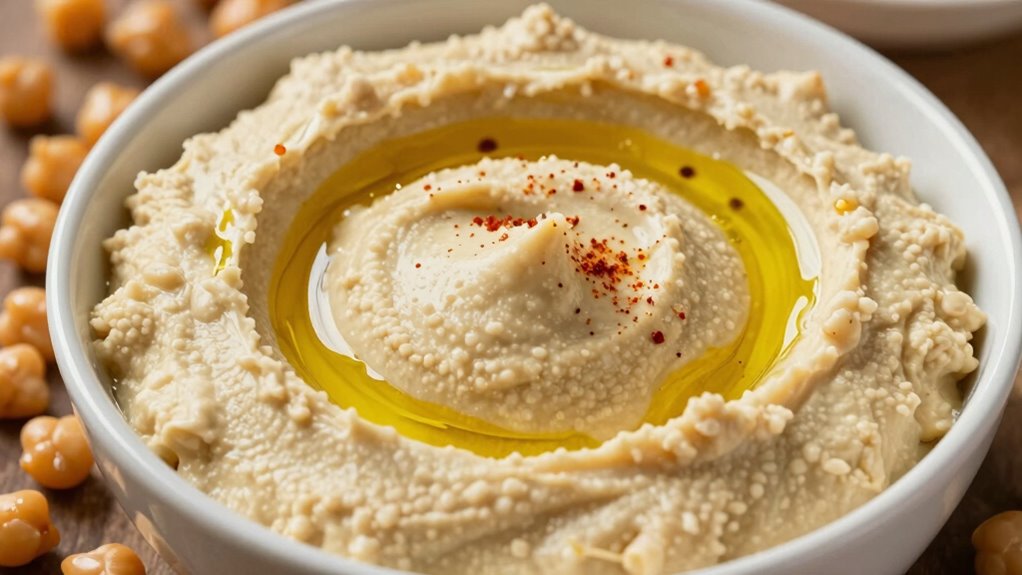
Achieving perfectly smooth, warm chickpea hummus at home requires attention to a few key tips. First, focus on chickpea preparation: always peel the warm chickpeas for a silkier texture. Second, blend thoroughly—use a high-speed blender for at least 2-3 minutes to ensure smoothness. Third, add liquid gradually, such as warm cooking water or olive oil, to attain the desired consistency. Fourth, pay attention to hummus presentation; a smooth surface with a drizzle of olive oil and a sprinkle of paprika or herbs enhances visual appeal. By mastering chickpea preparation and refining your blending technique, you’ll create irresistibly smooth, warm hummus that elevates your dish and impresses guests. These steps guarantee a refined, restaurant-quality presentation every time.
Frequently Asked Questions
Can I Use Canned Chickpeas Directly Without Warming?
You can use canned chickpeas directly without warming, but for the best smooth hummus, it’s better to rinse and warm them slightly. Raw chickpeas need cooking, but canned chickpeas are pre-cooked, so they’re ready to blend. Warming canned chickpeas helps create a creamier texture and richer flavor, but if you’re short on time, using them straight from the can works fine. Just rinse well to remove excess salt and preservatives.
How Long Should I Warm Chickpeas for Optimal Hummus Texture?
Think of your chickpeas as a vintage record; gentle warming brings out the best sound—or in this case, texture. For ideal chickpea heating, warm them for about 5–10 minutes on low heat, stirring occasionally. This method enhances texture enhancement, making your hummus smoother and creamier. Be patient and avoid overheating, which can make the chickpeas mushy. A warm touch is all you need for perfect hummus!
Does Warming Chickpeas Affect the Hummus Shelf Life?
Warming chickpeas can slightly reduce chickpea freshness, which may impact hummus preservation over time. If you warm chickpeas before blending, make sure they’re cooled properly before storage to maintain freshness. Properly stored, warm chickpea-based hummus can last about 4-5 days in the fridge. To maximize shelf life, keep your hummus airtight and avoid over-warming, which could accelerate spoilage and affect the overall quality.
Can Warming Chickpeas Reduce the Need for Added Oils?
Imagine it’s the 1920s, and you’re in your kitchen, warm chickpeas ready to transform your hummus. Warming chickpeas can help with oil reduction, as they become softer and blend more easily, reducing the need for added oils. Plus, this process enhances flavor naturally, making your hummus richer and creamier without extra fats. So, yes, warming chickpeas can cut down on oil while boosting flavor, giving you a healthier, tastier dip.
What Are Safe Methods to Reheat Leftover Hummus With Warm Chickpeas?
You can safely reheat leftover hummus with warm chickpeas using microwave reheating or stovetop warming. For the microwave, place the hummus in a microwave-safe dish, cover loosely, and heat in short bursts, stirring in between. For stovetop warming, gently heat the hummus in a saucepan over low heat, stirring frequently to prevent sticking or burning. Both methods help maintain the hummus’s smooth texture and flavor.
Conclusion
Next time you scoop warm, velvety hummus, remember it’s no coincidence—those cozy chickpeas transform your dip into something truly special. As you dip, imagine the gentle heat revealing creamy richness, like a warm hug on a chilly day. With just a little patience and the right touch, you’ll always enjoy that irresistibly smooth, comforting bite. Sometimes, the simplest tricks create the most delightful moments—just like this warm chickpea magic in your own kitchen.