🔍 Read the full analysis: Strangozzi Al Tartufo Nero: Umbria's Truffle Pasta At Home on Mad Tasting

Get kitchen staples and gadgets delivered free — and shop member deals
- Fast, free delivery on millions of items
- Access to Prime Big Deal Days deals on October 6–7
- Prime Video, Amazon Music and more included
TL;DR
This article provides a detailed guide to making traditional Umbrian strangozzi al tartufo nero, emphasizing gentle cooking and quality ingredients. It explains the importance of truffle selection, pasta preparation, and timing to preserve aroma, helping home cooks recreate this signature dish.
Home cooks can now prepare authentic Strangozzi al Tartufo Nero, a signature Umbrian black truffle pasta, following a detailed method that preserves the dish’s delicate aroma and rustic texture. This development comes as culinary interest in regional Italian dishes grows, offering a way for enthusiasts to experience Umbrian flavors without traveling.
The guide emphasizes using fresh, high-quality black truffles, preferably Tuber melanosporum for winter dishes, or milder varieties like Tuber aestivum in summer, with recommended quantities of 10–20 grams per person. The pasta, traditionally made with flour and water, should be cooked until just firm, then combined with a simple sauce of warm extra-virgin olive oil, garlic, and pasta water. The key to preserving the truffle’s aroma is to add most of it off the heat, after the pasta is coated and the sauce has thickened. The method involves gentle heating to release the truffle’s fragrance without frying, ensuring maximum aroma and flavor. The pasta shape, strangozzi, with its thick, irregular strands, is ideal for holding the oil-based sauce and tiny truffle particles, making it more flavorful than smoother pasta like spaghetti.Strangozzi al Tartufo Nero
Bring Umbria’s signature black truffle pasta home with thick eggless noodles, quality olive oil, gentle heat, and one crucial final move: add most of the truffle after the pan leaves the flame.
Four ingredients carry the dish
Restraint is the recipe. Each ingredient has a clear role, while cream, heavy cheese, and aggressive seasoning can obscure the truffle’s woodland character.
Strangozzi
Thick, irregular flour-and-water strands create friction, catching olive oil, starchy water, and tiny truffle particles better than smooth spaghetti.
Fresh black truffle
Choose aromatic, firm specimens. Tuber melanosporum suits winter cooking; milder Tuber aestivum may require a more generous portion in summer.
Olive oil and garlic
Use fragrant extra-virgin olive oil and gently warmed garlic. The goal is a quiet aromatic base, not browned garlic or sizzling truffle.
A five-step aroma-preserving flow
Timing links every stage. Reserve pasta water, build a light emulsion, and keep the most aromatic truffle away from direct heat.
Clean and divide
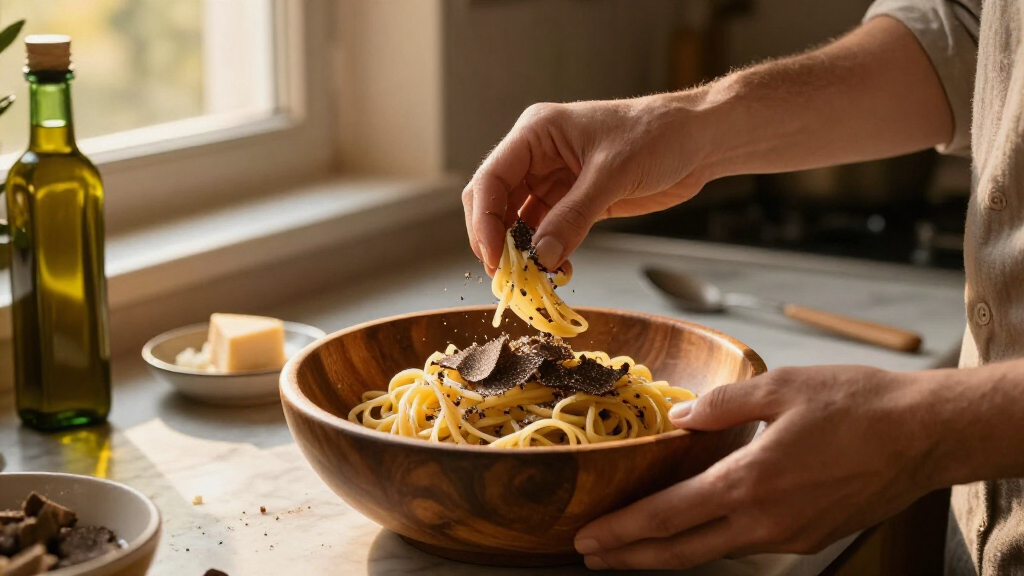
Brush the truffle clean. Finely grate a small portion and reserve the rest for shaving.
Warm gently
Heat olive oil with garlic over low heat. Fragrance should bloom without browning.
Cook just firm
Boil strangozzi until slightly firmer than the desired final texture. Save starchy water.
Coat and emulsify
Toss pasta with the warm oil and splashes of pasta water until glossy and cohesive.
Finish off heat
Remove the pan, fold in grated truffle, shave more over each plate, and serve immediately.
The lower the heat, the louder the truffle
Relative aroma retention shown below is a practical technique guide, not a laboratory measurement.
Choose by season and intensity
Fresh truffle delivers the clearest result. Preserved products can work in a pinch, but their aroma and texture rarely match a fresh specimen.
| Option | Aroma | Suggested amount | Heat tolerance | Best use |
|---|---|---|---|---|
| Tuber melanosporum | ✓ Deep and complex | 10–15 g per person | ~ Gentle warmth only | Winter preparation |
| Tuber aestivum | ~ Mild and nutty | 15–20 g per person | ~ Gentle warmth only | Summer preparation |
| Jarred truffle | ~ Variable | Adjust to product | ~ Brief warming | Convenient substitute |
| Dried truffle | ✗ Less vivid | Use sparingly | ✗ Avoid frying | Backup pantry option |
Decisions at a glance
The dish is simple enough for a weeknight, but its short ingredient list leaves little room to hide stale truffle, overcooked pasta, or scorched garlic.
What if strangozzi are unavailable?
Choose pici or tonnarelli. Their substantial texture holds an oil-based sauce and suspended truffle particles more effectively than thin, smooth pasta.
Can the dish be prepared ahead?
No. Cook, finish, and serve in one sequence. Add fresh truffle immediately before plating to protect its fleeting aroma.
How should the amount be adjusted?
Use less of an assertive winter truffle and more of a mild summer variety. Freshness and fragrance matter more than a rigid gram count.
What remains uncertain?
Exact aroma retention varies with species, age, storage, cooking time, and pasta texture. Treat the recommended range as a starting point.
An Umbrian chain of flavor
Norcia, Spoleto, and the Valnerina connect woodland truffle culture with a rustic eggless pasta designed to carry it.
Why Preserving Truffle Aroma Matters
This method highlights the importance of technique in maintaining the aromatic integrity of black truffles. Because truffle aroma is volatile, improper cooking—such as frying or overexposure to heat—can diminish its intensity. For home cooks, mastering this delicate process ensures an authentic experience, bringing a taste of Umbrian cuisine into their kitchens. The dish’s rustic appeal and earthy aroma make it a sought-after specialty, and replicating it correctly emphasizes the value of quality ingredients and precise timing in Italian cooking.
As an affiliate, we earn on qualifying purchases.
Umbrian Truffle Tradition and Regional Variations
Umbrian cuisine is renowned for its truffles, especially in areas like Norcia, Spoleto, and the Valnerina, where woodland conditions favor the growth of Tuber melanosporum. Historically, local farmers and foragers have harvested these prized fungi for centuries, integrating them into regional dishes like strangozzi. The pasta itself is a traditional, eggless noodle, crafted from simple ingredients—flour and water—that complement the earthy truffle flavor. Over recent years, interest in authentic regional recipes has surged, driven by food tourism and a desire to preserve culinary heritage. While the basic recipe remains unchanged, variations in truffle seasonality, species, and quality influence how the dish is prepared and enjoyed today.
“The secret to perfect black truffle pasta is gentle heat, quality olive oil, and restraint in adding the truffle. Overcooking or frying can obliterate the delicate aroma.”
— Mad Tasting
As an affiliate, we earn on qualifying purchases.
What Aspects of Truffle Preparation Are Still Unclear
While the guide provides a detailed method, some uncertainties remain regarding the optimal amount of truffle for different species and seasons, as well as the precise impact of varying cooking times on aroma retention. Additionally, the influence of different pasta shapes and cooking techniques on flavor absorption requires further exploration. The effect of storage and aging of fresh truffles on aroma preservation is also not fully clarified.
As an affiliate, we earn on qualifying purchases.
Next Steps for Home Cooks and Truffle Enthusiasts
Home cooks are encouraged to experiment with the recommended method, paying attention to truffle freshness and quality. Future developments may include more detailed guidance on truffle storage, alternative pasta shapes, and pairing suggestions. Culinary workshops and regional tours are likely to promote deeper understanding of Umbrian truffle cuisine, further enriching home preparation techniques.
As an affiliate, we earn on qualifying purchases.
Key Questions
What type of pasta is best for truffle sauce?
Strangozzi, with their thick, irregular shape and ridges, are ideal because they hold the oil and tiny truffle particles well. Alternatives include pici or tonnarelli if strangozzi are unavailable.
How much truffle should I use per serving?
Typically, 10–20 grams of fresh black truffle per person is recommended, depending on the species and season. Use more in summer varieties with milder aroma, and less for stronger winter truffles.
Can I prepare this dish ahead of time?
It is best served immediately after preparation to preserve the aroma. The pasta can be cooked and kept warm briefly, but adding the truffle should be done just before serving.
What is the key to preserving the truffle’s aroma?
The main technique is to add most of the truffle off the heat, after the pasta is coated and the sauce has thickened, avoiding frying or overexposure to direct heat.
Truffle products like preserved or jarred truffles can be used, but they often have less aroma. Dried truffles are another option, but freshness and quality vary, so use sparingly and adjust seasoning accordingly.
Source: Mad Tasting
Fall Picks
fall essentials
As an affiliate, we earn on qualifying purchases.