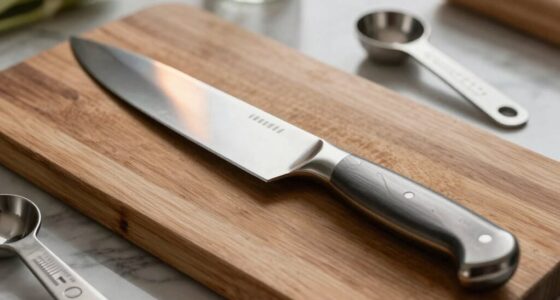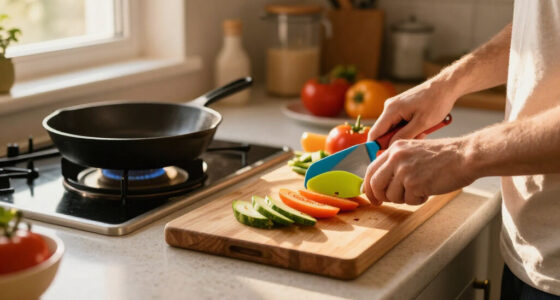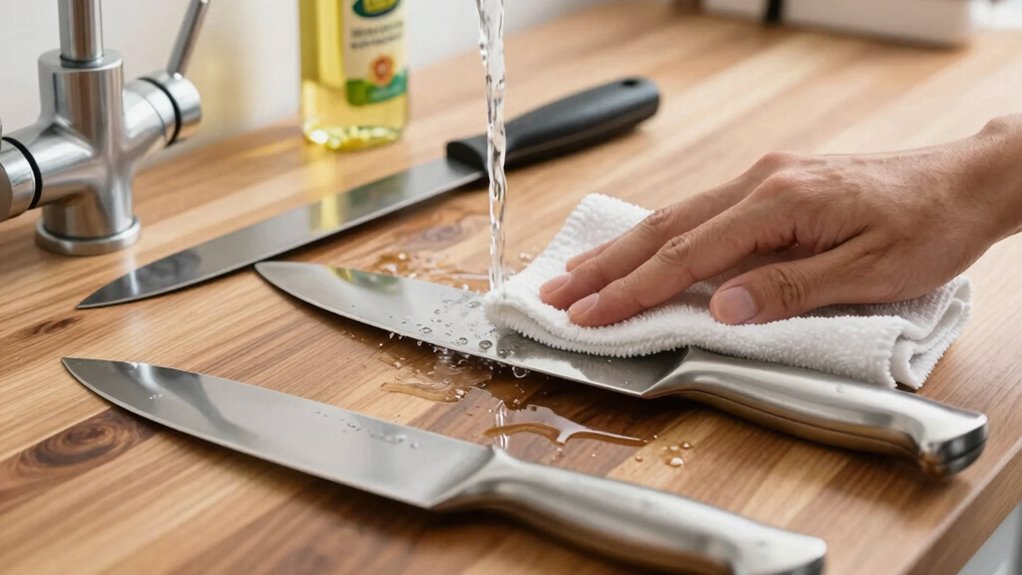

To keep your chef knives performing well, clean them with warm, soapy water using a soft sponge, then dry thoroughly to prevent rust. Hone your blades regularly and sharpen them periodically with a sharpening stone or electric sharpener for ideal sharpness. Store your knives properly with blade guards or in an organized block to avoid damage. Proper upkeep not only prolongs their lifespan but also keeps your kitchen safer—and there’s more you can do to get the best results.

Get kitchen staples and gadgets delivered free — and shop member deals
- Fast, free delivery on millions of items
- Access to Prime Big Deal Days deals on October 6–7
- Prime Video, Amazon Music and more included
Key Takeaways
- Hand wash knives with warm, soapy water and dry thoroughly to prevent rust and corrosion.
- Hone blades regularly with a honing rod to realign edges and maintain sharpness.
- Sharpen periodically using a sharpening stone or electric sharpener to restore blade edges.
- Store knives properly in blade guards or organized blocks to prevent dulling and damage.
- Clean, hone, sharpen, and store knives consistently to ensure optimal performance and safety.
Keeping your chef knives in top condition is essential for safe and efficient cooking. When your knives are sharp and well-maintained, you can cut through ingredients smoothly, reducing the risk of accidents and making your prep work faster and more precise. To achieve this, you need to focus on proper cleaning, effective knife sharpening, and smart storage solutions. Neglecting any of these can lead to dull blades and potential safety hazards, so it’s worth investing time in each step.
Keeping your knives sharp and well-maintained ensures safer, more precise cooking every time.
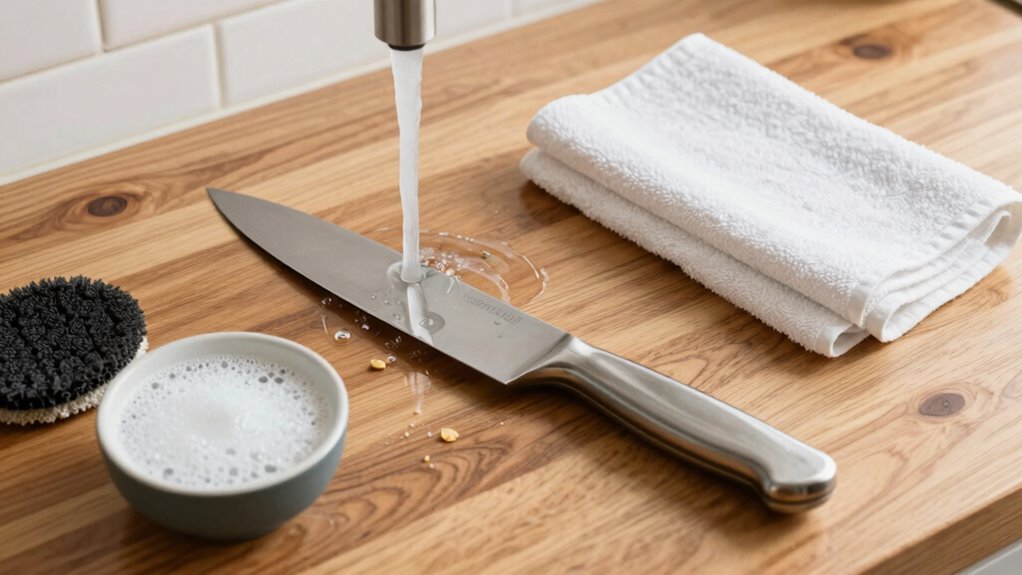
Start by cleaning your knives immediately after use. Hand wash them with warm, soapy water and a soft sponge or cloth. Avoid putting knives in the dishwasher, as high heat and harsh detergents can damage the blade and handle. Rinse thoroughly and dry completely with a towel to prevent rust and corrosion. Regular cleaning not only keeps your knives hygienic but also preserves their sharpness. When it comes to knife sharpening, it’s a key part of maintenance that shouldn’t be overlooked. A dull knife requires more force to cut, increasing the risk of slips and injuries. Use a sharpening stone, honing rod, or an electric sharpener to keep blades razor-sharp. Hone your knives regularly—after every few uses—to realign the edge, and sharpen them periodically, depending on how often you cook. Proper sharpening techniques will extend the life of your blades and guarantee they perform at their best. Additionally, proper storage is vital for maintaining your knives’ edges and safety, as storing them improperly can cause damage and accidents. Storage solutions play a crucial role in maintaining your knives’ performance. Storing them improperly—such as tossing them into a drawer—can dull or chip the blades and pose safety hazards. Proper storage methods help prevent blade damage and keep your knives in optimal condition. Investing in organized storage can also make your kitchen more efficient by making knives easier to find and access when needed. Using protective blade guards can further prevent accidental damage and injury. These options keep your knives separated, protecting the edges from contact and reducing the risk of accidents when reaching for or putting away your tools. Additionally, storing knives in a designated place helps you keep track of their condition and make sure they’re always ready for use. Regularly inspecting your knives and understanding blade care techniques can help you spot issues early and maintain their performance longer.
Incorporating these practices—regular cleaning, diligent knife sharpening, and smart storage solutions—can dramatically improve your knives’ longevity and performance. When your blades stay sharp and well-cared for, your cooking becomes more enjoyable and safer. Remember, a well-maintained knife is not just an investment in your kitchen tools but also in your safety and efficiency as a cook. By dedicating a few moments to proper maintenance, you assure your chef knives will serve you well, slicing through ingredients effortlessly for years to come.
As an affiliate, we earn on qualifying purchases.
Frequently Asked Questions
How Often Should I Sharpen My Chef Knives?
You should sharpen your chef knives every 1-3 months, depending on how often you cook and the blade material. If you notice dullness or difficulty slicing, it’s time to hone. Regularly check the knife handle for looseness and clean it properly, while maintaining the blade’s edge. Proper sharpening ensures your knife stays sharp, safe, and efficient, so your food prep remains precise and enjoyable.
What Type of Oil Is Best for Knife Maintenance?
For knife maintenance, the best oil types are mineral oil, camellia oil, or food-grade knife oil. You should oil your knives regularly—about once a month or after each heavy use—to keep the blade rust-free and smooth. Oiling frequency depends on how often you use your knives. Apply a thin layer of oil, ensuring it covers the entire blade, and wipe off any excess to maintain peak performance.
Can Dishwasher Cleaning Damage Chef Knives?
Dishwasher cleaning can damage your chef knives, especially the knife handle, which might loosen or crack, and the blade’s edge, risking dullness. Dishwashers often use harsh detergents and high heat, which aren’t compatible with many cutting board materials or knife handles. To keep your knives sharp and handle intact, hand wash them with warm water and mild soap, then dry thoroughly. Always check your cutting board compatibility with cleaning methods.
How Do I Prevent Rust on My Stainless Steel Knives?
To prevent rust on your stainless steel knives, you need to focus on rust prevention and stainless steel care. Keep your knives dry after each use, wipe them thoroughly, and store them in a dry, safe place. Avoid leaving them in damp environments, and regularly oil the blades with food-safe oil. These steps guarantee your knives stay sharp, shiny, and rust-free, maintaining their performance over time.
What Is the Ideal Storage Method for Maintaining Sharpness?
To maintain sharpness, you should use proper knife storage that safeguards the blade. Store your knives in a knife block, on a magnetic strip, or in a blade guard, avoiding drawer storage that can dull edges. This method provides blade protection and prevents unnecessary contact with other utensils. Regularly inspecting your storage setup ensures your knives stay sharp longer, keeping your cuts precise and safe.
As an affiliate, we earn on qualifying purchases.
Conclusion
To keep your chef knives performing at their best, regular cleaning and proper maintenance are key. Avoid dishwasher damage by hand washing and drying immediately. Sharpen your blades regularly to maintain their edge, and store them safely to prevent dulling. Did you know that a well-maintained knife can last up to 20 years? By following these simple tips, you’ll guarantee your knives stay sharp, safe, and effective for many years to come, making your cooking easier and more enjoyable.
As an affiliate, we earn on qualifying purchases.
As an affiliate, we earn on qualifying purchases.
NFL season / tailgating Picks
team gear
As an affiliate, we earn on qualifying purchases.