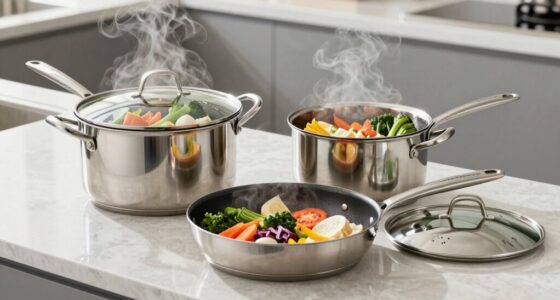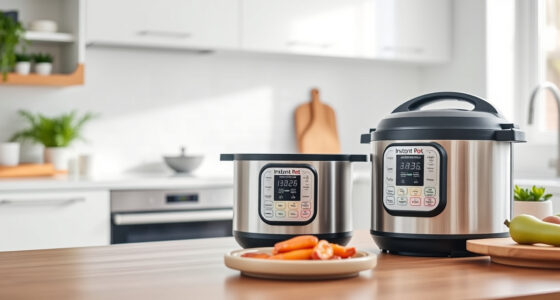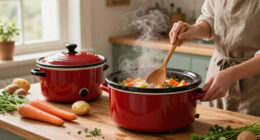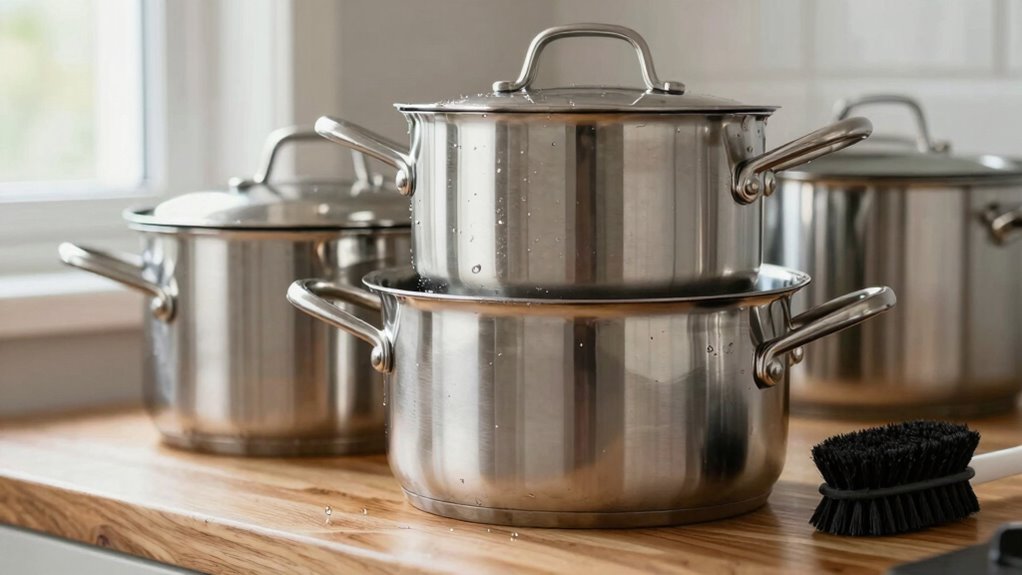

To keep your cookware sets performing well, clean them regularly with appropriate methods for each material—use copper cleaner or lemon salt for copper, avoid harsh chemicals for non-stick surfaces, and employ vinegar-water for stainless steel. Gentle scrubbing, prompt removal of stains, and proper storage prevent damage and buildup. Inspect and address tarnish or discoloration early to maintain their shine and efficiency. Stay tuned for more tips to extend your cookware’s lifespan and keep performance exceptional.

Get kitchen staples and gadgets delivered free with Prime
- Fast, free delivery on millions of items
- Prime Video, Amazon Music and more included
- Member-only deals all year
Key Takeaways
- Regularly inspect and clean cookware using appropriate methods for each material to prevent buildup and damage.
- Avoid metal utensils and abrasive cleaners to preserve non-stick coatings and surface finishes.
- Promptly address tarnish, discoloration, or stains with suitable cleaning techniques like lemon salt or vinegar solutions.
- Store cookware carefully, using soft cloths or hanging methods to prevent scratches and dents.
- Perform routine polishing and maintenance to sustain performance and extend the lifespan of your cookware set.
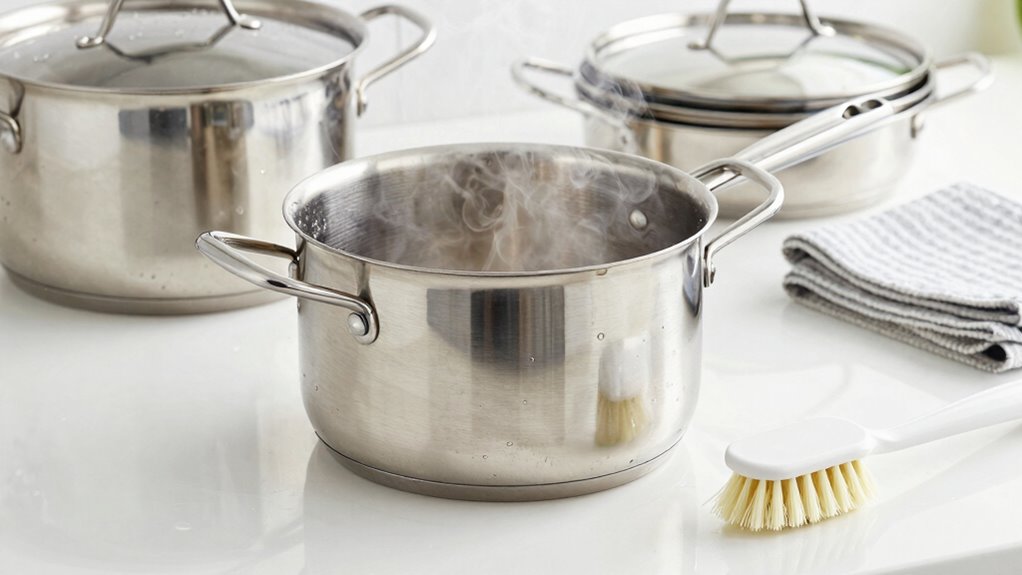
Maintaining your cookware sets is vital to guarantee they last longer and perform at their best. Proper care prevents buildup, scratches, and deterioration that can diminish cooking efficiency over time. Whether you have stainless steel, non-stick, or copper cookware, understanding how to clean and maintain them ensures they stay in top shape. For copper pots and pans, copper restoration becomes an essential step when tarnish or dullness appear. You can restore their shine by using a copper cleaner or a mixture of lemon juice and salt, gently scrubbing the surface to bring back their luster. Regularly polishing your copper cookware not only keeps them looking beautiful but also prevents corrosion, extending their lifespan. Additionally, proper cleaning techniques help maintain the cookware’s original finish and performance.
When it comes to non-stick care, the goal is to preserve the coating’s integrity. Avoid using metal utensils, as they can scratch and damage the non-stick surface, leading to uneven cooking and peeling over time. Instead, opt for silicone, wooden, or plastic tools. Cleaning non-stick pans requires a gentle touch—hot water and mild dish soap are usually enough. For stubborn residues, soak the pan briefly before cleaning, and steer clear of abrasive scrubbers that can wear down the non-stick coating. Occasionally, you might use a baking soda paste to remove any stubborn stains or grease, but always rinse thoroughly afterward to prevent residue buildup that could affect food release. Proper storage also plays a part in non-stick care; stacking these pans with a soft cloth or paper towel between them prevents scratches and preserves the coating longer.
Additionally, maintaining your cookware’s performance involves regular inspections and gentle cleaning routines. For example, if you notice any discoloration or tarnish on copper, don’t delay restoring it. The sooner you address these issues, the easier they are to fix, and it keeps your cookware looking and functioning like new. Using appropriate cleaning materials tailored for each type of cookware can significantly extend their lifespan and maintain their appearance. For stainless steel, a mixture of vinegar and water can help remove mineral deposits and restore shine, while avoiding harsh chemicals that might damage the surface. Always dry your cookware thoroughly after washing to prevent water spots, especially on copper and stainless steel. Proper storage—stacking carefully or hanging—also prevents dents and scratches that could compromise their performance. Additionally, understanding material-specific cleaning methods can prevent accidental damage and help prolong the life of your cookware. Being mindful of buildup removal techniques can also contribute to maintaining the cookware’s optimal performance over time.
As an affiliate, we earn on qualifying purchases.
Frequently Asked Questions
Can I Use Metal Utensils on Non-Stick Cookware?
You shouldn’t use metal utensils on non-stick cookware because they can scratch the non-stick surface, reducing its durability. Metal utensils threaten non-stick durability, causing scratches and damage that make the coating peel or flake over time. To preserve your cookware’s performance, opt for wooden, silicone, or plastic utensils. This way, you maintain the non-stick surface and extend the lifespan of your cookware set.
How Often Should I Replace My Cookware Set?
You should replace your cookware set when you notice significant wear, warping, or damaged non-stick surfaces, which can compromise cookware longevity. Typically, the replacement frequency varies based on usage and care, but most sets last about 5 to 10 years with proper maintenance. Regularly inspecting your cookware helps you determine when it’s time for a replacement, ensuring peak performance and safety in your cooking.
Is It Safe to Put Cookware in the Dishwasher?
You might think it’s safe, but dishwasher safety varies with cookware type. While some pans withstand the cycle, others risk damage, compromising cookware durability. Always check manufacturer instructions—if it’s dishwasher safe, go ahead, but if not, hand washing preserves its quality. Don’t gamble with your cookware’s longevity; knowing which pieces can handle the dishwasher guarantees you maintain performance and avoid costly replacements later.
What Is the Best Way to Remove Burnt-On Food?
To remove burnt-on food, start by soaking your cookware in warm water with a cleaning solution like dish soap or baking soda for a few hours. Use a non-abrasive scrubber to gently loosen burnt residue without scratching the surface. For stubborn spots, simmer a mixture of water and vinegar in the pan. This combination helps break down burnt residue, making it easier to clean and restoring your cookware’s performance.
How Do I Prevent Corrosion on My Cookware?
Think of your cookware like a delicate garden—protect it from corrosion with proper storage techniques. To prevent this, always dry your pots and pans thoroughly, especially if they’re made from materials prone to rust like cast iron or steel. Make certain material compatibility when cleaning or stacking, using soft cloths or padding. This approach keeps your cookware in top shape, extending its life and maintaining performance over time.
As an affiliate, we earn on qualifying purchases.
Conclusion
By regularly cleaning and caring for your cookware, you keep it performing at its best, much like a well-oiled machine from the days of steam engines. Avoid abrasive scrubbers, hand wash when needed, and store properly to prevent damage. Think of your cookware as a trusty steed—treat it with care, and it’ll serve you faithfully through many a feast, not just the one-night stand of a quick meal. Keep up the maintenance, and your pots and pans will reward you for years to come.
As an affiliate, we earn on qualifying purchases.
As an affiliate, we earn on qualifying purchases.
NFL season / tailgating Picks
team gear
As an affiliate, we earn on qualifying purchases.