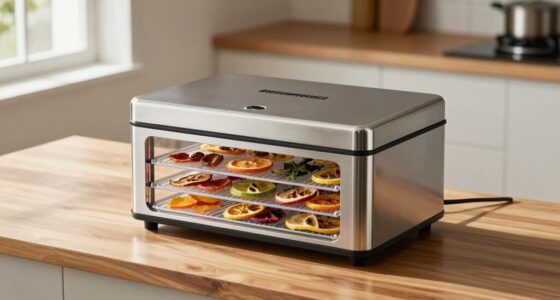

To keep your food dehydrator performing well, regularly clean all removable parts with warm, soapy water and use a soft brush for stubborn residue. Wipe internal surfaces carefully without wetting electrical components and use compressed air for vents. Prevent buildup by inspecting frequently and soaking trays in vinegar water if needed. Avoid harsh chemicals to prevent damage. Consistent cleaning and maintenance ensure ideal airflow and food quality—discover more tips to maximize your dehydrator’s lifespan.

Get kitchen staples and gadgets delivered free — and shop member deals
- Fast, free delivery on millions of items
- Access to Prime Big Deal Days deals on October 6–7
- Prime Video, Amazon Music and more included
Key Takeaways
- Regularly clean all removable trays, racks, and food contact surfaces with gentle, non-abrasive cleaners to prevent residue buildup.
- Wipe internal components and vents with damp cloth or compressed air to ensure optimal airflow and prevent overheating.
- Soak stubborn residue in vinegar-water solution and scrub gently to maintain smooth surfaces for efficient drying.
- Inspect and remove dust or debris from fans and vents frequently to sustain consistent performance.
- Perform routine maintenance and cleaning after each use to prevent mold, bacteria, and performance decline.
Keeping your food dehydrator clean and well-maintained is essential for ensuring safe, efficient, and flavorful drying cycles. Regular dehydrator cleaning prevents buildup of mold, bacteria,, and residue that can compromise food safety and alter the taste of your preserved items. When you stick to proper cleaning routines, you maximize the effectiveness of your food preservation techniques, ensuring your dried foods stay fresh longer and retain their nutrition. Neglecting this step can lead to reduced airflow, uneven drying, and an increased risk of spoilage. Incorporating proper cleaning techniques helps extend the lifespan of your dehydrator and maintains its optimal performance.
Regular cleaning ensures safe, efficient drying and preserves food quality and nutrition.
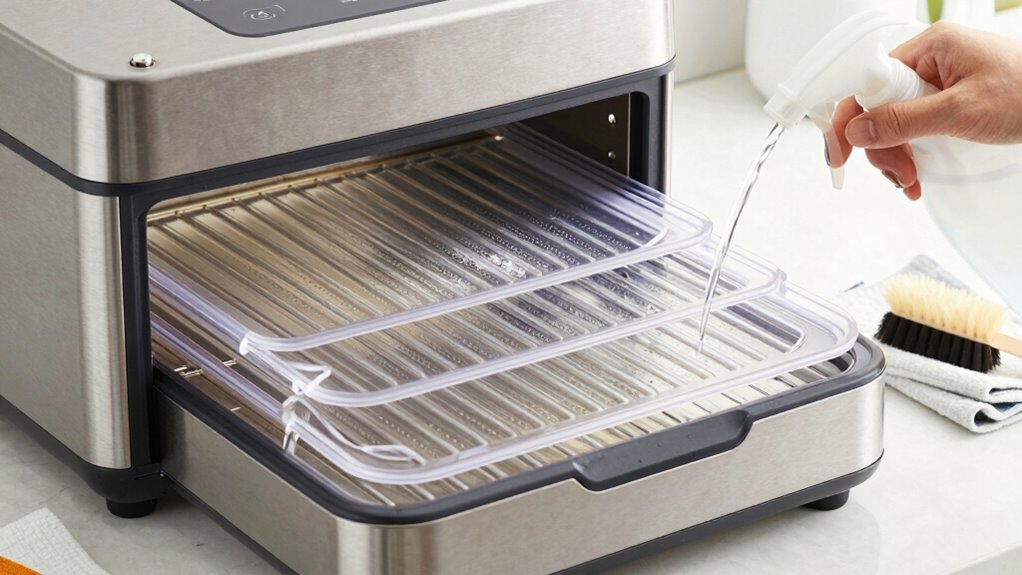
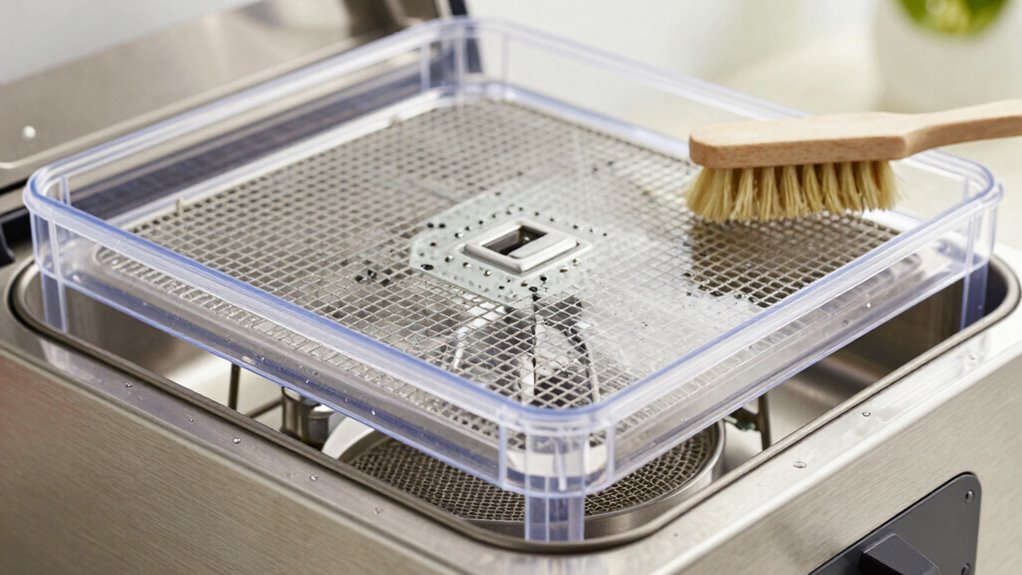
Start by unplugging your dehydrator and removing all trays and racks. Wash these components with warm, soapy water, using a soft brush or sponge to scrub away any stuck-on debris. Avoid abrasive cleaners or steel wool, which could scratch surfaces and harbor bacteria. Rinse thoroughly and let them dry completely before reassembling. For stubborn residue or sticky spots, soak trays in a mixture of vinegar and water for a few minutes, then scrub gently. This helps break down any stubborn residues and disinfects the surfaces. Regularly inspecting and cleaning your dehydrator’s removable parts also helps prevent bacterial growth that could contaminate your food.
The dehydrator’s interior, including the heating element and fan, also needs attention. Use a damp cloth or sponge to wipe down the interior surfaces, being careful not to get water into electrical components. If buildup appears around vents or the fan, a soft brush or compressed air can help remove dust and debris without damaging sensitive parts. Proper cleaning of internal components is crucial for maintaining the dehydrator’s efficiency and avoiding mechanical issues. Additionally, cleaning these areas regularly with appropriate tools promotes ideal airflow, which is vital for consistent drying temperatures. When cleaning these parts, avoid harsh chemicals that could damage the components or leave residues that might contaminate your food.
food dehydrator cleaning brushes
As an affiliate, we earn on qualifying purchases.
As an affiliate, we earn on qualifying purchases.
Frequently Asked Questions
How Often Should I Replace the Dehydrator’s Fan or Heating Element?
You should replace the dehydrator’s fan or heating element when they show signs of damage or no longer function effectively, usually after several years of regular use. The replacement frequency depends on the dehydrator’s lifespan, which varies by model and usage. Typically, you might need to replace these parts every 3 to 5 years to guarantee peak performance and prevent overheating or uneven drying. Regular inspections help catch issues early.
Can I Use Dishwasher-Safe Parts for Cleaning?
Sure, go ahead and toss those parts into the dishwasher—if they’re labeled dishwasher-safe, that is. Just remember, not all dehydrator components are dishwasher-friendly, so check those cleaning techniques first. Using dishwasher safety for your parts can save time and effort, but if in doubt, a gentle wipe with warm soapy water is your safest bet. Don’t risk warping or damaging your dehydrator just for convenience!
Are There Specific Cleaning Products I Should Avoid?
You should avoid harsh chemicals and abrasive cleaners when cleaning your food dehydrator. These can damage the non-stick surfaces and electrical components, reducing its lifespan and performance. Instead, opt for mild soap, warm water, and a soft brush or cloth. Regularly cleaning with gentle products guarantees your dehydrator stays in top condition, working efficiently without risking damage from aggressive cleaning agents.
How Do I Prevent Mold Growth Inside the Dehydrator?
To prevent mold growth inside your dehydrator, prioritize good dehydrator hygiene by regularly cleaning all surfaces with a mild, non-abrasive cleaner. Make certain your food is thoroughly dried before storage, and keep the dehydrator in a dry, well-ventilated area. Mold prevention also involves removing any food debris promptly and avoiding moisture buildup. By maintaining a clean environment, you’ll keep mold at bay and guarantee peak dehydrator performance.
What’s the Best Way to Store a Dehydrator Long-Term?
Did you know that improperly stored appliances can lose up to 15% of their efficiency? To guarantee long-term preservation of your dehydrator, clean it thoroughly and dry all parts completely. Store it in a cool, dry place, preferably in its original packaging or a protective cover to prevent dust and moisture buildup. Proper dehydrator storage keeps it ready for use, maintains performance, and extends its lifespan.
dehydrator vent cleaning compressed air
As an affiliate, we earn on qualifying purchases.
As an affiliate, we earn on qualifying purchases.
Conclusion
By giving your dehydrator a little tender loving care, you’ll keep it humming along smoothly and avoid any pesky hiccups. Regular cleaning and gentle maintenance act like a revitalizing breeze, ensuring your appliance stays in top shape. Think of it as whispering sweet nothings to your device—helping it perform at its best without a fuss. With a bit of attention, your dehydrator will reward you with delicious, perfectly dried treats every time.
As an affiliate, we earn on qualifying purchases.
As an affiliate, we earn on qualifying purchases.
NFL season / tailgating Picks
team gear
As an affiliate, we earn on qualifying purchases.