
When setting up your food dehydrator, avoid common mistakes like skipping thorough cleaning, which can lead to bacteria buildup. Don’t overload trays or block airflow, as this causes uneven drying. Make sure to follow the manufacturer’s instructions for temperature and placement—using the wrong heat or placing it on an unstable surface can be dangerous. Proper setup is key, and if you keep these tips in mind, you’ll improve your dehydrating results considerably.
Key Takeaways
- Failing to wash and prepare fruit properly, leading to uneven dehydration and spoilage.
- Ignoring manufacturer’s temperature guidelines, risking under- or over-drying.
- Overcrowding trays, which hampers airflow and results in inconsistent drying.
- Neglecting regular cleaning and ventilation, causing mold and bacteria buildup.
- Setting up the dehydrator on unstable surfaces or near water, compromising safety and appliance longevity.
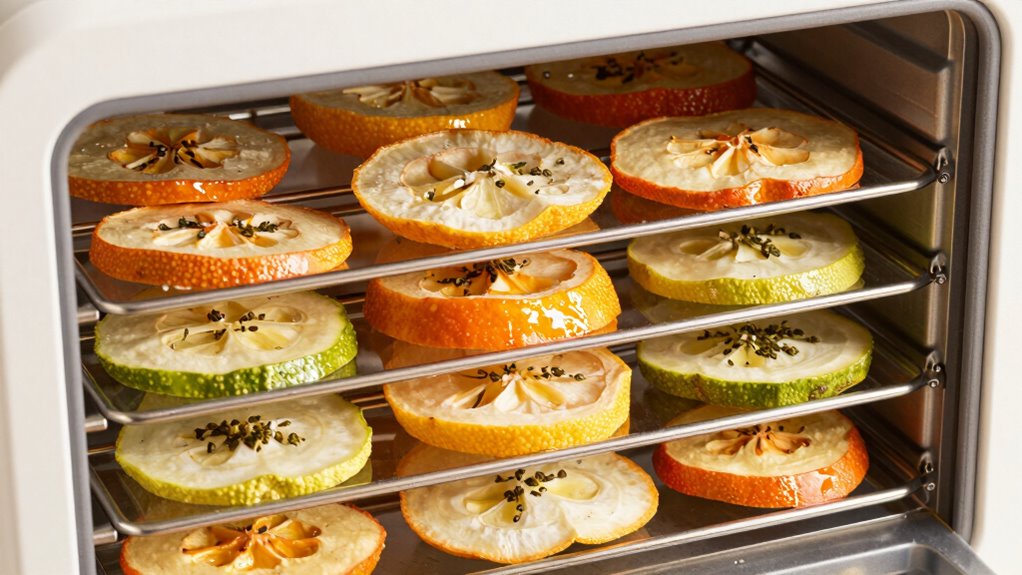
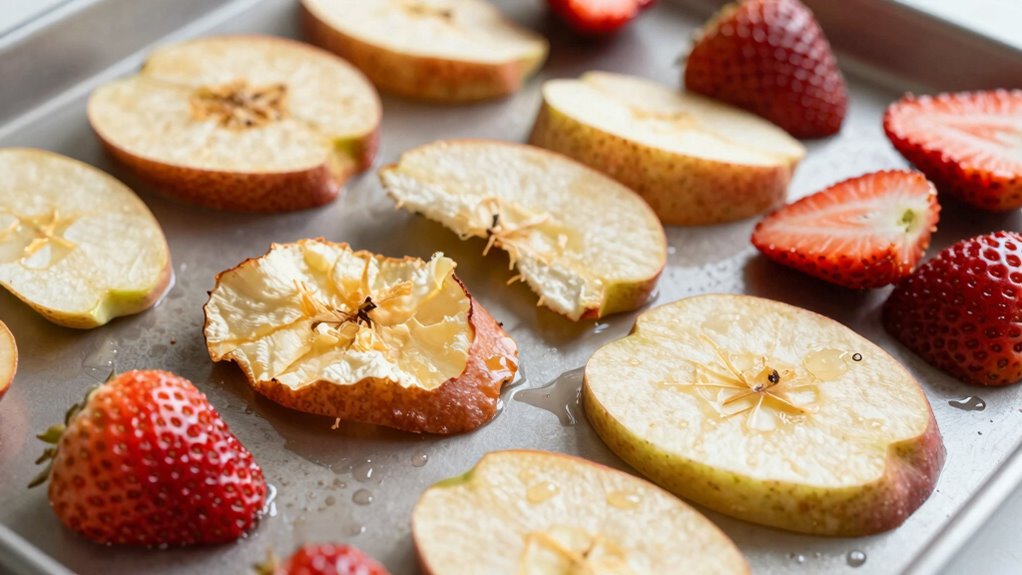
Getting started with a food dehydrator can seem straightforward, but many beginners make common setup mistakes that can affect their results. One of the most frequent errors involves not preparing the fruit properly before drying. If you skip washing or fail to remove blemishes and uneven slices, your fruit preservation efforts might be compromised. Unevenly cut pieces can lead to inconsistent drying, resulting in some pieces being over-dried while others remain too moist. To avoid this, use a sharp knife or mandoline for uniform slices, which promotes even dehydration and better fruit preservation.
Another mistake is ignoring the importance of temperature and timing settings. Many new users don’t consult the manufacturer’s guidelines or fail to adjust the temperature appropriately for different types of fruit. Too high a temperature can cause the fruit to cook rather than dehydrate, ruining texture and flavor, and increasing the risk of mold growth. Conversely, too low a temperature prolongs drying time and may allow bacteria or mold to develop, jeopardizing both the quality of your dried fruit and appliance safety. Always follow recommended temperature ranges and monitor the process, especially during the first few uses, to optimize fruit preservation and ensure safe, successful results. Proper temperature control is essential for achieving consistent and safe drying outcomes.
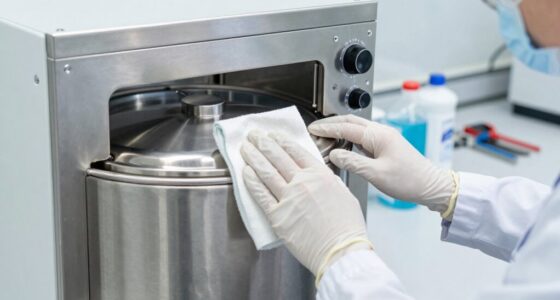
Many beginners overlook the significance of proper airflow. Overcrowding the trays or stacking fruit pieces too closely impairs air circulation, leading to uneven drying. This not only affects the quality of your fruit but also increases the likelihood of spoilage. Keep slices spaced evenly and avoid overloading the dehydrator. Proper airflow ensures each piece dries uniformly, preserves flavors, and reduces the risk of mold growth. Additionally, cleaning the trays and the interior regularly is essential. Residue or stuck-on pulp can harbor bacteria, compromise appliance safety, and negatively impact your fruit preservation efforts. Regular maintenance and adequate ventilation are key to prolonging the lifespan of your dehydrator. Incorporating proper cleaning techniques can further enhance the overall safety and efficiency of your appliance. Maintaining consistent airflow throughout the drying process also helps achieve more reliable and evenly dried products. Moreover, ensuring proper ventilation not only benefits the dehydrator’s performance but also minimizes the accumulation of heat and moisture, which can lead to safety hazards.
Finally, some users neglect to think about appliance safety during setup. Failing to place the dehydrator on a flat, heat-resistant surface or ignoring manufacturer safety instructions can cause accidents. Make sure the appliance is stable and well-ventilated, and keep it away from water or flammable materials. Proper placement not only safeguards your safety but also ensures the appliance functions efficiently. Taking these precautions helps you avoid hazards and prolongs the lifespan of your dehydrator, making your fruit preservation endeavors safer and more successful. By paying attention to these common setup mistakes, you set yourself up for better results, safer operation, and delicious, well-preserved fruit.

5Pcs Fruit Juicer Machine Clean Brush Nylon Soy Milk Maker Clean Brush Right Angle Crevice Cleaning Tool for Sink Tile Toaster Grout Grater Seafood Small Cleaning Brushes Set for Kitchen Appliances
Multi-Surface Cleaning:These brush to clean juicer machine are designed for a variety of kitchen appliances, including juicers, soy…
As an affiliate, we earn on qualifying purchases.
As an affiliate, we earn on qualifying purchases.
Frequently Asked Questions
How Long Should I Dry Different Types of Food Initially?
You should dry different foods for varying times, typically 6-12 hours, depending on the item. For flavor preservation, check periodically and adjust as needed. Fruits may take around 8-10 hours, while jerky might need 4-6 hours. Use dehydrator accessories like parchment paper or mesh screens to prevent sticking. Remember, every food is different, so monitor progress and fine-tune drying times for the best results.
Can I Use Parchment Paper or Trays Not Designed for Dehydrators?
You can use parchment paper or trays not designed for dehydrators, but tray compatibility is essential. Parchment paper can help with messy foods, yet avoid blocking airflow, which might hinder drying. Using incompatible trays can restrict air circulation, leading to uneven dehydration. Always check if your trays are food-safe and designed for dehydrator use. Ensuring proper tray compatibility helps your food dry evenly and maintains the dehydrator’s efficiency.
Is It Necessary to Pre-Treat or Blanch Foods Before Dehydrating?
You don’t always need to pre-treat or blanch foods before dehydrating, but it can enhance food safety and nutrient retention. Blanching helps kill bacteria and enzymes that cause spoilage, ensuring safer results. It also preserves nutrients better by halting enzyme activity. For delicate fruits or vegetables, quick pre-treatment can improve the texture and flavor. Always consider the specific food and your dehydration goals to decide if pre-treating is necessary.
What’s the Best Way to Clean and Maintain My Dehydrator?
To keep your dehydrator safe and energy-efficient, clean it regularly with warm, soapy water after each use, paying attention to trays and vents. Avoid harsh chemicals that could damage components. Make certain to dry all parts thoroughly before reassembling to prevent mold. Regular maintenance guarantees peak dehydration, prolongs your dehydrator’s lifespan, and maintains safety standards. Proper cleaning also helps your appliance run more efficiently, saving energy over time.
How Do I Prevent Food From Sticking or Sticking to Trays?
To prevent food from sticking to trays and preserve flavor, always lightly oil or use non-stick sheets before placing food. Arrange items in a single layer, avoiding overcrowding, to guarantee even dehydration and extend shelf life. Regularly clean trays to remove residue, which helps maintain flavor quality. Proper preparation and maintenance keep your dehydrated foods fresh, flavorful, and safe to store longer, maximizing both flavor preservation and shelf life.
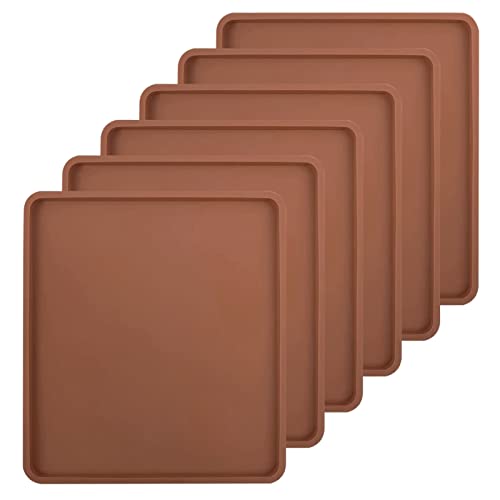
6 Pack Silicone Dehydrator Trays Compatible with Cosori CP267-FD, Nonstick Silicone Drye Sheets with Edge, Multi-purpose Reusable for Jerky, Fruit, Meat, Herbs, Vegetables, Crackers
Raised Lip Edge Design: The silicone dehydrator mats is designed with a raised Lip around the edge to…
As an affiliate, we earn on qualifying purchases.
As an affiliate, we earn on qualifying purchases.
Conclusion
Getting your food dehydrator setup right from the start can save you a lot of headaches down the line. Avoid rushing or skipping steps, and pay close attention to placement and settings. Remember, a stitch in time saves nine—taking the time to do it right now prevents bigger issues later. Keep these tips in mind, and you’ll be well on your way to perfect dehydrated snacks and healthy treats with minimal fuss.
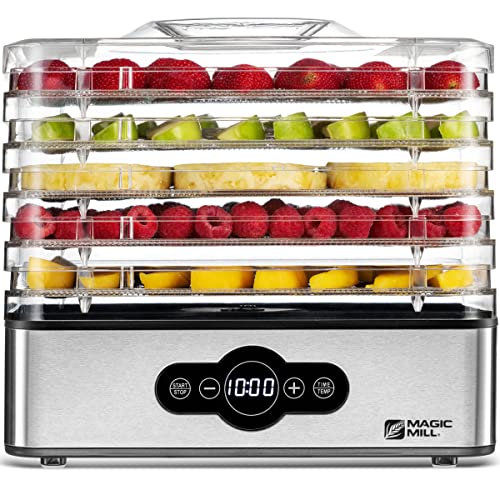
Magic Mill Food Dehydrator Machine | 5 Stackable Stainless Steel Trays, 48H Digital Adjustable Timer & Temperature Control Upto 167° Electric Dryer & Preserver for Jerky, Fruit, Dog Treats & Much More
POWERFUL FOOD DRYING PROCESS – Magic Mill Compact Food Dehydrator Machine streamlines 240W drying capacity that offers an…
As an affiliate, we earn on qualifying purchases.
As an affiliate, we earn on qualifying purchases.
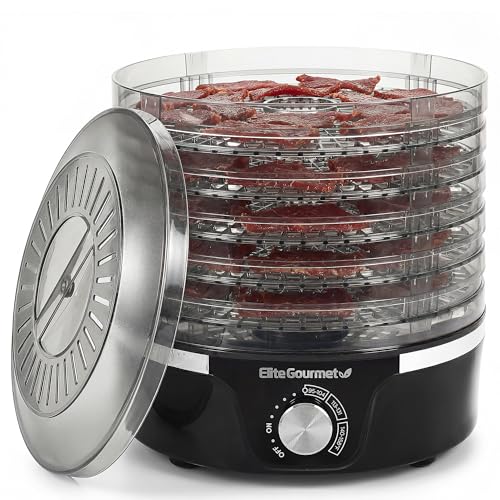
Elite Gourmet EFD319 Food Dehydrator, 5 BPA-Free 11.4" Trays Adjustable Temperature Controls, Jerky, Herbs, Fruit, Veggies, Dried Snacks, Black
CUSTOM TEMPERATURE CONTROL FOR PERFECT RESULTS: Adjustable temperature range from 95°F–158°F lets you dry fruits, vegetables, herbs, mushrooms…
As an affiliate, we earn on qualifying purchases.
As an affiliate, we earn on qualifying purchases.