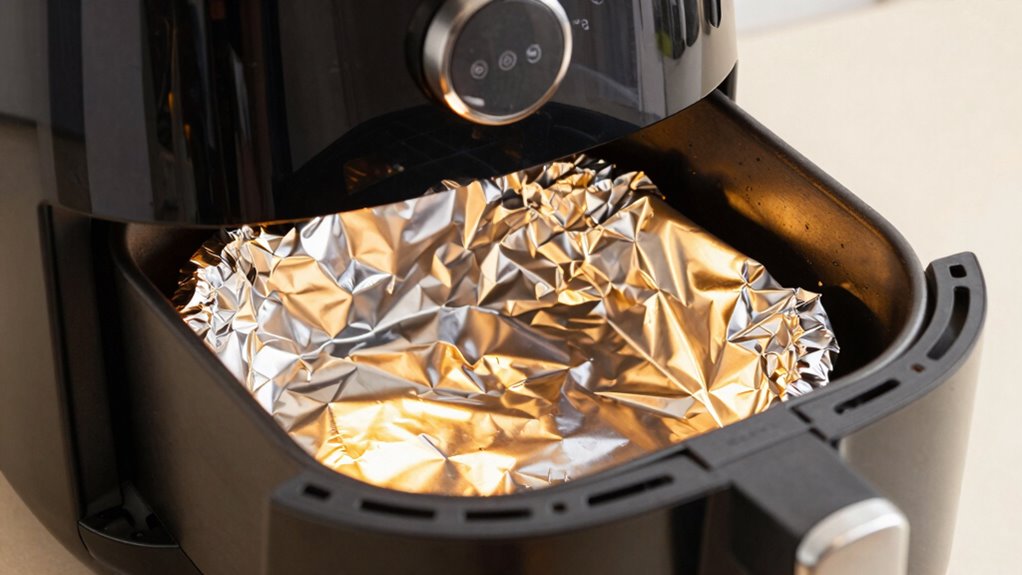

Yes, you can use foil in your air fryer if you follow safety rules. Make sure the foil is flat, secured, and doesn’t block airflow or touch the heating element. Avoid covering the entire basket, and keep vents clear to prevent overheating. Use heavy-duty foil and consider poking small holes for better circulation. Following proper guidelines will help you cook safely and efficiently—if you want tips, keep exploring.
Key Takeaways
- Use foil only if it doesn’t block airflow, keeping it flat, secure, and away from the heating element.
- Always check your air fryer’s manual for specific foil usage guidelines and restrictions.
- Avoid covering the entire basket or sealing foil tightly to prevent heat buildup and appliance damage.
- Poke small holes in foil or use perforated parchment paper to promote proper hot air circulation.
- Consider alternatives like parchment paper or silicone mats for safer, easier cleanup and optimal airflow.
Is Using Foil in Your Air Fryer Safe? What You Need to Know

Using foil in your air fryer can be be safe if you follow proper guidelines, but it’s important to understand the potential risks. Foil safety depends on how you use it, so always check your air fryer’s manual for specific instructions. When using foil, avoid covering the entire basket, as blocking airflow can cause uneven cooking and damage the appliance. Proper air fryer tips include placing the foil flat and ensuring it doesn’t touch the heating element. Using foil correctly can help with cleanup and prevent food from sticking. Additionally, understanding the technology behind air fryers can help you use foil more safely. For example, the air circulation process is essential for achieving the desired crispness and even cooking. Following these simple precautions guarantees safe and effective foil use in your air fryer. However, always stay attentive when using foil, and never cover the entire basket or block vents, as Airflow is crucial for even cooking and preventing overheating.
When Is It Safe to Use Foil in Your Air Fryer?
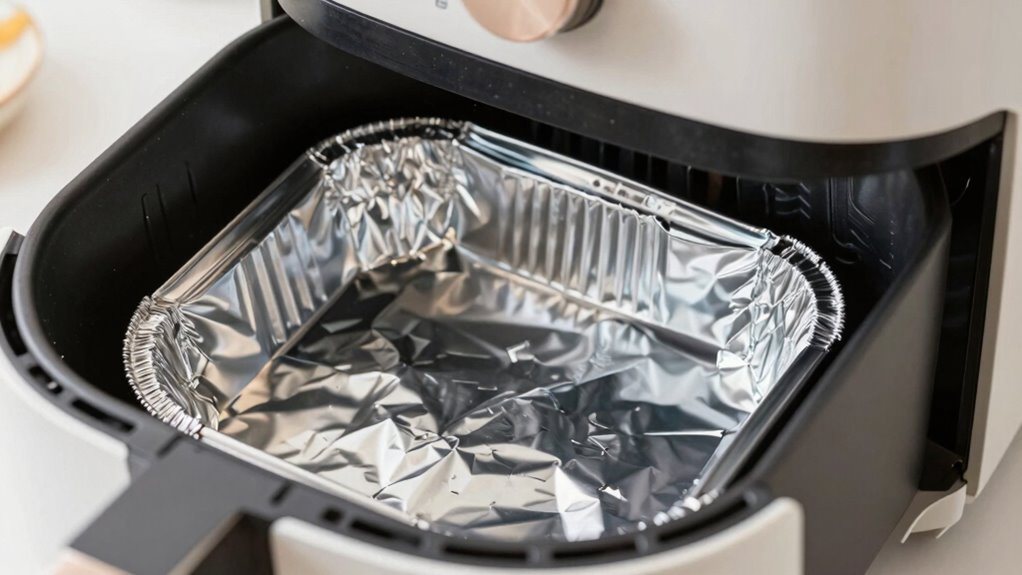
You can use foil in your air fryer when you place it properly, ensuring it doesn’t touch the heating element or the sides. Make sure the foil doesn’t block the airflow, which is essential for even cooking. When used correctly, foil helps keep your air fryer clean without risking safety. Additionally, understanding Free Floating principles can help you optimize airflow and prevent accidents. Using foil that allows for proper air circulation is key to maintaining safe and effective cooking conditions, as it supports the ventilation necessary for consistent heat distribution. Being aware of your household appliance safety guidelines can further ensure safe usage of foil in your air fryer. Properly managing wave and wind effects within the appliance can also enhance cooking efficiency and safety.
Proper Foil Placement
To guarantee safe and effective use of foil in your air fryer, proper placement is vital. Focus on foil placement to prevent blocking airflow, which is essential for even cooking. Always keep the foil flat and secure, avoiding wrinkles or loose edges that could lift and touch the heating element. Make certain there’s enough space around the foil for airflow considerations to prevent overheating or fire hazards. Position the foil beneath the food, not covering the entire basket or tray, so hot air can circulate freely. Never cover the bottom vents or block the fan. When you follow these guidelines, foil helps contain messes without interfering with the air fryer’s ventilation, ensuring safe operation and ideal results.
Avoiding Airflow Blockage
Proper foil placement helps maintain good airflow, but knowing when it’s safe to use foil is just as important. You want to avoid airflow obstruction, which can lead to uneven cooking or overheating. To guarantee foil compatibility with your air fryer, keep foil away from the heating element and avoid covering the entire basket. Instead, use small pieces or create a foil barrier that allows hot air to circulate freely. Always leave space around the foil for airflow, and don’t block the vents. If your air fryer’s manual advises against foil or warns about airflow issues, follow those guidelines. When used correctly, foil can prevent messes without compromising airflow, but misuse can cause dangerous airflow blockage. Proper placement is key to safe, effective air frying.
Best Practices for Using Foil in Your Air Fryer
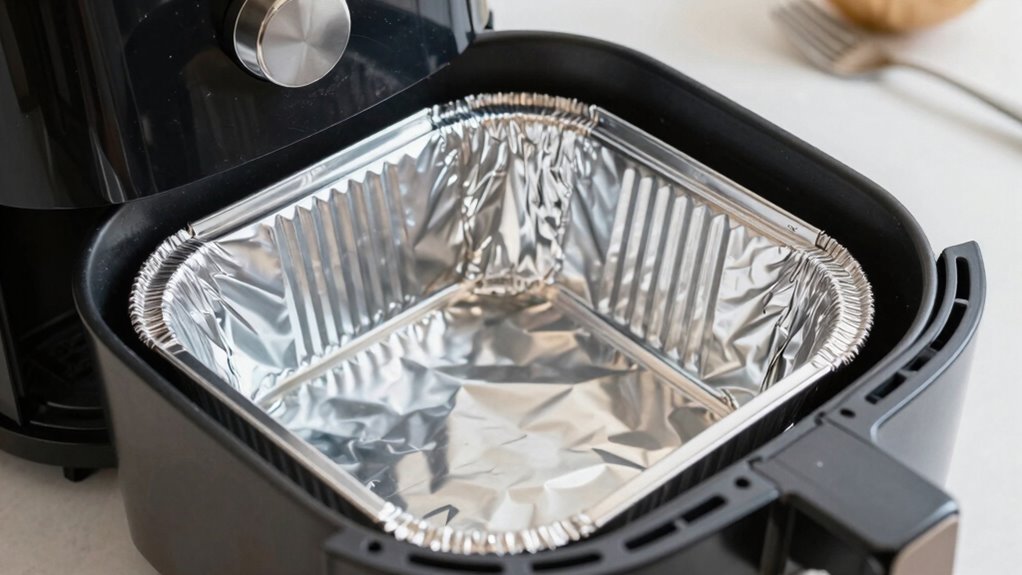
Using foil in your air fryer can be beneficial, but it’s important to follow best practices to guarantee safe and effective cooking. First, avoid covering the entire basket, as this can block airflow and affect cooking quality. When using foil, ensure the food isn’t too acidic, as high food acidity can react with the foil and cause leaks or uneven cooking. Additionally, keep the foil away from the heating element to prevent possible fire hazards. Adjust the cooking temperature accordingly; high temperatures can cause foil to melt or become brittle, reducing safety. Always secure the foil properly, allowing enough space for hot air to circulate. Proper airflow management is crucial for optimal cooking results and safety. Ensuring proper cooking techniques can help prevent accidents and improve your air fryer’s performance. Incorporating safety precautions such as checking the foil regularly can further protect against potential hazards. Being aware of the material properties of different foils can help prevent mishaps during cooking. By following these guidelines, you’ll optimize your air fryer’s performance and maintain safety during your cooking process.
Common Mistakes to Avoid When Using Foil in Your Air Fryer
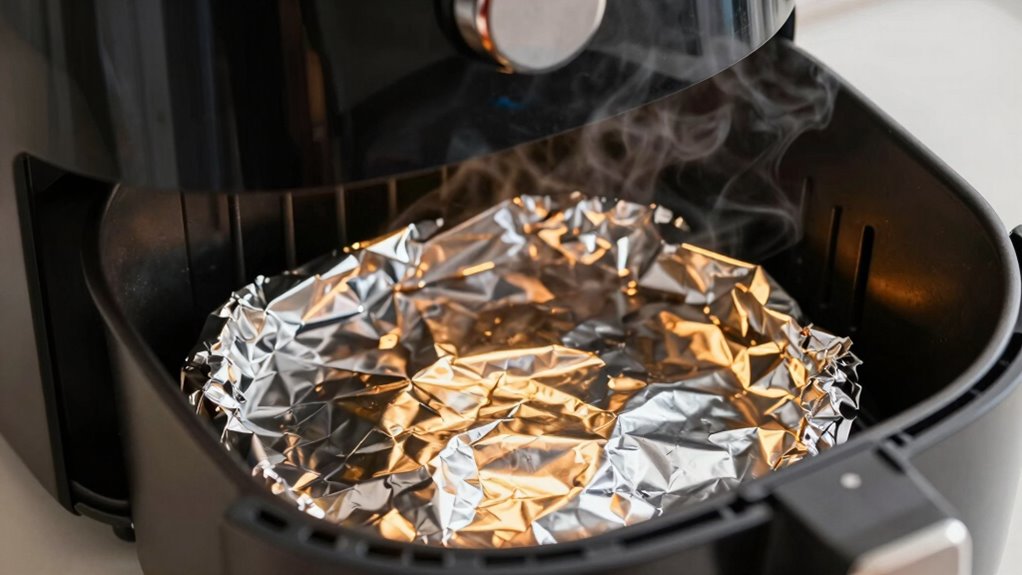
One common mistake is placing foil that completely covers the basket, which can block airflow and lead to uneven cooking or soggy food. For ideal foil safety, always leave space around the edges so hot air can circulate freely. Avoid sealing the foil tightly to the basket, as this can cause heat buildup and damage your air fryer. Another mistake is using too much foil, which can affect air fryer maintenance by trapping grease and food particles, making cleaning harder. Make sure to poke small holes in the foil if necessary, to allow proper airflow. By following these tips, you prevent uneven cooking and avoid potential damage. Being mindful about foil placement ensures safe use and helps maintain your air fryer’s longevity.
Which Types of Foil Are Suitable for Air Frying?

You should choose the right type of foil for your air fryer to guarantee safe and effective cooking. Aluminum foil comes in various forms, including non-stick and heavy-duty options, each suited for different needs. Consider what works best for your recipes and appliance to get the best results. Additionally, selecting appropriate storytelling techniques can help you communicate safety tips more effectively and engage your audience in responsible cooking practices. It’s also important to understand smart accessory use so you can optimize your setup and avoid common pitfalls. Being aware of product safety standards ensures that you select the most reliable and suitable foil for your air frying needs. Moreover, understanding material safety considerations can help prevent potential hazards during cooking. For example, knowing the horsepower of electric dirt bikes can help you gauge the power and safety features of related equipment used in your kitchen or outdoor activities.
Aluminum Foil Types
When selecting aluminum foil for air frying, it’s important to choose types that can withstand high temperatures and allow proper airflow. Standard heavy-duty foil is ideal because it offers better foil safety, reducing the risk of tearing or melting at high heat. Thin or generic foils may not hold up well and can pose safety hazards. Look for foil labeled specifically for high-heat cooking, as it’s designed to endure the temperatures in air fryers. If you’re concerned about foil safety, consider foil alternatives like silicone mats or parchment paper, which can provide similar benefits without the risks. Always check manufacturer instructions to ensure compatibility and safety. Properly used, high-quality foil enhances cooking while minimizing safety concerns in your air fryer. Design, technology, and focus can help you create a distraction-free environment for better cooking results.
Non-Stick Variations
Non-stick aluminum foil options are excellent choices if you want to prevent food from sticking to the surface during air frying. These non-stick variations enhance foil safety by reducing the need for added oils and making cleanup easier. Look for foil with a non-stick coating or those labeled as non-stick, which are specially designed to resist food adhesion. Using these varieties minimizes the risk of torn or damaged foil, ensuring safer cooking. Proper placement helps maintain ideal air fryer performance while taking advantage of the non-stick benefits. Additionally, selecting appropriate tip sizes and ensuring proper filtration can help maintain the efficiency and safety of your air fryer setup. Being aware of air circulation is also crucial to prevent blocking airflow and ensure even cooking, which contributes to safer and more effective air frying. Proper airflow management is essential to prevent overheating and ensure consistent results, further enhancing safety. Overall, non-stick foil options are practical for safer, cleaner air frying experiences.
Heavy-Duty Options
Heavy-duty aluminum foil offers a robust solution for air frying, especially when cooking with thicker or heavier foods that require extra strength. This type of foil enhances foil durability, minimizing tears or punctures during cooking. When choosing heavy-duty options, you guarantee your foil can handle demanding tasks without compromising safety or performance. It’s especially useful for lining baskets or wrapping large cuts of meat. Keep in mind that thicker foil can better withstand high heat and vigorous stirring, providing peace of mind. To maximize effectiveness, use heavy-duty foil for heavy or dense foods. Proper placement is crucial to avoid blocking airflow and ensure even cooking. Additionally, avoid excessive folding that can trap heat or block vents, which could hinder airflow and affect cooking results. Choosing the right foil not only enhances safety and cooking efficiency in your air fryer but also contributes to the overall foil longevity and performance. Selecting the appropriate foil type can contribute to the longevity of your air fryer and improve overall cooking outcomes.
Should You Use Foil With Your Specific Air Fryer Model?

Not all air fryer models are designed to handle foil, so it’s important to check your specific appliance’s guidelines before using it. Some models might have vents or sensitive components that foil could obstruct or damage, affecting foil safety. Review your user manual or manufacturer’s website to see if foil is recommended or discouraged. Many air fryer accessories are specifically designed to work safely with certain models, ensuring proper airflow and preventing risks. If your model permits foil, use it carefully, avoiding covering the entire basket or blocking vents. Always follow your air fryer’s instructions to prevent unsafe situations. When in doubt, stick to manufacturer recommendations to ensure safe and effective cooking.
Alternatives to Foil for Easy Cleanup and Better Cooking

Instead of foil, consider using parchment paper or silicone mats to make cleanup easier and promote better airflow during cooking. These alternatives help prevent food from sticking, reduce mess, and support cooking safety by avoiding potential fire hazards. Using these options also enhances cleanup tips, saving you time and effort afterward. Parchment paper with perforations allows hot air to circulate properly, ensuring even cooking. Silicone mats are reusable, eco-friendly, and heat-resistant, providing a non-stick surface.
Use parchment paper or silicone mats for safer, easier air fryer cleanup and better airflow during cooking.
- Use parchment paper to contain drips without blocking airflow.
- Employ silicone mats for durability and easy cleaning.
- Always check for proper fit to avoid interfering with the air fryer’s operation.
These choices promote safer cooking and simplify cleanup, making your air frying experience more enjoyable.
Final Tips for Safe and Effective Use of Foil in Your Air Fryer
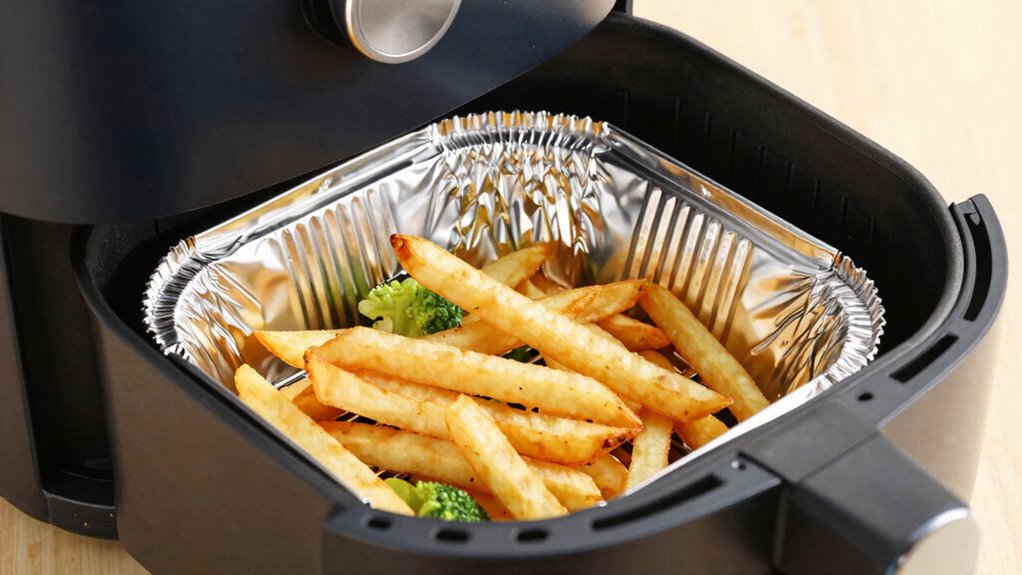
To use foil safely and effectively in your air fryer, it’s important to follow a few key guidelines. First, avoid covering the entire basket, as this can hinder airflow and compromise air fryer safety. Instead, create small, perforated foil liners or use foil alternatives like parchment paper for easier cleanup and better heat circulation. Always secure the foil firmly to prevent it from flying around during cooking, which could damage the appliance or cause safety hazards. Keep the foil away from the heating element and do not block vents. By adhering to these tips, you ensure safe operation and ideal cooking results. Remember, proper use of foil or suitable foil alternatives can make cleanup easier without sacrificing the safety or efficiency of your air fryer.
Frequently Asked Questions
Can Foil Damage the Air Fryer’s Heating Element?
Foil can potentially damage your air fryer’s heating element if used improperly. It might cause overheating or block airflow, leading to wear over time. To guarantee proper air fryer maintenance, avoid covering the entire basket with foil and keep it away from the heating element. Instead, consider foil alternatives like parchment paper or silicone mats, which are safer and prevent damage while still catching drips and crumbs effectively.
Does Foil Affect the Cooking Time or Temperature?
Using foil in your air fryer can throw a wrench in the works, affecting cooking time and temperature. Foil insulation impacts heat flow, while foil conductivity can cause uneven cooking or hotspots. If you cover food too tightly, it traps heat, making it cook faster or slower than expected. To keep things on track, use foil sparingly and avoid covering the entire basket. This way, you won’t upset the delicate balance of your air fryer’s performance.
Is Using Foil in an Air Fryer Safe for All Food Types?
Using foil in an air fryer isn’t safe for all food types, especially if it blocks airflow or touches the heating element. For food safety, avoid foil with acidic foods or items that release juices, which can cause sparks or mess. Instead, consider foil alternatives like parchment paper or silicone mats. These options promote proper air circulation, ensuring safe, even cooking while protecting your appliance and your health.
How Do I Prevent Foil From Touching the Heating Element?
Think of your air fryer as a delicate dance floor, and foil as a cautious partner. To prevent foil from touching the heating element, always use proper foil placement—keep it away from the heating element and avoid tight crumples. This guarantees heating element safety, reduces risk of sparks, and keeps your cooking smooth. By maintaining safe distances, you help your air fryer perform at its best without hazards.
Can Foil Cause Uneven Cooking in My Air Fryer?
Foil can cause uneven cooking in your air fryer if it blocks airflow or wrinkles, trapping heat. When you use foil, make sure it stays smooth and doesn’t cover the entire basket, allowing air to circulate properly. Wrinkles can create hot spots, leading to uneven browning or undercooked areas. Keep the foil loose and away from the heating element to guarantee consistent, safe results.
Conclusion
Now that you know the do’s and don’ts, you can confidently use foil in your air fryer without risking a culinary catastrophe. Remember, even as you embrace modern kitchen gadgets, safety is timeless—like a trusty knight guarding your feast. Use foil wisely, follow best practices, and enjoy perfectly cooked meals with peace of mind. After all, a well-used air fryer can turn your kitchen into a modern-day culinary castle—without the dragon lurking nearby.