The biggest mistake people make with food thermometers is not placing them correctly, which leads to inaccurate temperature readings. You might insert the probe into the wrong spot, touch bones or fat, or fail to reach the thickest part of the meat. Proper placement guarantees you accurately check for safe temperatures and perfect doneness. Keep reading to discover how to position your thermometer every time for the best results.
Key Takeaways
- Insert the thermometer into the thickest part of the food, avoiding bones, fat, or gristle for accurate readings.
- Ensure proper depth and contact; shallow placement or touching the pan skews results.
- Measure multiple spots to detect hot or cold zones caused by uneven heat distribution.
- Calibrate the thermometer regularly to maintain measurement accuracy.
- Clean and sanitize the probe before and after use to prevent cross-contamination and false readings.
Why Proper Thermometer Placement Ensures Food Safety and Perfect Results

Proper thermometer placement is essential because it directly affects the accuracy of your temperature readings, which in turn guarantees your food is safe to eat. Accurate temperature readings are critical for maintaining food safety, preventing bacterial growth, and ensuring your cooked food reaches the proper internal temperature. When you place the thermometer correctly, you can trust that it measures the true temperature of the food, avoiding undercooked or overcooked results. Consistent placement helps you monitor cooking progress precisely, reducing the risk of foodborne illness. Remember, even a slight misplacement can lead to inaccurate readings, compromising safety and quality. Proper thermometer placement is especially important when cooking large cuts of meat or poultry, as it ensures the entire piece reaches a safe temperature. By paying close attention to proper placement, you ensure your food is both safe to consume and perfectly cooked every time, and understanding internal temperature is key to achieving this.
Common Mistakes When Positioning Food Thermometers
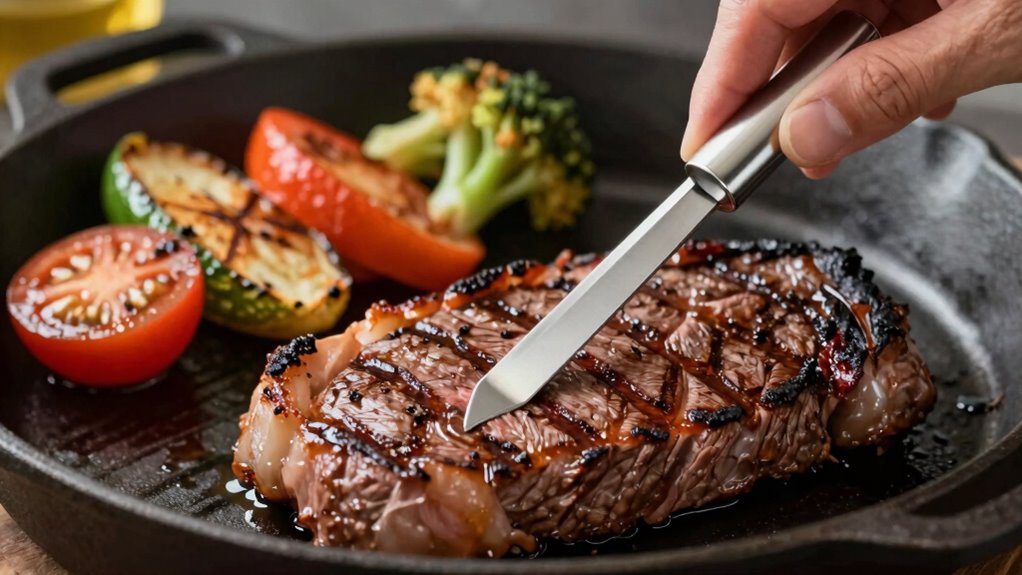
One common mistake is not inserting the thermometer deep enough into the food, which can give an inaccurate reading. Neglecting hot spots can also lead to undercooked areas, risking food safety. Paying attention to these details ensures you get a true temperature and cook your food properly. Proper food safety practices can also help preserve the quality and safety of your food over time. Additionally, understanding thermometer placement can significantly improve your cooking results and prevent foodborne illnesses. Recognizing hot spot detection techniques can help ensure even cooking throughout your dish. Knowing food origin can also influence how you monitor the internal temperature for optimal safety.
Incorrect Insertion Depth
When inserting a food thermometer, it’s easy to make the mistake of placing it too shallow or too deep, which can lead to inaccurate readings. If you don’t insert it to the proper depth, you risk compromising food safety because the temperature reading won’t reflect the food’s true internal temperature. For most foods, the probe should reach the thickest part, avoiding bone, fat, or gristle, which can distort results. Too shallow, and you’ll miss the actual temperature; too deep, and you might underestimate or overestimate the heat. Proper insertion ensures you get an accurate reading, which is essential for maintaining food safety and ensuring proper cooking. Proper depth guarantees temperature accuracy, helping you prevent undercooked or overcooked food. Additionally, understanding safe installation practices ensures your thermometer provides reliable data over time. Using the correct probe placement is crucial for consistent and safe cooking results. Ensuring proper water immersion techniques can also improve the accuracy of thermometers, especially in moist environments. Being aware of piercing techniques can help prevent damage to the thermometer and ensure precise temperature readings. Incorporating electric tools like digital thermometers can further enhance measurement accuracy and ease of use.
Ignoring Hotspots
Have you ever checked the temperature of your food and wondered why some parts seem undercooked while others are overdone? Ignoring hotspots is a common mistake that hampers temperature consistency. Hotspots are areas where the food’s temperature is higher, often caused by uneven heat distribution. Failing to identify and measure these areas can result in undercooked sections risking food safety or overcooked parts ruining texture. To improve accuracy, understand hotspot awareness and target multiple points when inserting your thermometer. Use this quick reference:
| Hotspot Awareness | Best Placement | Why It Matters |
|---|---|---|
| Identify areas | Insert probe into thickest part | Ensures thorough cooking |
| Avoid edges | Check center of slices | Prevents undercooking or overcooking |
| Rotate thermometer | Measure multiple spots | Achieves temperature consistency |
Additionally, proper thermometer placement is essential for accurate readings and safe, delicious results. Proper placement helps prevent temperature inaccuracies caused by uneven heat distribution. Recognizing the importance of hotspot identification can significantly improve cooking outcomes and food safety. Regularly checking multiple areas is also vital for consistent food safety, especially when cooking large or unevenly heated items. Being aware of heat flow helps you optimize thermometer positioning for the most accurate results.
Where to Put Your Thermometer in Roasts and Large Meats
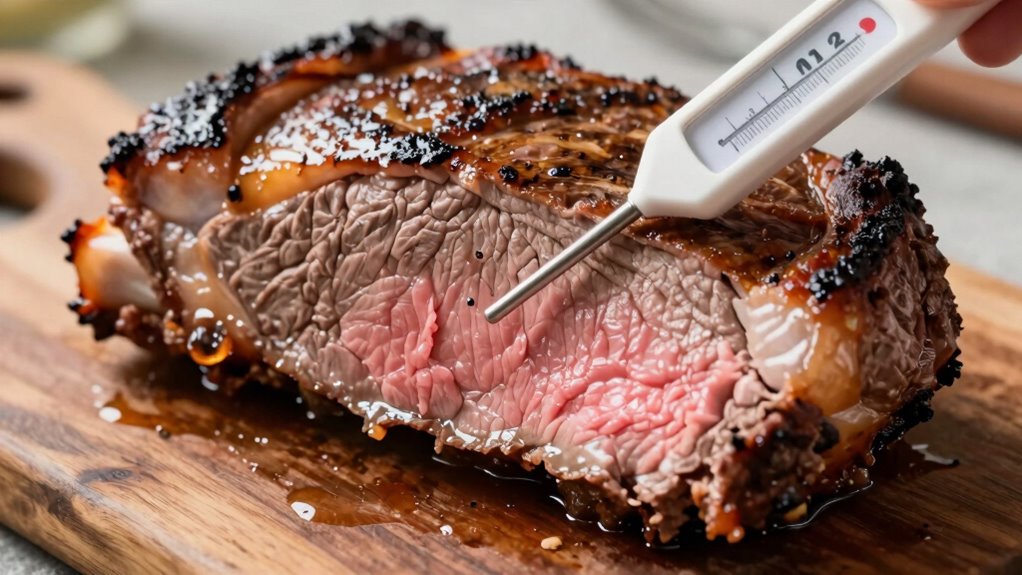
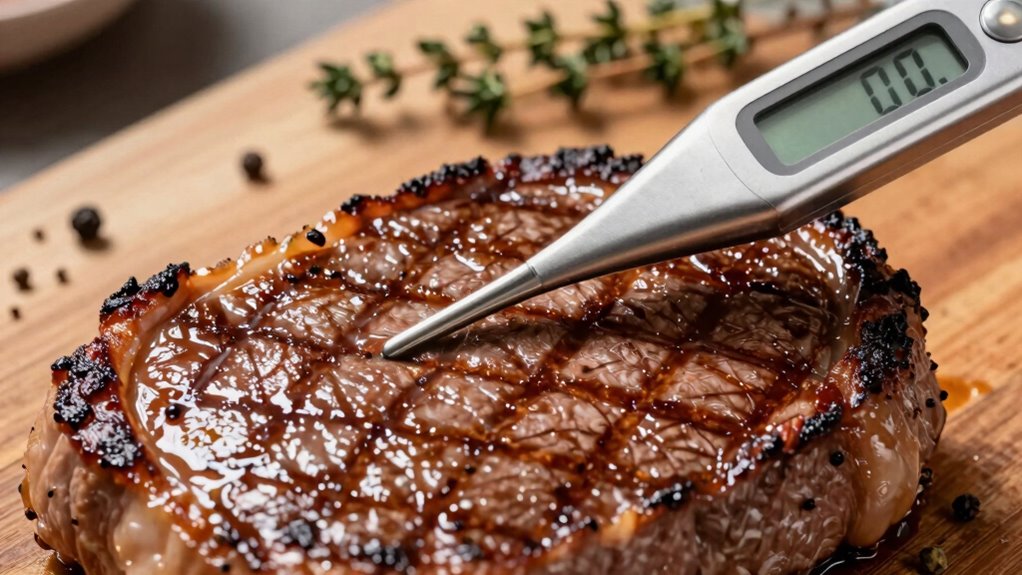
When placing your thermometer in roasts and large meats, always insert it into the thickest part to get an accurate reading. Keep it clear of bones, as contact can give false results. For the most reliable temperature, check multiple spots if possible. Additionally, ensuring proper thermometer placement can significantly improve the accuracy of your measurements. Using a probe thermometer designed for oven use can also help maintain consistent readings throughout the cooking process. Proper temperature calibration of your thermometer is equally important to ensure accurate measurements. Being aware of measurement accuracy best practices can help prevent undercooking or overcooking your meat. Employing vetted product recommendations can further enhance your cooking precision and confidence.
Measure in Thickest Part
To guarantee accurate temperature readings, place your food thermometer in the thickest part of the roast or large meat. This area is less likely to overcook or undercook, ensuring the meat reaches a safe internal temperature. Checking the thickest part also reflects the overall food texture, giving you a true sense of doneness. When you measure in the right spot, you prevent uneven cooking that can compromise flavor enhancement and tenderness. Avoid inserting the thermometer near the edges or thin sections, as these can heat faster and give false readings. By focusing on the thickest part, you ensure your meat is perfectly cooked, safe to eat, and maintains ideal texture and flavor. This simple step makes all the difference in achieving a perfect, evenly cooked roast. Additionally, understanding the thermal properties of meat helps in choosing the best spot for accurate measurement.
Avoid Bone Contact
Placing your thermometer away from bones is essential for an accurate reading because bones conduct heat differently than meat, which can lead to false temperature measurements. Bone contact often results in falsely high readings, making you think the meat is cooked when it isn’t. To guarantee your thermometer shows the correct temperature, avoid touching or resting it directly against bones. Also, check that your thermometer is properly calibrated before use; an inaccurate device will give unreliable results regardless of placement. When inserting the probe, position it in the thickest part of the meat, keeping it clear of bones. This way, you get a true reading that guarantees your meat is cooked to safe, perfect doneness without bone interference skewing the temperature.
Check Multiple Spots
Checking multiple spots with your thermometer guarantees you get an accurate reading of large cuts like roasts. Since oven placement can cause temperature variations, measuring in various areas ensures you don’t miss hot or cold spots. Insert the thermometer into the thickest part of the meat, avoiding bones and fat, for the most reliable results. Remember to calibrate your thermometer regularly to maintain accuracy. If your thermometer isn’t properly calibrated, your readings could be off, leading to undercooked or overcooked meat. When checking multiple spots, aim for the center and edges, especially in unevenly cooked roasts. This approach helps you determine if the entire piece has reached a safe temperature, avoiding guesswork and ensuring perfectly cooked meat every time.
How to Check Bread and Baked Goods Correctly
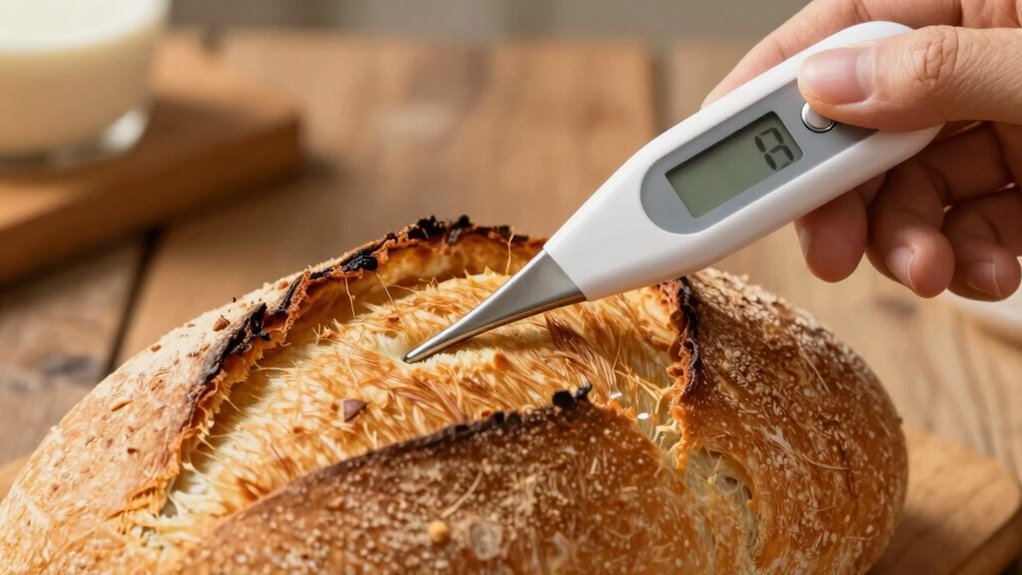
Ever wonder how to make certain your bread is perfectly baked? Accurate dough testing is key. Use your food thermometer to check the internal temperature at the center of the loaf or baked good. Insert the probe vertically into the middle, avoiding crust or filling. For even results, test in multiple spots, especially for large or uneven items.
Here’s a quick guide:
| Step | What to Do | Why It Matters |
|---|---|---|
| Insert probe | Deep into the center of the bread or baked good | Ensures precise reading |
| Check multiple | Test in 2-3 spots | Confirms even baking |
| Wait for reading | Hold for 10 seconds until stable | Gets an accurate temp |
| Final temp | Ensure it reaches 190-210°F | Indicates proper bread baking |
Master these steps to perfect your baked goods every time.
Best Placement Tips for Poultry and Other Meats
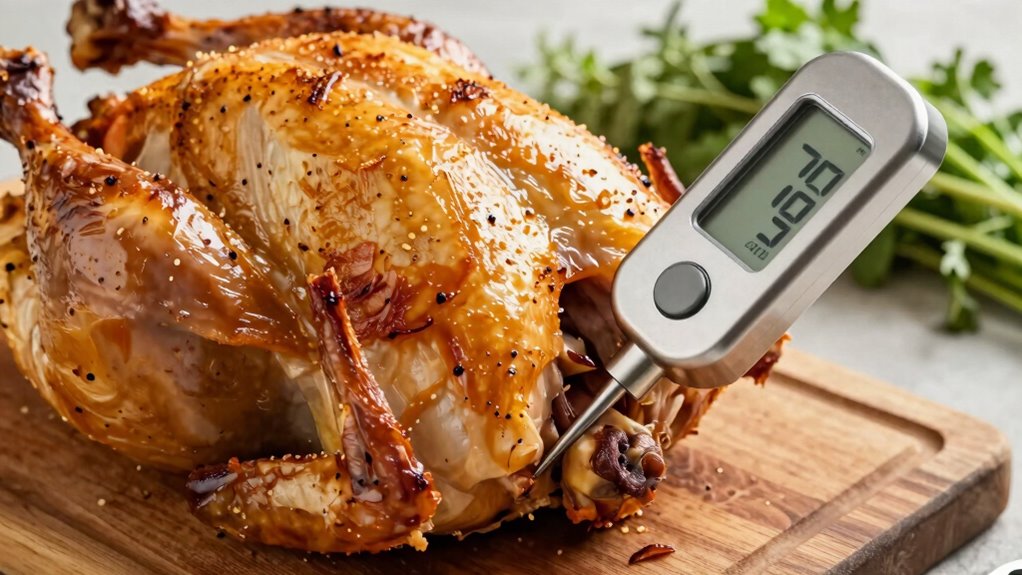
To guarantee your poultry and meats are cooked safely and thoroughly, it’s vital to position your food thermometer correctly. Insert the probe into the thickest part of the meat, avoiding bone, fat, or gristle, which can give false readings. Proper placement supports good kitchen hygiene by preventing cross-contamination, especially when checking multiple meats. Also, make sure your meat has been stored properly; meat stored at the right temperature cooks more evenly and reduces the risk of bacteria. Clean your thermometer before and after use to maintain hygiene. Avoid touching the bone or stuffing, as these areas can skew the temperature. Consistent placement ensures accurate readings, helping you achieve safe, properly cooked poultry and other meats.
Using Different Thermometers: Placement Tips for Digital and Analog Devices
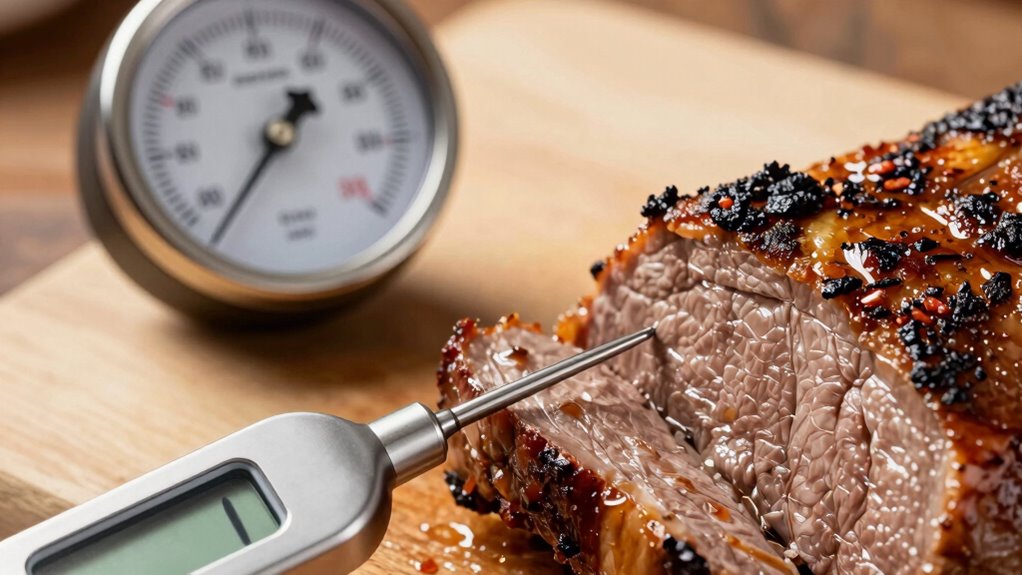
When using digital and analog thermometers, proper placement guarantees accurate readings. Digital devices often have specific tips for placement, while analog thermometers require different strategies for reliable results. Knowing these differences helps you choose the right technique for each type.
Digital Thermometer Placement Tips
Digital thermometers require careful placement to guarantee accurate readings. When measuring food temperature, insert the probe into the thickest part of the ingredient, avoiding fat, bone, or gristle, which can distort results. Proper placement ensures you’re accurately checking food storage and ingredient freshness, preventing undercooked or unsafe food. Make sure the probe is fully inserted without touching the container sides or bottom, as this can give false readings. Keep the digital display away from heat sources or cold spots that might skew the measurement. Always clean the probe between uses to prevent cross-contamination. Consistent placement and proper technique help you trust your digital thermometer’s readings, confirming food safety and ideal freshness. Accurate placement is key to preventing foodborne illness and maintaining quality.
Analog Thermometer Placement Strategies
Choosing the right placement for an analog thermometer is essential for accurate readings. To guarantee precision, regularly use calibration techniques like ice water or boiling water tests, adjusting as needed. Proper thermometer storage also matters; keep your analog device in a consistent, protected environment to prevent damage or inaccurate readings. When placing the thermometer, insert it into the thickest part of the food, avoiding contact with bones or fat, which can skew results. Make sure it’s fully immersed without touching the container sides or bottom. Accurate placement minimizes errors and provides reliable temperature data. Remember, consistent calibration and proper storage are vital for maintaining your analog thermometer’s accuracy over time. Following these strategies helps you get the right temperature every time.
How to Avoid Cross-Contamination When Inserting Your Thermometer
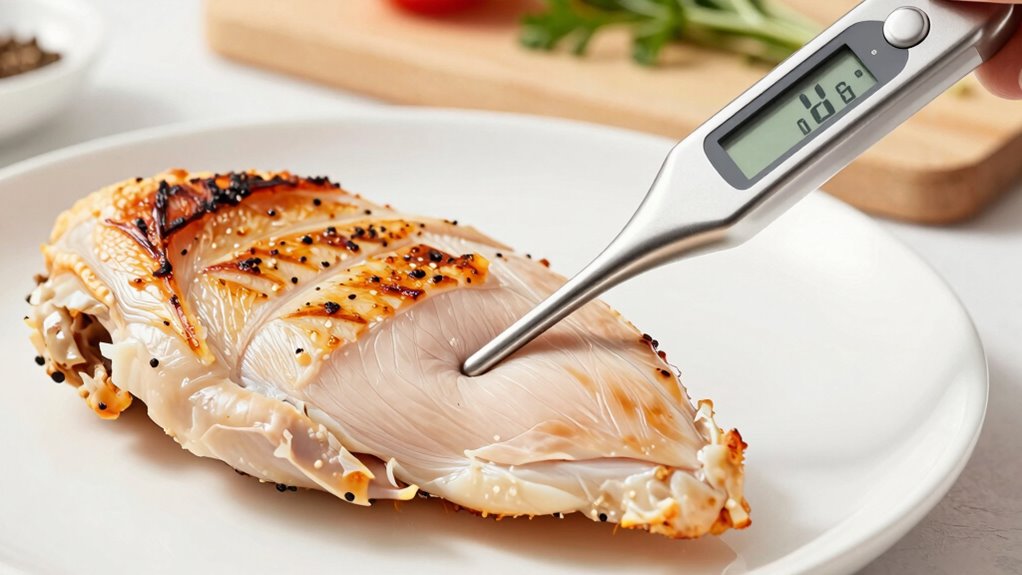
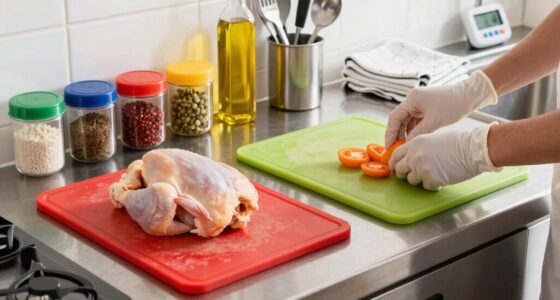
To prevent cross-contamination, it’s essential to handle your food thermometer carefully each time you insert it. Start by washing your hands thoroughly and ensuring your thermometer is clean. Before measuring, check that your kitchen hygiene practices are solid, and avoid inserting the thermometer into multiple ingredients without cleaning it first. When dealing with raw meat or poultry, sanitize the probe before moving to cooked foods to prevent bacteria transfer. Proper ingredient storage minimizes the risk of contamination; keep raw and cooked foods separate, and use different thermometers or clean them between uses. Always insert the thermometer into the thickest part of the food without touching bones or the pan. Following these steps helps ensure safe food handling and prevents cross-contamination during temperature checks.
How Incorrect Placement Affects Food Safety and Quality
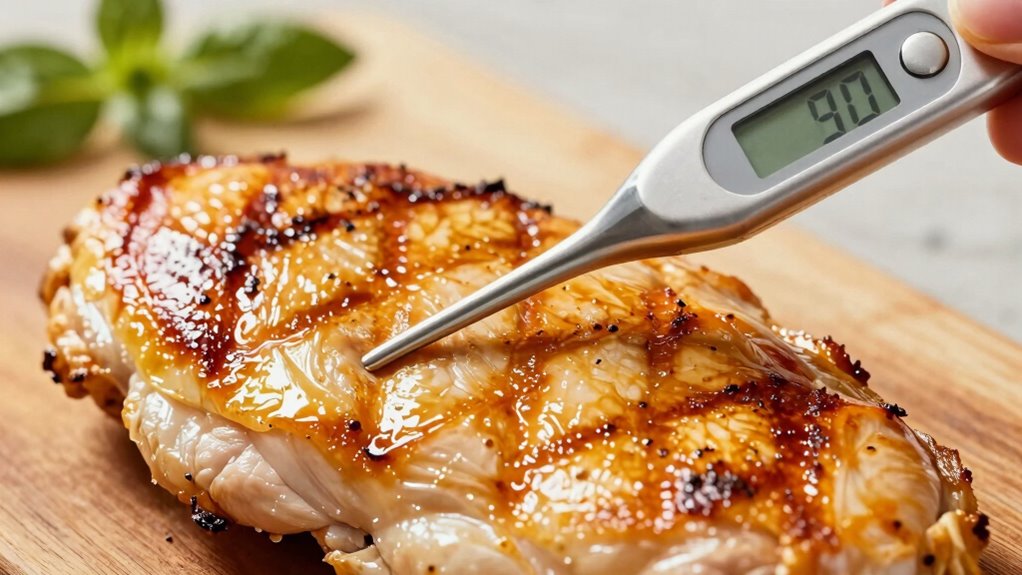
Incorrect placement of your food thermometer can lead to serious safety and quality issues. Many cooking myths suggest that sticking the thermometer anywhere is enough, but improper placement can cause you to misjudge doneness, risking foodborne illnesses. It also affects flavor preservation; piercing the thickest part ensures even heat, maintaining the intended taste and texture. When you insert the thermometer incorrectly, you might think food is safe when it’s not, or overcook it, ruining its quality. Proper placement guarantees accurate readings, helping you meet safety standards without sacrificing flavor. Ignoring this step can give a false sense of security or lead to unnecessary overcooking. Ensuring correct placement is key to achieving safe, flavorful, and perfectly cooked food every time.
Step-by-Step: Placing Your Food Thermometer Correctly Every Time
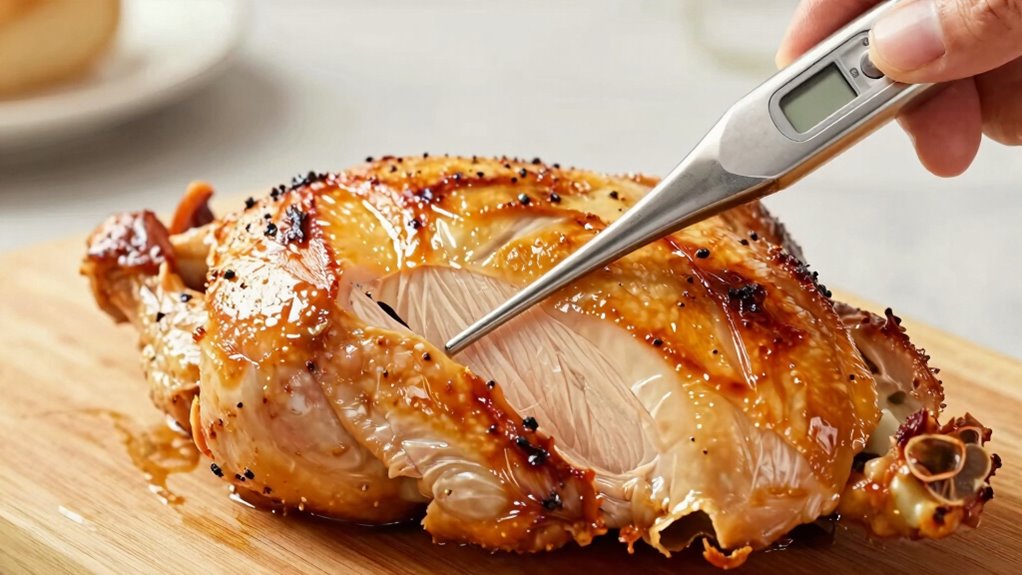
Placing your food thermometer correctly is essential for accurate temperature readings and safe cooking. To do it right every time, follow these steps:
| Step | Action | Tips |
|---|---|---|
| Insert Properly | Insert the probe into the thickest part | Avoid touching bone or fat |
| Depth | Ensure the probe is fully immersed | Usually 1.5-2 inches deep |
| Positioning | Keep the probe centered and steady | Prevents false readings |
| Rest & Read | Wait for the temperature to stabilize | Use the final reading for accuracy |
Correct placement influences your cooking techniques, ensuring food reaches safe temps. It also enhances flavor pairing by avoiding overcooking delicate flavors. Mastering this step guarantees precise results and delicious, safe meals.
Troubleshooting: Why Your Temperature Readings Might Be Off
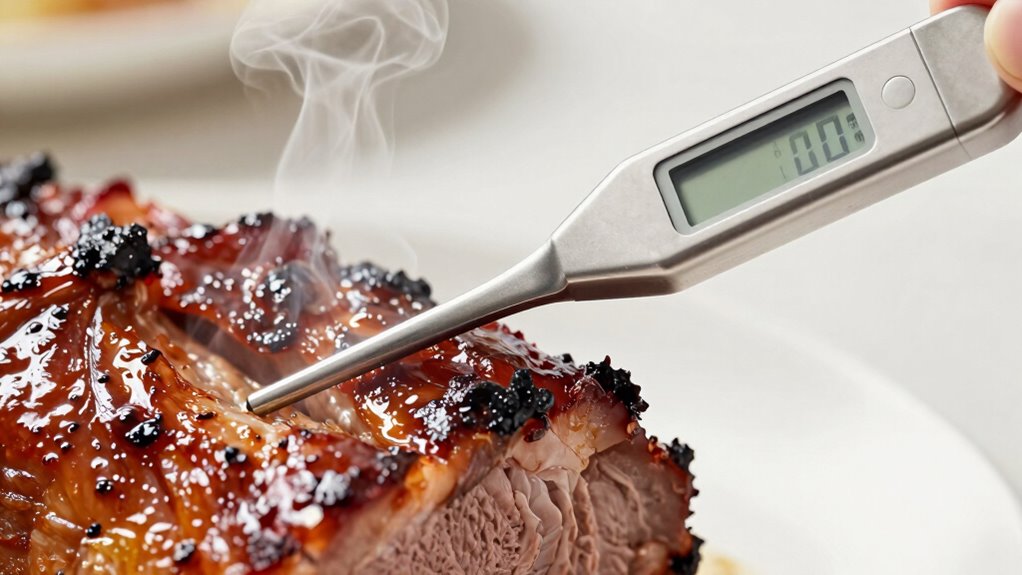
Even when you follow proper placement techniques, your temperature readings can still be off due to common issues like probe calibration errors, improper insertion, or inconsistent contact with the food. These problems can lead to inaccurate ingredient temperature readings, affecting your cooking results. To troubleshoot, check that your thermometer is calibrated correctly and functioning properly. Ensure you’re inserting the probe fully into the thickest part of the food, avoiding contact with bones or cooking equipment that could skew results. Also, verify you’re holding the probe steady and making good contact for consistent readings.
- Calibration issues with your thermometer
- Not inserting the probe deep enough
- Contact with frozen or uneven surfaces
- Using the wrong type of thermometer for your equipment
Frequently Asked Questions
How Often Should I Calibrate My Food Thermometer for Accurate Readings?
You should calibrate your food thermometer at least once a year to guarantee accuracy maintenance. If you notice inconsistent readings or after dropping it, calibrate more frequently. Regular calibration helps you avoid incorrect temperatures, preventing food safety issues. Keep a schedule for calibration, especially if you rely on your thermometer often. This way, you stay confident that your readings are precise and safe for cooking or serving.
Can the Type of Meat Affect Where I Should Place the Thermometer?
Think of meat as a layered cake; the right spot depends on its thickness and temperature zones. Thinner cuts need the thermometer inserted into the thickest part, avoiding bone or fat, while thicker cuts may require multiple readings. The type of meat influences placement because different cuts have varied internal structures. Always aim for the center to guarantee an accurate temperature reading, regardless of the meat type.
Is It Necessary to Clean the Thermometer Between Different Food Items?
Yes, you should disinfect the thermometer between different food items. Proper cleaning protocols help prevent cross-contamination and ensure accurate readings. After checking each item, wash the probe with hot, soapy water or disinfectant if necessary. This simple step keeps bacteria from spreading and maintains food safety. Always remember, clean thermometers are key to preventing cross-contamination and ensuring your food is cooked to the right temperature.
How Does Ambient Temperature Influence Thermometer Placement Choices?
Ambient temperature greatly impacts your thermometer placement choices because ambient effects can skew readings if you’re not careful. To guarantee placement accuracy, avoid inserting the thermometer in cold or hot spots caused by the environment. Instead, choose a spot away from drafts, heat sources, or cold air currents. This way, you get a true temperature reading, helping you cook safely and accurately without being misled by external temperature influences.
Are There Specific Placements for Thick Versus Thin Cuts of Meat?
For thick cuts of meat, you should insert the thermometer to the very center, hitting the thickest part for an accurate reading. With thin cuts, a quick, shallow placement works best, ensuring you don’t overcook or undercook. Always match your thermometer depth to the meat’s thickness—think of it as a secret code to perfect doneness. Proper placement guarantees juicy, safe, and delicious results every time.
Conclusion
By placing your thermometer correctly, you guarantee food safety, achieve perfect doneness, and prevent cross-contamination. Remember to check the right spots, avoid common mistakes, and follow proper techniques every time. Consistent placement boosts accuracy, confidence, and delicious results. So, focus on proper placement, practice mindful insertion, and enjoy safe, tasty meals every time you cook. Your food, your health, your peace of mind—all depend on getting it right.