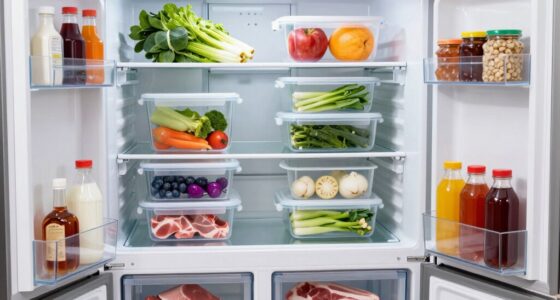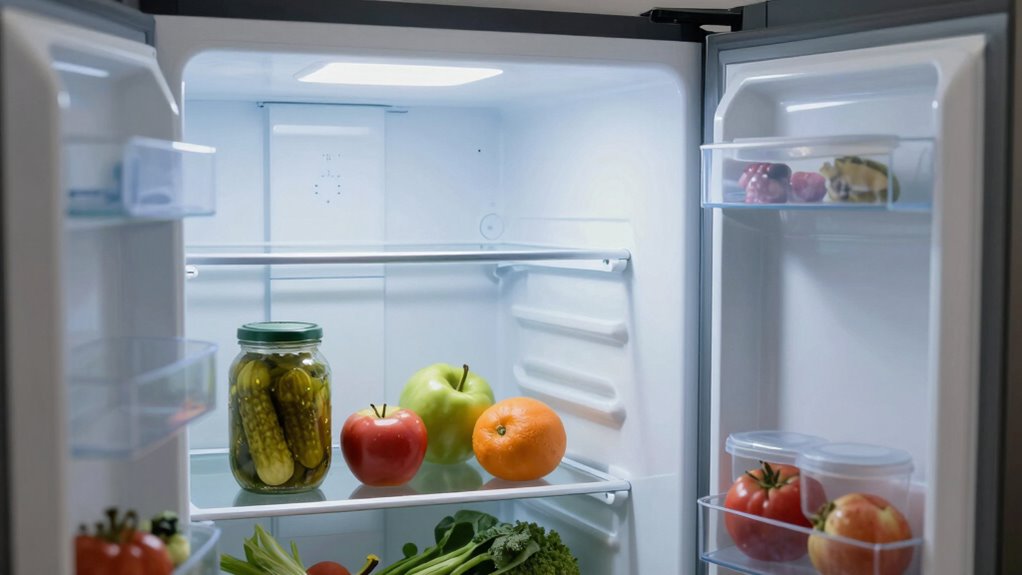

Your fridge temperature may be silently spoiling your food if it’s not set around 37°F (3°C). Too warm, and bacteria can grow quickly, causing spoilage, while too cold, and you risk freezing produce or wasting energy. Regularly check with a thermometer and adjust the thermostat as needed. Properly maintained, your fridge keeps food safe and fresh. To find out how to get it just right, keep exploring this guide.
Key Takeaways
- Incorrect fridge temperature, especially above 40°F (4°C), can silently promote bacterial growth and spoil food.
- Setting the fridge too warm or too cold disrupts food preservation and increases energy waste.
- Regularly verify and calibrate your thermometer to ensure the fridge stays at the recommended 37°F (3°C).
- Fluctuating temperatures or frost buildup indicate cooling issues that can spoil food unnoticed.
- Proper maintenance, including cleaning coils and checking seals, prevents silent spoilage caused by temperature irregularities.
Why Setting the Right Fridge Temperature Matters for Food Safety

Setting the right fridge temperature is essential because it directly affects how well your food stays safe and fresh. Proper temperature calibration guarantees your refrigerator runs at the ideal setting, preventing bacterial growth and spoilage. If your fridge isn’t correctly calibrated, it may be too warm, risking foodborne illnesses, or too cold, which can damage delicate items. Following food safety guidelines helps you maintain a safe environment for your groceries, reducing waste and health hazards. Regularly checking and adjusting your fridge’s temperature ensures it stays within the recommended range, typically around 37°F (3°C). By paying attention to proper calibration, you protect your health and extend the freshness of your food, making sure your fridge operates efficiently and safely.
What’s the Best Temperature for My Refrigerator?
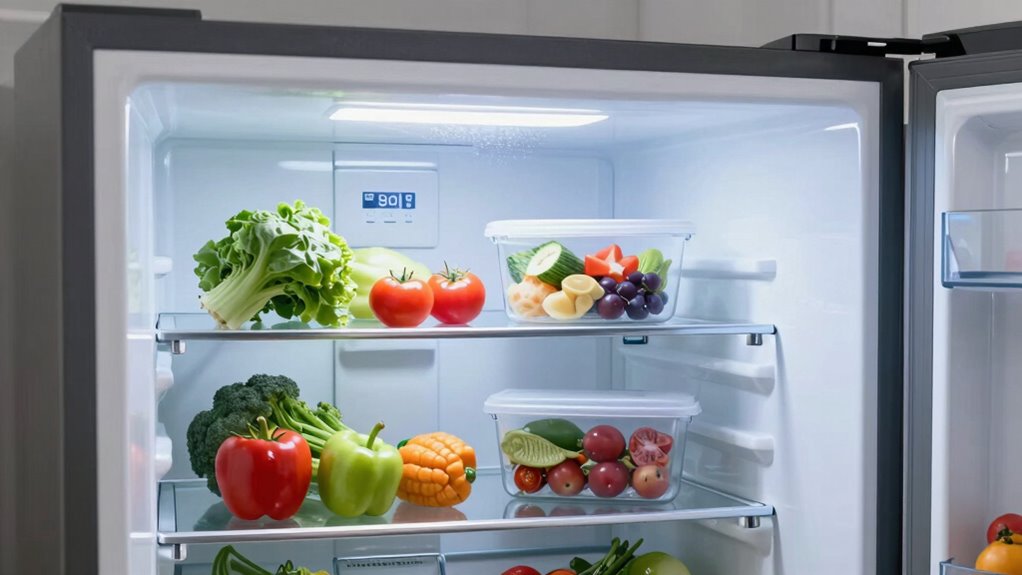
Knowing the ideal temperature for your refrigerator helps you keep food fresh and safe. Experts recommend setting your fridge at around 37°F (3°C) to maximize food preservation and energy efficiency. A consistent temperature at this level slows bacterial growth, preventing spoilage while minimizing energy use. Avoid setting it too cold, which can waste power and damage food, or too warm, risking foodborne illness. Use a thermometer to ensure your fridge stays within the perfect range, especially if you notice temperature fluctuations. Proper temperature control not only safeguards your food but also reduces electricity bills by preventing unnecessary cooling. Regularly checking and adjusting your fridge’s temperature ensures it operates efficiently and keeps your food fresh longer. Maintaining a stable temperature range is crucial for optimal appliance performance and food safety. Additionally, understanding how your home energy interacts with appliance operation can help you optimize energy use and keep your food at the ideal temperature. Being aware of the role of temperature in food preservation can further help you make informed adjustments and avoid spoilage. Ensuring your fridge maintains a consistent temperature can also extend the lifespan of your appliance and reduce maintenance costs. Incorporating proper insulation techniques can also help your refrigerator maintain a steady internal temperature more effectively.
How to Check Your Fridge Temperature Quickly and Accurately
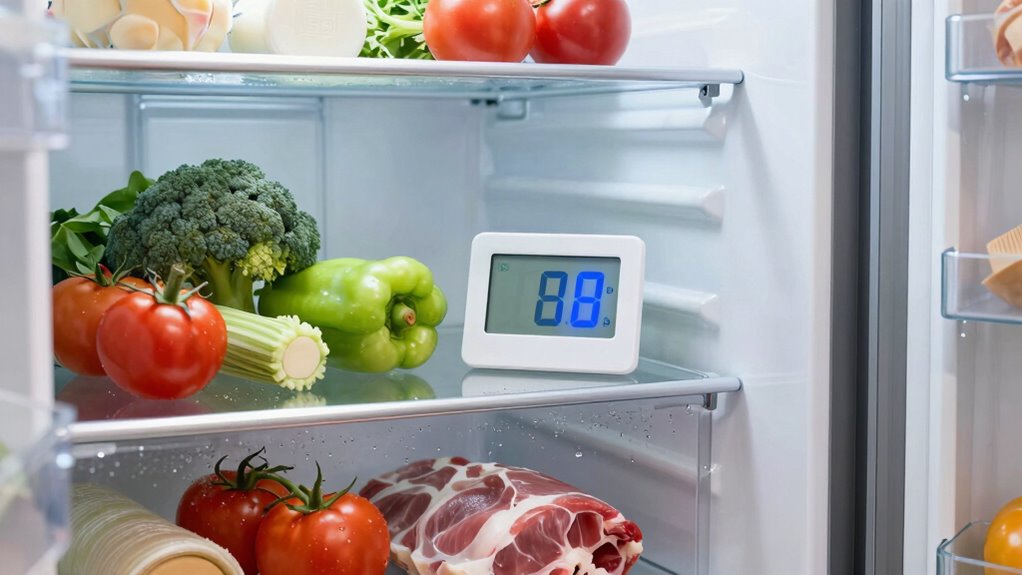
To verify your fridge temperature quickly and accurately, start by using a reliable thermometer designed for food storage. Make sure to place the thermometer in the center of the fridge, away from the walls and door shelves. This way, you’ll get an accurate reading to ensure your fridge stays at the right temperature. For optimal preservation, maintaining the correct refrigerator temperature is essential to prevent spoilage and bacterial growth. Additionally, periodically checking the air purifier maintenance dos and don’ts can help maintain a clean environment that supports food freshness.
Use a Reliable Thermometer
Using a reliable thermometer is essential for accurately checking your fridge temperature. To guarantee thermometer accuracy, select a model designed for food storage or appliance use. Regular calibration tips include placing the thermometer in boiling water for a few minutes to check if it reads 212°F (100°C) or using ice water for 32°F (0°C). If your device isn’t accurate, follow its instructions to calibrate or replace it. A precise thermometer helps you maintain the ideal fridge temperature of around 37°F (3°C), preventing food spoilage and bacteria growth. Always use a digital or dial thermometer with clear readings, and test it periodically to ensure ongoing accuracy. Proper calibration of your thermometer ensures reliable readings, allowing you to make informed adjustments, keeping your food safe and fresh. Additionally, understanding temperature consistency within your fridge can further help in maintaining optimal storage conditions. Regularly monitoring your fridge’s temperature with an accurate thermometer helps prevent foodborne illnesses caused by improper storage temperatures. Incorporating regular checks can lead to early detection of temperature fluctuations, safeguarding your food over time.
Place It Properly
Proper placement of your thermometer is key to getting an accurate reading of your fridge’s temperature. To guarantee precise results, position the thermometer away from the door, where temperature fluctuations are common, and avoid placing it near the walls or the back of the appliance, which can be warmer or colder. For ideal food storage, keep the thermometer in the main body of the fridge, ideally in the center or near the shelves where you store most items. Regularly checking and repositioning your thermometer is part of good appliance maintenance, helping you maintain safe temperatures and prevent spoilage. Correct placement ensures you monitor your fridge accurately, allowing you to adjust settings if needed and keep your food fresh longer. Using a trusted business or service for appliance maintenance can help ensure your fridge stays in optimal condition. Additionally, understanding the recommended temperature range for refrigerators can help you set and verify your appliance’s temperature more effectively. Maintaining proper temperature calibration is crucial for consistent performance and food safety. To further ensure accuracy, consider using a digital thermometer with a precise readout for more reliable measurements.
Signs Your Fridge Isn’t Cold Enough (or Too Cold)

If your fridge isn’t maintaining a consistent temperature, you might notice fluctuations or strange changes in your food’s freshness. Unusual spoilage or frost buildup can also signal that your appliance isn’t cooling properly. Additionally, a sudden spike in energy bills may indicate it’s working harder than it should to keep things cold. Ensuring proper airflow and avoiding overloading can help maintain optimal air circulation inside your fridge. Regularly checking the electric components of your fridge can also prevent potential malfunctions that affect cooling performance. Proper maintenance and awareness of free floating issues are essential to keep your food fresh and your appliance running efficiently. Being mindful of toilet flushing mechanisms can help prevent plumbing issues that may indirectly influence your home’s overall water use and efficiency. Furthermore, understanding the importance of proper refrigeration techniques can extend the lifespan of your appliance and improve its cooling consistency.
Temperature Fluctuations Detected
When your fridge isn’t maintaining a consistent temperature, you might notice fluctuations that can compromise food safety and freshness. Temperature fluctuations occur when the fridge cycles on and off unpredictably or the temperature swings outside the safe range. Using fridge thermometers helps you detect these inconsistencies, as built-in gauges can be unreliable. If you notice your fridge’s temperature rising or dropping suddenly, it indicates a problem with the cooling system or door seals. These fluctuations can cause perishable items to spoil faster or freeze unevenly. Regularly monitoring your fridge thermometers allows you to catch these issues early, ensuring your food stays fresh and safe. Being aware of temperature stability and maintaining proper settings can help prevent spoilage. Addressing temperature swings promptly keeps your fridge functioning efficiently and maintains ideal storage conditions.
Unusual Food Spoilage Signs
Unusual food spoilage signs often indicate that your fridge isn’t maintaining the right temperature. If your stored food shows signs of rapid decay, mold, or an off smell, it’s a clear warning that your food storage conditions are off. Overly warm temperatures allow bacteria to thrive, leading to quicker spoilage and potential health risks. Conversely, if your fridge is too cold, you might notice frozen produce or dairy turning icy, which can compromise freshness. These signs highlight the importance of spoilage prevention through proper temperature control. Regularly checking for these clues helps you adjust your fridge settings promptly, ensuring your food stays fresh longer and reducing waste. Staying vigilant about unusual spoilage signs keeps your food safe and extends its shelf life.
Energy Consumption Spikes
Spikes in your fridge’s energy consumption can be strong indicators that the temperature isn’t set correctly. When your fridge runs more often than usual, it strains energy efficiency and risks compromising food preservation. To troubleshoot, check for these signs:
- The compressor cycles on and off frequently.
- The fridge feels unusually warm or cold.
- Ice buildup appears inside or on the door seals.
- Food spoils faster than expected.
- Improper temperature settings can lead to increased energy use and food safety issues.
- Additionally, AI detection methods are increasingly used to monitor appliance performance and ensure optimal operation.
These issues suggest your fridge is working harder to maintain the right temperature, which increases energy use. Proper temperature settings help maximize energy efficiency and keep your food fresh longer. If you notice these spikes, adjusting the thermostat or inspecting door seals can help restore ideal operation, ensuring your fridge is neither too cold nor too warm.
Risks of Incorrect Fridge Settings: Spoilage and Waste

Incorrect fridge settings can lead to food spoilage and unnecessary waste, putting your health and budget at risk. When your fridge isn’t at the right temperature, perishable items may spoil faster, increasing food waste. Poor freezer organization can cause items to be forgotten or misplaced, leading to spoilage. Proper food storage is essential to keep food fresh and avoid unnecessary disposal. Here’s a quick guide to common issues:
| Issue | Cause | Solution |
|---|---|---|
| Spoiled dairy | Too warm fridge temperatures | Lower temperature to 37°F (3°C) |
| Freezer burn | Improper freezer organization | Use airtight containers |
| Vegetables wilting | Incorrect humidity levels | Use appropriate storage bins |
| Bacterial growth | Cross-contamination | Keep raw and cooked separate |
| Food waste | Ignoring expiration dates | Regularly check and organize |
Adjusting your fridge and freezer settings helps prevent these risks.
Easy Tips to Keep Your Fridge at the Perfect Temperature
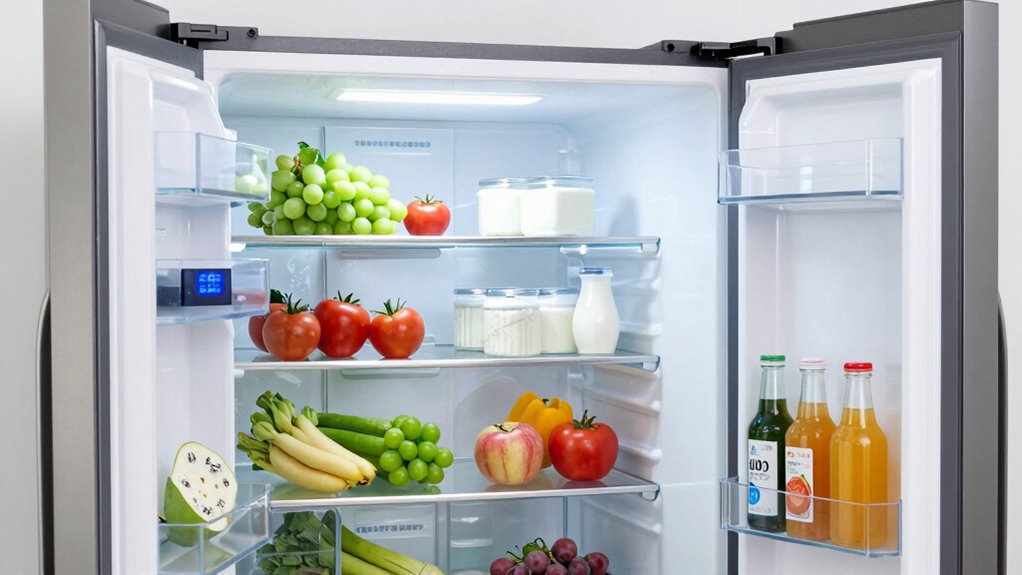
Maintaining the right temperature in your fridge is simple when you follow a few easy steps. First, set your fridge to the recommended 37°F (3°C) for ideal food preservation. To guarantee consistent temperature, regularly check with a thermometer. Second, avoid overloading your fridge, which can hinder air circulation and cause uneven cooling. Third, keep the door closed as much as possible to prevent temperature fluctuations. Fourth, perform regular appliance maintenance, such as cleaning coils and checking seals, to keep your fridge running efficiently. These simple tips help maintain a stable environment, extending food freshness and preventing spoilage. Proper temperature management isn’t just about food safety—it’s about preserving your groceries and maintaining your appliance’s longevity.
Common Mistakes When Setting Your Fridge Temperature
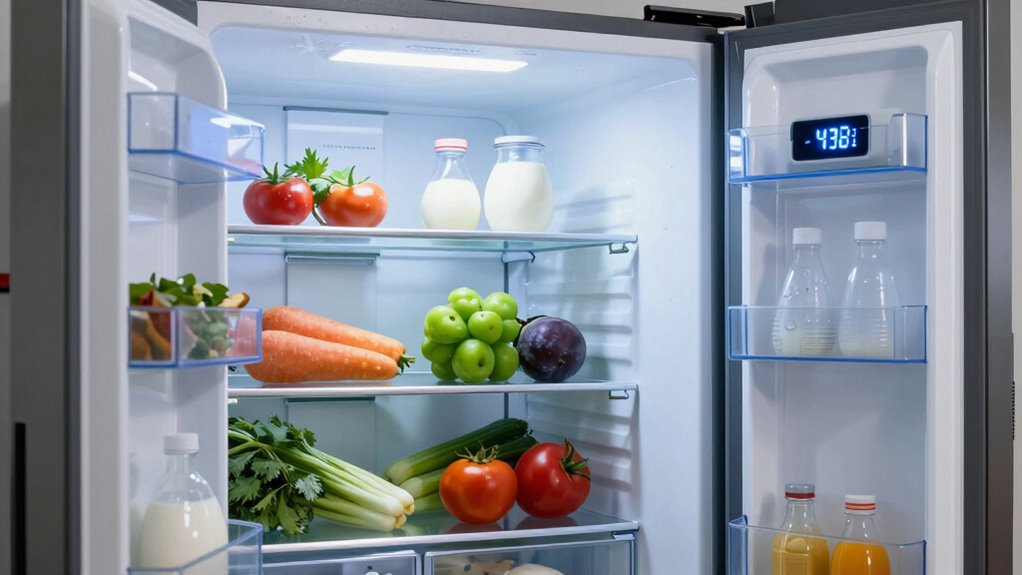
One common mistake is ignoring the recommended temperature guidelines, which can lead to food spoilage or safety issues. Overloading your fridge can block airflow, making it harder to maintain a consistent temperature. Paying attention to these issues helps keep your fridge running efficiently and your food fresh.
Ignoring Temperature Guidelines
Many people overlook the importance of following recommended temperature guidelines, which can lead to food spoilage and health risks. Ignoring these guidelines often stems from neglecting proper temperature calibration and disorganized fridge storage. When your fridge isn’t calibrated correctly, you might think it’s at the right temp, but in reality, it’s not. To avoid this, you should:
- Regularly check and calibrate the thermometer.
- Keep your fridge organized for proper air circulation.
- Store raw meats separately from produce.
- Avoid overpacking the fridge, which hampers cooling efficiency.
Failing to follow these simple steps can cause your fridge to operate inefficiently, risking bacteria growth and food spoilage. Always adhere to temperature guidelines for safe, fresh food.
Overloading the Fridge
Overloading your fridge might seem like a way to store more food, but it actually hampers proper cooling. When you cram too much inside, air can’t circulate freely, leading to uneven temperatures and spoiled food. Effective food storage depends on good fridge organization—placing items properly and leaving space between them helps maintain a consistent chill. Avoid packing it tightly; instead, arrange your groceries so cold air can flow around everything. This not only preserves your food longer but also ensures the fridge operates efficiently. Remember, a well-organized fridge with appropriate spacing prevents warm spots and reduces the risk of spoilage. Overloading may seem convenient, but in the long run, it compromises your fridge’s ability to keep food fresh.
Tools and Gadgets to Monitor Your Fridge’s Temperature
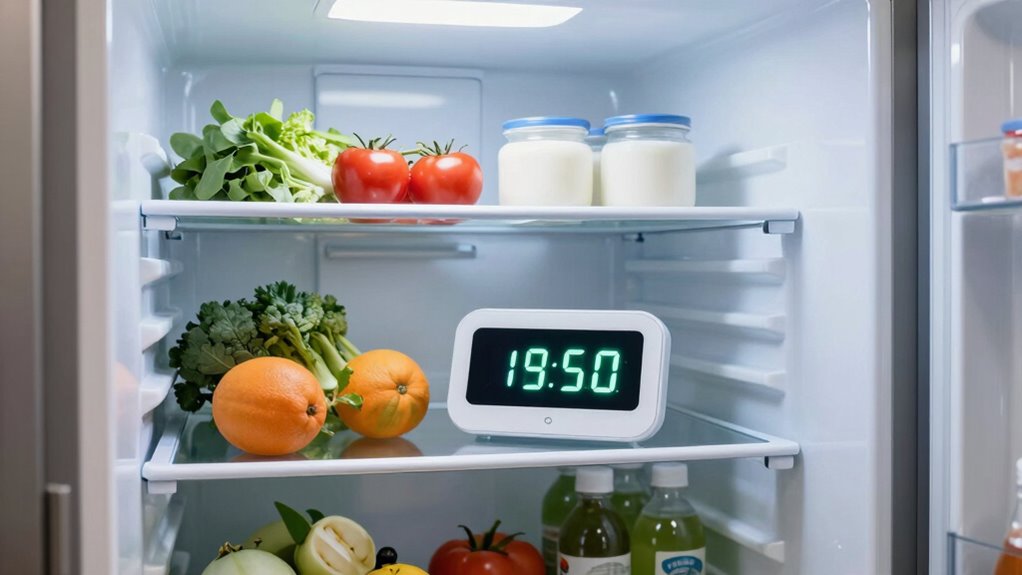
Keeping an eye on your fridge’s temperature is easier than ever with the right tools. Digital thermometers and wireless sensors help you monitor food storage conditions accurately. Here are four essential tools:
- Digital Refrigerator Thermometers – provide instant, precise readings.
- Wireless Temperature Sensors – send updates to your smartphone for real-time monitoring.
- Infrared Thermometers – quickly check surface temperatures without opening the door.
- Appliance Calibration Tools – guarantee your fridge maintains consistent temperature settings.
Using these gadgets helps prevent spoilage caused by improper temperature control. They also assist in verifying that your appliance calibration is accurate, saving you from food waste and potential health risks. Keeping tabs on your fridge’s temperature with these tools ensures your food stays fresh longer.
What to Do If Your Fridge Isn’t Cooling Properly?

If your fridge isn’t cooling properly, the first step is to identify the cause before attempting repairs. Check if the fridge is plugged in and the thermostat is set correctly—usually between 37°F and 40°F. Clear any vents or coils from dust and debris to improve airflow, which is essential for effective fridge maintenance. Make sure door seals are tight; leaks can cause temperature fluctuations. Avoid overloading the fridge, as overcrowding hampers cooling and affects food storage tips. If these steps don’t resolve the issue, consider defrosting the freezer or consulting a professional. Proper fridge maintenance helps prevent future cooling problems and ensures your food stays fresh longer, avoiding spoilage caused by temperature inconsistencies.
Maintaining the Right Fridge Temperature for Fresh, Safe Food
Are you aware that maintaining the correct fridge temperature is essential for keeping your food fresh and safe? When you set your fridge properly, you improve energy efficiency and support food preservation. To do this effectively:
- Keep the temperature at or below 40°F (4°C).
- Use a thermometer to monitor the exact temperature.
- Avoid overloading your fridge, which can obstruct airflow.
- Regularly clean the vents and coils for ideal performance.
These steps ensure your fridge operates efficiently, saving energy and preventing spoilage. Correct temperature control slows bacterial growth, extends food freshness, and reduces power consumption. By maintaining the right temperature, you protect your food and minimize waste while supporting energy efficiency.
Frequently Asked Questions
How Often Should I Check My Refrigerator’s Temperature?
You should check your refrigerator’s temperature at least once a week to guarantee proper cooling. Regular temperature monitoring helps you catch any fluctuations caused by thermostat calibration issues early. Keep a thermometer inside and verify it stays between 37-40°F. If it’s off, adjust the thermostat and recheck. Staying vigilant prevents spoilage, saves money, and keeps your food fresh and safe.
Can a Fridge’s Door Seal Affect Temperature Accuracy?
Yes, your fridge’s door seal can affect temperature accuracy. A worn or damaged door seal prevents proper closure, causing cold air to escape and making the fridge work harder to maintain the right temperature. Regular door seal maintenance ensures a tight seal. After replacing or repairing the seal, you should perform temperature calibration to confirm your fridge stays at the ideal setting, keeping your food fresh.
Does Ambient Room Temperature Impact Fridge Cooling?
Yes, ambient room temperature does influence your fridge’s cooling. When the room gets too warm, it forces the compressor to work harder, trying to keep the internal temperature steady. Poor air circulation can make this worse, causing uneven cooling and risking food spoilage. So, keep your fridge in a cool, well-ventilated spot to guarantee the compressor runs efficiently, and your food stays fresh longer.
Are There Specific Foods That Require Different Fridge Temperatures?
Yes, some foods need different fridge temperatures for food safety. You should store deli meats and seafood in the coldest zone, typically at 32°F to 40°F, to prevent bacteria growth. Dairy and leftovers also require cooler spots, while fruits and vegetables can tolerate slightly higher temperatures. By maintaining proper temperature zones, you guarantee your food stays fresh longer and reduces the risk of spoilage or foodborne illnesses.
How Do I Reset My Fridge’s Temperature After a Power Outage?
After a power outage, you should reset your fridge’s temperature promptly. First, locate the thermostat control and turn it to the recommended setting, usually around 37°F (3°C) for the fridge. The power outage impact can cause temperature fluctuations, so resetting guarantees your food stays safe. Wait a few hours, then check the temperature with a thermometer, adjusting as necessary to maintain the proper cold environment.
Conclusion
Keeping your fridge at the right temperature is key to preventing food spoilage and waste. Don’t overlook this small detail, as it can make a big difference in food safety and savings. Regular checks and proper settings are your best tools to stay ahead of problems. Remember, a stitch in time saves nine—taking quick action now keeps your food fresh and your kitchen running smoothly. Stay vigilant, and enjoy peace of mind with every meal!