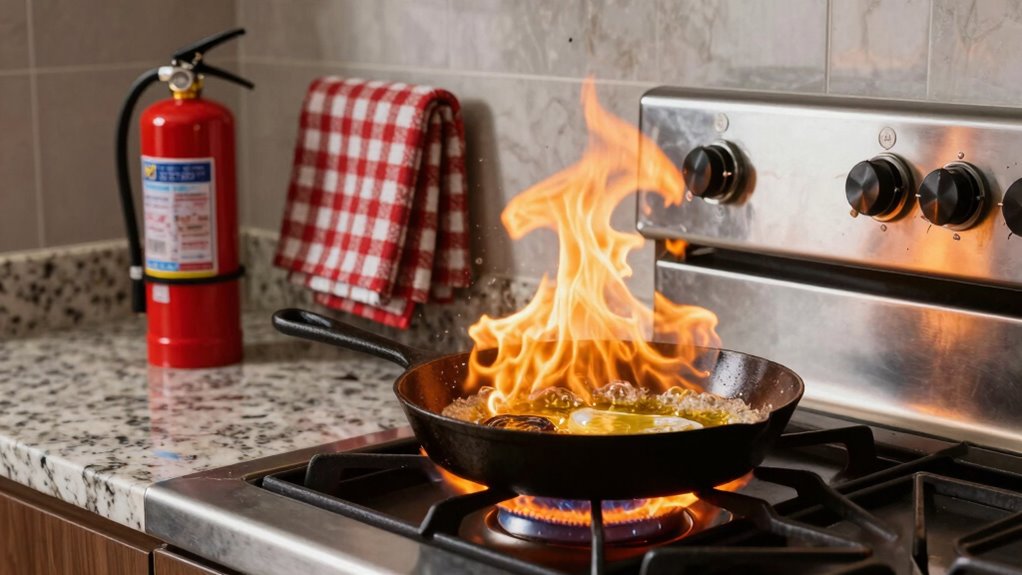

If a grease fire starts, turn off the heat immediately and cover the flames with a metal lid or baking sheet to smother it. Never pour water on it, as this makes it worse, and avoid moving the pan. Use a fire extinguisher rated for grease fires and aim at the base. Knowing these do’s and don’ts can save lives and property—keep going for more essential safety tips to handle kitchen fires effectively.
Key Takeaways
- Never use water to extinguish a grease fire; it causes flare-ups and spreading.
- Turn off the heat immediately and cover the fire with a metal lid or baking sheet to smother flames.
- Use a Class K or ABC fire extinguisher aimed at the fire’s base to safely extinguish the flames.
- Evacuate the area if the fire becomes uncontrollable and call emergency services promptly.
- Keep a fire extinguisher, lid, or fire blanket accessible in the kitchen for quick response.

Cuisinart CSO-300N Convection Steam Oven, Stainless Steel
120 minutes of steady, uninterrupted steam
As an affiliate, we earn on qualifying purchases.
What Causes Grease Fires and How Do They Escalate?
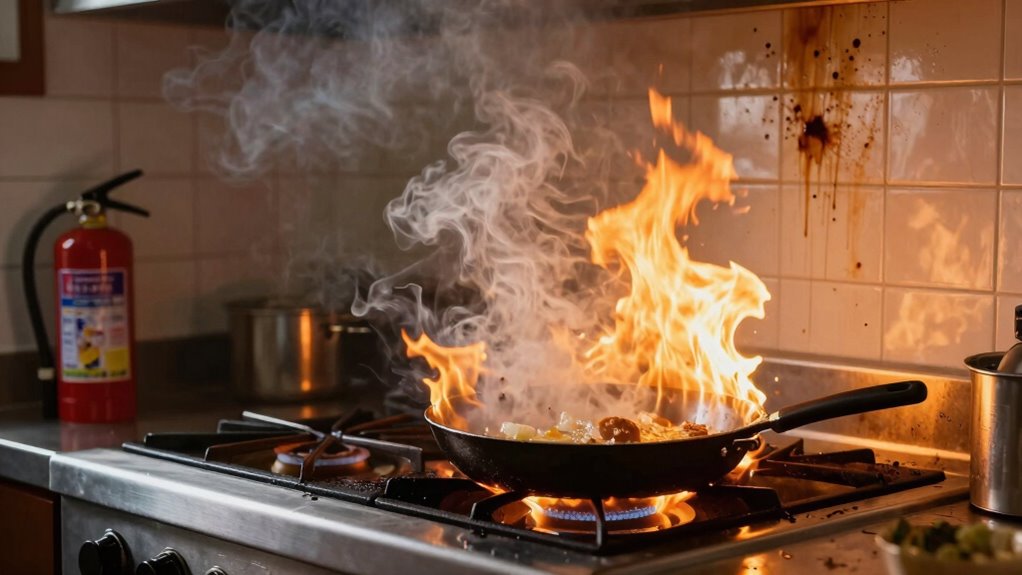
Grease fires typically start when cooking oil or fat become too hot and ignite, often because the heat is uncontrolled or spills occur near the stove. When oil reaches its flash point, it can ignite suddenly, causing a small flame to form. If you don’t act quickly, the fire can spread rapidly across the surface of the cooking oil. As the flames grow, they can ignite nearby combustibles like kitchen towels or paper towels, making the fire much worse. The key to understanding how these fires escalate is realizing how easily heat transfer allows flames to jump from the oil to other materials. Once fire spread begins, controlling or extinguishing the blaze becomes more difficult, increasing the risk of bigger damage and danger.
CIARRA 12-in-1 Countertop Steam Oven with Air Fryer, 25.4QT Steam Air Fryer Combo Nosh Oven Pro - Convection Toaster, Bake, Self-Clean, Dehydrate, Ferment, White
All-Round Cooking for Every Craving: This 25.4QT convection oven is a kitchen workhorse, boasting 11 cooking modes—including convection,...
As an affiliate, we earn on qualifying purchases.
How to Recognize the Signs of a Grease Fire Quickly

Recognizing the signs of a grease fire quickly is essential to preventing it from spreading. In terms of fire safety, knowing what to look for helps you act fast and avoid dangerous kitchen hazards. Signs include a sudden, uncontrolled flame on the stove, smoke billowing from the pan, or a strong, unusual smell of burning oil. If you notice the following, you’re likely dealing with a grease fire:
| Sign | What to Do | Immediate Action |
|---|---|---|
| Bright, yellow-orange flames | Flames flickering and growing | Stay calm and don a metal lid or baking sheet to smother the fire |
| Smoke or a burning smell | Smoke billowing from the stove | Turn off heat immediately and keep a safe distance |
| Bubbling or popping oil | Oil splattering unexpectedly | Do not pour water—this makes it worse |
| Discolored or charred food | Food looks burnt or blackened | Remove from heat and stay alert to hazards |
| Sudden intense heat | Feeling heat from the stove | Keep fire safety in mind and act swiftly |
| Unusual kitchen fire signs | Being aware of early indicators helps prevent escalation | Recognizing early fire hazards allows for quicker response |
Being familiar with these early warning signs can significantly improve your ability to respond promptly and effectively to a grease fire. Developing an emergency plan and practicing it can also make a crucial difference during such incidents. Additionally, understanding the importance of fire safety equipment like fire extinguishers is vital for quick response.

TOSHIBA 6-IN-1 Compact Steam Oven, Combi Oven Countertop with Convection Steam & Bake, Ferment, Air Fryer, Slow Cook, Smart APP Control, 36 Preset Menus and Steam Cleaning, 20L
SMART APP CONTROL - TOSHIBA convection oven can be remotely controlled and monitored in real time via TOSHIBA...
As an affiliate, we earn on qualifying purchases.
Immediate Steps to Take During a Grease Fire
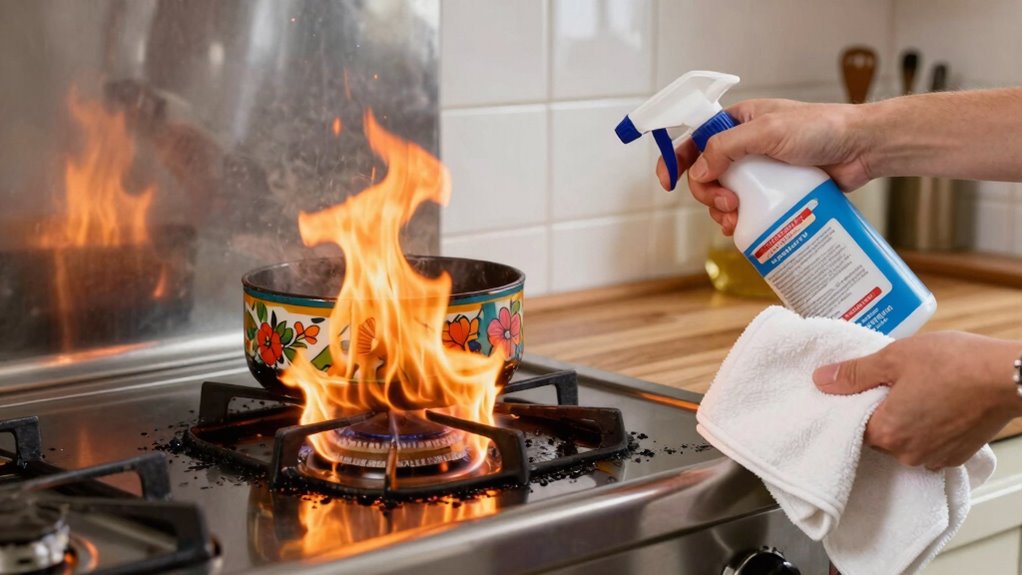
When a grease fire occurs, quick and calm action is crucial to prevent it from spreading or causing injury. Your first step is to turn off the heat source to stop fueling the fire, which is essential for fire prevention. Do not try to move the pan or carry it outside, as this can cause hot oil to splatter. Instead, cover the flames with a metal lid or a cookie sheet to smother the fire and cut off oxygen. Keep a fire extinguisher nearby specifically for kitchen fires, and use it if the fire grows beyond control. Never use water, as it can cause the fire to flare up. Staying composed and acting swiftly ensures your safety and helps prevent a small fire from becoming a disaster. Additionally, understanding proper ventilation considerations can help reduce the risk of smoke buildup and improve safety during fire emergencies. Proper fire safety practices include knowing when to evacuate and calling emergency services if needed, which is vital for your safety. Practicing fire drills regularly can also prepare you to respond effectively in an emergency.

OUNIN Air Fryer & Toaster Oven with Steam Infusion, 12L Compact, Countertop Friendly, Fast Preheat with Bake, Convection Bake, Grill, Broil and Warm Options, 60-Minute Timer, Stainless Steel
【Compact Yet Spacious for Small Families】 Ideally sized for your countertop, this versatile oven boasts a surprisingly roomy...
As an affiliate, we earn on qualifying purchases.
Do’s and Don’ts for Handling a Grease Fire Safely
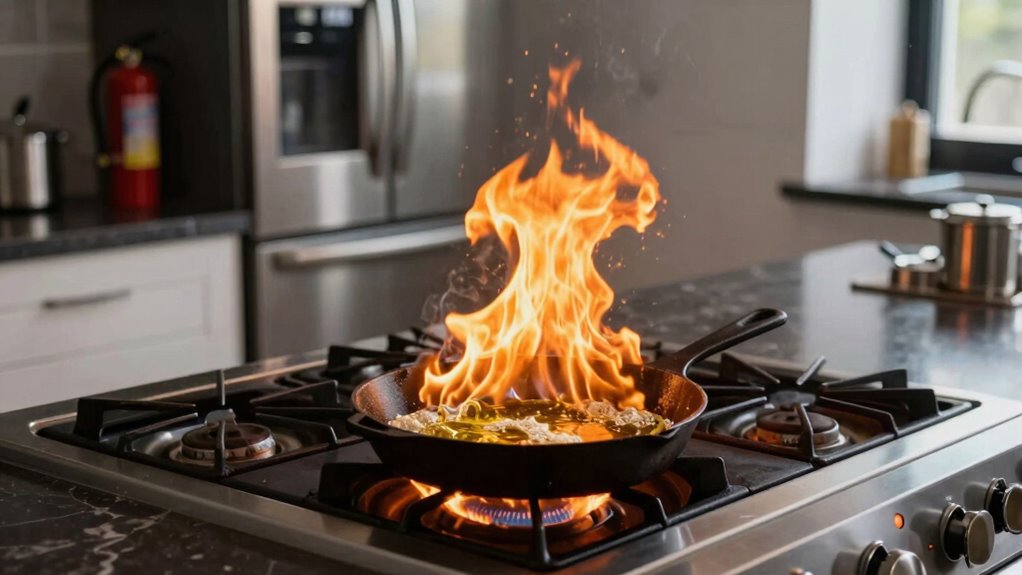
If a grease fire starts, never try to put it out with water. Instead, grab a fire extinguisher designed for kitchen fires and use it immediately. Knowing what to do can prevent the fire from spreading and keep everyone safe.
Do Not Use Water
You must never pour water on a grease fire because it can cause the fire to spread rapidly and violently. Water hazards are significant with grease fires since water sinks below the oil and instantly turns to steam. This sudden expansion can cause the burning grease to splatter, igniting nearby surfaces or spreading flames. Using water as a fire suppression method is dangerous and ineffective for grease fires. Instead, focus on removing the heat source or covering the fire with a metal lid or baking sheet to smother it. Remember, water will only make the situation worse, increasing the risk of burns and property damage. Always prioritize proper fire suppression techniques designed for grease fires to stay safe. Additionally, understanding water safety in fire emergencies is crucial to preventing injury.
Use a Fire Extinguisher
Using a fire extinguisher properly can quickly control a grease fire and prevent it from spreading. Always aim at the base of the flames, using a sweeping motion. Before using, verify your fire extinguisher is well-maintained; check the pressure gauge and inspect for damage regularly. Proper fire extinguisher storage keeps it accessible and safe from heat or humidity. Remember, never attempt to fight a large fire; evacuate and call emergency services.
| Fire Extinguisher Maintenance | Fire Extinguisher Storage |
|---|---|
| Check pressure gauge monthly | Keep in a visible, accessible location |
| Inspect for damage regularly | Store away from heat and humidity |
How to Use a Fire Extinguisher Effectively on a Grease Fire
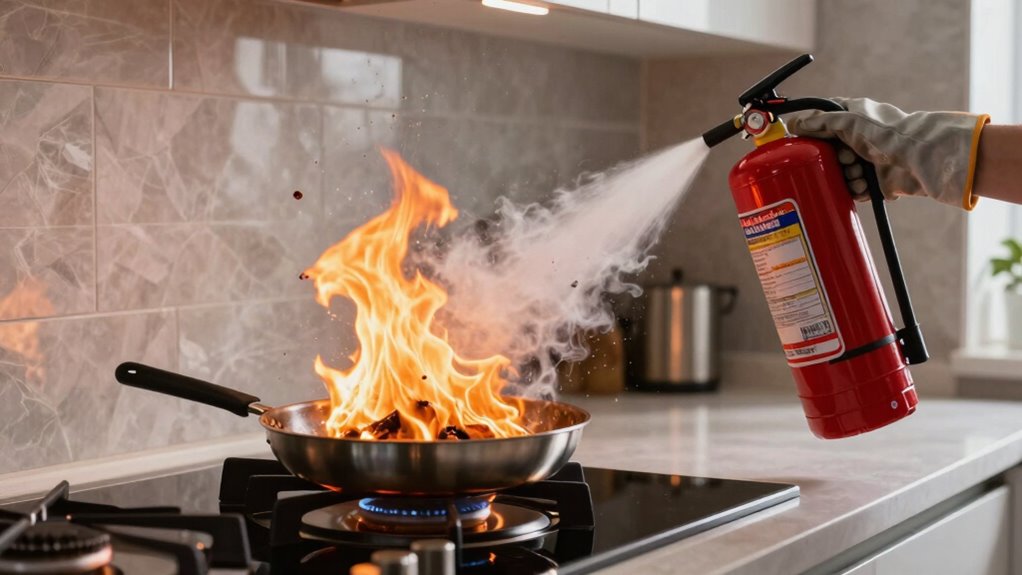
To use a fire extinguisher on a grease fire, first pull the pin to release it. Aim the nozzle at the base of the fire and sweep side to side until it’s out. Following these steps helps guarantee you put out the fire safely and effectively.
Pull Fire Extinguisher
Have you ever wondered what the first step is when tackling a grease fire with a fire extinguisher? First, locate the closest fire extinguisher and verify it’s properly maintained—regular fire extinguisher maintenance keeps it ready to use. Know your fire extinguisher types; a Class K extinguisher is ideal for kitchen fires, but a multi-purpose ABC extinguisher can also work. Before pulling the pin, make sure everyone is at a safe distance, and the fire isn’t spreading rapidly. Grasp the extinguisher firmly, pull the pin to release the handle, and keep your stance steady. Remember, pulling the fire extinguisher is the vital initial step that sets the stage for effectively putting out the fire.
Aim at Base Fire
When fighting a grease fire with a fire extinguisher, it’s essential to aim at the base of the flames rather than the top or sides. This targets the source of the fire, cutting off the heat and preventing it from spreading. Be cautious of nearby flammable liquids and electrical hazards, which can escalate the situation. Proper aim ensures the extinguisher’s contents effectively smother the flames and prevent re-ignition.
| Tip | Why It Matters |
|---|---|
| Aim at the base | Stops the fire at its source |
| Avoid the top/sides | Less effective, risk of spreading or re-ignition |
| Watch for flammable liquids | Prevents reignition from spilled oils or liquids |
| Be aware of electrical hazards | Avoids electrocution or electrical fires |
| Use steady pressure | Ensures consistent flow for effective extinguishing |
Sweep Side to Side
After aiming at the base of the flames, you’ll need to sweep the extinguisher nozzle from side to side across the fire. This technique guarantees the extinguishing agent covers the entire area of the grease fire, cutting off the oxygen supply and stopping the flames. Remember, swift, steady sweeping is critical for effective fire prevention and maintaining cooking safety. Keep your movements controlled, and don’t rush, as this can spread the fire or push burning grease out of control. Always stay alert and keep a clear exit path. Using a fire extinguisher correctly not only puts out the fire effectively but also reduces damage and prevents escalation. Proper training on sweeping side to side can make all the difference in handling kitchen fires safely.
Common Mistakes That Worsen a Grease Fire

One of the most dangerous mistakes you can make during a grease fire is trying to move or carry the burning pan, as this can cause the flames to spread or spill hot oil. This action worsens the fire and endangers your safety. For effective fire prevention, stay calm and avoid panicking. Never use water to put out a grease fire, as it can cause splattering and intensify the flames. Instead, turn off the heat immediately and cover the pan with a metal lid or baking sheet to smother the fire. Remember, kitchen safety involves knowing how to respond properly—trying to move the pan or using improper extinguishing methods can make the situation worse. Staying calm during a fire is crucial for safe handling and effective containment. Proper fire safety measures can help prevent escalation and protect everyone in the kitchen. Navigation and mapping in smart home devices can help you monitor kitchen safety more effectively.
When to Evacuate and Call Emergency Services
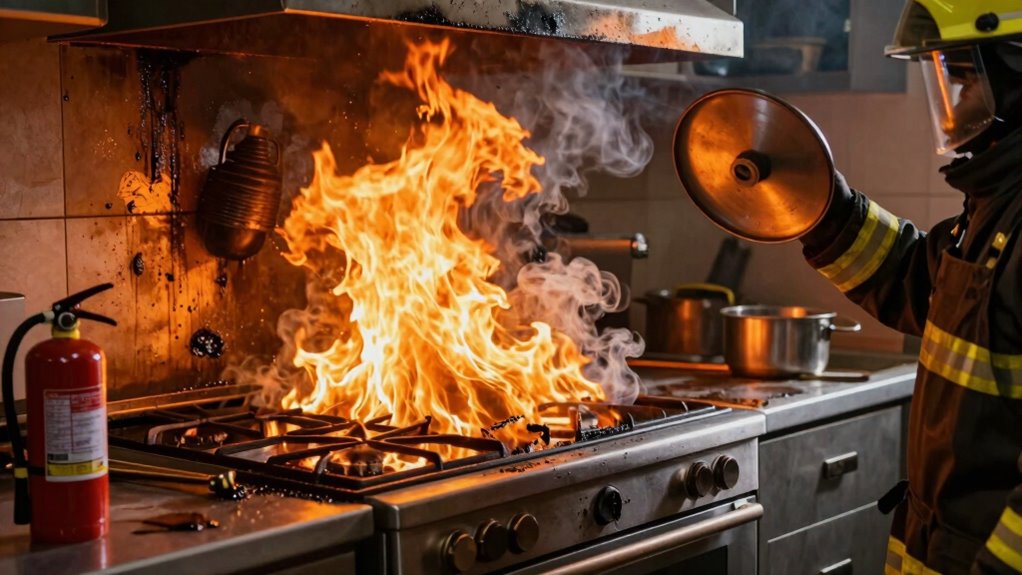
Knowing how to respond quickly when a grease fire worsens can make all the difference. If the fire becomes uncontrollable or spreads, it’s time to follow evacuation procedures immediately. Leave the kitchen and close the door behind you to contain the fire as much as possible. Once at a safe distance, call your emergency contact number—911 or local emergency services. Do not attempt to move the pan or extinguish the fire if it’s growing; instead, focus on getting yourself and others out safely. Staying calm and acting swiftly ensures everyone’s safety. Remember, delaying evacuation can lead to serious injuries or property damage. Prioritize your safety by evacuating promptly and calling emergency services when the situation surpasses your ability to control it. Creating a digital-friendly environment at home can also help in educating family members about safety procedures during emergencies. Additionally, having an emergency plan in place ensures everyone knows what to do in such situations.
Tips to Prevent Future Grease Fires in Your Kitchen
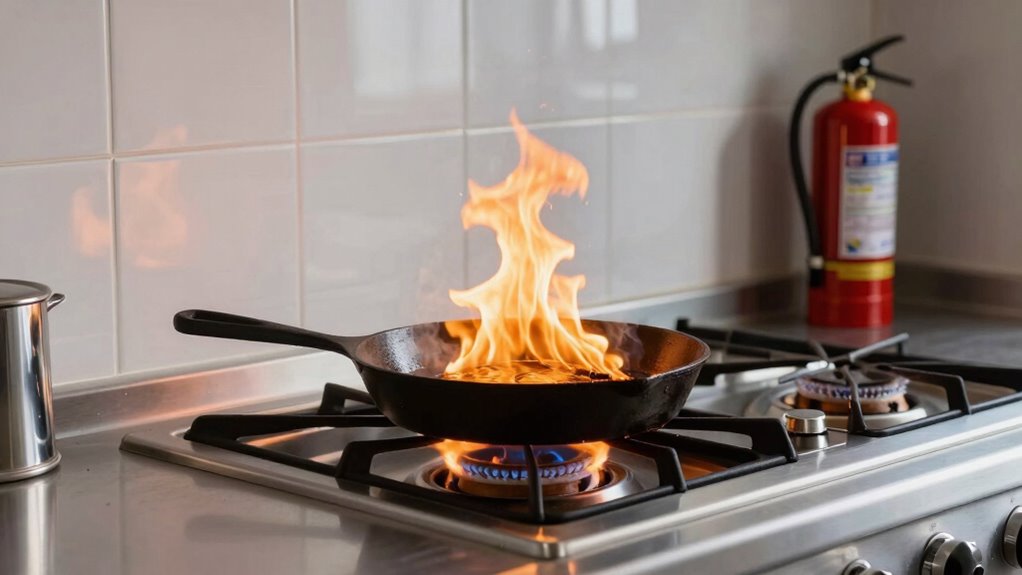
To prevent future grease fires, you should stay attentive while cooking and never leave hot oil or greasy foods unattended. Proper kitchen ventilation helps reduce smoke and grease buildup, lowering fire risk. Develop fire safety plans that include quick access to a fire extinguisher and clear escape routes. Keep flammable items away from heat sources. Regularly clean stovetops and exhaust fans to prevent grease accumulation. Use lids to cover pots and pans, smothering small flare-ups. Never attempt to move a burning pan, and avoid overfilling containers with oil. Maintain an organized cooking space to identify hazards quickly. Additionally, understanding thermal behavior of cooking oils can help you better gauge when they are at risk of igniting. Being aware of fire safety procedures is essential for effective response during emergencies. Remember, prevention is key to safety in your kitchen. Simple steps like improving ventilation and planning ahead can make a significant difference in avoiding grease fires. Being knowledgeable about fire hazards and how to mitigate them further enhances your safety measures. Familiarizing yourself with fire prevention techniques can also help you respond more effectively if a fire does occur.
Essential Tools and Equipment for Responding to Kitchen Fires
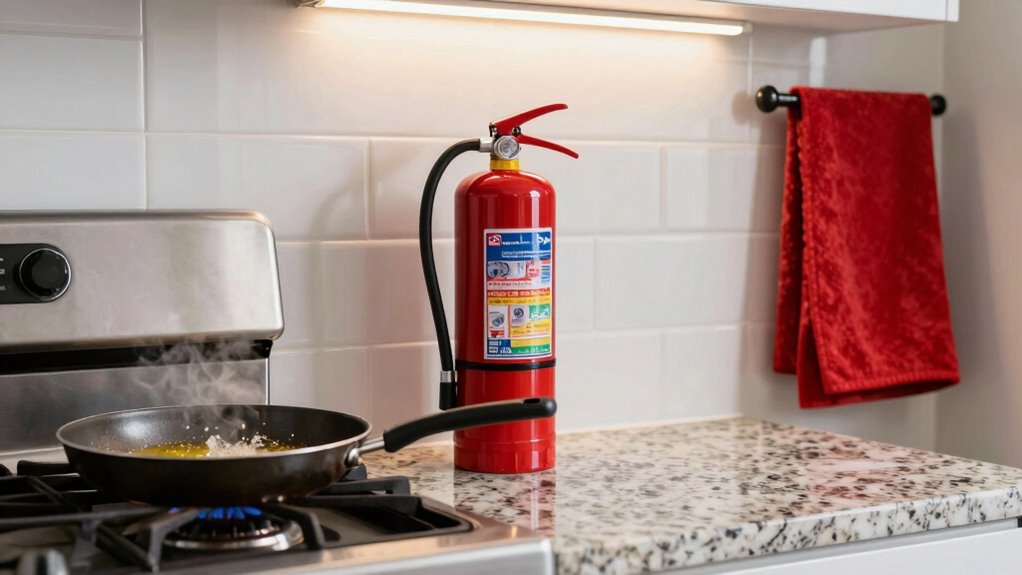
Having the right tools on hand can make all the difference when responding to a kitchen fire. A fire extinguisher rated for kitchen fires (Class K or ABC) is essential, allowing you to quickly suppress flames. Keep a sturdy lid nearby to smother small grease fires safely. A fire blanket can also be effective for smothering flames or protecting yourself. Regular kitchen safety checks ensure these tools are accessible and functional. Incorporate fire safety drills into your routine so everyone knows how to use the equipment confidently during an emergency. Having these tools ready and practicing proper response techniques can prevent a small fire from escalating, giving you peace of mind and a safer kitchen environment.
Key Takeaways for Staying Safe During a Grease Fire

Knowing how to recognize the signs of a grease fire can prevent panic and delay. Using the correct extinguisher is essential—water can make things worse. An appropriate fire safety procedure involves turning off the heat and covering the pan with a metal lid or baking sheet to smother the flames. Proper fire extinguisher use is crucial for safety, as using the wrong type can escalate the fire or cause injury. Avoid common mistakes, like moving the pan or trying to extinguish with a lid, to stay safe. Familiarity with smart home safety features can further help you respond effectively in an emergency.
Recognize Fire Signs
How can you tell if a grease fire is starting? Recognizing early fire signs is vital for safety. Fire detection often begins with distinctive smoke signals—thin wisps or thick billows rising from the stove. You might also notice a sudden, intense heat or a shimmering appearance on the surface of the oil. Other warning signs include:
- Smoke accumulating quickly
- A persistent, crackling sound
- An unusual, strong smell of burning oil
- Flames visible at the oil’s surface
- Discolored or bubbling oil that rapidly intensifies
Being alert to these signs helps you act swiftly, preventing the fire from spreading. Remember, early fire detection is key to staying safe during a grease fire. Stay vigilant and respond immediately at the first sign of trouble.
Use Correct Extinguishers
When a grease fire starts, using the correct extinguisher is vital for safety. Not all fire extinguishers are suitable for kitchen fires, so knowing your fire extinguisher types is important. Class K extinguishers are designed specifically for kitchen fires involving cooking oils and fats. Using the wrong type, like a standard ABC extinguisher, can worsen the fire or cause dangerous splattering. Always keep a fire extinguisher nearby as part of your safety equipment, and make sure it’s rated for grease fires. Before using it, read the instructions carefully. Remember, a fire extinguisher designed for kitchen fires is your best tool for safely putting out a grease fire without spreading flames or causing harm. Proper equipment saves lives and minimizes damage.
Avoid Common Mistakes
To stay safe during a grease fire, it’s crucial to avoid common mistakes that can escalate the danger. Missteps in common cooking and neglecting kitchen safety can turn a small fire into a disaster. Never try to move a burning pan, as this spreads flames. Don’t use water on a grease fire; it causes dangerous flare-ups. Avoid using a glass lid, which can shatter. Never pour flour or baking powder on the fire—they can ignite. Also, don’t delay calling emergency services if the fire worsens. Staying alert and informed helps you respond effectively and minimizes risks. Remember, quick, correct actions are essential to prevent injury and property damage during a grease fire. Practicing proper kitchen safety and avoiding these mistakes keeps everyone safe.
Frequently Asked Questions
Can I Use Water to Put Out a Grease Fire Safely?
You should never use water to put out a grease fire because it can cause the fire to spread rapidly. Instead, turn off the heat and cover the flames with a metal lid or baking sheet to smother the fire. Practicing proper kitchen safety and fire prevention is essential to avoid accidents. Keep a fire extinguisher nearby, specifically a class K extinguisher, to handle grease fires safely and effectively.
How Long Does a Typical Grease Fire Take to Extinguish?
A grease fire can burn out in about 10 to 15 minutes if you use the right fire extinguishing methods and follow safety precautions. Like a candle snuffed by a gentle breeze, it quickly diminishes when properly managed. Keep a fire extinguisher nearby, avoid water, and smother the flames with a metal lid or baking soda. Acting swiftly and safely guarantees the fire extinguishes without spreading or causing injury.
Are There Specific Types of Fire Extinguishers for Grease Fires?
Yes, there are specific fire extinguisher types designed for grease fires, mainly Class K extinguishers, which are essential kitchen safety equipment. These extinguishers use wet chemical agents that effectively suppress grease fires without spreading the flames. You should keep a Class K extinguisher nearby in your kitchen, so you’re ready to act quickly if a grease fire occurs. Never use water on a grease fire, as it can worsen the flames.
What Are the Common Causes of Unattended Stovetop Fires?
Unattended stovetop fires often start because you get distracted during cooking. Poor cooking habits like leaving pots unattended or ignoring bubbling over can ignite grease or food. Additionally, neglecting appliance maintenance, such as failing to clean grease buildup or check for faults, increases fire risk. To prevent this, stay attentive, avoid multitasking while cooking, and regularly maintain your appliances to keep everything in safe working order.
How Can I Prevent Grease Buildup That Leads to Fires?
Like a vigilant guardian, you can prevent grease buildup by regularly cleaning your grease trap and maintaining your ventilation system. These act as the first line of defense, stopping excess grease from accumulating and igniting fires. Avoid letting grease sit and build up on stovetops or in drains. Consistent cleaning reduces fire risks, ensuring your kitchen stays safe and smoke-free during meal prep.
Conclusion
Stay alert, stay prepared, and stay safe. Recognize the signs, act quickly, and use the right tools to handle a grease fire. Remember the do’s, avoid the don’ts, and prioritize your safety above all. Practice prevention, keep calm, and call for help when needed. Your awareness and quick response can make all the difference. Stay informed, stay cautious, and keep your kitchen a safe place for everyone.