To keep your weeknight meal prep safe, follow the leftover cooling rule: cool hot foods to below 40°F within two hours after cooking. Use shallow containers or ice baths to speed up cooling and prevent bacteria growth in the “danger zone” between 40°F and 140°F. Don’t leave hot food out for more than 20-30 minutes before refrigeration, and avoid stacking hot containers in the fridge. Keep going to discover more tips for safe leftovers.

Get kitchen staples and gadgets delivered free — and shop member deals
- Fast, free delivery on millions of items
- Access to Prime Big Deal Days deals on October 6–7
- Prime Video, Amazon Music and more included
Key Takeaways
- Cool leftovers to below 40°F within two hours of cooking.
- Divide large portions into shallow containers for faster cooling.
- Avoid leaving hot food out at room temperature longer than 20-30 minutes.
- Do not place hot containers directly into the fridge; use ice baths or cooling paddles.
- Properly organize the fridge to maintain a consistent temperature at or below 40°F.
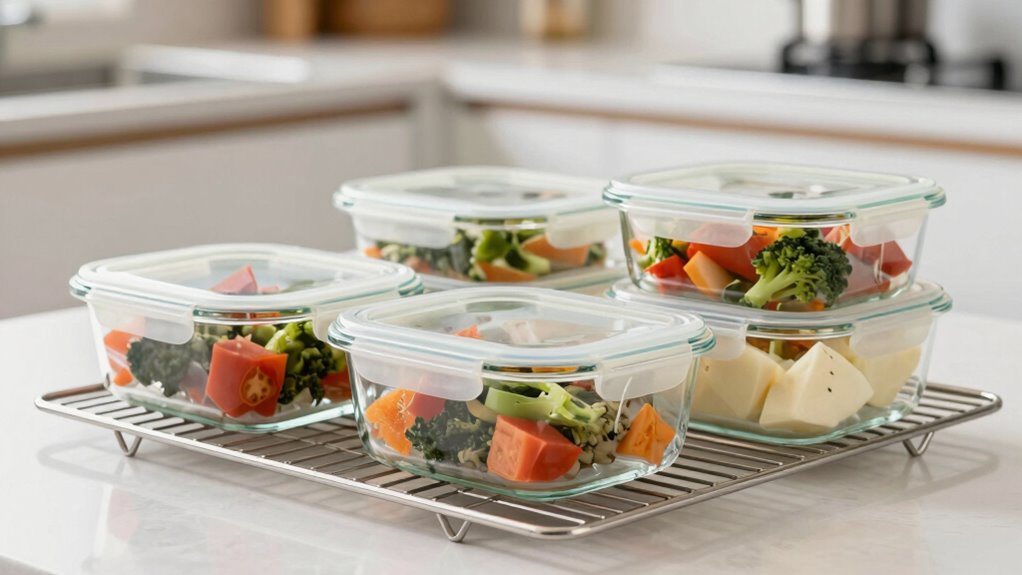
Cooling leftovers properly is vital to prevent bacterial growth and guarantee your meals remain safe to eat. When you store cooked food, the key is to get it into the refrigerator promptly, but how you do it matters just as much. The main goal is to control the temperature of your leftovers, which directly impacts food safety. Bacteria thrive in the “danger zone,” typically between 40°F and 140°F, so your job is to keep food out of this range as quickly as possible.
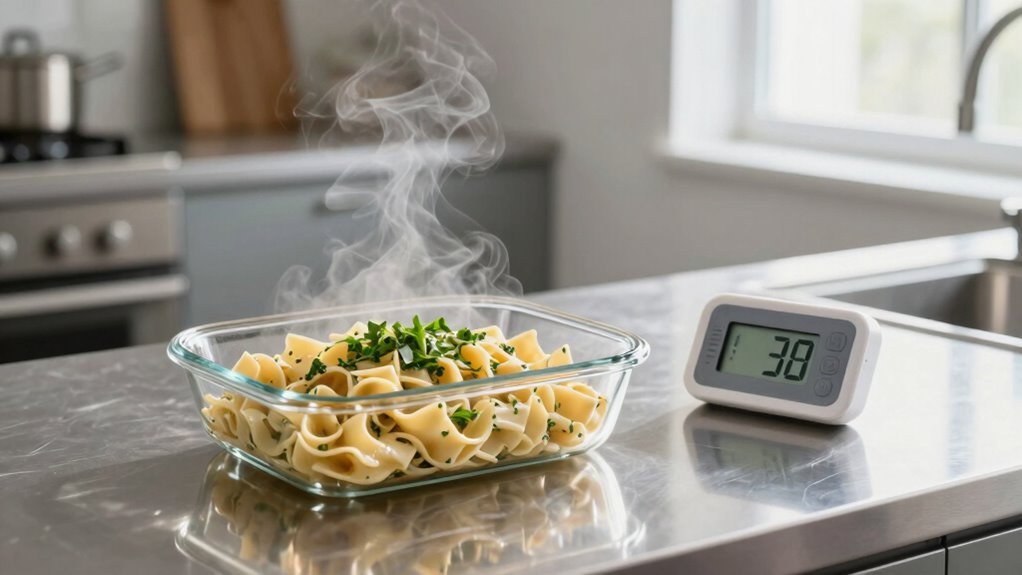
To follow the leftover cooling rule effectively, start by dividing large portions into smaller, shallow containers. This increases the surface area, allowing heat to escape faster and reducing the cooling time. You want to aim for cooling food to below 40°F within two hours of cooking. If you leave food out for longer than that, bacteria can multiply rapidly, increasing your risk of foodborne illness. Using shallow containers also promotes better temperature control, ensuring that heat dissipates evenly and quickly throughout the food. Proper food safety practices during cooling are essential to prevent contamination. Additionally, avoiding hot spots in your refrigerator by not placing large, hot containers directly inside can help maintain a consistent temperature environment.
Divide large portions into shallow containers to cool quickly and safely within two hours.
Another tip for maintaining proper food safety during cooling is to avoid stacking hot containers or placing them directly into the fridge without cooling first. Hot food can raise the overall temperature inside your refrigerator, potentially jeopardizing the safety of other stored items. Instead, let hot leftovers sit at room temperature for no more than 20-30 minutes, then transfer them to the fridge. In some cases, you can expedite cooling by placing containers in an ice bath or using a cooling paddle, which helps bring down the temperature faster without compromising food safety. Understanding the importance of proper cooling techniques can significantly reduce your risk of foodborne illness. Proper refrigerator organization and placement of hot foods help maintain a safe environment for all stored items. Always remember that maintaining a consistent refrigerator temperature at or below 40°F is key to ongoing food safety.
As an affiliate, we earn on qualifying purchases.
Frequently Asked Questions
How Long Can Leftovers Be Safely Stored in the Refrigerator?
You can safely store leftovers in the refrigerator for up to 3 to 4 days, following food safety guidelines. To guarantee proper food preservation, cool leftovers quickly and keep your fridge at 40°F (4°C) or below. Always check for signs of spoilage before eating, like bad odors or slimy textures. Storing leftovers within this timeframe helps prevent foodborne illnesses and keeps your meals safe to enjoy later.
What Temperature Should the Refrigerator Be Set to for Safety?
You should set your refrigerator to 40°F (4°C) or lower for safe food storage. Proper temperature control slows bacterial growth, ensuring leftovers stay safe to eat. Regularly check the thermometer to make sure your fridge maintains this temperature. Keeping food at the right temperature prevents spoilage and foodborne illnesses, helping you enjoy leftovers safely throughout the week. Proper food storage and temperature control are essential for kitchen safety.
Can the Cooling Rule Be Applied to Hot or Warm Leftovers?
You shouldn’t apply the cooling rule directly to warm leftovers, as hot or warm food needs to cool down safely before refrigeration. Let warm leftovers sit at room temperature for no more than two hours, then transfer to shallow containers to accelerate cooling. Follow reheating guidelines to guarantee leftovers are heated thoroughly. This practice helps prevent bacterial growth, keeping your weeknight meals both safe and delicious.
How Quickly Should Leftovers Be Cooled After Cooking?
Imagine a mountain of steaming food cooling swiftly in your kitchen. To guarantee food safety, you should cool leftovers within two hours of cooking, using rapid chilling methods like dividing large portions into smaller containers. This quick action prevents bacteria growth and keeps your meals safe. Remember, the faster you cool leftovers, the safer and tastier they remain, turning your kitchen into a fortress of food safety.
Are There Specific Containers Best for Cooling Leftovers Safely?
You should use shallow, non-metal containers made of glass or BPA-free plastic for cooling leftovers. These materials promote even cooling and prevent bacteria growth. Implement effective cooling techniques by dividing large portions into smaller, thinner layers to accelerate cooling. Avoid deep containers, which trap heat, and always refrigerate leftovers within two hours of cooking. Proper container choice and cooling methods help keep your leftovers safe and fresh longer.
As an affiliate, we earn on qualifying purchases.
Conclusion
By following the leftover cooling rule, you’re making your weeknight meal prep safer without adding extra hassle. It’s easy to implement—just cool leftovers quickly and store them properly. Some might think it’s an extra step, but it’s worth it for peace of mind and preventing foodborne illnesses. Once you get into the habit, it’ll become second nature, helping you enjoy delicious, safe meals without worry. Stay safe and keep your family healthy!
As an affiliate, we earn on qualifying purchases.
As an affiliate, we earn on qualifying purchases.
Fall Picks
fall essentials
As an affiliate, we earn on qualifying purchases.