
🔍 Read the full analysis: Pasta Con Le Sarde: Sicily's Sweet-Savory Sardine Landmark on Mad Tasting

Get kitchen staples and gadgets delivered free with Prime
- Fast, free delivery on millions of items
- Prime Video, Amazon Music and more included
- Member-only deals all year
TL;DR
Pasta con le sarde is a Sicilian pasta especially associated with Palermo and western Sicily. Sardines, wild fennel, raisins and pine nuts create its sweet-savory character; many versions add saffron and finish with toasted breadcrumbs. Its exact origins are uncertain, and family recipes vary.
A Mad Tasting guide to pasta con le sarde describes the Sicilian dish as a Palermo and western Sicily specialty built around sardines, wild fennel, raisins and pine nuts. The guide says the recipe has no single fixed version: saffron is common but optional, toasted breadcrumbs often stand in for cheese, and the exact origin remains uncertain.
The dish’s defining feature is its sweet-savory balance, not a strict ingredient list or measurement. Sardines supply a rich, briny flavor, while wild fennel brings a fresh, anise-like aroma. Raisins add occasional soft sweetness, and pine nuts contribute a mild, nutty crunch. The guide advises using raisins sparingly so they complement rather than overwhelm the fish and herb.
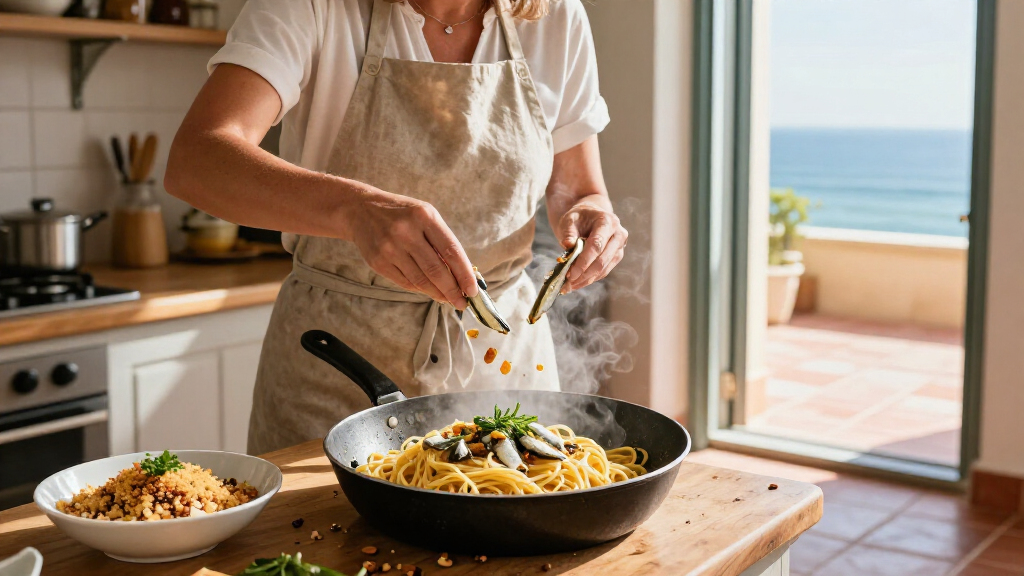
Many cooks finish the pasta with muddica atturrata, or toasted breadcrumbs. Browned in a little oil, the crumbs add a crisp topping; cheese is often omitted, though household practices differ. Saffron appears in many versions for color and an earthy aroma, but the guide says it is not required in every family recipe. Bucatini is a classic choice, while other long pasta can be used.
Fresh sardines and wild fennel give the dish its clearest coastal and herbal character, according to the guide. When fresh sardines are unavailable, good-quality canned sardines are a practical substitute, though the texture and flavor will differ. Cultivated fennel fronds can replace wild fennel with a milder aroma. The guide emphasizes that ingredient freshness and proportion matter more than reproducing one supposedly definitive recipe.
Pasta con le sarde Sicily’s sweet-savory landmark
A Palermo and western Sicily specialty that brings sardines and wild fennel together with restrained sweetness. Family recipes vary, and the dish’s precise origin remains uncertain.
A balance of sea and land
The defining idea is the interplay of briny fish, aromatic fennel and gentle sweetness.
Sardines
Bring rich, briny flavor; fresh fish gives the clearest coastal character.
Wild fennel
Adds a fresh, anise-like aroma associated with local cooking.
Raisins and pine nuts
Raisins add occasional sweetness; pine nuts bring a mild crunch.
A flexible recipe
The guide describes common choices, not a fixed ingredient list.
| Ingredient or finish | How recipes vary |
|---|---|
| Saffron | Common, but optional |
| Toasted breadcrumbs | Often used instead of cheese |
| Pasta | Bucatini is classic; other long pasta works |
| Raisins | Use sparingly so sweetness does not overwhelm |
Make it with what’s available
Practical substitutes can help, though they change the result.
Use fresh sardines when available, or good-quality canned sardines.
Wild fennel is traditional; cultivated fennel fronds have a milder aroma.
Saffron is optional; toasted breadcrumbs add a crisp topping.
Palermo, spring and local recipes
The dish connects coastal sardines with fennel gathered from the land.
A Dish Linking Coast and Countryside
The dish brings together ingredients associated with Sicily’s coast and countryside: sardines from the sea and fennel gathered from the land. Raisins, pine nuts and saffron add flavors that reflect the island’s wider Mediterranean food traditions, while the toasted breadcrumb finish gives the plate a distinctive texture.
For readers cooking at home or ordering in Palermo, the guide’s central point is that variation is part of the tradition. A version with less saffron or more fennel is not automatically less authentic. The balance of fish, herb and restrained sweetness is a more useful guide than a rigid recipe, and comparing versions can show how different cooks interpret the same regional dish.
Products Worth Considering

Cuisinart 8-in-1 Portable Wood Pellet Grill and Smoker

Philips 2200 Series Fully Automatic Espresso Machine with Classic Milk Frother

Instant Pot Duo 6 Qt 7-in-1 Electric Pressure Cooker
As an affiliate, we earn on qualifying purchases.
Palermo, Spring and Local Recipes
Palermo and western Sicily have a particularly strong association with pasta con le sarde, where coastal fishing and the use of wild fennel meet in local cooking. The guide describes spring as a natural time to prepare it because wild fennel is more readily available. Some communities also connect the dish with the Feast of San Giuseppe on March 19.
Recipes vary between households and restaurants. Cooks may adjust the amount of raisins, include or omit saffron, choose different pasta shapes, or bake the dish until its top is golden. The guide notes that origin stories linking the recipe to Arab forces in Sicily or to a cook gathering ingredients during a military campaign are popular lore, not settled history. The ingredients reflect Mediterranean connections, but that does not establish a precise origin.
“The balance matters more than a rigid measurement.”
— Mad Tasting guide
Origins and Recipes Remain Open
The dish’s precise historical origin is not established by the guide. Stories connecting it to Arab forces or a cook on a military campaign are presented as lore rather than verified accounts. The available material does not identify a single documented source or date for the recipe.
There is also no one standardized household version. The guide does not prescribe exact proportions, and practices around saffron, pasta shape and finishing ingredients vary. Its account offers a way to recognize the dish’s flavor balance, not evidence that every cook in Palermo follows the same method.
Seasonal Cooking and Local Variations
In spring, cooks can look for wild fennel and fresh sardines, while asking fishmongers to clean and fillet the fish if needed. When those ingredients are unavailable, the guide recommends practical substitutes such as cultivated fennel fronds or good-quality canned sardines, with the understanding that the result will differ.
The next step for diners is to compare local versions rather than assume one restaurant represents the only authentic recipe. The guide gives no announcement of a new event, official designation or forthcoming historical finding; its focus is how to understand and prepare a regional dish while acknowledging what is still unknown about its beginnings.
Key Questions
What is pasta con le sarde?
Pasta con le sarde is a Sicilian pasta dish made with sardines and commonly paired with wild fennel, raisins and pine nuts. Some recipes also use saffron and toasted breadcrumbs.
Why is the dish associated with Palermo?
The guide identifies Palermo and western Sicily as places especially associated with the dish, which brings coastal sardines together with fennel used in local cooking.
Are raisins and saffron required?
Recipes vary. Raisins provide a restrained sweet contrast, while saffron is optional and does not appear in every family version.
Is there a confirmed origin story?
No precise origin is established in the guide. Stories tying the recipe to Arab forces or a military campaign are described as popular lore rather than settled history.
What can I use if I cannot find wild fennel or fresh sardines?
The guide suggests cultivated fennel fronds as a milder substitute for wild fennel and good-quality canned sardines in place of fresh fish. Both change the dish’s flavor or texture, but can work as practical alternatives.
Source: Mad Tasting