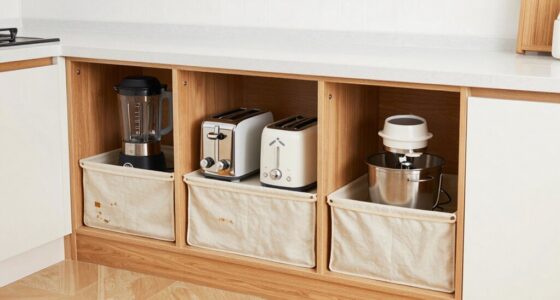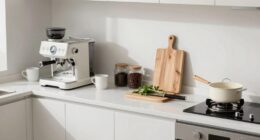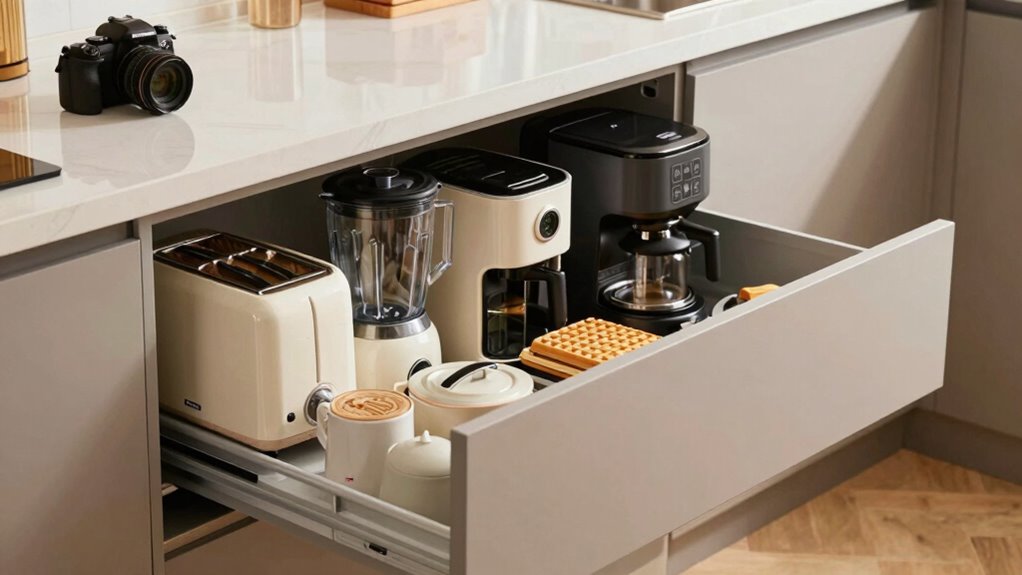

Storing appliances based on how often you use them helps you stay organized and makes daily routines smoother. By keeping frequently used items, like blenders or coffee makers, within easy reach, you save time and effort. Less-used appliances, like bread machines, can be tucked away out of the way. This approach reduces clutter and prevents damage from constant handling. If you want practical tips on optimizing your space, keep exploring how storage by usage benefits you.

Get kitchen staples and gadgets delivered free — and shop member deals
- Fast, free delivery on millions of items
- Access to Prime Big Deal Days deals on October 6–7
- Prime Video, Amazon Music and more included
Key Takeaways
- Frequently used appliances should be stored within easy reach to streamline daily routines and save time.
- Organizing by usage prevents everyday clutter and minimizes the effort needed to access essential items.
- Storing appliances based on how often they are used enhances appliance longevity through proper handling.
- Grouping by frequency supports maintenance and repairs by keeping commonly accessed appliances visible and accessible.
- Prioritizing usage over category ensures a practical, functional space that adapts to changing routines.

Organizing your appliances can be a game-changer for maximizing space and maintaining their functionality. When you prioritize storage organization based on how often you use each appliance, you’re setting yourself up for greater efficiency and longer appliance longevity. Instead of grouping items solely by category, think about your daily routines. This way, frequently used appliances are within easy reach, reducing the time and effort it takes to get things done. It also helps prevent clutter from piling up on countertops or in cabinets, which can cause unnecessary wear and tear. When appliances are stored logically according to usage, you avoid the temptation to leave things in awkward spots, which can lead to accidental damage or misplaced items.
Organize appliances by usage to boost efficiency, reduce clutter, and extend their lifespan.
Focusing on frequency rather than category is particularly effective because it aligns your storage with your actual habits. For example, you might use your blender every day but only pull out your bread machine once a month. Placing the blender front and center makes it easier to grab, while tucking the bread machine away in a less accessible spot keeps your main workspace clutter-free. This approach not only streamlines your routine but also helps you maintain your appliances better. When appliances are stored in a way that reflects their usage, you’re less likely to forget about them or leave them in hard-to-reach places, which can cause issues over time, impacting their appliance longevity.
Moreover, this method enhances your overall storage organization. Instead of creating isolated categories that might cause you to shuffle appliances around frequently, you develop a system based on practicality. Items used often stay close, while those used rarely are stored out of the way, but still accessible. This setup reduces unnecessary handling, which minimizes the risk of accidental damage and extends the lifespan of your appliances. When appliances are stored in accordance with their usage frequency, you can more easily identify which appliances might need repairs or replacement before they completely break down. Additionally, understanding background checks can help you ensure your appliances are safe and legitimate, especially when purchasing secondhand items or from unfamiliar sellers.
In the end, storing appliances by frequency rather than category isn’t just about convenience; it’s a smart way to ensure your appliances last longer. It promotes better storage organization, minimizes damage, and keeps your daily routines smooth. When you think about how often you actually use your appliances, you create a smarter, more functional space that works with your habits rather than against them. This simple shift in how you organize can make a significant difference in keeping your appliances in top shape for years to come. Additionally, considering storage solutions tailored to your needs can further optimize your space and protect your appliances.
As an affiliate, we earn on qualifying purchases.
Frequently Asked Questions
How Do I Determine the Actual Frequency of Appliance Use?
You can determine the actual frequency of appliance use by observing your usage patterns through appliance monitoring. Track how often each appliance is turned on or used daily or weekly. Use smart plugs or monitoring devices to gather data automatically, or keep a simple log. This helps you identify which appliances are used most frequently, guiding you to organize storage based on usage rather than category, optimizing convenience and efficiency.
What Are Signs That an Appliance Needs to Be Relocated?
You’ll notice an appliance needs relocating when its aesthetics clash with your space or it’s no longer energy efficient. Ironically, appliances that seem “fine” might actually be draining power or cluttering your layout, making them harder to access. If you find yourself avoiding the appliance or it’s in the way, it’s a clear sign it’s time to move it closer to where you use it most, improving both efficiency and appearance.
Can Storage Location Affect Appliance Longevity?
Yes, storage location impacts appliance longevity. Proper storage optimization guarantees appliances are in suitable environments, reducing wear and tear. When you prioritize appliance accessibility based on how often you use them, you prevent unnecessary movement and potential damage. Keeping frequently used appliances in easy-to-reach spots minimizes strain on cords and components, extending their lifespan. So, thoughtful placement based on usage rather than category helps maintain your appliances longer.
How Often Should Appliance Storage Areas Be Reorganized?
You should reorganize your appliance storage areas quarterly, balancing aesthetic arrangement with cost efficiency. While it’s tempting to keep everything in place, a fresh setup guarantees high-use items are accessible, reducing wear and tear. Plus, a tidy space boosts overall efficiency, saving you time and money. Regular reorganization prevents clutter buildup, keeps your appliances in top shape, and maintains an appealing, functional environment that adapts to your changing needs.
Are There Safety Concerns With Storing Appliances Based on Frequency?
Storing appliances based on frequency generally isn’t a safety concern if you follow proper safety protocols. Make sure that heavy or bulky appliances are placed securely to prevent fire hazards or accidents. Keep electrical cords organized and away from water sources, and avoid overloading outlets. Regularly inspect appliances for damage. By adhering to these safety measures, you minimize fire hazards and ensure a safe storage environment, regardless of how you organize by frequency.
As an affiliate, we earn on qualifying purchases.
Conclusion
So, next time you’re organizing your kitchen, remember: storing appliances by how often you use them beats sticking to arbitrary categories. Who needs convenience when you can spend hours digging through a cluttered chaos, right? After all, nothing says “efficient” like hunting for the coffee maker buried behind the blender you only use once a year. Embrace the chaos—your cluttered countertops will thank you!
countertop appliance storage solutions
As an affiliate, we earn on qualifying purchases.
As an affiliate, we earn on qualifying purchases.
As an affiliate, we earn on qualifying purchases.
Halloween Picks
halloween
As an affiliate, we earn on qualifying purchases.