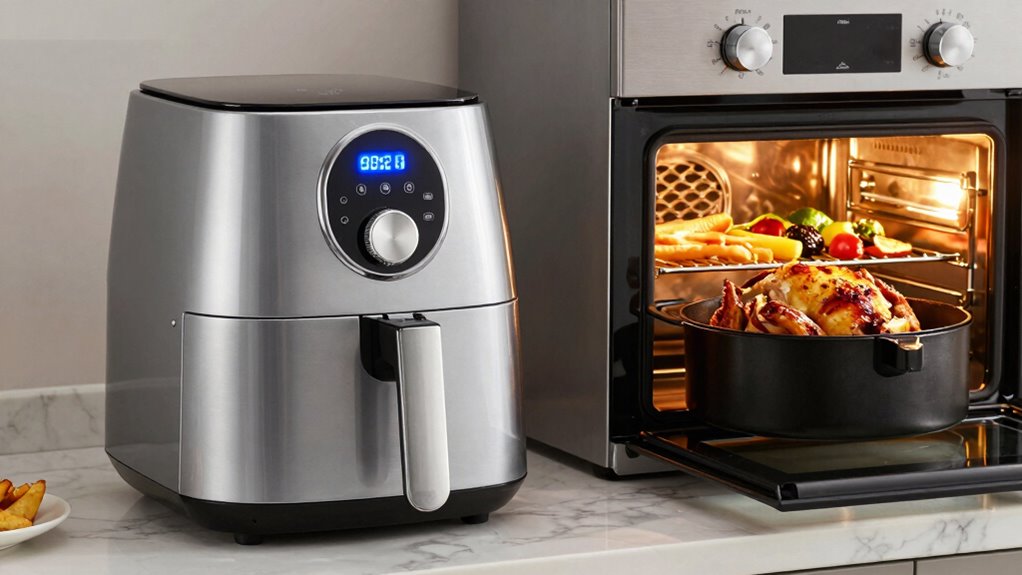

You can’t simply swap oven times for your air fryer because they cook differently. Air fryers use rapid air circulation that speeds up cooking and browning, often leading to overcooking if you follow oven times directly. Factors like airflow efficiency, food size, moisture content, and your specific model all affect cooking times. To get perfect results, you need to adjust times and temperatures carefully—and if you keep going, you’ll discover how to master these differences effortlessly.
Key Takeaways
- Air fryers cook faster due to focused, rapid airflow, making oven time conversions often too long or inaccurate.
- Directly swapping oven times can cause overcooking or burning, as air fryers have more efficient heat transfer.
- Differences in moisture loss and browning require adjustments in temperature and cooking duration when switching appliances.
- Factors like food size, thickness, and moisture content significantly influence actual cooking times in air fryers versus ovens.
- Proper recipe adaptation and monitoring are essential; relying solely on oven times leads to inconsistent, subpar results.
How Do Air Fryers Cook Differently From Ovens?
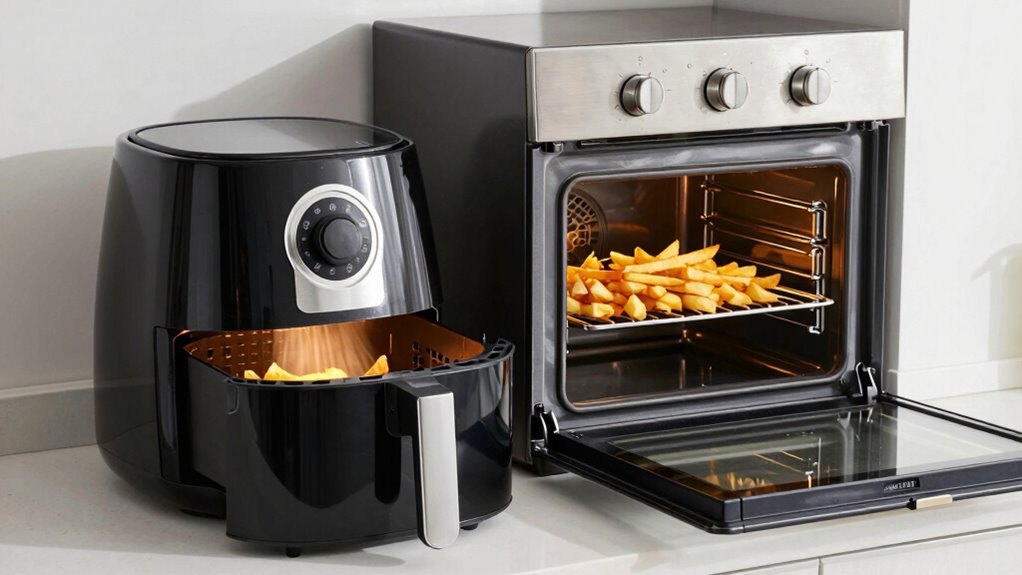
Although both air fryers and traditional ovens cook by heat, their methods differ markedly. Air fryers use powerful fans to promote rapid air circulation around food, creating a convection-like effect. This circulating air ensures heat transfer occurs quickly and evenly, leading to a crispy exterior without the need for much oil. In contrast, ovens rely primarily on radiative and conductive heat transfer from their heating elements and walls, which can be slower and less uniform. The intense air circulation in air fryers accelerates cooking times and enhances browning, while traditional ovens often require longer periods to achieve similar results. This difference in heat transfer and air movement is what makes air fryers uniquely efficient and capable of producing crisp textures in a fraction of the time. Additionally, heat transfer mechanisms significantly impact overall cooking efficiency, which is why understanding these differences is essential for properly adjusting recipes for optimal results across different appliances. Moreover, the design of air fryers contributes to their compact size and portability, making them suitable for small kitchens and quick meals.
Why Can’t You Just Convert Oven Times For Your Air Fryer?
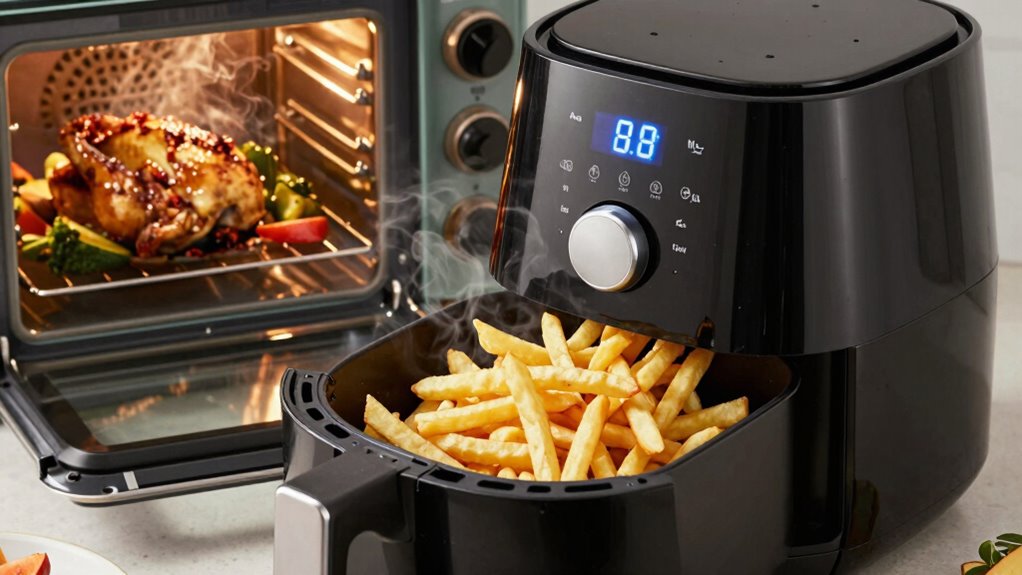
Your air fryer’s airflow is much more efficient than an oven’s, so food cooks faster and more evenly. Because of this, using oven times directly can lead to overcooking or burning your food. Additionally, the rapid airflow can cause moisture loss, affecting texture and flavor if you don’t adjust cook times properly. Understanding airflow efficiency is key to mastering air fryer cooking. Recognizing the importance of cooking technology can help you better adapt recipes for your air fryer. A circulating hot air system enhances the cooking process, making timing adjustments essential for optimal results. Appreciating heat transfer mechanisms can further improve your cooking precision in an air fryer. Being aware of thermal dynamics helps in adjusting cook times to prevent uneven results.
Airflow Efficiency Differences
Since air fryers rely on rapid, concentrated airflow to cook food quickly, their airflow efficiency differs markedly from traditional ovens. This difference stems from distinct airflow patterns and circulation efficiency. In an air fryer:
- The airflow is highly focused, creating a rapid, uniform cooking environment.
- Circulation efficiency ensures heat reaches all surfaces evenly, reducing cooking time.
- The compact design promotes better airflow, intensifying heat transfer.
- Traditional ovens, with larger spaces and less focused airflow, lack this efficiency, leading to longer cooking durations.
- Understanding airflow dynamics helps explain why direct time conversions often fail in practice.
- Recognizing these airflow differences can help you better adapt recipes between appliances.
- The design of air fryers enhances airflow concentration, making them more effective for quick cooking.
- Appreciating these performance variations can improve your cooking accuracy and results.
- Additionally, the size and shape of the cooking chamber influence airflow patterns and overall efficiency, further affecting cooking times.
Because of these airflow pattern differences, simply converting oven times overlooks how air fryers circulate hot air more effectively. This results in undercooked or unevenly cooked food if you rely solely on traditional oven timings.
Food Moisture Loss
While air fryers’ rapid airflow and efficient heat circulation speed up cooking, they also cause food to lose moisture much faster than in traditional ovens. This accelerated moisture loss affects moisture retention, making food drier and less tender. Because of this, simply converting oven cooking times often results in over-drying your food. To preserve texture, you need to adjust not just time but also temperature and cooking methods. Air fryers excel at creating crisp exteriors but risk compromising moisture content if you follow oven times blindly. Understanding this moisture loss is key to maintaining the desired texture. By paying attention to moisture retention, you can prevent your food from becoming overly dry and ensure it stays juicy and flavorful. Additionally, cooking techniques tailored for air fryers can help minimize moisture loss and achieve better results, such as using moisture-retaining ingredients or pre-soaking foods when appropriate. Incorporating proper cooking methods can further help maintain optimal moisture levels during air frying, especially when combined with awareness of food moisture content and how it impacts overall quality. Recognizing the impact of air circulation on moisture can help you adapt your approach for better results.
What Factors Affect Cooking Times In Air Fryers?
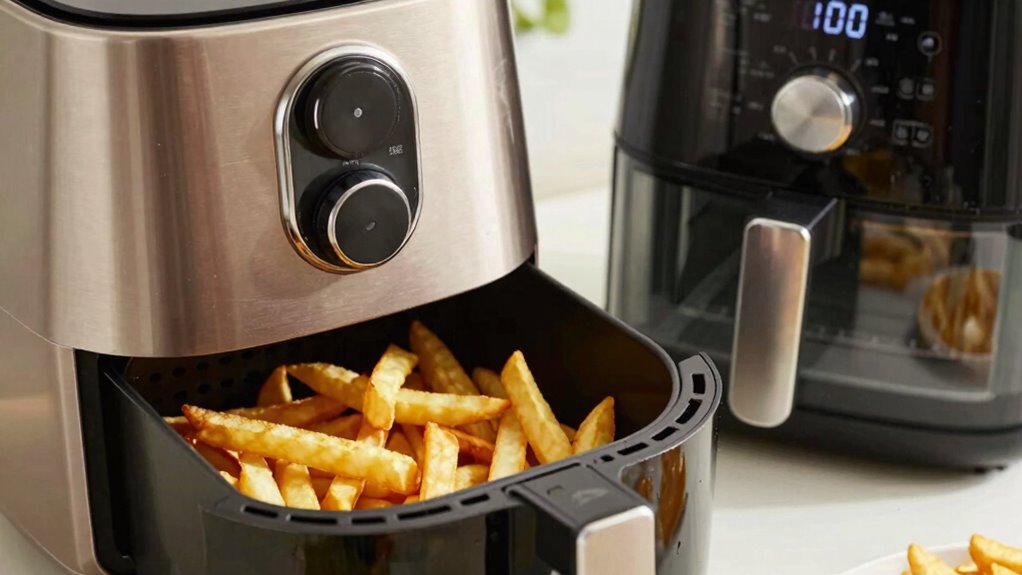
What exactly influences the cooking times in your air fryer? Several factors come into play. First, ingredient sensitivity affects how quickly food cooks; denser or thicker items need more time. Second, recipe complexity matters—more intricate recipes often require longer cooking or multiple stages. Third, the size and shape of your food impact heat penetration, with larger pieces taking longer. Fourth, moisture content influences cooking speed; foods with high moisture may cook faster but risk moisture loss. Additionally, equipment calibration can also affect timing accuracy, as different models may cook at slightly varying rates. Regularly checking doneness indicators ensures optimal results and prevents overcooking. Factors like piercing or monitoring can help assess doneness more precisely. These elements combine to create variability in cooking times, making it essential to consider each factor. Understanding how ingredient sensitivity and recipe complexity affect your air fryer helps you achieve perfect results without relying solely on standard timings.
How To Adjust Oven Recipes For Perfect Air Fryer Results?

To get the best results, you need to adjust your oven recipes for your air fryer. Start by lowering the cooking temperature, usually around 25°F to 30°F, and cut down the cooking time. This way, your food will cook evenly without overdoing it.
Adjust Cooking Temperatures
Adjusting cooking temperatures from traditional oven recipes is essential for achieving perfect results in an air fryer. To do this effectively, consider the following steps:
- Perform temperature calibration to ensure your air fryer’s heat settings are accurate, as many models vary.
- Reduce the recipe’s temperature by about 25°F (14°C) since air fryers cook more efficiently.
- Modify ingredients by cutting back on oil or moisture, which affects browning and crispiness.
- Adjust cooking times accordingly, as lower temperatures often require shorter or similar cooking durations for ideal results.
Modify Cooking Times
Since air fryers cook more efficiently than traditional ovens, you’ll often need to modify the cooking times when converting recipes. Proper recipe adaptation involves making timing adjustments to prevent overcooking or undercooking. Start by reducing the original oven time by about 20-25%, then check for doneness. For example, if a recipe calls for 30 minutes in the oven, try 22-24 minutes in the air fryer and add more time if needed. Keep in mind that thicker or denser foods may require a bit more time, while thinner items cook faster. Always monitor your food closely during the initial attempts and adjust the timing based on your specific air fryer model. Consistent timing adjustments will help you achieve perfect results every time.
Common Mistakes When Replacing Oven Recipes With Air Fryers?
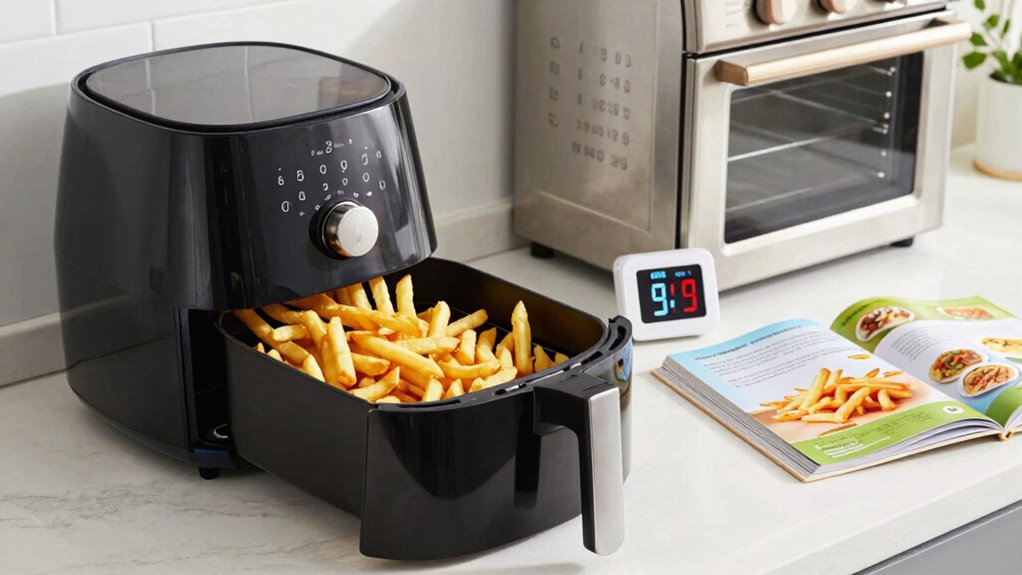
Replacing oven recipes with an air fryer might seem straightforward, but it’s easy to make common mistakes that can affect your results. One mistake is skipping proper oven adaptation, which can lead to uneven cooking or burning. Second, neglecting to adjust cooking times and temperatures compromises recipe accuracy. Third, failing to preheat the air fryer can result in undercooked food. In the end, using the wrong cookware or overcrowding the basket hampers air circulation, affecting cook quality. To avoid these pitfalls, you should focus on adjusting recipes carefully, considering the air fryer’s unique cooking environment. Remember, direct conversions often don’t account for the differences in heat distribution, making proper oven adaptation essential for consistent, tasty results.
Tips For Getting Perfectly Cooked Air Fryer Meals Every Time
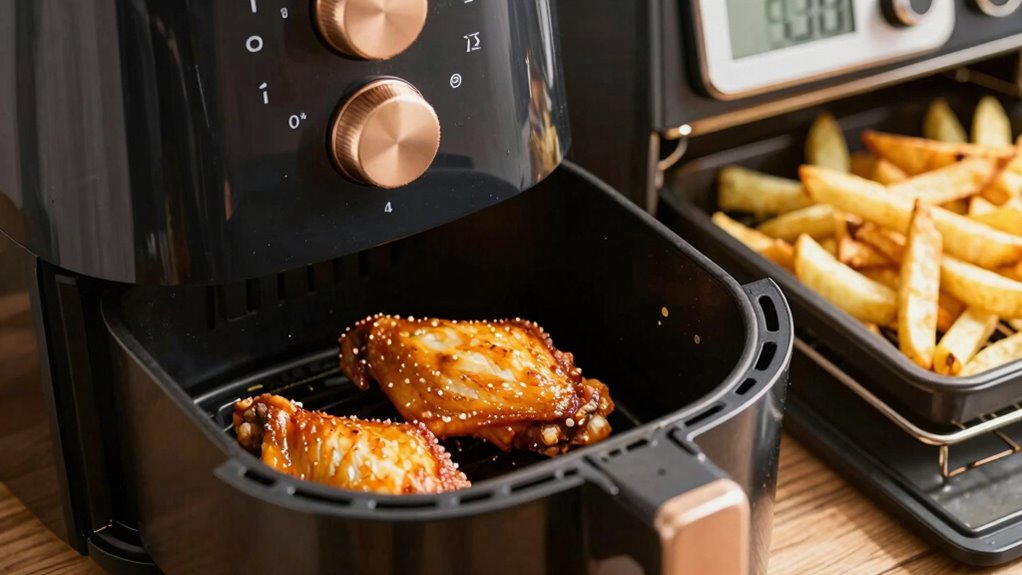
Achieving perfectly cooked air fryer meals every time starts with understanding your appliance’s quirks and capabilities. Use seasoning techniques that enhance flavor without overwhelming the food, such as light sprays of oil and herbs. When ingredient substitutes are needed, choose options that maintain moisture and texture, like Greek yogurt instead of mayonnaise. To ensure even cooking, shake or turn your food halfway through. Keep a simple chart handy to adjust times based on ingredients:
| Ingredient Type | Adjusted Time | Tips |
|---|---|---|
| Frozen | 20-25% longer | Thaw slightly before cooking |
| Breaded | Reduce by 2-3 mins | Use lighter coatings |
| Fresh | Standard time | Avoid overcrowding |
Master these tips, and your air fryer meals will come out perfect every time.
Frequently Asked Questions
Can I Use the Same Recipes for Both Appliances?
You can’t use the same recipes for both appliances without modifications. Air fryer and oven cooking times and temperatures differ, so recipe modifications are necessary for appliance compatibility. For example, reduce the temperature and cooking time in your air fryer compared to your oven. Always check for doneness and adjust as needed. This ensures your dishes turn out perfectly, no matter which appliance you utilize.
How Does Food Size Impact Cooking Times in Air Fryers?
Think of your food as a story—size and density matter. When portions are larger or denser, your air fryer needs more time to cook thoroughly. Smaller, lighter pieces cook faster. Adjust your cooking time based on food size, and consider portion adjustments to prevent undercooking or burning. Remember, just like a good novel, the key is understanding how the details—food size—affect the overall outcome.
Are There Foods That Don’T Work Well in Air Fryers?
Some foods don’t work well in air fryers because their texture can become uneven or overly dry, especially if they require gentle, moist heat. Items with complex cooking needs, like delicate baked goods or large roasts, often don’t perform well due to limited space and airflow. You’ll find that certain foods demand more precise temperature control and moisture, making air fryers less ideal for complex cooking tasks.
What Safety Precautions Should I Take When Using an Air Fryer?
Think of your air fryer as a trusted companion in your kitchen. To keep it safe, always follow food safety guidelines, like avoiding overcrowding and checking for doneness. Use oven mitts to prevent burns, and never leave it unattended while in use. Regularly clean and maintain the appliance to prevent fire hazards. These steps guarantee your air fryer remains a safe, reliable partner for delicious meals.
How Do I Prevent Food From Drying Out in an Air Fryer?
To prevent food from drying out in an air fryer, focus on moisture retention by using cooking techniques like lightly oiling your food or adding a small amount of broth. Covering items with parchment paper or using lower temperatures also helps keep moisture in. Keep an eye on cooking times and avoid overcooking, ensuring your food stays juicy and flavorful without drying out.
Conclusion
Remember, trying to convert oven times directly to your air fryer can lead to undercooked or overcooked meals. Since air fryers cook up to 25% faster due to their rapid air circulation, you need to modify times and temperatures carefully. Did you know that, on average, air fryers cut cooking times by about 20-25%? Mastering these adjustments ensures your dishes come out perfectly every time, making your cooking quicker and more delicious.