Carryover cooking happens when residual heat inside your food continues to raise its temperature after you take it off the heat, often by about 10%. This means your meat or dish might become overcooked unless you plan ahead—removing it slightly before reaching your target temperature. Factors like size, thickness, and thermal properties influence this process. If you want to master perfect timing and avoid overcooking, keep going to discover how to use this effect to your advantage.
Key Takeaways
- Carryover cooking occurs when residual heat raises the internal temperature of meat by about 10% after removal from heat.
- Larger cuts benefit more from carryover cooking, which can lead to overcooking if not properly timed.
- Internal temperature continues to increase due to heat transfer within the food, even after taking it off the heat source.
- Relying solely on timers without considering carryover effects risks overcooking; sensory cues and thermometers are more accurate.
- Resting food allows heat to distribute evenly, preventing overcooking caused by residual heat during carryover cooking.
What Is Carryover Cooking and Why Does It Happen?
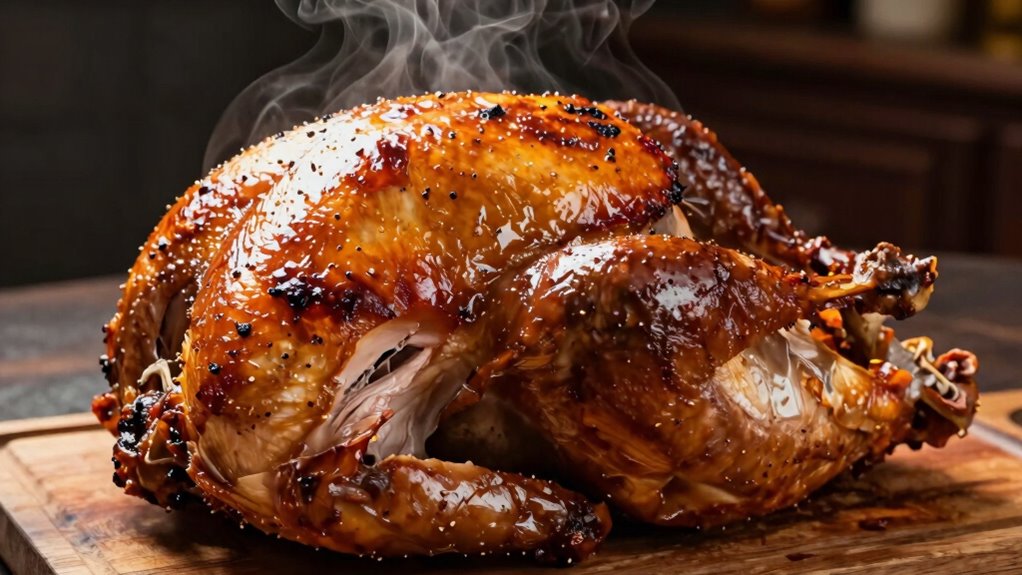
Have you ever wondered why your roasted meat continues to cook even after you take it out of the oven? This phenomenon, known as carryover cooking, happens because of temperature fluctuations inside the meat. When you remove it from heat, residual heat still transfers from the outer layers to the cooler interior through heat transfer processes. As the internal temperature rises slightly, the meat continues to cook, often by about 10%. This subtle increase can make a big difference in doneness, especially with larger cuts. The key is that the heat transfer doesn’t stop immediately when you remove the meat from the heat source. Instead, the internal heat redistributes, causing a gradual temperature rise that results in continued cooking after removal. Understanding carryover cooking can help you achieve perfectly cooked dishes every time.
Why Does Food Keep Cooking Even After Removing It From Heat?
Even after you take food off the heat, it continues to cook because heat doesn’t stop transferring immediately. This phenomenon is often misunderstood due to common cooking myths, especially temperature myths that suggest removing food at a specific moment guarantees perfect doneness. In reality, residual heat continues to move within the food, causing it to cook further. Many cooks believe that once the heat source is gone, cooking halts instantly—this isn’t true. The carryover cooking effect means your food can overcook if you don’t account for this ongoing heat transfer. Understanding that temperature myths about instant stopping of cooking are false helps you better gauge when to remove food, preventing overcooking. Recognizing residual heat transfer as a real phenomenon allows cooks to make more informed timing decisions. This knowledge ensures your dishes reach the perfect doneness without relying on misconceptions, especially since heat transfer continues even after removal from the heat source. Additionally, factors like food thickness influence how long residual heat continues to cook the item, so adjusting timing accordingly is essential. Being aware of timing adjustments can help you optimize cooking results and avoid unnecessary overcooking. Moreover, understanding the thermal properties of different foods can further refine your timing, leading to more precise and consistent cooking outcomes.
How to Recognize When Your Food Is Done to Prevent Overcooking
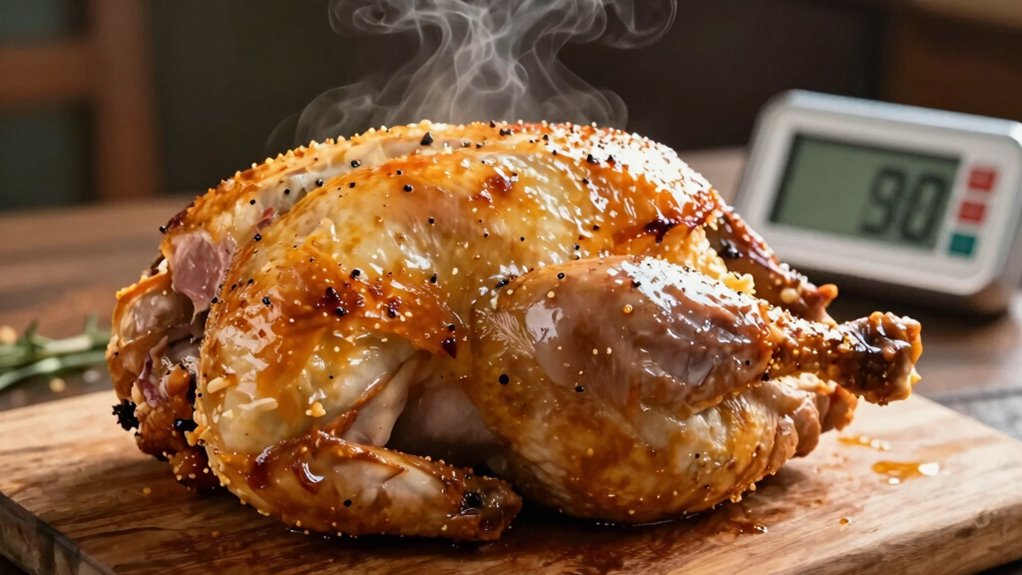
Recognizing when your food is done is essential to prevent overcooking, especially because residual heat can continue to cook it even after removing it from the heat source. Pay close attention to the cooking temperature; using a thermometer helps verify you hit the right mark without guesswork. Food texture is also a key indicator—juices run clear for meats, and vegetables should be tender but not mushy. For baked goods, a toothpick inserted in the center can confirm doneness. Trust your senses: a perfect crust, firm yet yielding, or the right aroma signals readiness. Remember, removing food slightly before the desired finish point allows carryover cooking to bring it to perfection without overdoing it. This mindful approach prevents overcooking and guarantees better results. Understanding carryover cooking can help you better anticipate how residual heat will affect your dish after removal from heat. Additionally, being aware of temperature management techniques can further fine-tune your cooking process to avoid the overcooking effect. Proper timing awareness also plays a crucial role in ensuring your dishes reach perfection without excess cooking. Incorporating resting time into your routine allows heat to evenly distribute within the food, reducing the risk of overcooking.
The Science of Temperature Changes During Carryover Cooking

When you remove food from the heat, its internal temperature doesn’t stop rising immediately. Instead, heat continues to transfer inward through heat conduction, causing the core to cook further. This process involves thermal expansion, where molecules vibrate more as they heat up, increasing the food’s temperature. Several factors influence temperature changes:
- The initial internal temperature
- The size and shape of the food
- The thermal conductivity of the material
- The ambient temperature
Heat conduction spreads heat from the surface to the interior, raising the internal temperature over time. This gradual transfer explains why food continues to cook even after removal from heat, contributing to the carryover cooking effect. Understanding these processes helps you better predict when your food reaches the perfect doneness. Additionally, thermal properties of the food material can significantly impact the rate of temperature change during this process, especially in relation to heat transfer efficiency. Proper knowledge of thermal conductivity can help optimize cooking times and avoid overcooking. Recognizing the thermal response of different foods is essential for precise cooking control, and being aware of how heat transfer mechanisms operate allows for more consistent results.
How Different Foods Are Affected by Carryover Cooking
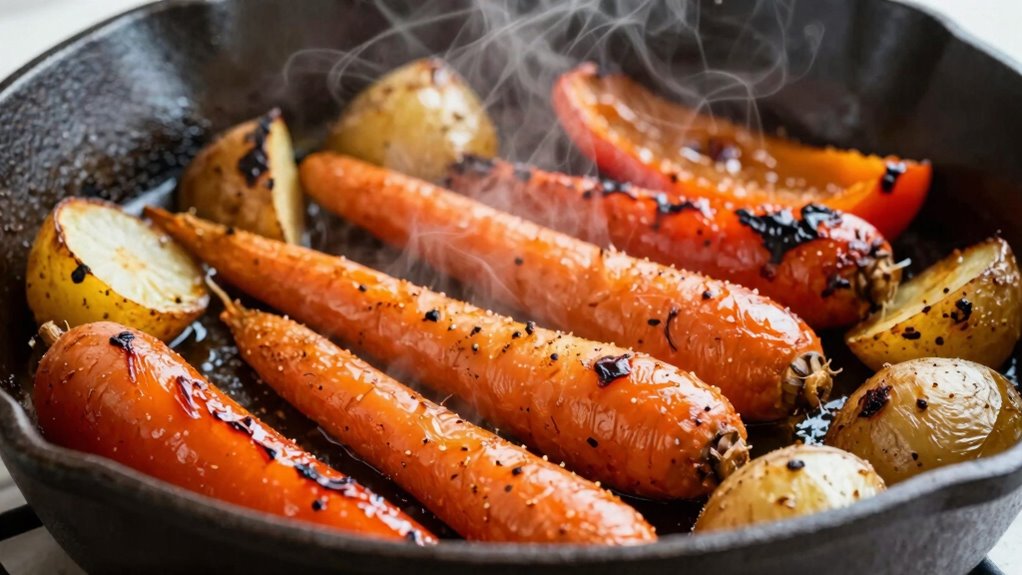
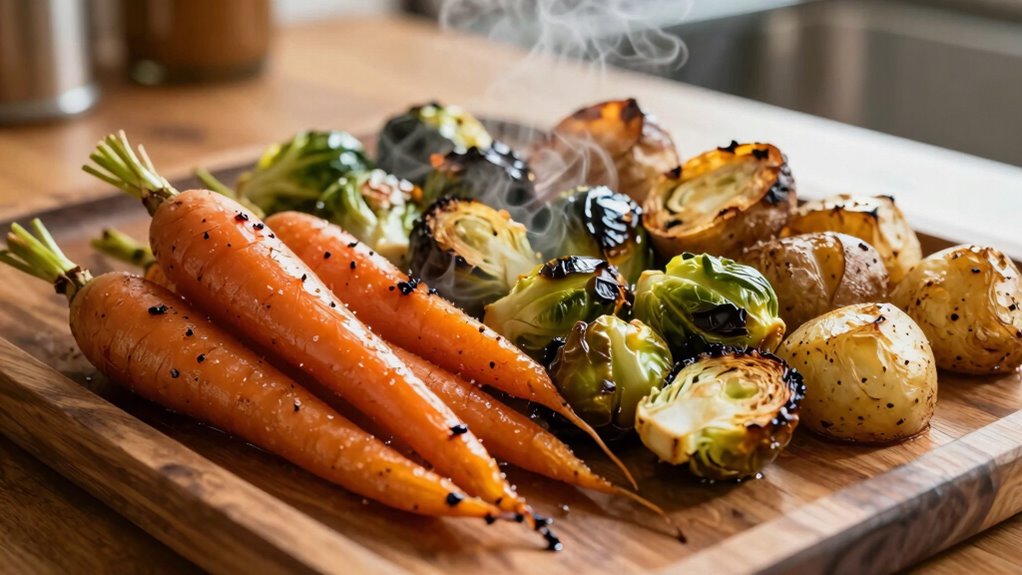
Different types of foods respond uniquely to carryover cooking based on their composition and size. For example, larger cuts of meat, like roasts or steaks, continue cooking internally, enhancing flavor development and tenderness if you rest them properly. Poultry and fish, being more delicate, can overcook quickly, losing moisture and texture if not monitored. Vegetables are also affected; thicker ones like potatoes benefit from residual heat, but leafy greens can become mushy. Knowing how different foods react allows you to adjust your cooking techniques accordingly, ensuring ideal flavor and texture. Cooking techniques play a crucial role in managing carryover effects and preventing overcooking. Overlooking these differences may lead to overcooking, diminishing quality. By understanding carryover cooking’s impact, you can better manage cooking times to preserve moisture, develop flavor, and achieve the perfect finish. Additionally, being aware of food composition can help you optimize your methods for different ingredients.
Tips to Use Carryover Cooking to Your Advantage
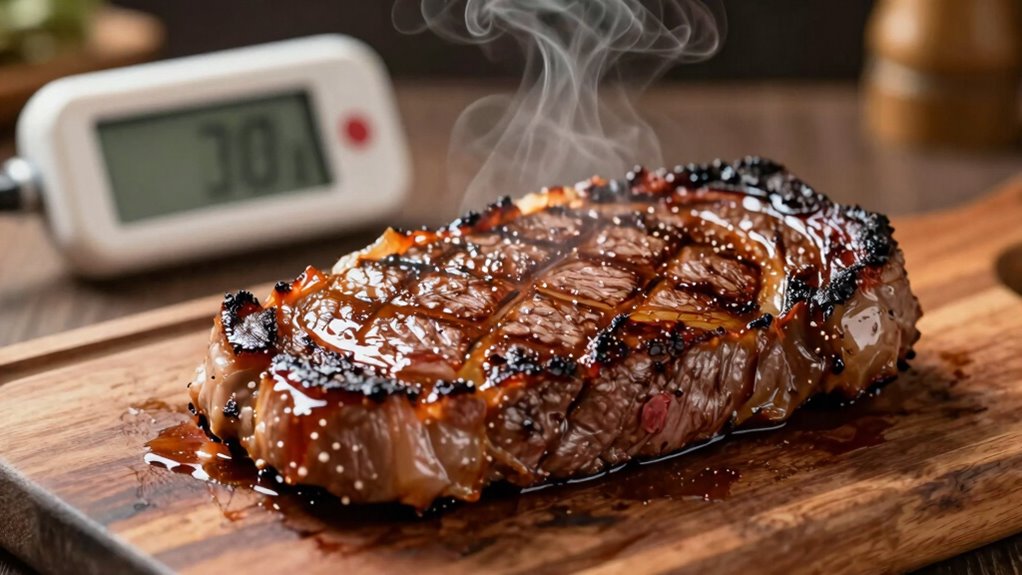
Understanding how carryover cooking affects various foods allows you to turn it into an advantage rather than a challenge. To do this, plan your cooking with precision, especially when using techniques like sous vide, which minimizes carryover. Here are some tips:
- Remove meats from heat slightly before target doneness to avoid overcooking during carryover.
- Use carryover timing to enhance flavor, letting meats rest to develop richer taste.
- When sous vide cooking, factor in carryover to ensure perfect doneness without overcooking.
- Rest meats properly after cooking to allow carryover heat to evenly finish the process.
- Understanding the carryover cooking process helps you better anticipate and control final results.
- Being aware of heat transfer principles allows you to fine-tune your cooking process and prevent overcooking.
- Recognizing the role of essential oils in flavor and health benefits can also help in preparing well-balanced dishes.
- Incorporating knowledge of natural aromatherapy can enhance the sensory experience of your culinary creations.
Common Mistakes That Lead to Overcooked Dishes
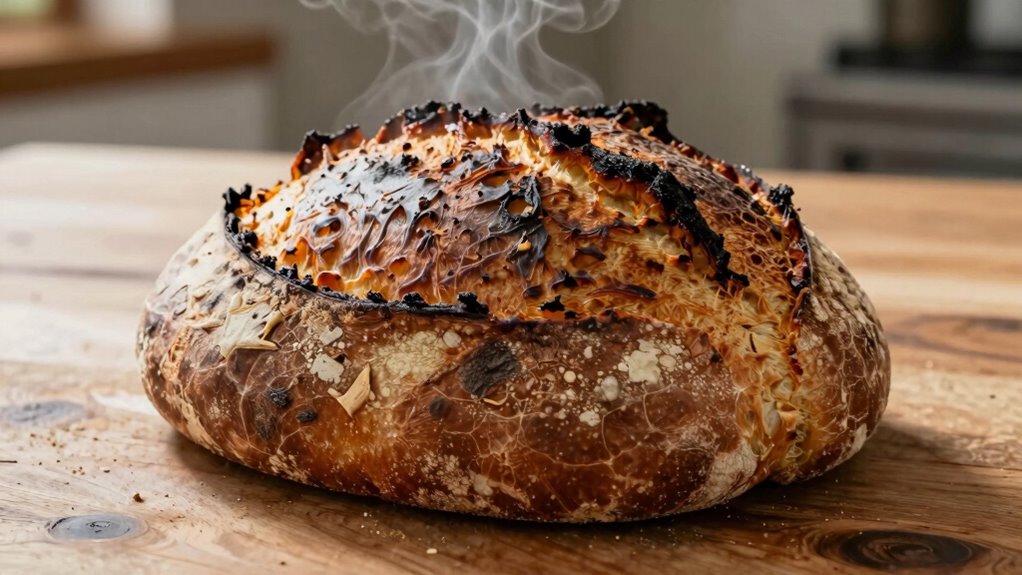
Many cooks forget to let meat rest after cooking, which can cause overcooking as juices continue to move. Relying only on timers doesn’t account for carryover heat, leading to dishes that are drier than intended. Paying attention to resting periods and using your senses instead of just timers helps prevent overcooking. Additionally, understanding the carryover cooking process can help you better predict when your dish has reached the perfect doneness. Recognizing the importance of proper tool use and timing can make a significant difference in achieving optimal results.
Ignoring Resting Periods
One common mistake that leads to overcooked dishes is ignoring the resting period after cooking. When you skip resting, you miss the chance for the carryover effect to occur naturally, which helps even out temperature differences. Without resting, you might cut into hot meat or vegetables prematurely, causing moisture loss and uneven texture. To avoid this, keep these points in mind:
- Rest for the recommended time to allow heat to distribute evenly.
- Remember that carryover effect continues to cook food after removal from heat.
- Cutting too early traps moisture and results in dryness.
- Resting permits juices to reabsorb, ensuring tender, flavorful dishes.
Ignoring the resting period can lead to overcooking and less satisfying results, so don’t overlook this vital step.
Relying Solely on Timers
Relying solely on timers can lead to overcooked dishes because they don’t account for variations in heat, ingredient size, or real-time cooking progress. Even if your timer signals don’t align perfectly, your dish might be overdone due to carryover heat. To improve timing accuracy, pay attention to sensory cues like aroma, texture, and color. These cues give you real-time feedback on doneness, reducing the risk of overcooking. Relying only on timers ignores the natural variability in ingredients and stove performance. Instead, use timers as a guide and combine them with your senses. This approach helps you better judge when to remove food from the heat, ensuring perfectly cooked dishes without unnecessary overcooking.
Best Tools and Techniques to Monitor and Control Carryover Cooking
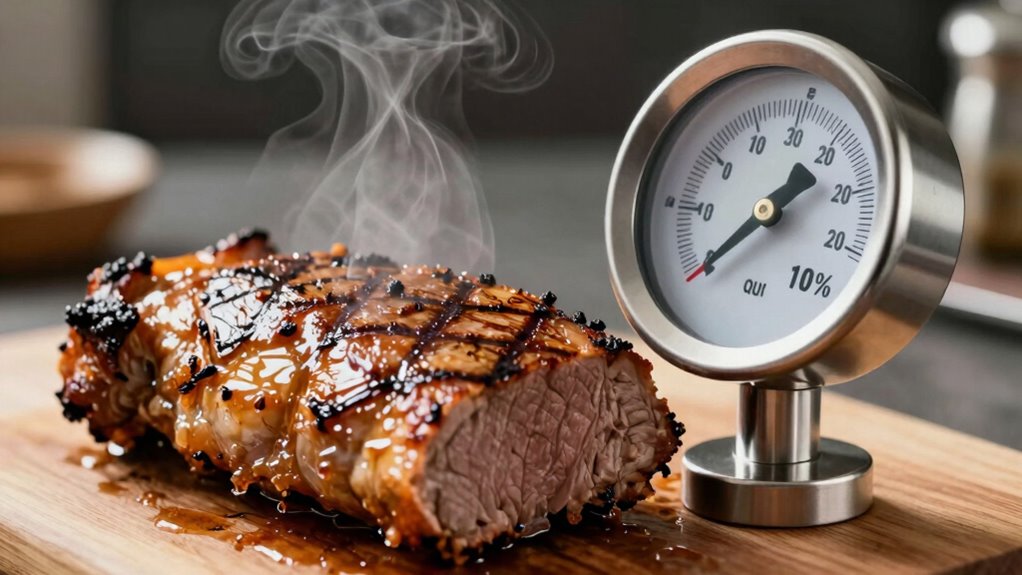
Controlling carryover cooking requires precise tools and techniques to guarantee your meat reaches the perfect doneness without overcooking. Using reliable tools helps debunk cooking myths and ensures accurate results that enhance flavor. Here are four essential methods:
- Use a instant-read or leave-in meat thermometer to monitor internal temperature precisely.
- Rest your meat after cooking, allowing carryover heat to settle before slicing.
- Measure ambient temperature and residual heat in your cooking environment to predict carryover effects.
- Keep a cooking log to track timing and temperature changes for future accuracy.
These tools and techniques give you control, preventing overcooking and maximizing flavor. Relying solely on timers often leads to overcooked results, but precise monitoring keeps meat juicy, tender, and perfectly cooked.
Practical Examples: Perfect Timing for Roasts, Steaks, and More

Getting your roast or steak just right depends on timing. Knowing when to remove them from heat lets carryover cooking finish the job perfectly. Let’s explore the ideal resting times to achieve tender, juicy results.
Perfect Roast Timing
Knowing the perfect timing for roasting different meats is essential to achieving ideal results, especially when you consider carryover cooking. To get it just right, you need to plan your oven timing carefully and monitor your meat temperature closely. Remember, meat continues to cook after removing it from the oven, so timing is key. Here are four tips to enhance your roasting:
- Roast until your meat reaches 5°F below your target meat temperature.
- Use a reliable meat thermometer for accurate readings.
- Remove the meat from the oven 10-15 minutes before it hits your desired temperature.
- Let it rest uncovered to allow carryover cooking to finish evenly without overcooking.
Following these steps helps you achieve perfectly cooked roasts, avoiding overcooking caused by the carryover effect.
Ideal Steak Resting Time
To achieve perfectly cooked steaks, timing your resting period is just as important as the cooking itself. Resting allows the meat’s juices to redistribute, improving meat tenderness and enhancing flavor development. For steaks cooked to medium-rare or medium, aim for a rest of 5 to 10 minutes, depending on thickness. Thicker cuts benefit from longer rests to prevent juices from escaping when sliced. During this time, carryover cooking raises the internal temperature slightly, so remove the steak from heat a few degrees below your target. Resting too briefly can result in a loss of tenderness and flavor, while resting too long might cause the meat to cool and lose its juiciness. Proper timing guarantees maximum tenderness and ideal flavor, making every bite more satisfying.
Frequently Asked Questions
Can Carryover Cooking Be Completely Eliminated?
You can’t completely eliminate carryover cooking because it’s a natural result of residual heat transferring from the food’s outer layers to the center. To minimize it, lower your cooking temperature and remove the food from heat slightly before the desired doneness. Keep in mind that food density affects this process; denser foods retain heat longer, making some carryover unavoidable. Practice helps you better predict and control this effect over time.
How Does Altitude Affect Carryover Cooking Times?
At high altitudes, carryover cooking times decrease because lower air pressure causes foods to cool faster after removing from heat. You should make altitude adjustments by lowering your cooking temperature and reducing the resting time to prevent overcooking. Keep in mind, the lower boiling point of water also influences cooking, so monitor your food closely and use a thermometer to ensure perfect results without overdoing it during carryover cooking.
Are Certain Cookware Materials Better at Controlling Carryover Cooking?
Sometimes, your choice of cookware materials aligns perfectly with your cooking techniques, helping you control carryover cooking better. Copper and stainless steel respond quickly to heat changes, allowing you to manage residual heat more precisely. Non-stick or cast iron, however, retain heat longer, making it harder to prevent overcooking. Knowing how different cookware materials handle heat helps you adapt your techniques and avoid overcooking, turning every meal into a masterpiece.
Does the Size of the Food Impact the Extent of Carryover Cooking?
Yes, food size impacts how much carryover cooking occurs. Larger pieces retain heat longer and continue cooking after removal from heat, leading to overcooking. Smaller foods cool down quickly, reducing carryover effects. Your cookware’s heat retention also influences this process; materials like cast iron hold heat well, increasing carryover for larger items. To prevent overcooking, consider food size and choose cookware that manages heat retention appropriately.
How Can I Adjust Recipes to Account for Carryover Cooking?
A wise cook knows, “It’s better to be safe than sorry.” To adjust recipes for carryover cooking, remove your food from heat when it’s slightly under your target resting temperature. Use cooling methods like tenting or placing on a wire rack to help it rest evenly. This way, you prevent overcooking and guarantee your dish hits the perfect doneness without losing moisture or flavor.
Conclusion
Think of carryover cooking like a gentle tide that continues to shape your meal after you’ve pulled it from the heat. If you’re aware of its subtle push, you can steer your dish to perfection, avoiding the overcooked shoreline. Mastering this natural wave lets you serve dishes just right—juicy steaks, tender roasts—without the surprise of overdone edges. Embrace this science as your guiding current, and transform your cooking into a harmonious voyage.