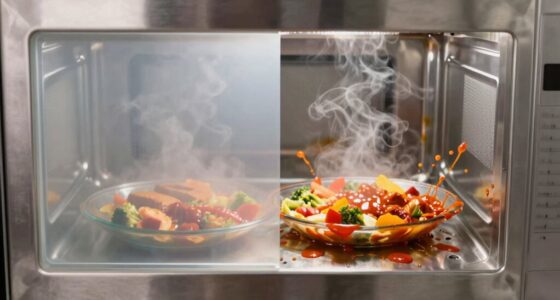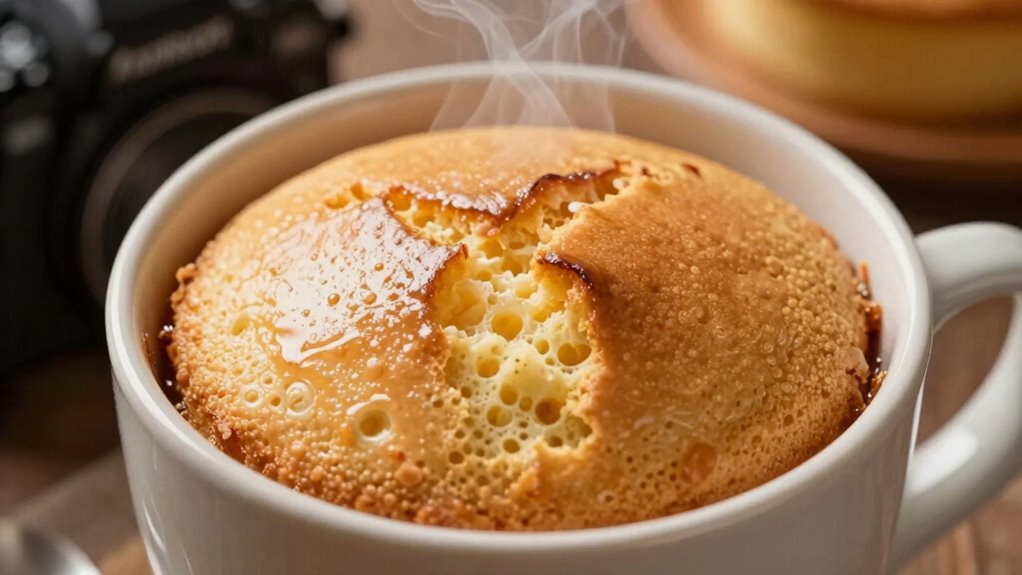

Your mug cake turns rubbery in the center because microwave energy heats unevenly, causing hot spots that overcook while others remain undercooked. Microwaves vibrate water, fat, and sugar molecules to generate heat quickly, but inconsistent heat distribution can dry out moisture in the center, making it chewy. Proper timing, power control, and techniques help prevent this. Stick around to discover how understanding microwave physics can perfect your mug cake every time.
Key Takeaways
- Uneven microwave heating causes hotspots, leading to overcooked outer layers and undercooked, rubbery centers.
- Rapid moisture evaporation in overheated zones results in dry, tough textures inside the mug cake.
- Overmixing develops excess gluten, creating a dense network that contributes to a rubbery, chewy center.
- Inconsistent heat distribution prevents even cooking, causing parts of the cake to become rubbery while others remain underdone.
- Proper power control and stirring help distribute heat evenly, reducing the risk of a rubbery center in microwave mug cakes.
Why Does Your Mug Cake Turn Out Dense or Rubbery?
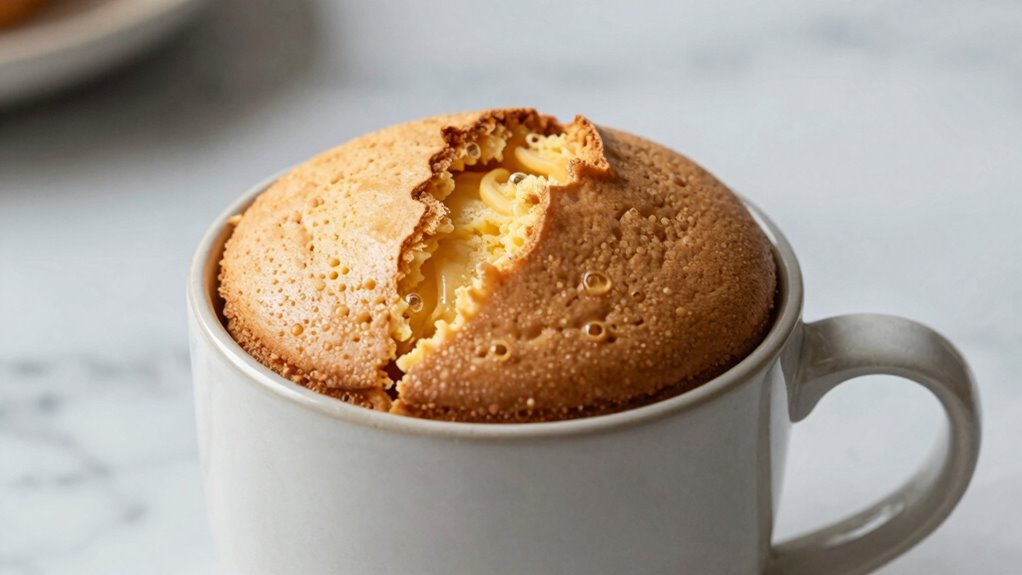
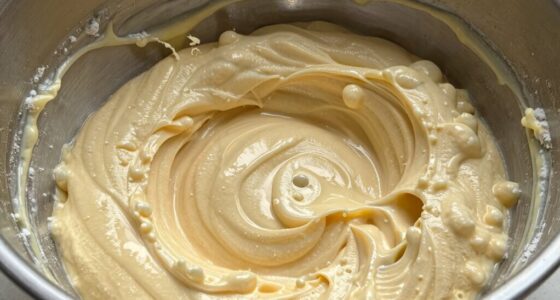
A dense or rubbery mug cake usually results from overmixing the batter or using too much flour. Overmixing develops excess gluten, which toughens the texture, while too much flour makes the cake dry and heavy. To fix this, consider ingredient substitution—use a bit less flour or swap some of it for almond or coconut flour to improve moisture and flavor. Overcoming these issues also allows you to enhance the flavor by adding spices, vanilla, or cocoa powder, making your mug cake tastier despite its dense texture. Be mindful of mixing just until combined to avoid overworking the batter. Proper ingredient balance and gentle mixing help create a light, tender mug cake with better flavor, preventing that rubbery or dense outcome. Additionally, employing energy-efficient cooking methods can help reduce overall preparation time and improve consistency. Incorporating eco-friendly kitchen appliances can further contribute to sustainable cooking practices while making your mug cakes, and understanding the thermal properties of your microwave can help optimize cooking time and prevent overcooking.
How Do Microwaves Heat Mug Cakes? (The Basics of Electromagnetic Radiation)

Microwaves heat mug cakes through electromagnetic radiation that causes water, fat, and sugar molecules to vibrate rapidly. This process occurs within the microwave spectrum, a range of frequencies specifically used in microwave ovens. When you turn on your microwave, the radiation emitted is absorbed by these molecules, leading to increased molecular motion and heat. Radiation absorption depends on the molecular properties, so water-rich batter heats more efficiently. As molecules vibrate, they transfer energy to neighboring molecules, evenly warming the cake from the inside out. This direct energy transfer is why microwave heating is so fast compared to conventional ovens. Understanding how microwave radiation interacts with ingredients helps explain how your mug cake cooks quickly, yet also why uneven heating can sometimes occur. Additionally, the design of microwave ovens influences how evenly heat is distributed during cooking.
What Makes Batter Structure Important for a Fluffy Mug Cake?

The structure of your batter plays a crucial role in achieving a fluffy mug cake because it determines how well air bubbles are incorporated and maintained during cooking. Batter stability is essential; if it’s too runny or too thick, air bubbles escape or collapse, resulting in a dense texture. Proper gluten development helps create a sturdy yet tender network that traps air effectively, giving your cake its rise and lightness. Overmixing can weaken this structure, leading to rubberiness, while undermixing might prevent enough gluten formation. Achieving the right balance ensures your batter can hold air during microwave heating, producing a fluffy, moist mug cake. Additionally, understanding batter consistency helps you tailor your mixing technique for optimal rise and texture. Maintaining an appropriate Batter stability is key to preventing collapse and ensuring a light finish. Paying attention to mixing technique can further enhance the batter’s ability to trap air and improve overall cake quality. Recognizing the importance of air incorporation can also help in achieving a uniformly risen mug cake with a tender crumb. Developing an awareness of structure formation can aid in troubleshooting common issues like rubberiness or density.
How Microwave Power Settings and Cooking Time Affect Your Mug Cake
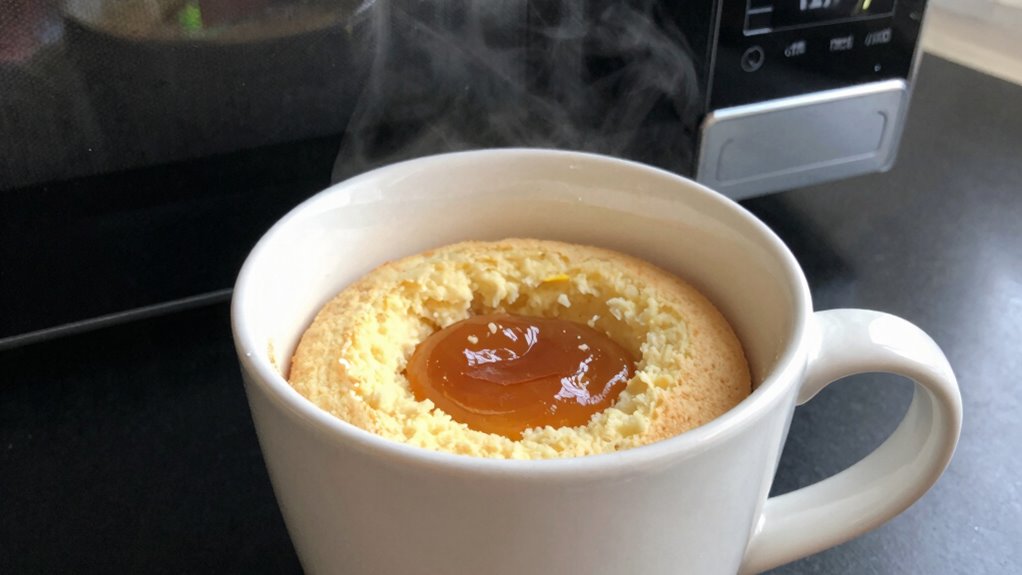
The power setting and cooking time you choose directly influence your mug cake’s texture and don’t always cook evenly. Using too high a power can lead to overcooking or a rubbery result, while too low might leave it underdone. Adjusting these settings helps you find the perfect balance for a fluffy, well-cooked mug cake.
Uneven Heating and Overcooking
When you set your microwave to too high a power or cook the mug cake for too long, uneven heating and overcooking can quickly occur. Microwave energy causes water molecules to vibrate, producing heat through heat diffusion. However, this process isn’t uniform; the outer layers heat faster than the center. Thermal conduction helps transfer heat inward, but if the outer surface gets too hot too quickly, it can lead to rubbery textures while the center remains undercooked. Overcooking also causes moisture loss, making the cake dry and tough. To avoid this, use moderate power settings and monitor cooking time closely. Stirring the mixture halfway through can help distribute heat more evenly, reducing the risk of uneven heating and overcooked edges. Additionally, understanding smart home automation can help you set precise timers and temperature controls for consistent microwave cooking results. Being aware of microwave wattage differences can further improve your cooking outcomes by adjusting times accordingly. Properly calibrated microwave settings and understanding power levels are essential for achieving perfectly cooked mug cakes. Incorporating cooking techniques such as rotating the mug during cooking can also contribute to more evenly heated and better-textured results.
Power Settings and Texture
Adjusting microwave power settings and cooking time directly impacts your mug cake’s texture. Using a lower power level allows for more even heating, reducing the risk of rubbery or overcooked edges. Higher power levels heat quickly but can cause uneven heating, leading to a dense or rubbery center. To achieve a tender, moist cake, set your microwave to a medium or medium-low power level and monitor the cooking time carefully. This ensures better heating uniformity, allowing the heat to penetrate evenly throughout the batter. Remember, every microwave is different, so it’s best to start with a shorter time and add more as needed. Proper power level adjustments help you control the texture, preventing rubberiness and ensuring your mug cake turns out perfectly moist and fluffy. Additionally, understanding microwave energy distribution can help you optimize cooking results for a consistent, desirable texture. Being aware of microwave power settings can further enhance your ability to produce evenly cooked mug cakes. Recognizing the importance of temperature control can also help in achieving the perfect moistness and avoiding overcooking.
Why Does Uneven Heating Cause a Chewy or Rubbery Center?
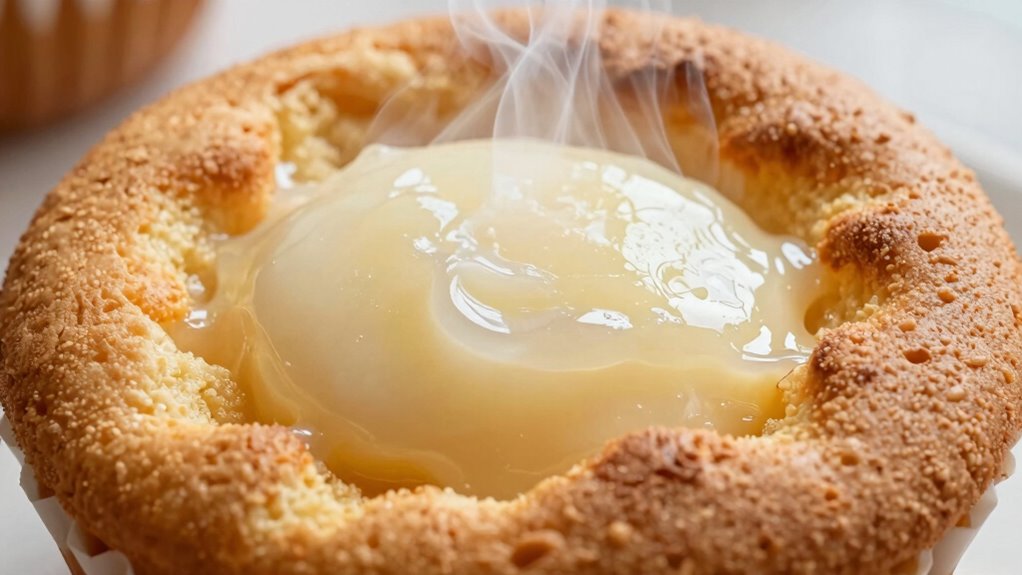
Uneven heating in your mug cake happens because heat penetrates differently across the mixture, leaving some areas overcooked while others stay undercooked. This inconsistency can cause the center to become chewy or rubbery. Rapid moisture evaporation in certain spots further worsens this texture, making it harder to get that perfect, tender bite. Understanding heat distribution and how it affects microwave cooking can help you troubleshoot and improve your mug cake results. Recognizing how microwave energy varies within the oven can lead to more consistent cooking outcomes. Additionally, knowing how power levels influence heat penetration can help you adjust your microwaving techniques for better results.
Heat Penetration Variability
Heat penetration variability occurs because microwave energy doesn’t always distribute evenly throughout the mug cake. Microwave frequency affects how energy is absorbed, causing hotspots where heat concentrates and cooler areas that heat more slowly. This uneven heating leads to inconsistent thermal conduction within the cake, making some parts cook faster than others. The result is a chewy or rubbery center because the outer layers may be overcooked while the core remains underdone. To reduce this variability, you can stir the batter partway through cooking or use a microwave with a turntable, which helps distribute energy more evenly. Understanding how microwave frequency influences heat transfer helps you achieve a more uniformly cooked mug cake with a tender, consistent center.
Rapid Moisture Evaporation
When microwave energy causes certain areas of your mug cake to heat faster than others, moisture within those regions starts to evaporate rapidly. This uneven heat transfer creates dry spots and a chewy or rubbery center. As moisture escapes quickly from overheated zones, the structure becomes tough, making the cake less tender. The result is a texture imbalance that’s hard to enjoy. To visualize this, consider the following:
| Hot Spots | Moisture Loss | Texture Change |
|---|---|---|
| Faster heating | Rapid evaporation | Rubbery center |
| Uneven heat transfer | Dry areas | Chewy bite |
| Overcooked zones | Loss of moisture | Less tender |
Controlling heat transfer guarantees more uniform moisture retention, preventing rapid moisture evaporation and enhancing overall texture.
Tips for Achieving a Light, Fluffy Mug Cake in the Microwave
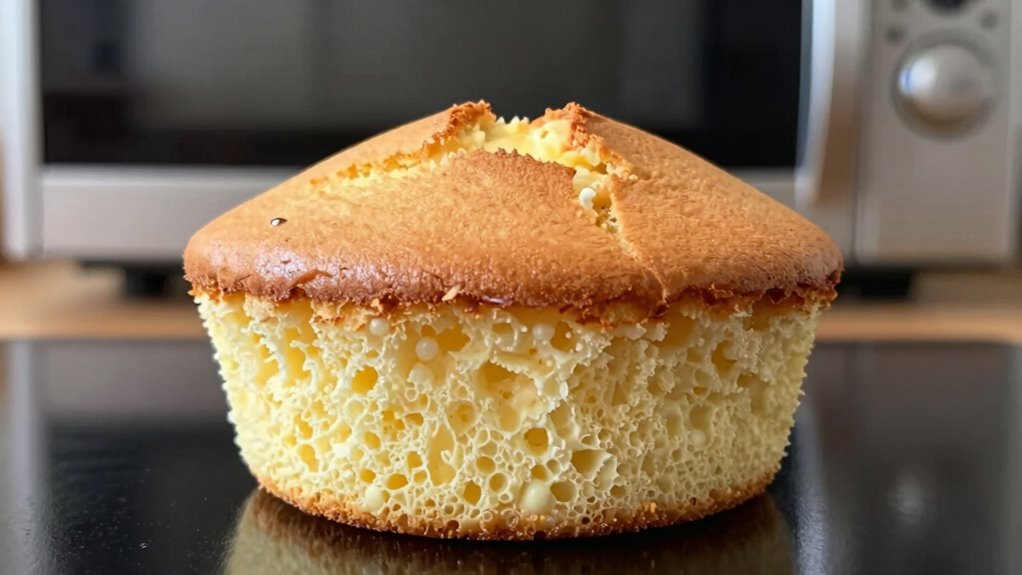
To achieve a light, fluffy mug cake in the microwave, it’s vital to focus on proper mixing and ingredient ratios. Use a gentle hand when combining ingredients to prevent overworking the batter, which can deflate the rise. Make sure your mug is microwave-safe to avoid accidents or uneven cooking. When substituting ingredients, choose light options like Greek yogurt instead of oil to add moisture without weighing down the batter. Proper ingredient ratios—such as balancing flour and leavening agents—are essential for a good rise. Avoid overmixing, which can develop gluten and make the cake dense. Ultimately, precise measurements and mindful substitutions help create a tender, airy texture, making your mug cake perfectly fluffy every time.
How Overcooking or Undercooking Changes Your Mug Cake’s Texture

Overcooking or undercooking your mug cake markedly impacts its texture, often resulting in a less-than-ideal dessert. In microwave chemistry, precise timing ensures the batter consistency transforms properly into a moist, tender cake. Overcooking leads to excessive moisture loss, making the cake rubbery or dry, while undercooking leaves the batter overly moist and dense. To understand this better, consider the following:
| Result | Effect on Texture |
|---|---|
| Overcooked | Rubberiness, dryness |
| Undercooked | Gummy, dense center |
| Correctly cooked | Soft, moist, evenly textured |
| Slight variation | Slightly different mouthfeel |
Pay close attention to timing; small adjustments can considerably change your mug cake’s final texture.
How Moisture Evaporation Influences Mug Cake Results
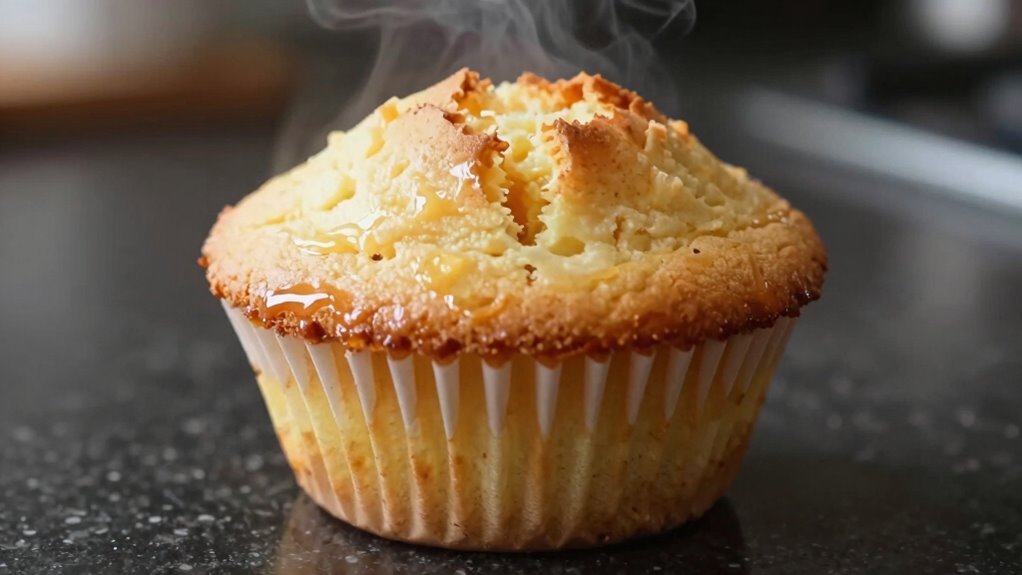
Moisture evaporation during cooking affects your mug cake’s texture and moistness. As steam forms, it keeps the cake tender, but surface drying can make it tough if moisture escapes too quickly. Timing your microwave and adjusting moisture levels help you control how much moisture is lost and how your cake turns out.
Steam Generation Impact
When moisture in your mug cake turns to steam, it plays a crucial role in shaping the final texture. As water evaporates, the steam causes molecular expansion within the batter, creating pockets that influence moistness and structure. This process depends heavily on thermal conductivity; a higher thermal conductivity allows heat to transfer quickly, promoting even steam generation throughout the cake. Rapid or uneven steam formation can lead to rubbery centers or dry edges, as moisture escapes too quickly or fails to distribute evenly. Controlling the rate of moisture evaporation ensures a balanced expansion of molecules, resulting in a tender, well-cooked mug cake. Ultimately, understanding how steam impacts molecular expansion and heat transfer helps you craft more consistent, satisfying microwave mug cakes.
Surface Drying Effects
As moisture escapes from your mug cake’s surface during microwaving, it directly impacts the final texture and appearance. Surface drying occurs when heat causes the moisture to evaporate faster than it can be replaced, leading to crust formation. This crust can create a firm, rubbery exterior that contrasts sharply with the moist interior. When surface drying happens too quickly, it prevents heat from evenly penetrating the cake, resulting in uneven cooking and potential rubberiness in the center. Controlling surface drying is vital to achieving a balanced texture. Using microwave power levels wisely or covering your mug can slow moisture loss, reducing crust formation. By managing surface drying, you help guarantee your mug cake remains tender, moist, and free of undesirable rubbery patches.
Moisture Loss Timing
Timing is crucial because the rate at which moisture escapes during microwaving directly affects your mug cake’s final texture. As heat conduction heats the batter unevenly, moisture begins to evaporate at different rates, influencing whether your cake stays moist or becomes rubbery. If moisture loss happens too quickly, the cake can dry out before setting, resulting in a dense, chewy center. Conversely, slower moisture evaporation promotes better moisture retention, ensuring a tender, fluffy result. Visualize this process:
- Steam escaping from the batter’s surface, creating a dry crust
- The center remaining moist and gooey, resisting overcooking
- Excess moisture gradually evaporating, thinning the batter’s consistency
Controlling moisture loss timing involves managing microwave power and cooking duration, which helps optimize heat conduction and moisture retention for perfectly textured mug cakes.
Common Mistakes That Lead to Rubbery Mug Cakes: And How to Avoid Them
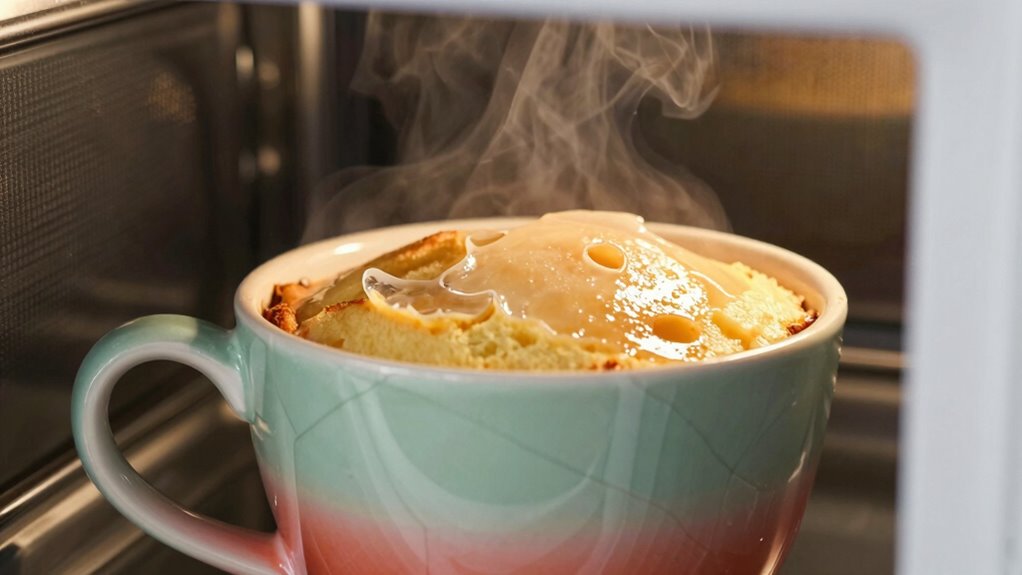
One common mistake that causes mug cakes to turn rubbery is overcooking them. When you cook your cake too long, the proteins and starches tighten excessively, resulting in a dense, rubbery texture. To avoid this, stick closely to the recommended cooking time. Additionally, relying on ingredient substitutions or recipe variations without adjusting cooking times can lead to uneven results. For example, swapping out ingredients like milk for yogurt or altering flour types can affect moisture levels and cooking behavior. Always test your mug cake with short bursts of time, especially when making adjustments. This way, you prevent overcooking and maintain a tender, moist center. Proper timing and understanding how ingredient changes influence cooking will help you achieve the perfect mug cake every time.
Using Physics to Perfect Your Mug Cake Every Time
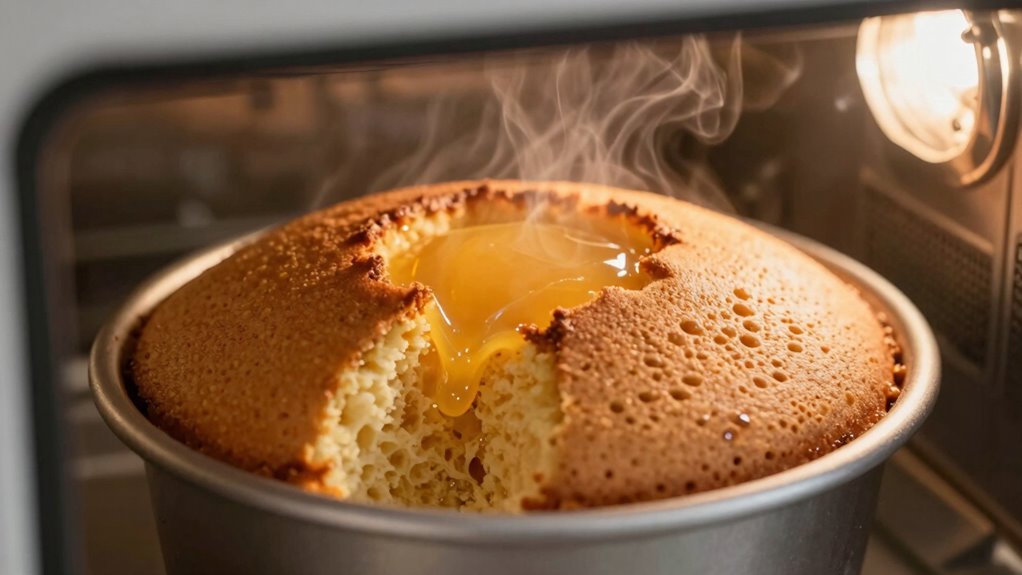
Understanding the physics behind microwave mug cakes can help you achieve perfect results every time. By mastering heat distribution and timing, you can avoid rubbery textures and overcooking. Focus on microwave safety by using microwave-safe mugs to prevent hazards. When experimenting with ingredient substitutions, consider how they affect moisture and density, which impact cooking time and texture. Visualize your mug filled with:
Master microwave physics for perfectly moist, evenly cooked mug cakes every time.
- Steaming batter that rises evenly, like a fluffy cloud
- Gentle waves of heat spreading through the cake, ensuring uniform cooking
- Steady, controlled bursts of microwave power preventing hotspots and overcooking
Applying these principles means adjusting your microwave‘s power level and timing, ensuring each cake is moist and tender. With a little physics knowledge, you can consistently create mug cakes that are perfectly cooked, safe, and delicious.
Frequently Asked Questions
How Does Microwave Frequency Influence Mug Cake Texture?
Microwave frequency effects considerably influence mug cake texture because they interact with food dielectric properties. Higher frequencies tend to heat food more evenly, reducing rubbery centers, while lower frequencies may cause uneven heating, leading to rubberiness. When you use the right microwave frequency, it guarantees the molecules in your cake absorb energy efficiently, resulting in a moist, tender texture. Adjusting microwave settings based on dielectric properties helps you avoid rubbery, overcooked centers.
Can Container Shape Affect Microwave Mug Cake Outcomes?
Yes, container shape and design affect your mug cake outcomes. A wider, shallow container promotes even heat distribution, preventing rubbery centers. Conversely, tall, narrow mugs can trap heat and cause uneven cooking, resulting in chewy or rubbery textures. Material effects also matter; ceramic retains heat well, ensuring thorough cooking, while plastic may heat unevenly. Choosing the right container design helps you achieve a perfectly moist, fluffy mug cake every time.
What Role Does Microwave Wattage Variability Play in Cake Texture?
Your microwave wattage variability affects cake texture by influencing power distribution and heat uniformity. Higher wattage provides more consistent heat, reducing rubbery centers, while lower wattage can cause uneven heating, leading to overcooked edges and undercooked centers. To achieve a perfect mug cake, you should adjust cooking times accordingly and stop microwaving once the cake is set, ensuring even heat distribution and a moist, tender texture.
How Does the Placement of the Mug in the Microwave Impact Cooking?
Your microwave positioning substantially impacts cooking because it affects heat distribution. If you place the mug too close to the microwave’s walls or turntable edge, uneven heating can occur, leading to rubbery centers. To guarantee even cooking, center the mug on the turntable and avoid blocking vents. Proper microwave positioning promotes uniform heat distribution, helping your mug cake cook evenly and develop the perfect texture without rubberiness.
Why Do Some Microwave Mug Cakes Develop a Paradoxical Rubbery Crust?
Think of your mug cake as a dance floor; when it develops a rubbery crust, it’s like dancers sticking to the floor. This happens because ingredient interactions, especially flour and eggs, create a firm surface. Moisture evaporation from the top causes that crust, while the inside remains moist. Overcooking accelerates this, so to avoid it, monitor your cake and make certain of even heating, keeping your “dance floor” just right.
Conclusion
By understanding the physics behind microwave mug cakes, you can turn your kitchen into a science lab where perfect textures come to life. Imagine each microwave zap as a tiny storm of energy, carefully heating your batter just right—neither too dense nor rubbery. With a little attention to timing and moisture, you’ll craft a fluffy, moist treat every time, transforming simple ingredients into a warm, comforting masterpiece that feels like a hug in a mug.