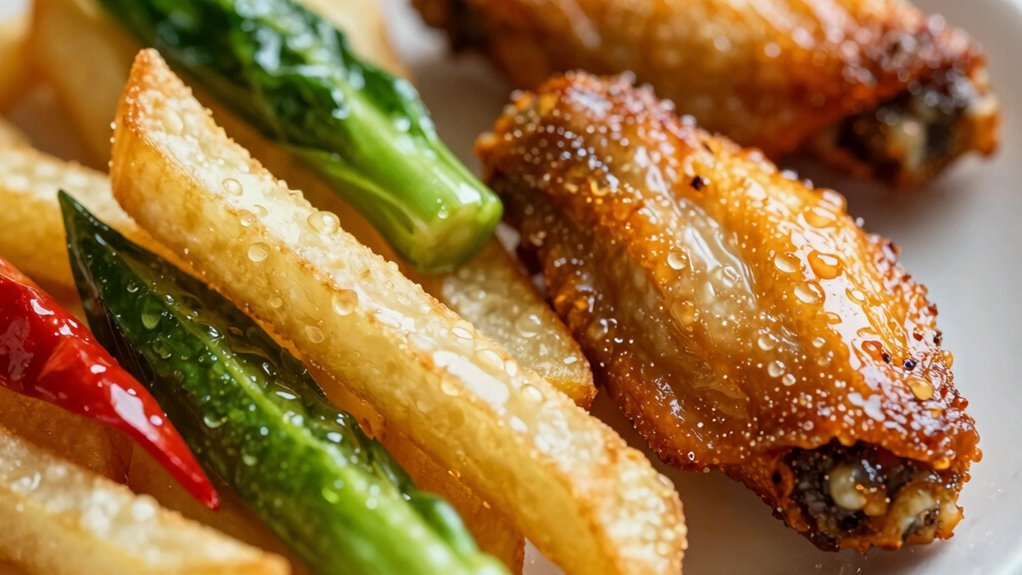

To prevent soggy fries, wings, and veggies, manage moisture carefully. Excess moisture from cooking or air exposure softens the crispy surface and causes sogginess. When frying, the hot oil creates a barrier that locks in moisture, keeping foods crisp. But if you leave fried items out or reheat improperly, moisture seeps in, softening the texture. Learning how moisture moves and how to control it can help you keep foods crispy longer—discover more insights ahead.

Get kitchen staples and gadgets delivered free with Prime
- Fast, free delivery on millions of items
- Prime Video, Amazon Music and more included
- Member-only deals all year
Key Takeaways
- Moisture migration from air or internal water causes crisp foods to absorb excess moisture, leading to sogginess.
- Residual steam during reheating creates surface moisture, softening crispy textures.
- Proper storage and serving immediately help prevent moisture from penetrating and softening fried items.
- Overcooking vegetables releases water, making them limp, while quick cooking methods preserve texture.
- Reheating with dry heat methods like oven or air fryer minimizes steam and maintains crispness.
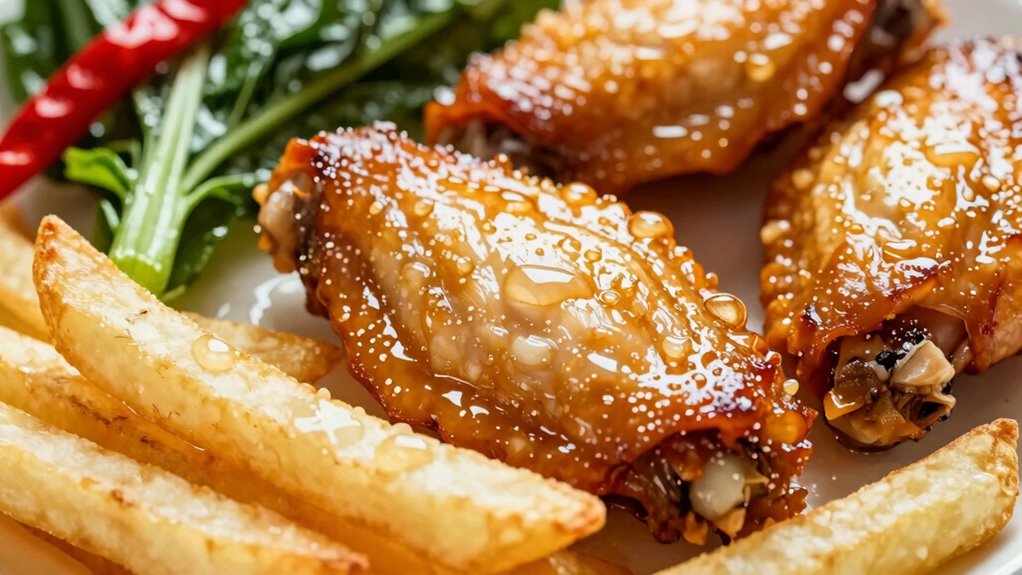
Have you ever wondered why your crispy fries turn soggy or your wings lose their crunch? It all comes down to moisture science. When you cook foods like fries, wings, or vegetables, the goal is to achieve flavor enhancement and texture preservation. But moisture is a double-edged sword — it’s essential for flavor, yet it can quickly ruin that satisfying crunch you crave. Understanding how moisture interacts with fried foods helps you keep them crispy longer and prevents sogginess.
Moisture is key to flavor but can ruin your crispy foods—balance is essential for perfect texture.
The moment hot oil hits your food, the surface begins to fry, creating a barrier that locks moisture inside. This process is *indispensable* for flavor enhancement, as the oil transfers heat evenly and infuses the food with rich flavors. However, if moisture inside isn’t properly controlled, it can escape or condense, leading to soggy textures. When you leave fries or wings sitting out, moisture from the air or residual steam seeps back into the food, softening the surface and destroying that initial crispness. This moisture absorption is what causes the soggy texture you dislike. Moisture migration plays a critical role here in how textures change over time.
To preserve texture, it’s *essential* to minimize moisture migration. One effective technique is to serve fried foods immediately after cooking, before moisture can penetrate the crust. Using a cooling rack instead of a plate allows excess oil and moisture to drip away, helping maintain crunch. When reheating, methods like oven or air fryer are preferable because they dry out moisture more effectively than microwaving, which tends to create steam and make foods soggy again. Additionally, understanding moisture transfer can help in choosing the best reheating techniques to restore crispness without adding excess moisture.
In vegetables, moisture plays a slightly different role. Overcooking releases water, making them limp and less flavorful. To keep vegetables crisp and flavorful, you want to cook them just enough to tenderize without releasing too much moisture. Blanching followed by rapid cooling can preserve their texture and freshness, preventing sogginess when stored. Also, adding ingredients like salt or acids can help draw out excess water during cooking, enhancing both flavor and texture. A good understanding of moisture science can help you better control these processes and improve your cooking results.
Ultimately, controlling moisture is *paramount* to maintaining that perfect crispy bite in fries, wings, and veggies. It’s a delicate balance—too much moisture leads to sogginess, while just enough keeps flavors vibrant and textures intact. With proper techniques like serving promptly, using the right reheating methods, and managing moisture during cooking, you can enjoy food that’s flavorful and delightfully crisp, every time.
As an affiliate, we earn on qualifying purchases.
Frequently Asked Questions
How Does Humidity Affect Food Sogginess During Storage?
Humidity greatly impacts food sogginess during storage. High humidity introduces extra moisture, leading to sogginess in crispy foods. To prevent this, you need humidity control by storing foods in airtight containers or using desiccants. This helps maintain the original texture and preserves freshness. Proper humidity management is essential for texture preservation, especially for items like fries, wings, and veggies, ensuring they stay crispy and appetizing longer.
Can Moisture Content Predict Food Shelf Life Accurately?
Imagine a moisture sensor snugly fitting inside a package, revealing the hidden moisture levels. Moisture content can help predict food shelf life, but it doesn’t do so precisely on its own. Accurate shelf life estimation relies on combining moisture data with other factors like temperature and packaging. While useful, moisture sensors provide a helpful clue, yet they shouldn’t be solely trusted for definitive shelf life predictions.
What Role Does Oil Quality Play in Preventing Sogginess?
Oil quality plays a vital role in preventing sogginess by maintaining proper frying conditions. When you use oil with a high smoke point, it resists breaking down and producing excessive moisture, helping foods stay crisp longer. Regular oil filtration removes debris and food particles, reducing moisture transfer. This combination guarantees your fried items stay crispy by minimizing moisture absorption, making your snacks less soggy and more enjoyable.
Are There Specific Packaging Materials That Reduce Moisture Transfer?
Yes, specific packaging materials with strong barriers can markedly reduce moisture migration. You should look for packaging with moisture-resistant barriers like foil or metallized films, which prevent humidity from entering and sogginess from forming. These packaging materials help maintain crispness by blocking moisture transfer, ensuring your fries, wings, and veggies stay fresh longer. Properly selecting packaging with effective barriers is key to controlling moisture and avoiding soggy foods.
How Do Different Cooking Methods Impact Moisture Retention?
Your choice of cooking technique greatly impacts moisture retention. For example, baking and roasting help lock in moisture, while frying can cause moisture migration, leading to sogginess. Grilling or sautéing reduces moisture loss by cooking quickly at high heat. Understanding how different methods influence moisture migration allows you to preserve texture and crispness, ensuring your fries, wings, or veggies stay deliciously crispy and less soggy.
As an affiliate, we earn on qualifying purchases.
Conclusion
Understanding the moisture science behind soggy fries, wings, and veggies is like revealing the secret to perfect texture every time. By controlling moisture levels, you can avoid turning your crispy favorites into soggy disasters. Think of it as wielding a superpower—your ability to keep foods crispy is nothing short of legendary. So next time you cook, remember: mastering moisture is the key to culinary greatness, transforming your dishes from mediocre to mind-blowingly perfect!
As an affiliate, we earn on qualifying purchases.
moisture-absorbing kitchen towels
As an affiliate, we earn on qualifying purchases.
As an affiliate, we earn on qualifying purchases.
Columbus Day / Indigenous Peoples' Day Picks
long weekend sales
As an affiliate, we earn on qualifying purchases.