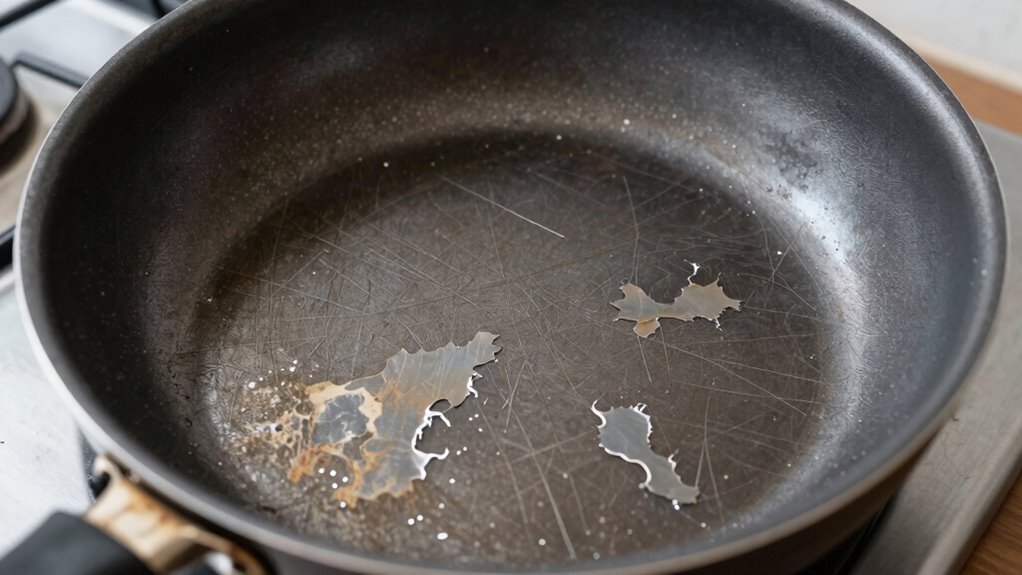
Your nonstick pan can fail early from factors like high heat, abrasive cleaning, or using metal utensils, but also due to manufacturing flaws, poor design, and improper care. Repeatedly exposing it to harsh conditions weakens the coating faster than you might expect. If you want to learn more about how to extend your pan’s lifespan and prevent premature failure, keep exploring the key points that can make a difference.
Key Takeaways
- High heat and preheating empty pans accelerate coating degradation, regardless of utensil type.
- Abrasive cleaning methods and harsh scrubbing weaken the nonstick surface over time.
- Manufacturing defects or uneven coating application can cause early peeling and wear.
- Using improper utensils like metal tools can scratch and expose the base material, speeding up failure.
- Poor cookware design and hotspots lead to uneven heating, compromising nonstick coating longevity.
What Causes Nonstick Coatings to Fail Early?
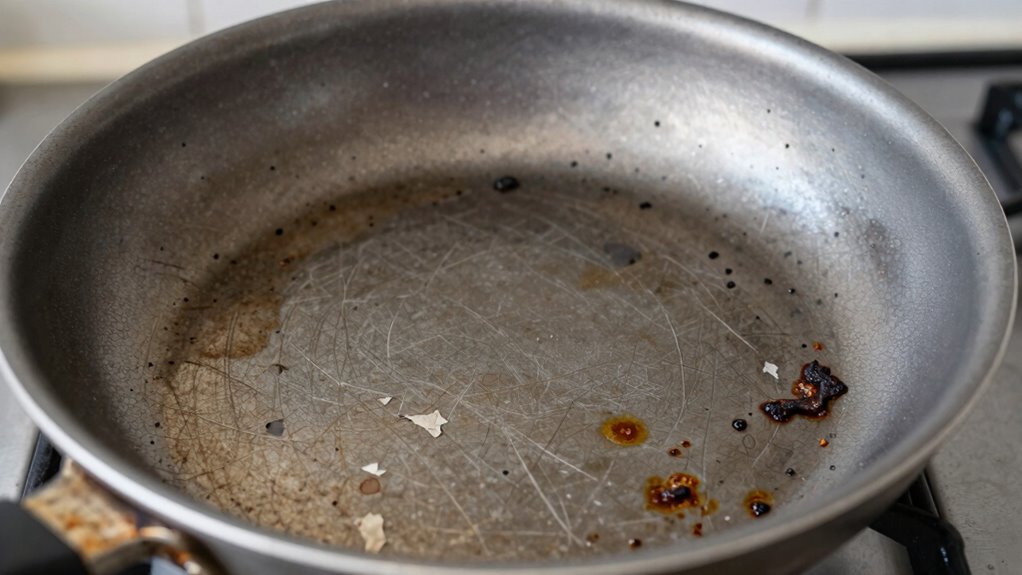
Nonstick coatings often fail early because of improper use and care. The core issue often lies in the limitations of nonstick technology and cookware design. Many pans are made with thin coatings that can degrade quickly if subjected to high heat or abrasive utensils. Poor cookware design may also lead to uneven heat distribution, causing hotspots that damage the coating. Over time, high temperatures can cause the nonstick layer to break down, especially if you preheat the pan empty or use metal tools. Additionally, some nonstick technologies are more durable than others, but no coating is entirely scratch-proof. Understanding how your cookware’s design interacts with proper cooking practices can extend the lifespan of your pan and keep the nonstick surface intact longer. Proper heat management and choosing high-quality nonstick coatings are essential for longevity, as heat distribution significantly impacts coating durability. Furthermore, advances in nonstick technology have introduced more durable options, but they still require careful handling to maximize their lifespan. Paying attention to care and maintenance can also greatly influence how long your nonstick coating remains effective.
How Do Cleaning Habits and Scratches Damage Your Nonstick Pan?
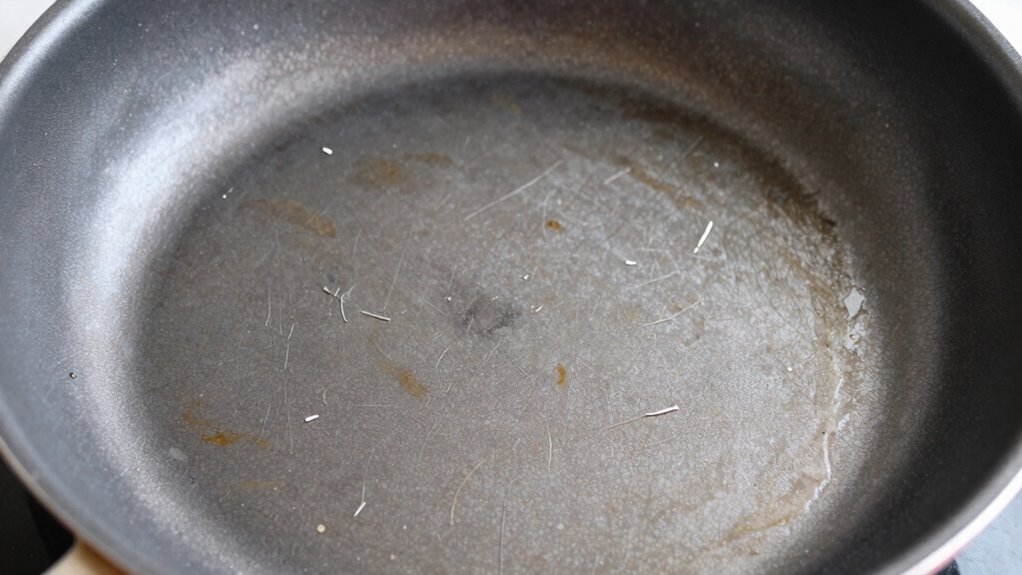
Using abrasive cleaners or harsh scrubbing tools can scratch the nonstick surface, weakening its coating. These scratches create tiny openings that allow cookware to wear out faster. To keep your pan in good shape, stick to gentle cleaning methods and avoid scrubbing with metal or abrasive pads. Additionally, incorporating Free Floating techniques in your maintenance routine can help minimize surface damage and prolong the lifespan of your nonstick cookware. Proper handling and cleaning can also prevent Auditory Processing Disorder from affecting your cookware’s surface integrity. Being aware of market trends can further guide you in maintaining your cookware and avoiding unnecessary damage, especially when considering the latest Farmhouse decor styles that emphasize durability and natural materials.
Scratches From Abrasive Cleaners
Even a small scratch from an abrasive cleaner can considerably weaken the nonstick coating on your pan. When you use abrasive cleaners or metal utensils, you risk scratching the surface, exposing the base material. These scratches create weak points that compromise nonstick performance and can lead to peeling. To understand the impact, consider this table:
| Cleaning Method | Effect on Nonstick Pan | Recommended Approach |
|---|---|---|
| Abrasive Cleaners | Scratches, coating damage | Use gentle, non-abrasive cleaners |
| Metal Utensils | Deep scratches, coating loss | Opt for silicone or wooden tools |
| Soft Sponges | Safe, preserves coating | Use non-abrasive sponges |
| Steel Wool | Severe damage, scratches | Avoid entirely |
| Baking Soda Paste | Mild cleaning, safe | Use for stubborn stains |
Avoid abrasive cleaners and metal utensils to prolong your pan’s lifespan. Additionally, understanding nonstick coating durability can help you adopt better cleaning habits.
Harsh Scrubbing Damage
Harsh scrubbing can quickly erode the protective coating on your pan, leading to premature damage. Using metal utensils during cleaning can scratch and weaken the surface, making it more vulnerable to wear. Even if you avoid metal, aggressive scrubbing with abrasive pads or steel wool can cause tiny scratches that compound over time. Dishwasher cleaning might seem convenient, but the high heat and strong detergents can also degrade the nonstick coating, especially if the pan is scrubbed vigorously beforehand. Repeatedly forcing off stubborn residue with harsh scrubbing weakens the coating’s integrity, reducing its nonstick properties and lifespan. To prevent early failure, opt for gentle cleaning methods and avoid metal utensils and abrasive cleaners that can damage the surface. Proper nonstick coating care can help you choose the best cleaning practices to extend your pan’s life. Additionally, proper maintenance plays a crucial role in preserving the integrity of your nonstick surface over time, including understanding cleaning techniques that minimize surface damage.
Do Cooking Temperatures and Utensil Choices Affect Nonstick Longevity?
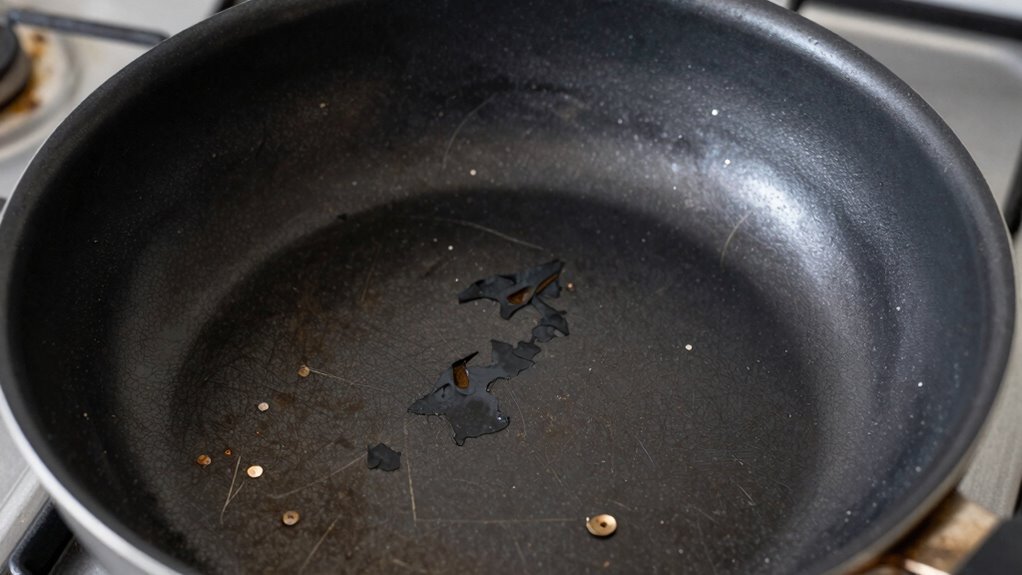
The temperatures at which you cook and the utensils you choose can substantially impact the lifespan of your nonstick pan. High cooking heat can cause the nonstick coating to break down faster, especially if you regularly cook at scorching temperatures. To preserve your pan, keep heat low to medium for most tasks. Additionally, utensil type matters: metal utensils can scratch and damage the coating, reducing its effectiveness over time. Opt for silicone, wooden, or plastic tools to avoid unnecessary wear. Proper cooking temperatures and gentle utensils help maintain the nonstick surface longer, preventing early failure. Being mindful of cooking heat levels and choosing the right utensils can extend your pan’s useful life and enjoy its nonstick benefits longer. Also, paying attention to manufacturing quality can make a significant difference in durability and longevity. Using quality cookware from reputable brands often results in better coating durability and overall performance. Moreover, understanding the importance of periodic maintenance can further help preserve the coating and prolong your pan’s usability. Regular cleaning and proper storage are additional steps that support the coating’s integrity over time.
Can Manufacturing Defects Shorten Your Nonstick Pan’s Life?
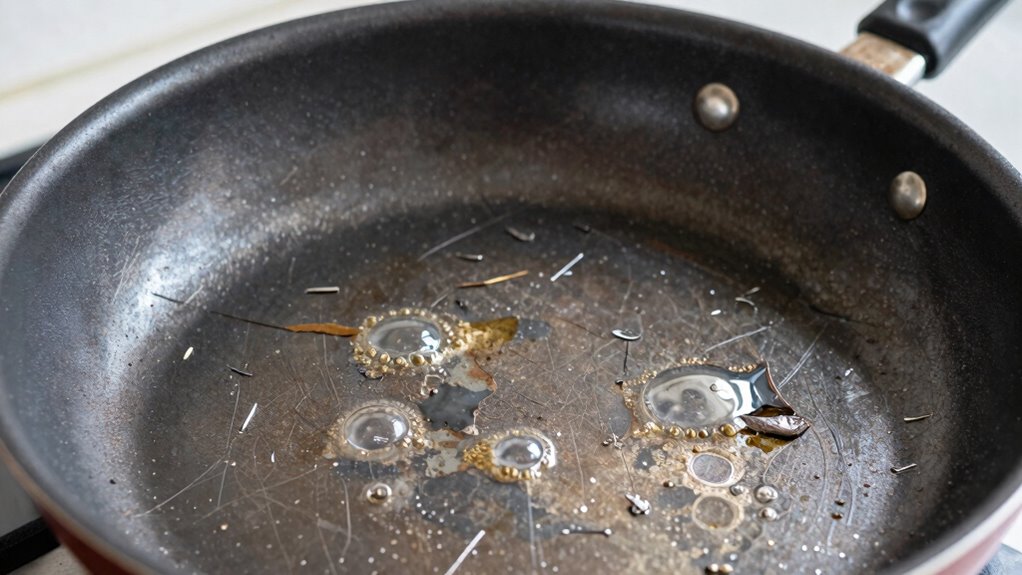
Manufacturing defects can considerably shorten your nonstick pan’s lifespan. Issues like poor quality control, flaws in material composition, or errors in coating application can cause early failure. Recognizing these problems helps you understand why your pan might not last as long as expected. Additionally, using the wrong utensils or cleaning methods can exacerbate these issues by damaging the coating integrity. Proper manufacturing standards are essential to ensure product durability and performance. Understanding the cultural heritage of manufacturing processes can also shed light on why some products are more durable than others. For example, the horsepower of electric dirt bikes reflects the importance of quality components and design in ensuring durability and performance. Furthermore, ongoing quality assurance practices are crucial in minimizing manufacturing defects and extending product lifespan.
Manufacturing Quality Control
Poor quality control during manufacturing can substantially shorten the lifespan of your nonstick pan. Factory defects often slip through if quality assurance isn’t rigorous enough, leading to issues like uneven coating or weak spots. When manufacturers overlook proper inspection, defective pans make it to store shelves, increasing the risk of early failure. These flaws can cause the nonstick coating to peel or deteriorate faster, even if you avoid metal utensils. Ensuring strict quality assurance processes helps catch flaws before products reach consumers. High standards in manufacturing reduce the chances of defective pans that wear out prematurely. When buying, look for brands that emphasize quality control, as this can markedly influence how long your nonstick pan remains effective and safe to use.
Material Composition Flaws
Even if a nonstick pan passes quality control, hidden flaws in its material composition can cause it to fail prematurely. Material flaws, such as inconsistencies in the base metal or poorly mixed layers, compromise the pan’s durability. Composition issues might include inadequate bonding between the core and the nonstick coating or the use of substandard materials that break down faster. These flaws weaken the pan’s structure and make it more susceptible to chipping, peeling, or warping over time. In some cases, manufacturing shortcuts or improper mixing during production can lead to uneven thickness or weak spots. Ultimately, flawed material composition undermines the pan’s integrity, reducing its lifespan and effectiveness long before the coating shows signs of wear.
Coating Application Errors
When the coating isn’t applied correctly during manufacturing, your nonstick pan can wear out much faster. Poor coating application can leave uneven layers, thin spots, or weak bonds that easily degrade with use. Manufacturing defects in the coating process, such as contamination or improper curing, can cause early peeling or flaking. These defects compromise the durability of the nonstick surface, making it less effective and more prone to damage. Even small inconsistencies in coating thickness can accelerate wear, especially under high heat or frequent use. Ultimately, faulty coating application during production shortens your pan’s lifespan, forcing you to replace it sooner than expected. Being aware of these manufacturing defects helps you understand why some nonstick pans fail prematurely, despite careful handling.
How Can You Properly Care for Your Nonstick Pan to Make It Last?
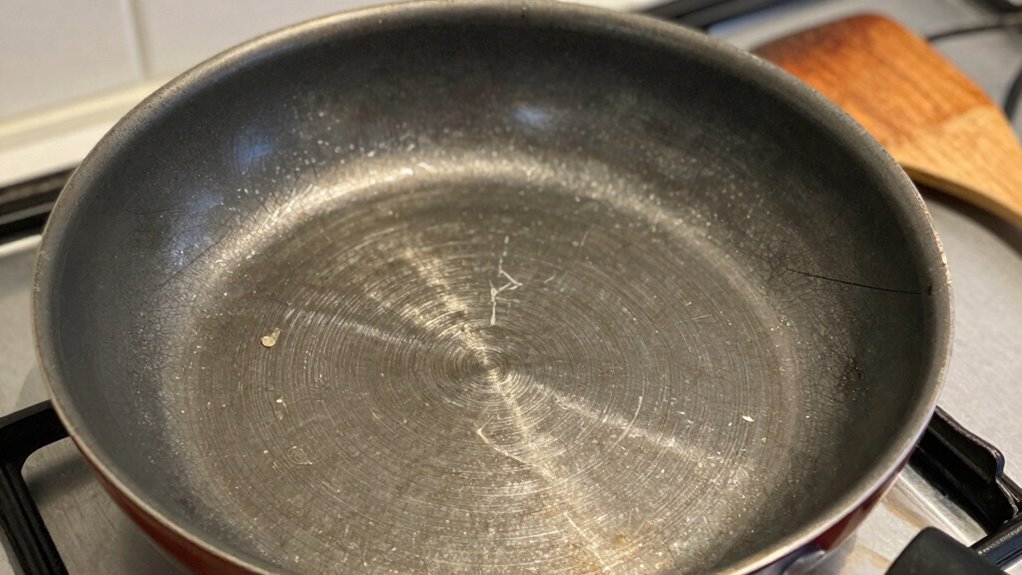
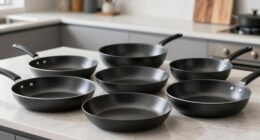
To guarantee your nonstick pan lasts longer, it’s essential to adopt proper care habits from the start. Treat your pan like seasoned cookware by avoiding metal utensils that can scratch the coating. Use gentle cleaning methods, like hand washing with soft sponges, and avoid abrasive scrubbers. Store your nonstick pans properly with padding between them to prevent scratches, following effective storage tips.
To extend its lifespan, remember these tips:
- Always hand wash after use
- Use wooden or silicone utensils
- Avoid high heat cooking
- Store with protective layers or separators
How Do You Know When It’s Time to Replace Your Nonstick Pan?

Over time, signs of wear and tear will indicate that it’s time to replace your nonstick pan. If the coating starts peeling, bubbling, or scratching easily, it’s a clear sign your nonstick replacement is needed. Additionally, if food begins to stick despite proper care, or if the pan warps or develops hot spots, its pan lifespan has likely reached its end. A damaged nonstick surface not only reduces cooking efficiency but can also pose health risks. Regularly inspect your pan for these issues, and don’t hesitate to retire it when repairs won’t restore its quality. Recognizing these signs ensures you maintain safe, effective cooking tools, and prevents health concerns associated with compromised nonstick coatings.
Frequently Asked Questions
Are There Specific Brands More Prone to Early Nonstick Coating Failure?
Some brands with lower manufacturing quality and questionable reputation tend to have nonstick coatings that fail sooner. Cheaper brands often cut corners, using inferior materials that wear out quickly. To avoid early failure, stick with reputable brands known for good manufacturing standards. High-quality nonstick pans from trusted brands typically last longer because they use durable coatings and better construction, reducing the likelihood of early coating failure.
Can Using Metal Lids Harm the Nonstick Surface?
Using metal lids can definitely harm the nonstick surface. Metal lid scratches can transfer to the pan, causing lid nonstick damage and exposing the coating to unnecessary wear. When you place a metal lid on your nonstick pan, you risk scratching the coating, which can lead to early failure. To protect your pan, opt for glass or silicone lids, and avoid applying pressure or sliding metal lids across the surface.
How Does Storage Method Impact the Longevity of Nonstick Pans?
Store your nonstick pans properly to prolong their life. If you toss them in a pan rack or stack them in storage containers without protection, scratches and damage can quickly occur. Always nest pans with soft cloths or separators to prevent scraping. Proper storage preserves the nonstick coating, helping it last longer. So, be mindful when storing—your pans will thank you with continued nonstick performance and durability.
Does Dishwasher Cleaning Affect Nonstick Coating Durability?
Dishwasher cleaning can damage your nonstick coating because the high heat and harsh cleaning chemicals often found in dishwashers wear down the surface. You might notice the coating peeling or becoming less effective over time. It’s best to hand wash your nonstick pans with gentle soap and avoid using abrasive scrubbers, as this helps preserve the coating and extends the life of your cookware.
Are There Eco-Friendly Alternatives That Last Longer Than Traditional Nonstick Pans?
If you’re seeking eco-friendly cookware that truly lasts, sustainable alternatives like ceramic or cast iron pans are excellent choices. They’re free from harmful chemicals, durable, and often more eco-conscious in production and disposal. These options tend to outperform traditional nonstick pans in longevity, so you can cook confidently while reducing environmental impact. Switching to these sustainable alternatives not only benefits the planet but also offers you reliable, healthier cooking tools.
Conclusion
If your nonstick pan isn’t lasting as long as you’d hoped, it’s worth examining how you care for it. Are you cleaning it gently, avoiding high heat, and using the right utensils? Sometimes, despite best efforts, flaws can develop. But isn’t investing in proper care and knowing when to replace your pan the key to cooking smarter? After all, isn’t your kitchen equipment a reflection of how much you value your culinary experience?