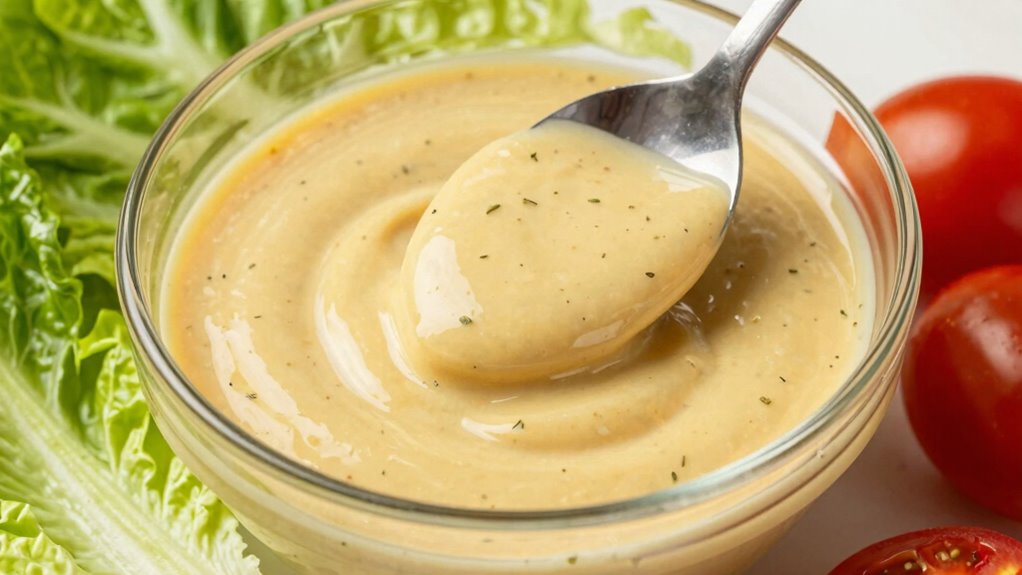

To make a restaurant-smooth salad dressing that won’t separate, start by using emulsifiers like Dijon mustard or egg yolks and whisk everything vigorously. Gradually add room temperature oil while whisking until fully combined, then incorporate stabilizers like honey or Greek yogurt if needed. Keep ingredients at consistent temperatures and avoid over-shaking. For more expert tips on maintaining a perfect, cohesive dressing, explore the detailed techniques that follow.
Key Takeaways
- Use emulsifying agents like mustard or egg yolk and whisk vigorously while gradually adding oil.
- Maintain ingredients at room temperature for better blending and stability.
- Follow proper ratios, such as 3 parts oil to 1 part acid, to prevent separation.
- Incorporate stabilizers like honey, Greek yogurt, or xanthan gum for longer-lasting emulsions.
- Mix slowly, start with emulsifiers, and adjust seasonings to achieve a smooth, cohesive dressing.

Chef'n 104-759-258 Emulstir Salad Dressing Mixer, One Size, Plastic, Arugula/Meringue
MIX, SERVE, AND STORE: This salad dressing mixer is perfect for creating your own homemade dressings in seconds….
As an affiliate, we earn on qualifying purchases.
As an affiliate, we earn on qualifying purchases.
Why Emulsification Is Key to Perfect Salad Dressings
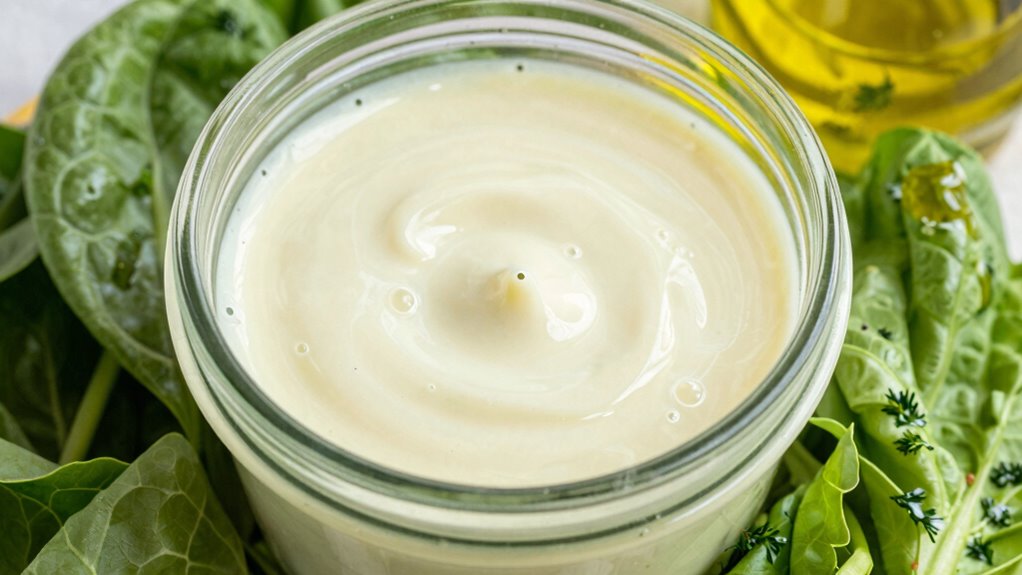
Emulsification is essential because it guarantees your salad dressing has a smooth, cohesive texture. When you properly emulsify, the oil and acid blend seamlessly, creating a balanced flavor profile. This process helps distribute ingredients evenly, ensuring each bite delivers the right flavor balance. Using fresh ingredients enhances this effect, as fresh herbs, lemon juice, or vinegar provide vibrant tastes that shine through when emulsified. Proper emulsification also prevents separation, maintaining the dressing’s consistency and appeal. If your dressing isn’t emulsified well, it can taste flat or oily, disrupting the overall flavor balance. Incorporating emulsifiers such as egg yolks or mustard can help create a more stable and long-lasting emulsion. Additionally, understanding the role of emulsifiers can help you achieve a more stable and long-lasting emulsion. Techniques such as emulsification methods like whisking vigorously or using a blender can further improve the texture and stability of your dressing. For optimal results, maintaining the right emulsion stability is crucial to keep the dressing smooth over time. So, taking the time to emulsify thoroughly ensures your salad dressing is not only smooth but bursting with fresh, well-rounded flavors.

Olive Garden Signature Italian Salad Dressing, 16 oz
EAT FRESH AT HOME: Made with tangy vinegar, garlic and extra virgin olive oil, Subway Roasted Garlic Aioli…
As an affiliate, we earn on qualifying purchases.
As an affiliate, we earn on qualifying purchases.
How Temperature Impacts Emulsification and Dressing Stability
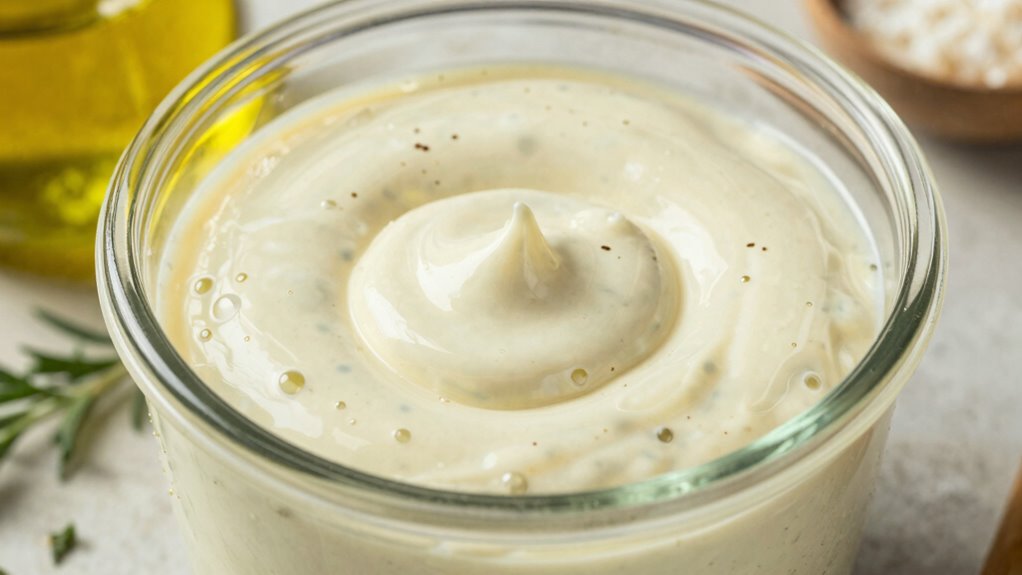
Temperature plays a pivotal role in how well your salad dressing emulsifies and stays stable. Temperature effects influence the viscosity of ingredients, making it easier or harder to combine and maintain an emulsion. When ingredients are too cold, they can become thick and resistant to blending, reducing emulsification stability. Conversely, if ingredients are too warm, they may separate quickly, undermining the dressing’s consistency. Ideally, use room temperature liquids to achieve the best emulsification. Slightly warmed or cooled ingredients can help the oil and vinegar blend smoothly and stay mixed longer. Managing temperature is essential for creating a dressing that resists separation, ensuring a silky, uniform texture from the first pour to the last bite.
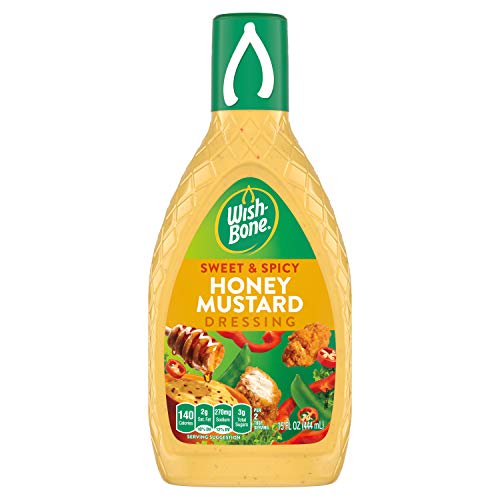
Wish-Bone Salad Dressing, Sweet & Spicy Honey Mustard, 15 oz
One 15 fl oz bottle of Wish-Bone Sweet & Spicy Honey Mustard Dressing
As an affiliate, we earn on qualifying purchases.
As an affiliate, we earn on qualifying purchases.
Essential Ingredients for a Smooth, Non-Separating Dressing
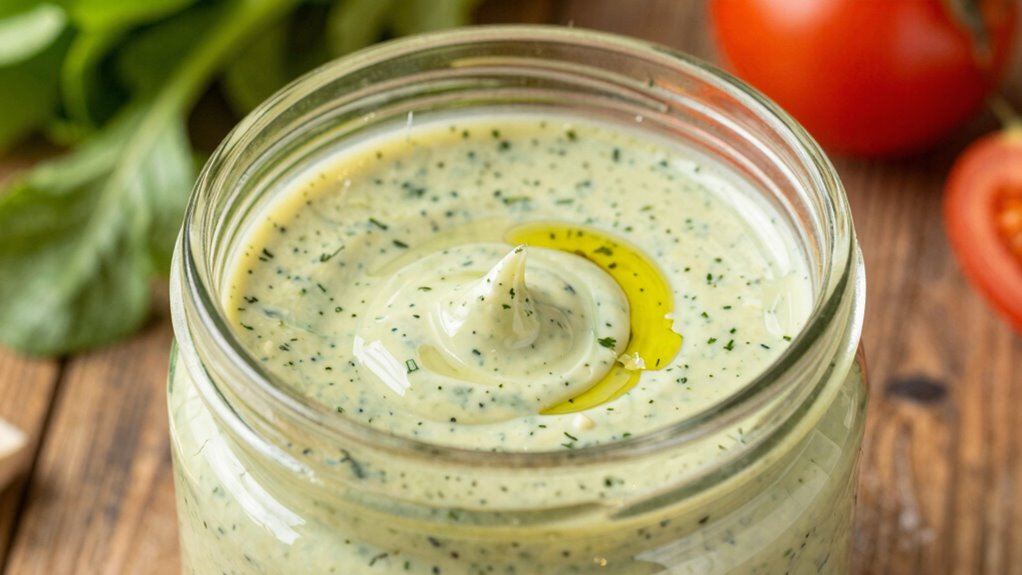
To keep your salad dressing smooth and stable, you need the right emulsifying agents like mustard or egg yolk. Using fresh, high-quality oils helps prevent separation and enhances flavor. Incorporating stabilizing ingredients such as honey or yogurt can also keep your dressing well-mixed and creamy. Additionally, understanding wiring basics can help you set up proper equipment for optimal stability in your kitchen, especially when working with connected appliances that ensure consistent mixing and temperature control.
Emulsifying Agents Needed
Achieving a smooth, non-separating salad dressing requires the right emulsifying agents, which help blend oil and vinegar into a cohesive mixture. These agents promote oil blending by creating a stable emulsion, preventing separation over time. Common emulsifiers include mustard, egg yolk, or honey, which also contribute to flavor balancing. When you add an emulsifier, it acts as a bridge, dispersing oil evenly throughout the vinegar and ensuring a creamy consistency. Using the right amount is key—too little won’t stabilize the mixture, while too much can overpower the flavor. Incorporating emulsifiers early in your mixing process, whisking vigorously to form a stable, uniform dressing, enhances the emulsion stability. Ensuring proper ingredient proportions is essential to achieve a consistent and appealing texture. This step guarantees a restaurant-quality finish that stays smooth and consistent from first pour to the last bite. Understanding the role of filtration and maintenance in creating consistent emulsions can help you troubleshoot and perfect your dressing every time. Additionally, maintaining your ingredients at proper temperatures can improve the emulsion formation, leading to a more durable and appealing texture.
Fresh, High-Quality Oils
Using fresh, high-quality oils is essential for creating a smooth, non-separating salad dressing. Your oil selection directly impacts the dressing’s texture and stability, so choose oils that are fresh and flavorful. Extra virgin olive oil, avocado oil, or light sesame oil are excellent options because they provide a clean, balanced taste that enhances flavor balancing. Avoid stale or low-quality oils, which can cause separation or off-flavors. The quality of your oil influences how well your dressing emulsifies and stays smooth over time. Remember, the right oil not only improves texture but also complements other ingredients, ensuring your dressing remains cohesive and delicious. Prioritize freshness and flavor to achieve a professional, restaurant-quality result.
Stabilizing Ingredients Incorporate
Incorporating stabilizing ingredients is key to guaranteeing your salad dressing remains smooth and won’t separate over time. Stabilizing ingredients, like emulsifiers or thickeners, help bind oil and water-based components effectively. Use proper incorporation techniques such as whisking vigorously or blending thoroughly to evenly distribute these ingredients. Adding a small amount of Dijon mustard or egg yolk can act as natural emulsifiers, promoting stability. When incorporating stabilizing ingredients, do so gradually while constantly whisking or blending to create a uniform mixture. This process ensures that the dressing remains cohesive and smooth, even after sitting for hours. Additionally, understanding the importance of Youngster Choice in maintaining consistency can provide insights into how stable and professional the final product will be. Proper incorporation techniques are essential for achieving a professional, restaurant-quality consistency that resists separation. Employing emulsification methods can significantly improve the stability of your dressing over time, especially when combined with proper mixing techniques to create a uniform emulsion.

Herbs Botanica Guar Gum Powder 8oz | Natural Food Grade Thickener & Stabilizer | Gluten-Free Powder for Baking, Cooking, Sauces, Dressings, Smoothies & DIY Craft Use
Premium Guar Gum Powder – 100% pure, natural, food-grade guar gum powder in an 8oz resealable pouch.
As an affiliate, we earn on qualifying purchases.
As an affiliate, we earn on qualifying purchases.
Simple Techniques to Emulsify Salad Dressings From Scratch
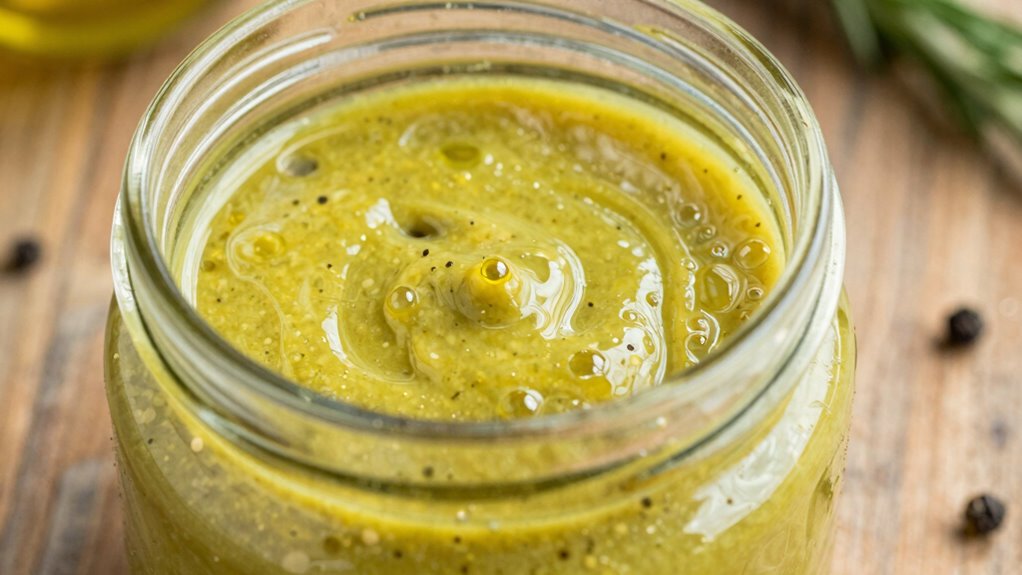
To create a stable, well-emulsified salad dressing, you need to use emulsifiers effectively and keep the right ingredient ratios. Whisk vigorously to combine the oil and acid thoroughly, breaking them into tiny droplets. With practice, you’ll master these simple techniques to achieve smooth, lasting dressings from scratch. Additionally, understanding the affiliate disclosure helps maintain transparency while sourcing quality ingredients.
Use Emulsifiers Effectively
Emulsifying your salad dressing is easier than you might think with a few simple techniques. Using emulsifiers effectively helps create a smooth, unified mixture that resists separation. To maximize their benefits, focus on proper oil blending and flavor balancing. Here are some tips:
- Whisk vigorously to combine ingredients thoroughly
- Gradually add oil while whisking to encourage emulsification
- Use a blender or food processor for quick, consistent results
- Incorporate natural emulsifiers like mustard or honey to stabilize
- Maintain a steady tempo to ensure even distribution of oil and acidity
Understanding emulsification processes can further enhance your technique and result in a more stable dressing. Additionally, experimenting with ingredient temperature can improve the emulsification process and yield a creamier texture. Being mindful of oil quality can also influence the stability and flavor of your dressing. Paying attention to ingredient freshness can further improve the overall consistency and taste of your homemade salad dressing.
Maintain Proper Ratios
Achieving a stable salad dressing starts with maintaining the right balance between oil and acidity. You need to focus on balance ratios and correct ingredient proportions to prevent separation. Too much oil makes the dressing greasy, while too much acid can overpower the flavor and cause separation. Start with a basic ratio, such as 3 parts oil to 1 part vinegar or lemon juice, then adjust based on taste. Using precise measurements ensures consistency and helps emulsify ingredients evenly. Keep in mind that small changes in ingredient proportions can profoundly affect stability. By carefully balancing ratios, you create a harmonious dressing that stays smooth and well-blended over time. This foundation is essential before moving on to further techniques like whisking vigorously.
Whisk Vigorously
Once you’ve established the right oil-to-acid ratio, the next step is to combine your ingredients thoroughly. Whisk vigorously to create an emulsion that binds the oil and vinegar smoothly. Use a steady, brisk motion to break down the droplets and encourage them to blend seamlessly. Remember, avoid overmixing, as it can cause the dressing to become too thick or break apart. Keep whisking until the dressing is uniform and slightly creamy. To enhance your technique:
- Use a small, deep bowl for better control
- Keep ingredients at room temperature for smoother blending
- Whisk in a zigzag or circular motion
- Incorporate ingredients gradually for even emulsification
- Stop whisking as soon as the dressing reaches the desired consistency
- Maintaining proper emulsion stability is key to preventing separation and ensuring a restaurant-quality, stable salad dressing without separation.
How to Use Thickeners and Emulsifiers for Better Stability
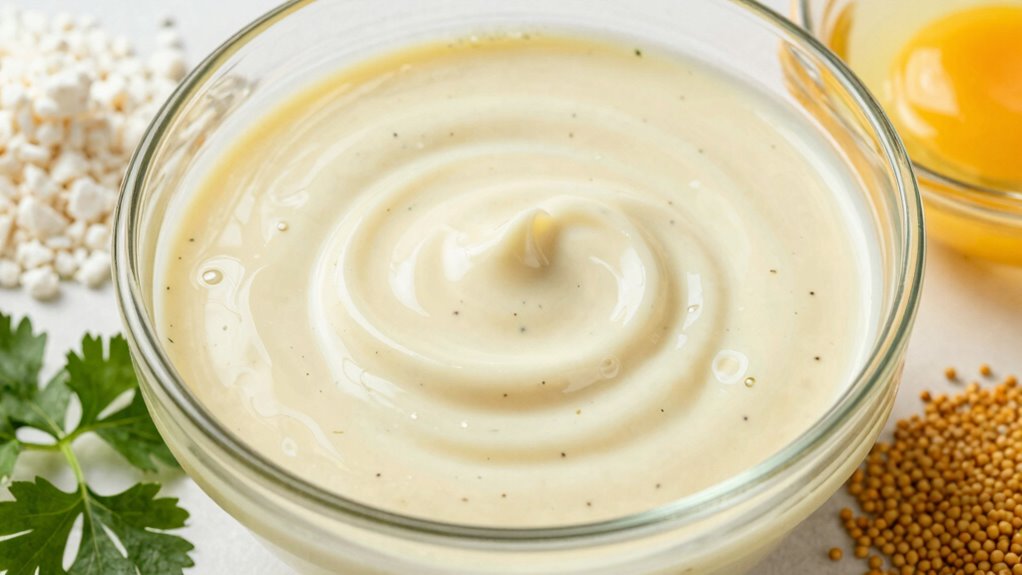
To improve the stability of your salad dressing, using thickeners and emulsifiers effectively is essential. Gelatin stabilization helps create a firm, cohesive texture by binding ingredients tightly, preventing separation over time. Dissolve gelatin in warm water, then whisk it into your dressing for added consistency. Xanthan gum thickening is another powerful tool; whisk a small amount into your mixture to enhance viscosity and maintain uniformity. It disperses easily and works quickly, making your dressing more resistant to separation. Both gelatin and xanthan gum improve the overall stability, ensuring your dressing stays smooth and well-emulsified, even after sitting. Use these thickeners carefully—start with small quantities and adjust as needed to achieve the perfect, restaurant-quality consistency.
What Are the Do’s and Don’ts When Mixing Your Dressing?
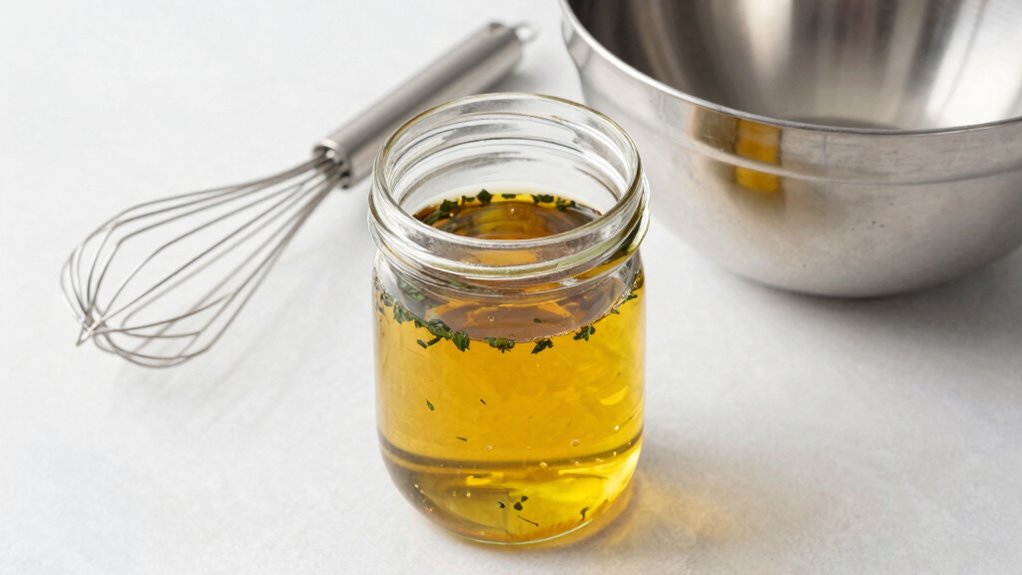
When mixing your salad dressing, paying attention to the do’s and don’ts can make all the difference in achieving a smooth, well-emulsified result. First, always combine your ingredients gradually, starting with the emulsifier, such as mustard or egg yolk. Avoid over-agitating, which can cause separation. Use room temperature ingredients for better blending. Keep your dressing balanced by tasting and adjusting for acidity and seasoning. Remember, beautiful salad presentation benefits from a consistent dressing that coats evenly. When pairing wine, opt for light, crisp varieties that complement the dressing’s flavors. In conclusion, avoid rushing the process—patience ensures stability and a restaurant-quality finish. Proper mixing elevates your salad, making every bite enjoyable and visually appealing.
Common Mistakes That Make Dressings Separate: And How to Avoid Them
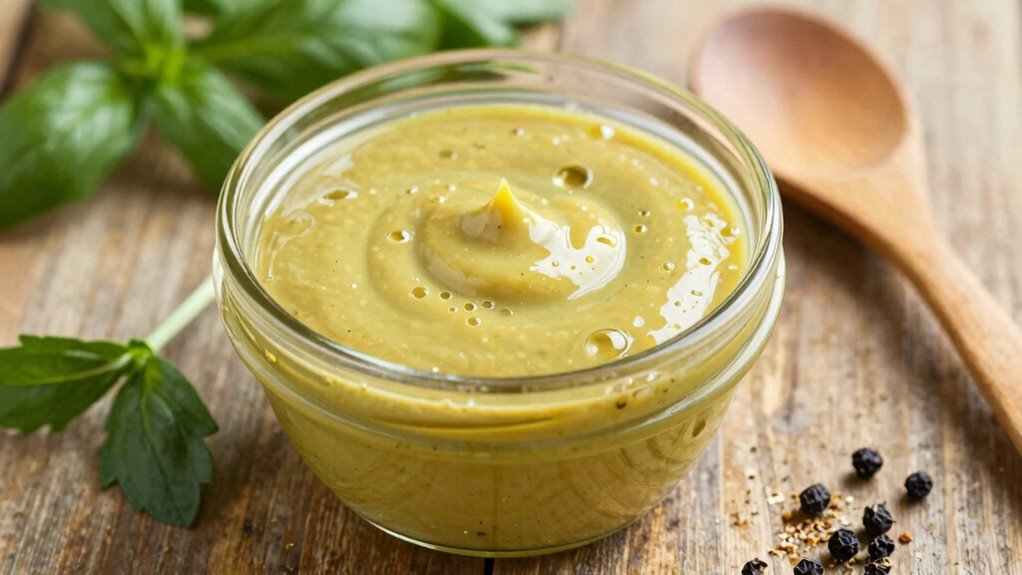
One common mistake that causes dressings to separate is adding ingredients in the wrong order. If you pour oil before combining other ingredients, it can prevent proper emulsion. Using ingredient substitutions without considering their role in flavor balancing can also throw off the mixture’s stability. For example, swapping honey with sugar might alter how well the dressing binds. Too much acidity or imbalance in flavors can cause separation over time. To avoid this, add your liquids gradually and in the correct sequence—usually starting with liquids, then whisking in emulsifiers like mustard or egg yolk. Paying attention to emulsification techniques can improve the consistency and stability of your dressing. Proper order and mindful ingredient choices help create a smooth, cohesive dressing that resists separation. Understanding the importance of net worth growth hacks can also inspire you to invest in quality ingredients that improve your culinary creations.
Quick Fixes to Rescue Broken or Watery Dressings
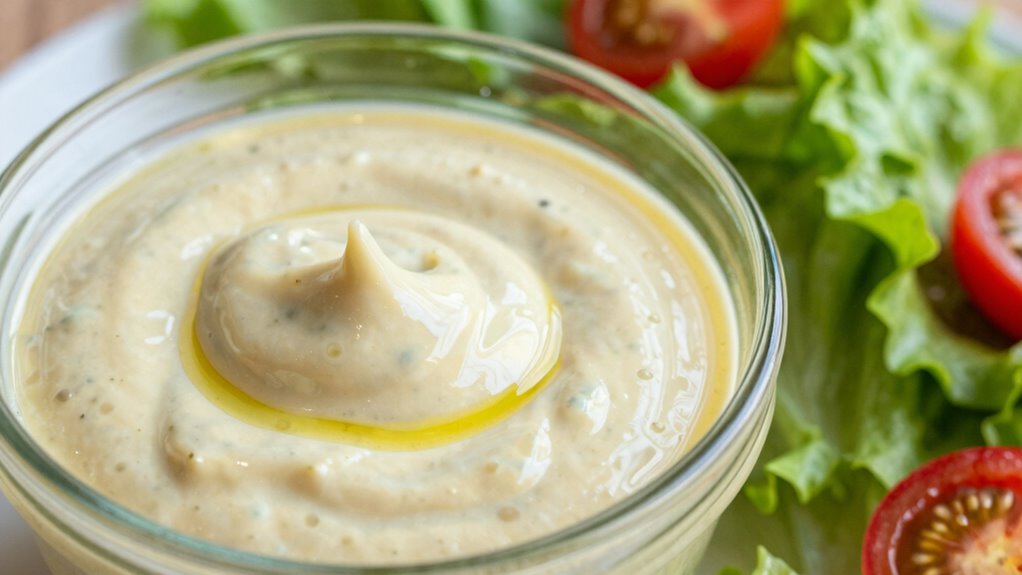
If your dressing has become too watery or has separated despite your efforts, don’t worry—there are simple fixes you can try. To thicken it quickly, whisk in a teaspoon of Dijon mustard or a small spoonful of mayonnaise. For a flavor boost, add vinegar variations like apple cider or balsamic vinegar, which can help balance the texture. You can also incorporate herb infusions—finely chopped fresh herbs such as basil or dill— to add body and aroma. If separation persists, blend in a small amount of Greek yogurt or a beaten egg yolk. These quick fixes restore creaminess and flavor, ensuring your salad dressing remains smooth and appetizing.
- Whisk in Dijon mustard or mayonnaise
- Add vinegar variations for flavor balance
- Incorporate herb infusions for aroma and body
- Blend in Greek yogurt or egg yolk
- Use an immersion blender for quick emulsification
Tips for Serving and Storing Restaurant-Quality Salad Dressings
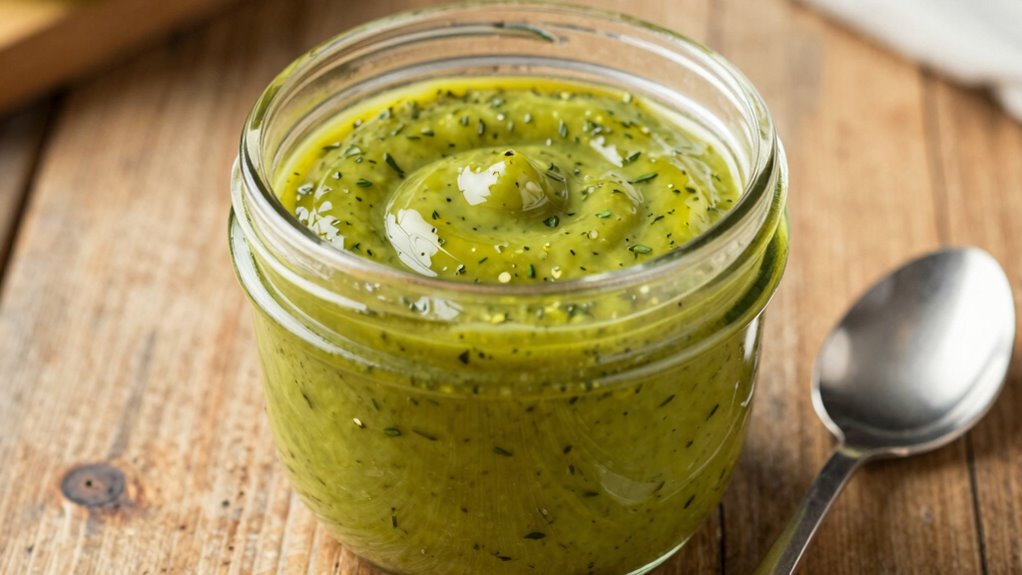
Proper serving and storage are key to maintaining the freshness and flavor of your salad dressings. Always refrigerate dressings in airtight containers to prevent spoilage and preserve their dressing flavor. Before serving, give the dressing a good shake or stir to re-emulsify it if it has separated. For variety, try ingredient swaps—adding fresh herbs or a splash of citrus can enhance flavor and give your dressing a custom touch. When storing, keep dressings away from direct sunlight and heat, which can degrade their quality. If you make a large batch, portion it into smaller containers to avoid repeated exposure to air. Proper storage and thoughtful serving help your dressings stay fresh, flavorful, and restaurant-quality every time.
Frequently Asked Questions
Can I Use Store-Bought Ingredients to Make Emulsified Salad Dressings?
Yes, you can use store-bought ingredients to make emulsified salad dressings. Use simple emulsification techniques like whisking or blending to combine store-bought oil, vinegar, and other flavorings. Adding an egg yolk or Dijon mustard helps stabilize the mixture, ensuring it stays smooth and doesn’t separate. With these techniques, you create a restaurant-quality dressing using convenient ingredients, and it’ll stay creamy and well-blended longer.
How Long Can I Store a Homemade Salad Dressing Without Separation?
You can typically store homemade salad dressing for up to one week without separation if you follow proper storage tips. Keep it in an airtight container in the refrigerator, and always shake or stir before using. For longer shelf life, consider adding natural preservatives like lemon juice or vinegar. Remember, always check for any off smells or changes in appearance before using, as freshness impacts shelf life.
Are There Specific Types of Oils That Work Best for Emulsification?
You should choose oils like extra virgin olive oil, avocado oil, or grapeseed oil, as they provide better emulsification stability. These oil types blend smoothly with vinegar or lemon juice, creating a consistent, restaurant-quality dressing. Avoid lighter oils like canola or vegetable oil, which may separate more easily. Using the right oils helps your salad dressing stay smooth and well-emulsified, making it perfect for serving or storing longer.
How Do I Adjust a Dressing Recipe if It Separates Prematurely?
Did you know that over 80% of homemade dressings separate within an hour? To prevent this, you can adjust your recipe by adding an extra pinch of mustard or honey, which act as natural emulsifiers. Use emulsification techniques like vigorous whisking or blending, and consider ingredient substitutions like using a more stable oil such as avocado or grapeseed oil. These steps help keep your dressing smooth and well-blended longer.
Can I Make a Salad Dressing in Advance Without It Separating Later?
Yes, you can make a salad dressing in advance without separation by preparing a batch and storing it properly. Use an airtight container and shake it well before serving to prevent separation. Incorporate flavor variations during batch preparation, like herbs or citrus zest, to keep it interesting. For best results, refrigerate the dressing and bring it to room temperature or shake again before serving, ensuring it stays smooth and flavorful.
Conclusion
With the right techniques and ingredients, you can whip up a restaurant-quality salad dressing that stays smooth and stable. Just remember, it’s all about keeping things in harmony—like a well-rehearsed orchestra. Don’t be discouraged by a few missteps; with practice, you’ll master emulsification and serve dressings that impress every time. Keep experimenting, stay patient, and you’ll turn your salad into a masterpiece, proving that with the right approach, you can have your cake and eat it too.