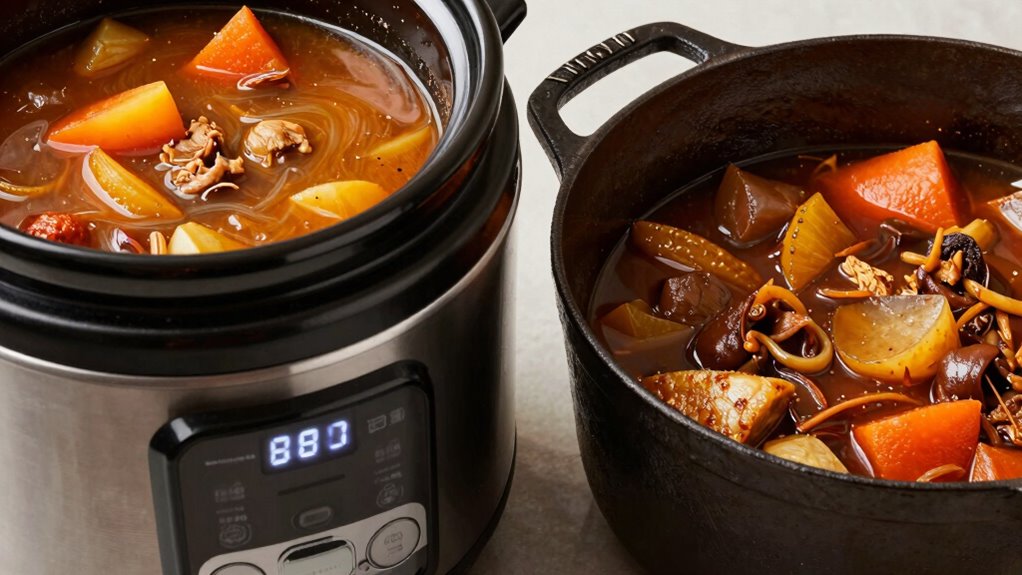

Slow cookers and Dutch ovens differ mainly in design, heat management, and moisture retention, which impacts flavor and texture. A Dutch oven’s thick walls and tight lid promote even heating, browning, and richer flavors through Maillard reactions. In contrast, slow cookers use gentle heat and a sealed environment to produce tender, moist dishes but less depth in flavor. Understanding these differences helps you choose the right tool for your desired taste—keep exploring to learn more.
Key Takeaways
- Dutch ovens provide higher, more consistent heat, promoting Maillard reactions that deepen flavors, unlike the gentle heat of slow cookers.
- The superior moisture retention and sealing of Dutch oven lids create richer, more concentrated flavors compared to the moist but less intense environment of slow cookers.
- Dutch ovens allow for browning and caramelization before slow cooking, adding complexity to taste that slow cookers can’t achieve.
- The longer, low-temperature cooking in slow cookers preserves nutrients better but results in milder, less caramelized flavors than Dutch ovens.
- Material differences impact heat distribution and retention, influencing flavor development and the overall taste profile of dishes prepared in each vessel.
How Do Slow Cookers and Dutch Ovens Differ in Design and Heat Distribution?
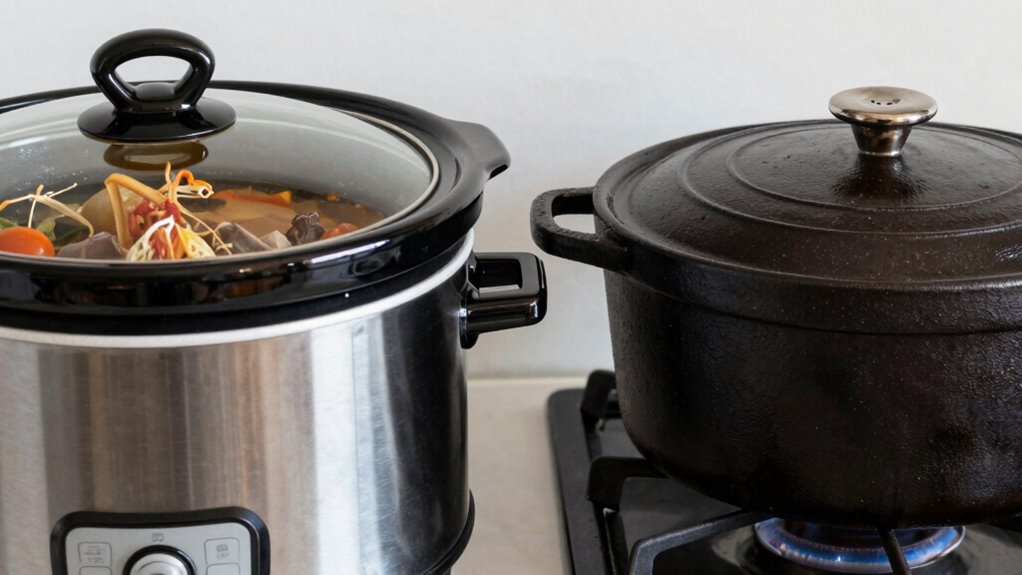
While both slow cookers and Dutch ovens are designed to cook food slowly, their structures and how they distribute heat differ considerably. Slow cookers typically feature thermal insulation that retains heat efficiently, allowing for gentle, consistent cooking over hours. Their lids are designed to trap moisture, creating a sealed environment that maintains lid pressure, which helps in even heat distribution. Dutch ovens, on the other hand, are usually made of thick, heat-retentive materials like cast iron, providing excellent thermal mass. Their lids sit tightly to lock in moisture and sustain lid pressure, but heat distribution depends heavily on the oven’s heat source and the evenness of the cast iron. These design differences influence cooking times and how heat and moisture are managed during cooking. Additionally, heat distribution in Dutch ovens can be affected by the oven’s temperature stability and the quality of the cookware material.
How Does the Design of Each Pot Affect Moisture Retention and Cooking Time?
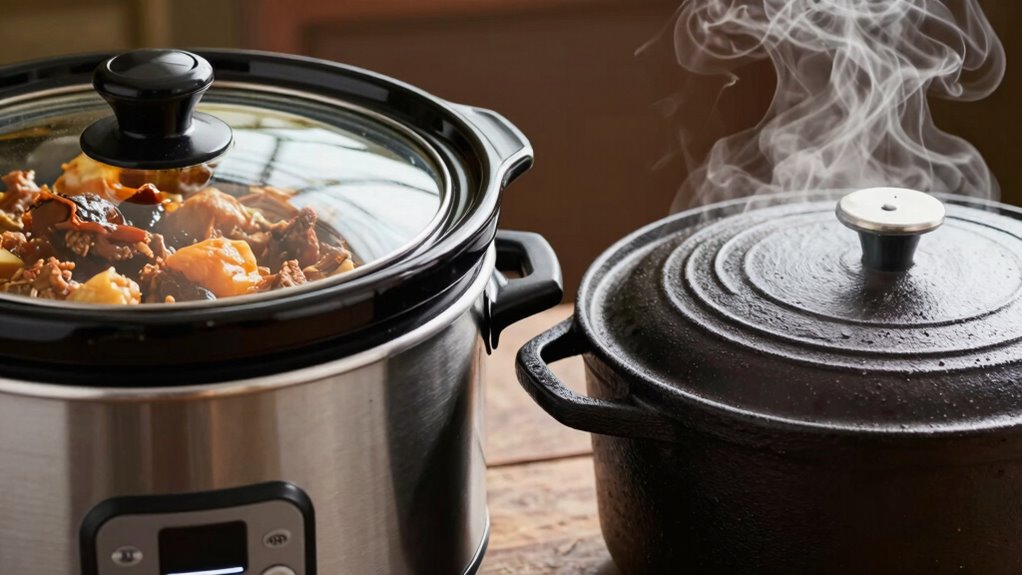
The design features of slow cookers and Dutch ovens substantially influence how well they retain moisture and determine cooking times. Pot material plays a key role: slow cookers are typically made of ceramic or porcelain-coated metal, which helps lock in heat and moisture over long periods. Dutch ovens usually use heavy cast iron, which heats evenly and maintains consistent moisture levels. Lid design is also pivotal; tight-fitting lids on both pots trap steam, but Dutch oven lids often form a better seal, enhancing moisture retention. This means Dutch ovens cook food more thoroughly and quickly, while slow cookers rely on extended, gentle heat to achieve similar results. Additionally, the heat retention properties of each material influence cooking efficiency and moisture preservation throughout the process. Understanding the moisture retention capabilities of each vessel can help you choose the right one for your specific cooking needs, especially when aiming for tender, flavorful dishes. The design of the lid seal plays a crucial role in maximizing moisture retention during cooking. Proper lid design and material choice can also affect the cooking time, making it important to consider these factors for optimal results. Moreover, the ventilation and air flow within each vessel can influence moisture levels and cooking speed, further impacting the final dish.
Why Does Cooking in a Dutch Oven Enhance Richness and Depth of Flavor?
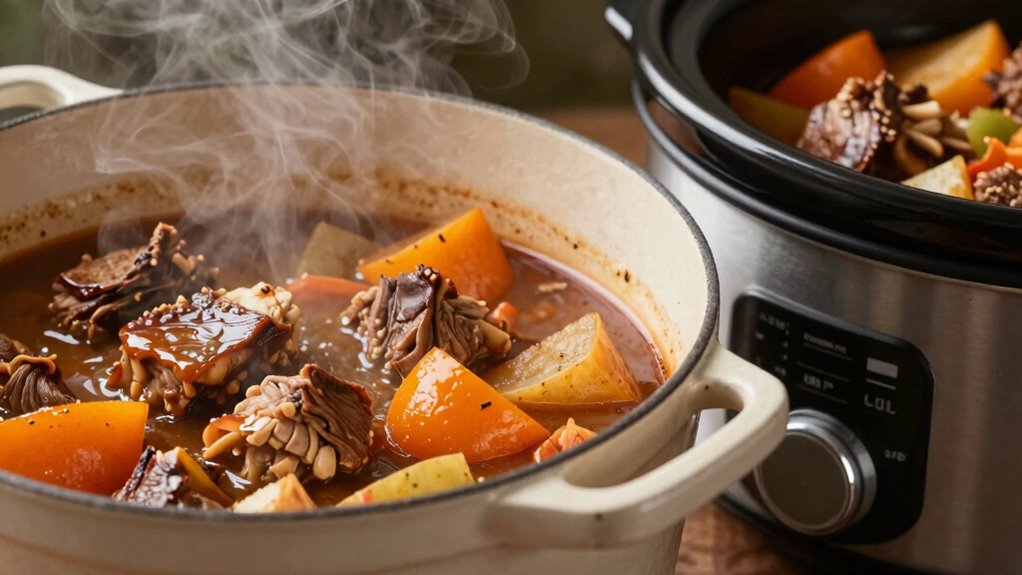
Cooking in a Dutch oven improves flavor because it retains heat better, allowing ingredients to cook evenly. This steady heat promotes the Maillard reaction, creating richer, more complex tastes. Plus, the extended cooking time helps develop deep, layered flavors that can’t be achieved with other cookware. Additionally, the consistent heat distribution of traditional cooking methods often highlights the importance of consistent heat for flavor development. Using a Dutch oven also enhances the aroma and texture, making dishes more appealing and flavorful. The thermal behavior of Dutch ovens ensures that heat is held and transferred efficiently, further enriching the cooking process. Furthermore, the cooking environment within a Dutch oven remains moist, which helps preserve the natural flavors of ingredients and prevents them from drying out.
Superior Heat Retention
Because a Dutch oven’s thick, heavy walls retain heat so effectively, they create a stable cooking environment that promotes even temperature distribution. This superior heat retention guarantees your food cooks slowly and evenly, allowing flavors to deepen. The lid design plays a crucial role by trapping moisture and heat, fostering a self-basting environment that enhances tenderness. The combination of heat conduction through the cast iron and the well-fitted lid keeps temperatures consistent, preventing hot spots. To better understand, here’s a comparison: heat retention. Additionally, the material of a Dutch oven contributes significantly to its ability to maintain stable temperatures during extended cooking sessions. Its thermal mass ensures sustained heat, making it ideal for long, slow simmering or braising.
Enhanced Maillard Reaction
Using a Dutch oven creates ideal conditions for the Maillard reaction, which is essential for developing rich, complex flavors. Its thick, heavy walls maintain consistent heat, allowing you to achieve higher temperatures necessary for this reaction to occur efficiently. As you brown meat or sauté vegetables directly in the Dutch oven, the surface foods undergo caramelization and browning, intensifying flavor concentration. This process releases aromatic compounds that deepen the taste profile, giving your dishes a more layered, savory quality. Unlike slow cookers, which operate at lower temperatures, a Dutch oven’s ability to reach and sustain higher heat levels enhances the Maillard reaction’s effectiveness. Consequently, your meals develop a richer, more nuanced flavor, elevating the overall depth and complexity of your cooking.
Extended Cooking Time
Extended cooking times in a Dutch oven allow flavors to meld and deepen, resulting in richer, more complex dishes. During this process, marinating techniques become even more effective, as they help infuse ingredients with flavor before cooking. Proper ingredient prep, such as browning meats and chopping vegetables, enhances caramelization and releases natural sugars, which intensify during long simmering. The slow heat allows tougher cuts of meat to break down, creating tender textures and a depth of flavor that shorter methods can’t achieve. As flavors blend over time, you’ll notice a harmonious balance that elevates your dish’s richness. Additionally, understanding the principles of heat distribution in Dutch ovens ensures consistent cooking and optimal flavor development. Proper temperature control during this process is essential to prevent burning and ensure even flavor development. Embracing extended cooking in a Dutch oven also encourages patience, which is key to developing complex flavors that cannot be achieved with quick methods. Paying attention to cooking times helps maximize the benefits of slow cooking and enhances the overall quality of your dish. Mastering heat retention is also crucial, as it allows the Dutch oven to maintain a steady temperature throughout the cooking process, further enriching your dish.
How Do Cooking Time and Temperature Impact Flavor and Texture?
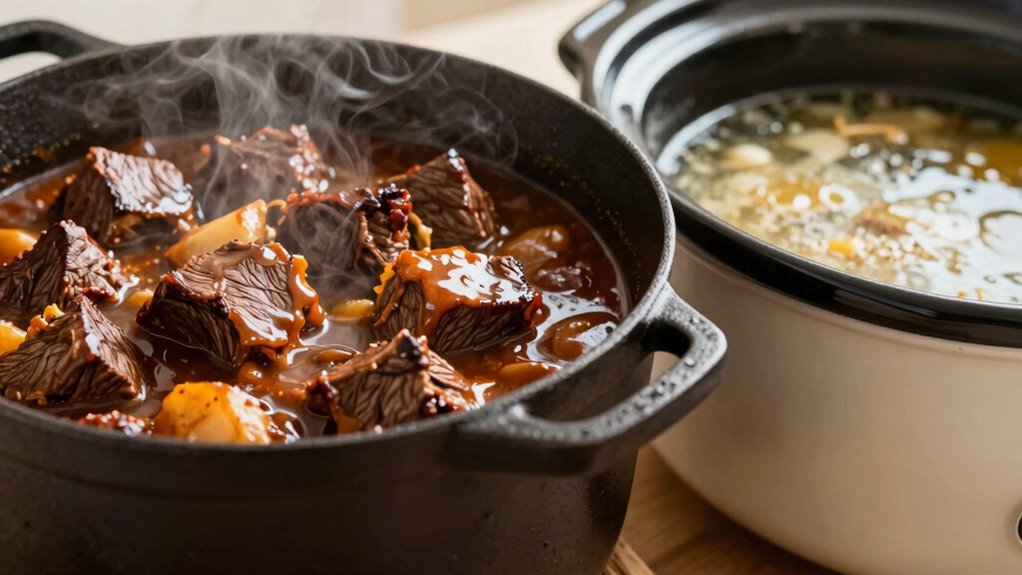
Cooking time and temperature play crucial roles in shaping both the flavor and texture of your dish. When you cook at lower temperatures for longer periods, flavors develop more fully through tenderization and the melding of ingredients. Proper seasoning techniques become essential, as longer cooking times can mellow or intensify spices. Additionally, understanding heat transfer mechanisms can help you better control the cooking process for optimal results. Conversely, higher temperatures can create a different texture, such as browning or caramelization, which adds depth to flavor. Ingredient freshness also impacts results; fresh ingredients retain their vibrant flavors, while older ingredients might become dull if overcooked. Adjusting cooking time and temperature carefully guarantees your dish achieves the desired texture—whether tender, crisp, or melt-in-your-mouth—and the best flavor, making your meal truly satisfying. Additionally, understanding the secret ingredient used in classic recipes can elevate your dish’s flavor profile and authenticity.
How Does Moisture Retention Vary Between Slow Cookers and Dutch Ovens?
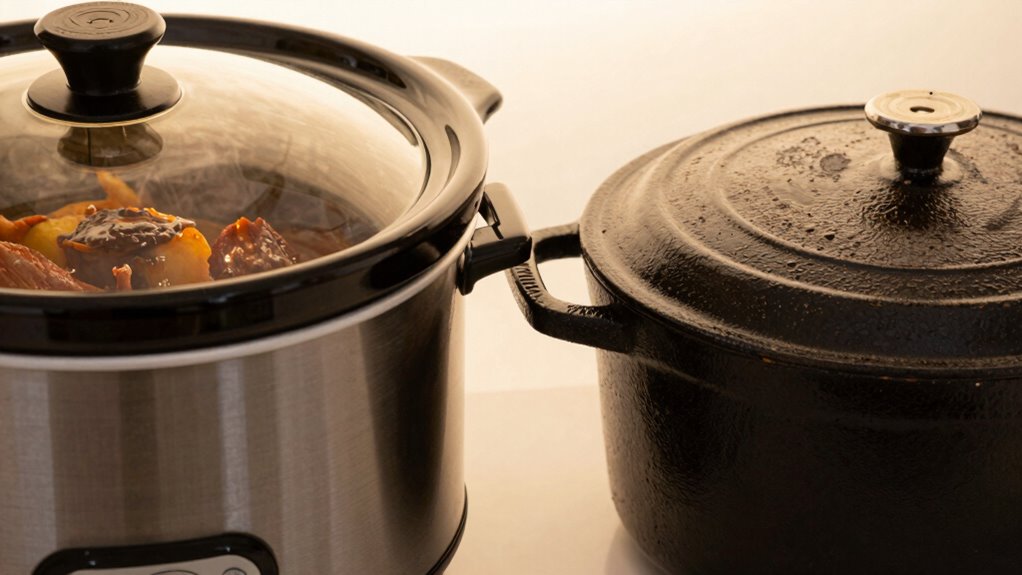
Moisture retention differs considerably between slow cookers and Dutch ovens, primarily due to their design and cooking environment. In a slow cooker, moisture vaporization is minimized because the sealed lid traps steam, creating a humid environment that promotes condensation efficiency. This results in dishes that stay moist and tender, as moisture continually cycles within the cooker. Conversely, a Dutch oven, especially with a tight-fitting lid, allows some moisture to escape during cooking, reducing condensation efficiency. This can lead to slightly drier results or more concentrated flavors, depending on the recipe. The difference in moisture retention influences the dish’s final texture and juiciness, making it essential to choose the right vessel based on your desired outcome. Additionally, cooking vessel design plays a crucial role in how moisture is retained or lost during the cooking process. Moreover, understanding how moisture retention impacts flavor concentration can help you select the appropriate cookware for various recipes.
Do Material and Lid Design Affect the Final Taste of Your Dish?
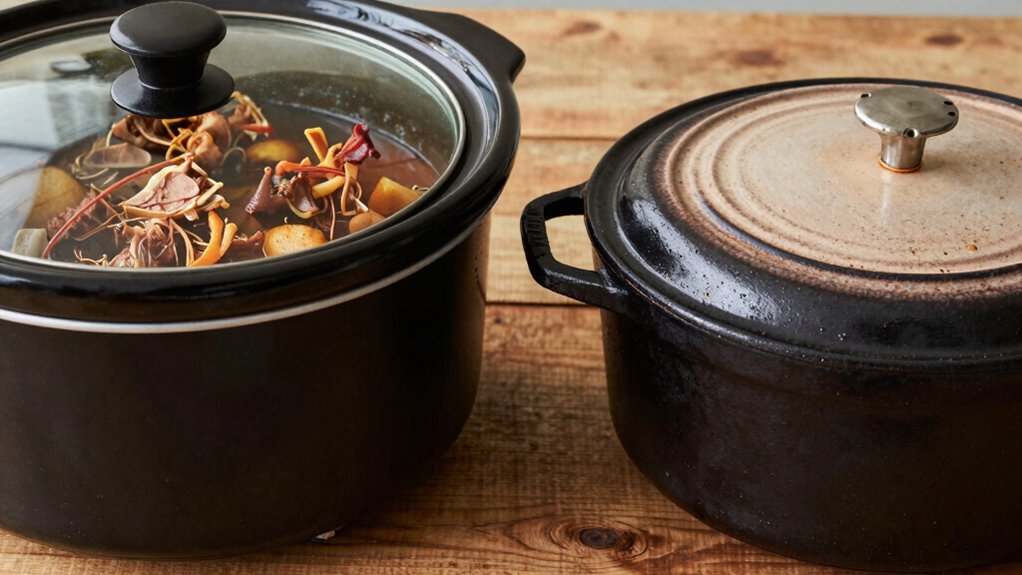
The materials used and the lid design of your cooking vessel can substantially influence the flavor of your dish. The material impact affects heat distribution and retention, which can alter how flavors develop during cooking. For example, a cast iron Dutch oven offers excellent heat retention, enhancing depth of flavor, while a stainless steel slow cooker may heat more evenly but less intensely. The lid influence is equally important; a tight-fitting lid traps moisture and aromas, intensifying taste. Consider these points:
- Material impact: cast iron vs. ceramic vs. stainless steel.
- Lid design: tight seal vs. vented lids.
- How lid influence controls moisture retention and flavor concentration.
Together, material and lid design shape how your dish cooks and ultimately taste.
Which Method Preserves Nutrients Better: Slow Cooking or Dutch Oven Cooking?

When it comes to preserving nutrients in your dishes, choosing the right method can make a significant difference. Slow cooking generally offers better nutrient retention because it uses low heat over a longer period, minimizing nutrient loss. This method maintains cooking efficiency by gently breaking down ingredients without high temperatures that can degrade vitamins and minerals. In contrast, Dutch oven cooking often involves higher heat, which can lead to some nutrient loss, especially with delicate vitamins. However, because Dutch ovens heat evenly and retain moisture well, they can also preserve nutrients when used carefully. Overall, if your goal is maximum nutrient preservation, slow cooking tends to be more effective due to its gentle process that minimizes nutrient degradation while maintaining cooking efficiency.
How Should You Choose Between a Slow Cooker and Dutch Oven for Your Flavor Goals?
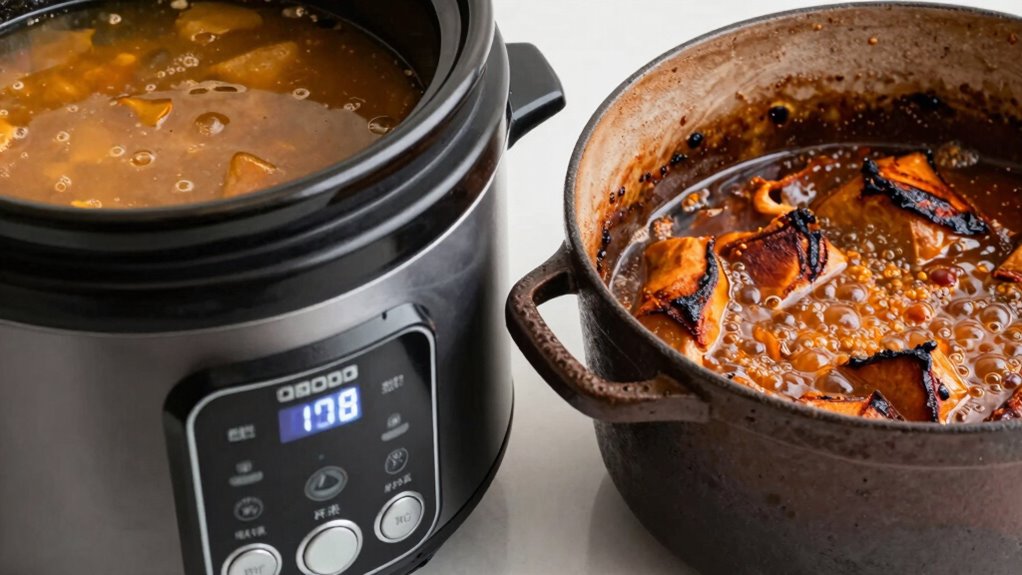
To choose between a slow cooker and Dutch oven for your flavor goals, consider how each method influences flavor development through techniques like browning or slow simmering. Think about how their cooking processes differ—slow cookers offer convenience with low, steady heat, while Dutch ovens allow more control and browning. Also, evaluate which ingredients work best with each method to achieve your desired taste profile.
Flavor Development Techniques
Choosing between a slow cooker and a Dutch oven for flavor development depends on the depth and complexity you want to achieve. Your approach to seasoning techniques and ingredient layering plays a key role.
- Use the Dutch oven for browning ingredients first, enhancing flavor through caramelization.
- Layer ingredients strategically, adding herbs and spices at different stages to build depth.
- Adjust seasoning techniques based on your vessel—slow cookers benefit from late-seasoning, while Dutch ovens allow for upfront flavor infusion.
A Dutch oven’s ability to brown and simmer at high heat heightens flavor complexity. Meanwhile, slow cookers excel at gentle, prolonged cooking that melds ingredients without browning. Choose based on whether you want layered, caramelized flavors or a more subtle, integrated profile.
Cooking Process Differences
Your flavor development approach influences how you should cook. When choosing between a slow cooker and Dutch oven, consider their cooking process differences. Slow cookers offer steady, low temperature control, typically set and forget, with a tight-fitting lid to retain moisture. This gentle, consistent heat allows flavors to meld over hours, emphasizing tenderness. Dutch ovens, on the other hand, provide more direct heat and higher temperature control via stovetop or oven use. Their lids may be tight but often allow for better evaporation, resulting in richer, more concentrated flavors. If you want slow, uniform cooking that preserves moisture, a slow cooker is ideal. For more hands-on control and flavor complexity, a Dutch oven’s versatile heat and lid tightness give you an advantage.
Ingredient Compatibility
Different ingredients respond uniquely to the cooking environment, making it important to match them with the right vessel. When considering seasoning compatibility, a Dutch oven’s even heat can deepen flavors, ideal for layered ingredients. A slow cooker, with its gentle, moist heat, works best for delicate or pre-seasoned items. To choose wisely:
- For dishes needing rich seasoning development, like stews, opt for the Dutch oven.
- For ingredients that benefit from slow, tender cooking without over-seasoning, like shredded chicken, use a slow cooker.
- For layered flavors, consider how ingredient layering impacts seasoning absorption—Dutch ovens excel here due to better heat distribution.
Matching ingredients with vessel characteristics ensures your flavors develop as intended, avoiding muddiness or uneven seasoning that can happen if you mismatch.
Frequently Asked Questions
Can the Same Recipe Be Cooked Equally Well in Both?
You can cook the same recipe in both, but it may not turn out equally well due to ingredient interaction and cooking duration differences. Slow cookers typically require longer, low-temperature cooking, which can enhance flavors but alter texture. Dutch ovens cook faster and often develop richer flavors through higher heat. Adjust your cooking time accordingly, and you’ll get the best results, regardless of the vessel you choose.
How Does Lid Design Influence Flavor Development?
Imagine you’re in a medieval kitchen, wielding a Dutch oven—its lid sealing tight. That lid design is vital for flavor, as it traps moisture and steam, enhancing taste. Proper sealing boosts moisture retention, making your dish richer and more flavorful. Unlike a slow cooker’s lid, which isn’t as airtight, a Dutch oven’s lid ensures ingredients simmer in their own juices, developing deeper flavors with every stir.
Are There Specific Dishes Better Suited for Each Method?
You’ll find that hearty stews and braises excel in a Dutch oven because its design enhances seasoning techniques and ingredient compatibility, creating rich, deep flavors. For tender roasts or slow-cooked dishes, a slow cooker works better, as it allows flavors to meld over time. Choose your method based on the dish’s ingredients, desired texture, and flavor development, ensuring you use appropriate seasoning techniques for the best results.
Does the Size of the Pot Affect Cooking Outcomes?
Is size the silent conductor of your cooking symphony? Yes, it influences outcomes because material differences and heat retention vary with pot size. A larger Dutch oven, with its thick walls, traps heat better, ensuring even cooking. Conversely, a smaller slow cooker may heat unevenly, affecting flavors and textures. So, choosing the right size isn’t just about quantity—it’s about harnessing the perfect heat retention for delicious results.
How Does Heat Source Impact Taste Differences?
The heat source considerably impacts taste, as it influences heat distribution and flavor infusion. When you use a Dutch oven, the direct heat provides even distribution, enhancing deep flavor development. A slow cooker’s indirect heat creates a gentler, more uniform cook, but can sometimes lead to less intense flavor infusion. So, your choice of heat source shapes the depth and richness of your dish’s taste.
Conclusion
Ultimately, your choice between a slow cooker and Dutch oven shapes your dish’s flavor and texture. While some believe slow cookers lock in moisture for tenderness, others argue Dutch ovens develop richer, deeper flavors through higher heat and browning. The truth is, both methods have their strengths—so experiment to see which best suits your taste goals. Trusting that each tool influences your dish helps you make smarter choices for delicious, satisfying results every time.