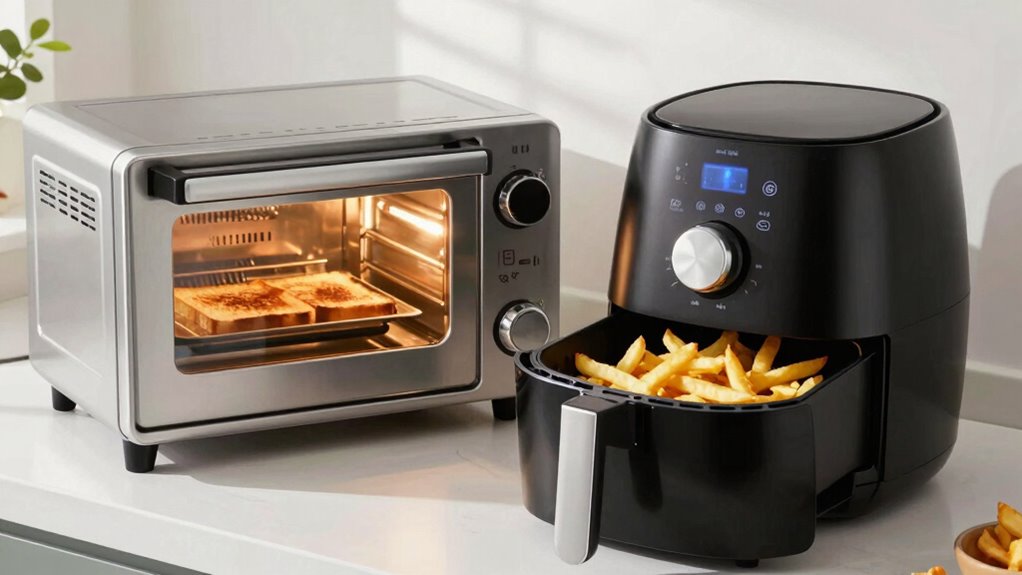
The main difference between a toaster oven and an air fryer lies in airflow. Air fryers have high-velocity, concentrated airflow that circulates hot air rapidly, creating crisp textures quickly. In contrast, toaster ovens use gentle, broad airflow for even heat distribution. Controlling airflow affects cooking speed, texture, and doneness. Understanding these differences helps you get better results—exploring further reveals how optimizing airflow can elevate your cooking outcomes.
Key Takeaways
- Air fryers use high-velocity, concentrated airflow for rapid, crispy results, while toaster ovens provide gentle, broad airflow for even heating.
- The intense airflow in air fryers accelerates moisture evaporation, creating crispy textures; toaster ovens have milder airflow for more moisture retention.
- Toaster ovens rely on slower, more diffuse airflow for even cooking; air fryers employ targeted, high-speed airflow for quick, crisp finishes.
- Proper airflow control in both appliances influences cooking time, food texture, and doneness, making airflow the key differentiator.
- Understanding airflow differences helps choose the right appliance for specific cooking needs, balancing speed, crispiness, and moisture retention.
How Does Airflow Affect Cooking Speed and Quality?
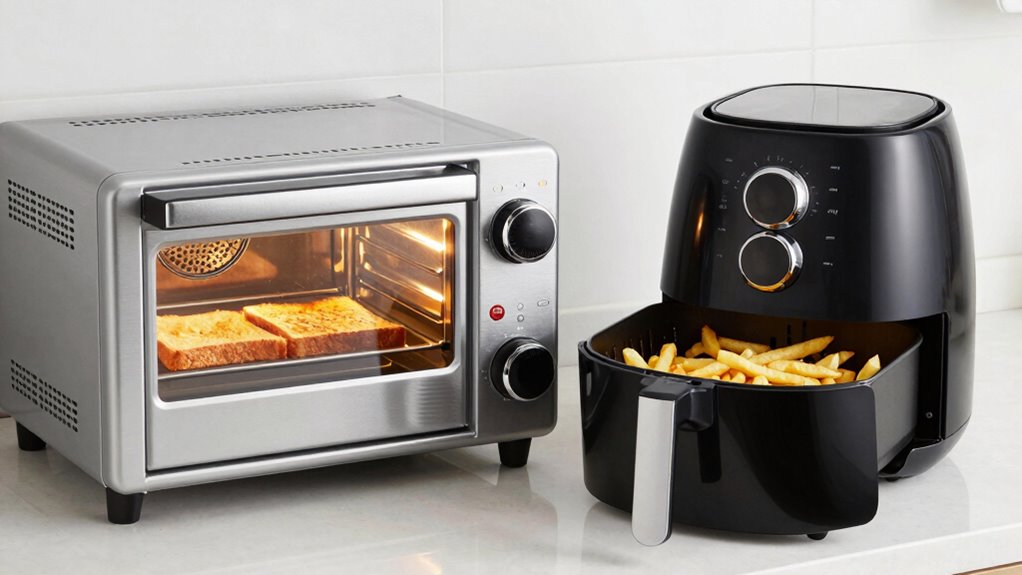
Airflow plays a crucial role in determining how quickly and evenly your food cooks in both toaster ovens and air fryers. Proper airflow ensures heat circulates efficiently, reducing cooking time and promoting even browning. However, airflow noise can become noticeable if the fan runs loudly or inconsistently, disrupting your cooking experience. To maintain peak cooking performance, it’s essential to keep airflow maintenance in check—cleaning vents and fans regularly prevents blockages that could hinder airflow. When airflow operates smoothly, your food cooks faster and more uniformly, with crispier textures. Additionally, airflow design influences the overall efficiency of heat distribution within the appliance. Well-designed airflow systems can also contribute to energy efficiency, helping you save on electricity bills. Regular airflow maintenance helps avoid these issues, ensuring your appliances perform at their best, especially in natural ventilation scenarios that rely on optimal airflow. Proper airflow management not only improves cooking quality but also extends the lifespan of your appliances by preventing overheating and mechanical wear.
How Airflow Changes Food Texture and Evenness
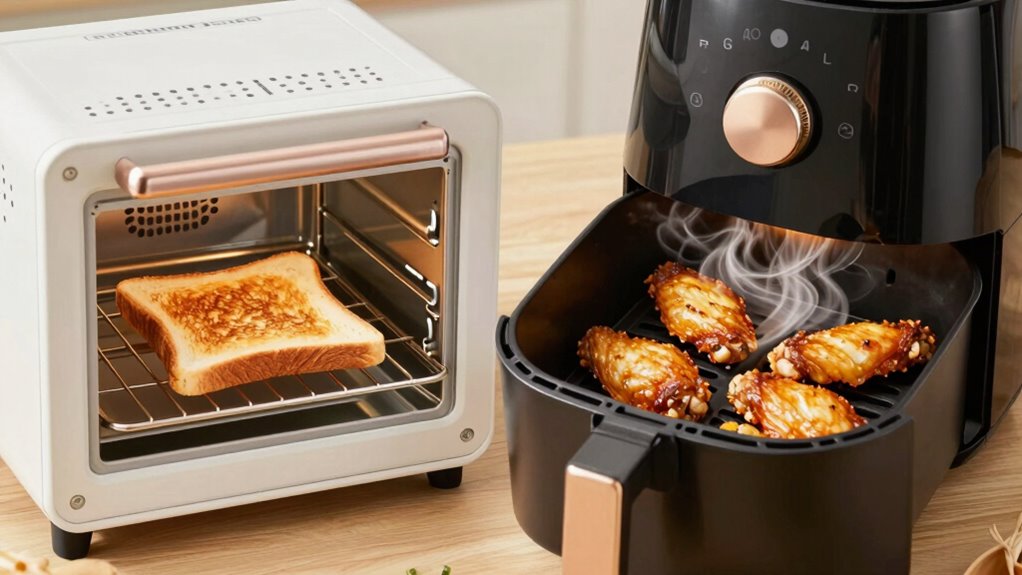
Airflow plays a key role in how your food turns out, especially in achieving crispiness and even cooking. When airflow is strong and consistent, it helps create a uniform heat that results in better texture and browning. Additionally, airflow control is crucial for managing how moisture escapes or is retained during cooking, which can influence whether foods become drier or more tender depending on the airflow intensity. Proper airflow regulation is essential for maintaining consistent results and preventing over- or under-cooking, highlighting the importance of airflow control in food preparation. Moreover, understanding how air circulation patterns affect heat distribution can further improve cooking outcomes.
Airflow Enhances Crispiness
When hot air circulates rapidly around your food, it removes moisture and promotes even heat distribution, which considerably enhances crispiness. This airflow speeds up moisture evaporation from the surface, creating that desirable crunchy exterior without sacrificing internal moisture. By efficiently removing excess moisture, it prevents sogginess and helps preserve the food’s natural flavor, ensuring each bite remains flavorful and satisfying. The consistent airflow also means your food cooks uniformly, reducing uneven textures. As a result, you get a crisp, golden crust with better moisture retention inside, giving you a satisfying crunch without dryness. This process makes airflow a key factor in achieving that perfect crispy texture while maintaining the overall quality and flavor of your food. Effective airflow is essential for consistent, high-quality results in crispiness and flavor preservation, especially when considering the technology differences between cooking appliances. Additionally, understanding how air circulation interacts with food can help optimize cooking outcomes.
Even Heat Distribution Achieved
Because hot air circulates rapidly around your food, it promotes uniform heating, which helps prevent hot spots and uneven textures. This airflow guarantees better baking consistency, so your dishes cook evenly every time. With improved heating efficiency, the heat reaches all areas of your food promptly, reducing the chances of undercooked centers or overdone edges. This even heat distribution enhances the overall quality of your cooking, giving you more predictable results. Whether you’re roasting vegetables or baking cookies, the consistent temperature helps achieve a professional finish. The airflow’s role in distributing heat evenly makes your appliance more reliable and effective, whether you’re using a toaster oven or air fryer. Additionally, airflow management is crucial for optimizing cooking performance and energy efficiency. Optimizing airflow patterns can further improve cooking results and appliance longevity. Ultimately, this leads to better texture, taste, and a more satisfying cooking experience. Understanding airflow is key to maximizing your appliance’s performance.
Moisture Retention Variances
While efficient airflow promotes even cooking, it also impacts how much moisture your food retains during the process. In an air fryer, high airflow quickly evaporates moisture, leading to crisp textures but potential dryness. Conversely, a toaster oven’s gentler air circulation helps preserve moisture, maintaining juiciness and flavor. This difference influences the overall texture and flavor preservation of your dishes. Additionally, understanding the specific airflow level can help you tailor your cooking method to achieve the desired moisture retention and food texture. Recognizing how cooking technology emphasizes intricate craftsmanship can also inspire attention to detail in culinary presentations. Moreover, airflow control plays a crucial role in customizing your cooking experience to better suit different foods and preferences, allowing for more precise moisture management.
How Do Toaster Ovens and Air Fryers Circulate Air Differently?
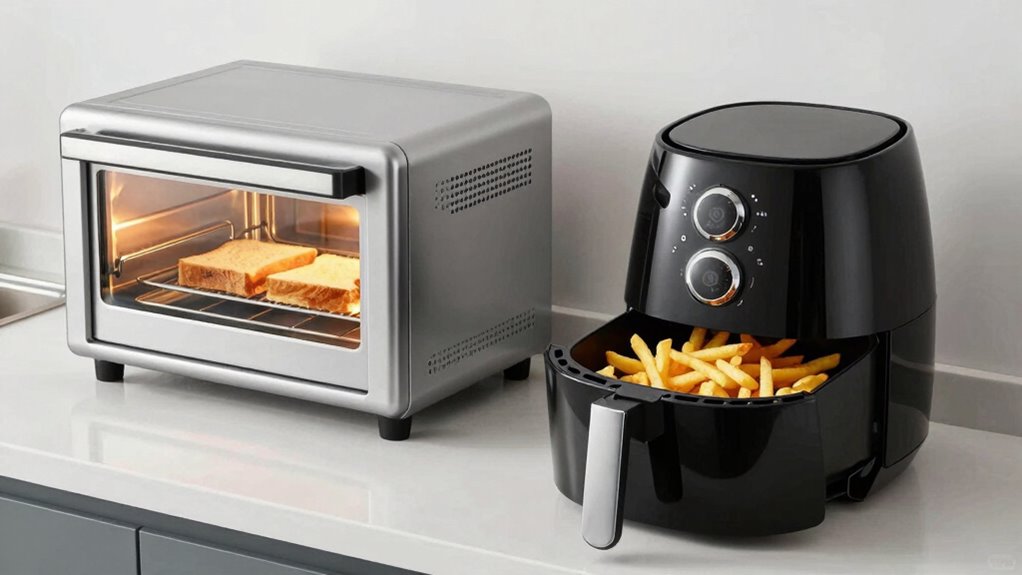
Toaster ovens and air fryers circulate air differently to cook your food efficiently. Toaster ovens use a heating element combined with a fan that creates gentle airflow patterns, mainly circulating warm air around the entire oven interior. This results in more even heating, but the airflow tends to be less intense. In contrast, air fryers feature advanced fan technology that produces a high-velocity, concentrated airflow. This rapid circulation of hot air surrounds your food closely, mimicking deep frying’s crispiness without oil. The difference lies in airflow patterns: toaster ovens rely on slower, broader circulation, while air fryers focus on powerful, targeted airflow to achieve quick, crispy results. Understanding these distinctions helps you choose the right appliance for your specific cooking needs.
Can You Control Airflow to Improve Your Cooking Results?
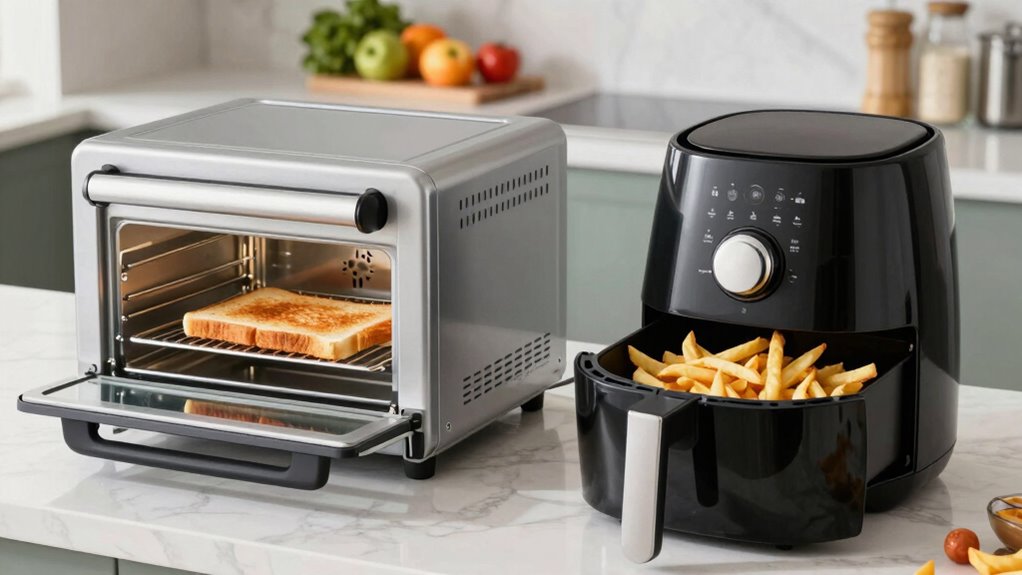
Controlling airflow can substantially enhance your cooking results, especially with appliances like air fryers and toaster ovens. Airflow control allows you to adjust how hot air circulates around your food, leading to more even cooking and crispier textures. Some models offer adjustable vents or fans, giving you direct influence over airflow. By managing airflow, you can optimize temperature regulation, ensuring food cooks thoroughly without burning. Proper airflow control makes it easier to achieve desired results, whether you’re roasting vegetables or baking pastries. Keep in mind, consistent airflow helps maintain stable temperatures, which is vital for precise cooking. Understanding field-of-view and airflow patterns can help you better anticipate how heat distributes within your appliance. Additionally, being aware of airflow dynamics can help you make more informed adjustments to enhance cooking efficiency. Mastering airflow control can significantly impact your culinary outcomes and help you create perfectly cooked dishes every time.
When Does Airflow Make the Biggest Difference in Cooking Tasks?
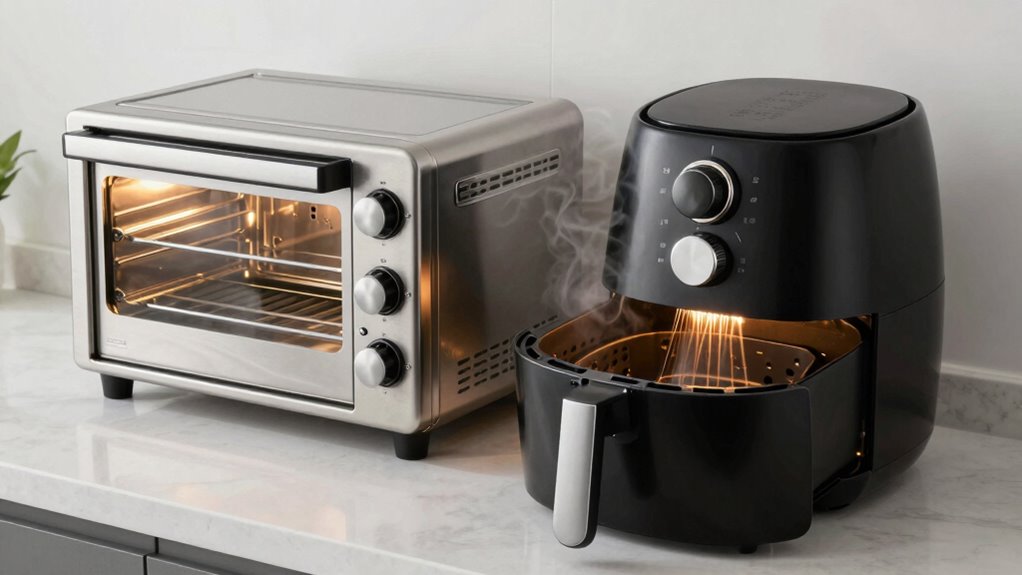
Airflow makes the biggest difference in cooking tasks that require even heat distribution and crispiness, such as roasting vegetables or baking pastries. When you need precise temperature control, airflow helps guarantee heat circulates uniformly, preventing hot spots and uneven cooking. It also reduces cooking duration by speeding up heat transfer, so your food reaches the desired temperature faster. If you’re baking delicate pastries or roasting crispy vegetables, proper airflow enhances texture and consistency. Without sufficient airflow, food may cook unevenly, resulting in softer or undercooked spots. Understanding when airflow impacts temperature control and cooking time helps you choose the right appliance for specific tasks, ensuring ideal results every time.
Tips to Maximize Airflow for Perfect Cooking Results
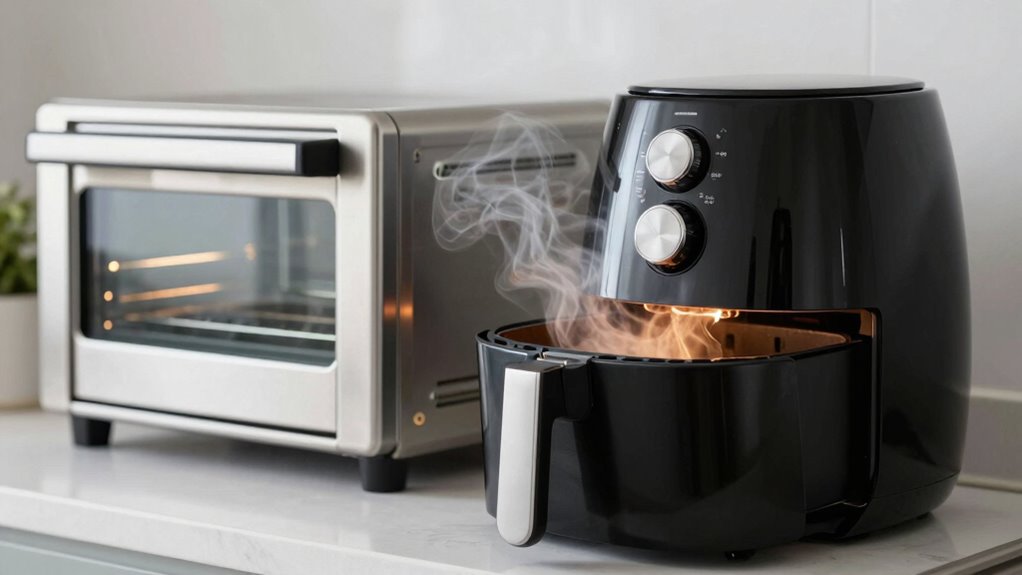
Maximizing airflow is essential for achieving evenly cooked, crispy results. To do this, pay attention to airflow patterns inside your appliance. Arrange food in a single, even layer, avoiding overcrowding, which can block air circulation. Use your fan speed control wisely—boost it for denser, more layered foods to promote better airflow, or dial it down for delicate items that need gentler circulation. Rotating trays during cooking also helps distribute airflow evenly. Keep vents clear of obstructions and clean the appliance regularly to prevent airflow blockages. By optimizing airflow patterns and adjusting fan speed control, you ensure consistent heat distribution, resulting in perfectly crispy, evenly cooked meals every time.
Frequently Asked Questions
Can Airflow Settings Be Adjusted on Most Toaster Ovens and Air Fryers?
Most toaster ovens and air fryers offer airflow control features, but adjustments vary. You can usually customize airflow settings on air fryers through specific controls or presets, which helps achieve crispy results. In toaster ovens, airflow customization is often limited or fixed, but some models include adjustable vents. Check your appliance’s manual for airflow customization options, as these features enhance cooking performance and allow you to tailor heat circulation to your preferences.
How Does Airflow Impact Energy Consumption During Cooking?
Airflow has a huge impact on energy consumption during cooking. When you regulate airflow, you’re fundamentally controlling how efficiently heat circulates, which can save tons of energy—like turning a tiny dial to power a spaceship. Proper airflow regulation boosts energy efficiency by reducing cooking time and preventing wasted heat. So, tweaking airflow isn’t just about crispiness; it’s a game-changer for saving electricity and cooking smarter.
Are There Foods That Benefit From Lower Airflow for Better Results?
Yes, you benefit from lower airflow when cooking gentle foods that need delicate flavors, like baked fruits or custards. Reduced airflow prevents unnecessary movement and preserves moisture, ensuring your dishes stay tender and flavorful. You should also use lower airflow for delicate baked goods or dishes that can dry out easily. This gentle approach helps maintain the integrity of the ingredients and results in better, more nuanced flavors.
What Maintenance Is Required to Keep Airflow Systems Functioning Properly?
To keep your airflow systems working well, you should regularly clean filters and check vents for any dust or debris. Remove and wash filters as needed, and guarantee vents are clear to prevent airflow blockages. This maintenance helps your appliance operate efficiently, prolongs its lifespan, and keeps your cooking consistent. Make it a habit to inspect and clean these parts every few weeks for ideal performance.
Does Airflow Influence the Safety Features of Toaster Ovens and Air Fryers?
Airflow safety is vital in both toaster ovens and air fryers because proper ventilation design prevents overheating and fire hazards. If airflow is restricted, it can compromise safety features, leading to potential damage or accidents. You should make certain vents are clear and functioning well, and follow maintenance guidelines to keep the ventilation system ideal. Good airflow helps maintain safe operation and prolongs your appliance’s lifespan.
Conclusion
So, next time you’re torn between a toaster oven and an air fryer, remember—it’s all about airflow. Ironically, the tiny difference in how they circulate air can turn a quick snack into a crispy masterpiece or a soggy disappointment. Who knew that just a little airflow could make or break your perfect meal? So, embrace the science, and let your kitchen’s airflow do the heavy lifting—because sometimes, it’s the smallest details that matter most.