To keep your kitchen sinks and faucets performing well, you should clean them regularly with baking soda and vinegar to prevent buildup and stains. Wipe down faucets daily with a soft cloth and mild soap, then dry to avoid mineral deposits. Deep clean periodically by soaking vinegar-soaked cloths around the faucet and scrubbing with a toothbrush. Also, inspect for leaks, clean aerators, and avoid chemical drain cleaners. For more detailed tips, keep exploring ways to maintain your plumbing effectively.

Get kitchen staples and gadgets delivered free — and shop member deals
- Fast, free delivery on millions of items
- Access to Prime Big Deal Days deals on October 6–7
- Prime Video, Amazon Music and more included
Key Takeaways
- Perform daily cleaning with baking soda and vinegar to prevent grime buildup and keep surfaces shiny.
- Regularly soak and scrub faucet parts with vinegar to remove mineral deposits and maintain water flow.
- Inspect and tighten or replace washers and aerators to prevent leaks and ensure optimal performance.
- Use boiling water and natural agents like baking soda and vinegar for drain maintenance and clog prevention.
- Schedule periodic deep cleaning and plumbing inspections to avoid corrosion, leaks, and performance decline.
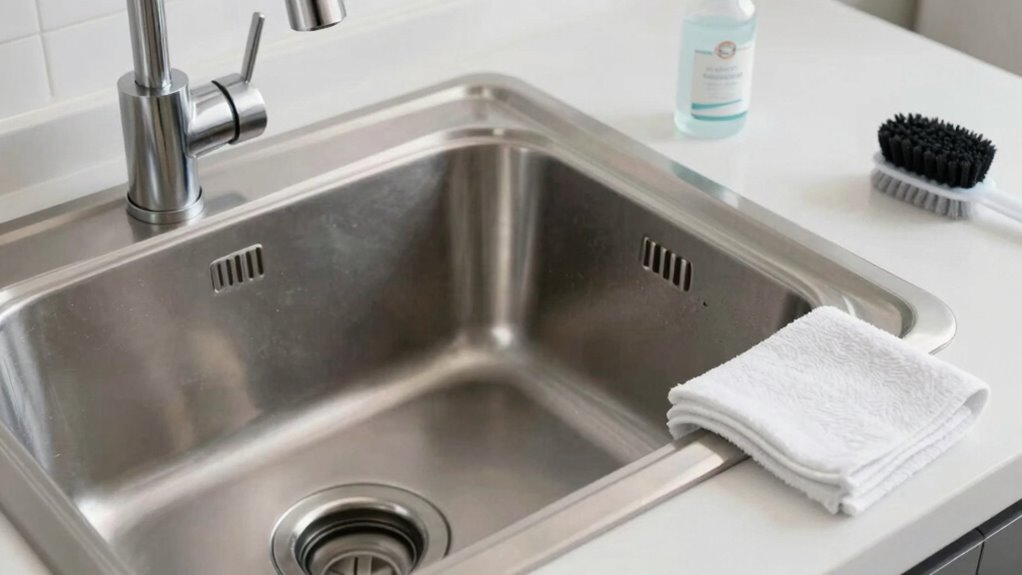
A clean and well-maintained kitchen sink and faucet not only enhance the look of your kitchen but also guarantee they function properly and stay hygienic. Regular upkeep is essential to prevent buildup of grime, soap scum, and mineral deposits that can compromise performance over time. To keep your sink sparkling and your faucet working smoothly, start with simple DIY cleaning tips. Use a mixture of baking soda and vinegar to scrub the sink surface. This natural combination dissolves stains and disinfects without harsh chemicals. For the faucet, wipe it down daily with a soft cloth dampened with mild soap and water. This prevents water spots and keeps it shiny. Remember to dry the faucet afterward to avoid water spots caused by mineral deposits.
Deep cleaning your faucet periodically will help maintain its appearance and function. Soak a cloth in vinegar and wrap it around the faucet spout for about 15 minutes to loosen mineral buildup, then scrub gently with an old toothbrush. This simple step also helps prevent common faucet repairs caused by clogging or corrosion. If you notice your faucet dripping or leaking, don’t ignore it—these are typical issues that, if left unaddressed, can cause more extensive damage. The problem might be as straightforward as a worn-out washer or a loose aerator. Tightening fittings or replacing washers often resolves these problems without needing professional help. If you’re comfortable, you can remove the aerator to clean out debris or mineral deposits, which restores proper water flow. Regularly inspecting and maintaining plumbing components is key to avoiding costly repairs and ensuring long-term performance. Additionally, understanding basic plumbing maintenance techniques can help you troubleshoot minor issues before they escalate. Regularly checking for leaks and corrosion can also help improve your indoor air quality, as leaks may contribute to excess moisture and mold growth indoors.
Keeping the drain clear is just as important. Regularly pour boiling water down the drain to melt away grease or soap scum. For stubborn clogs, a mixture of baking soda and vinegar followed by hot water can do the trick. Avoid using harsh chemical drain cleaners, which can damage pipes or corrode fixtures over time. To further improve drain health, consider installing a drain strainer to catch debris and prevent clogs. Regularly inspecting your plumbing and drain cleaning practices can significantly extend the lifespan of your sink and faucet. Maintaining your sink’s plumbing components is vital for ongoing performance, and many common faucet repairs are simple DIY fixes that save you money. Always turn off the water supply before attempting repairs, and keep spare washers or O-rings handy for quick replacements. Proper maintenance not only benefits your sink’s function but also contributes to a healthier indoor environment by reducing potential mold and bacteria growth.
As an affiliate, we earn on qualifying purchases.
Frequently Asked Questions
How Often Should I Replace My Kitchen Faucet?
You should replace your kitchen faucet every 10 to 15 years, depending on its condition. Regularly inspect your kitchen accessories and watch for leaks or corrosion, which signal it’s time for a replacement. Doing so helps prevent plumbing repairs and maintains peak performance. If repairs become frequent or the faucet shows significant wear, upgrading is a smart move. Staying proactive ensures your kitchen stays functional and efficient.
Are There Eco-Friendly Cleaning Options for Sinks?
Yes, you can choose eco-friendly cleaning options for your sink. Use biodegradable cleaners that break down naturally, avoiding harsh chemicals. Incorporate natural disinfectants like vinegar or baking soda to keep your sink hygienic without harming the environment. Regularly scrub with these sustainable solutions, rinse thoroughly, and maintain your sink’s shine. By prioritizing eco-friendly products, you protect your home and the planet while keeping your sink clean and well-maintained.
Can Hard Water Damage My Sink and Faucet?
Yes, hard water can damage your sink and faucet over time. It causes mineral buildup, which can clog and corrode surfaces. To protect your fixtures, consider water softening systems that reduce mineral content. Regularly cleaning with eco-friendly solutions helps prevent buildup, extending the lifespan of your sink and faucet. This proactive approach keeps your plumbing functioning smoothly and prevents costly repairs caused by hard water damage.
How Do I Prevent Mold and Mildew Buildup?
Picture your sink as a thriving garden—keep it dry and well-ventilated to prevent mold buildup. For mold prevention and mildew control, wipe down surfaces after use and guarantee no water pools. Regularly clean with vinegar or a gentle disinfectant, and keep the area dry and airy. This routine acts as a shield, stopping mold and mildew from taking root and maintaining a fresh, clean space.
What Tools Are Best for Deep Cleaning?
For deep cleaning, you should use cleaning brushes to scrub hard-to-reach spots around your sink and faucet. Disinfectant sprays are essential for killing germs and removing mold or mildew. Use the brushes to loosen grime, then spray the disinfectant thoroughly and let it sit for a few minutes before rinsing. This combo guarantees your sink and faucet stay spotless, hygienic, and perform efficiently over time.
As an affiliate, we earn on qualifying purchases.
Conclusion
Keep your kitchen sinks and faucets spotless, and you’ll never face the nightmare of build-up or corrosion creeping in! With just a little regular effort, you’ll dodge the disaster of leaky faucets and clogged drains, transforming your kitchen into a sparkling paradise. Don’t let grime and grime’s evil twin, mineral deposits, win the battle—stand strong, clean often, and enjoy a sink that performs like a champion every single day!
natural sink and faucet cleaning kit
As an affiliate, we earn on qualifying purchases.
As an affiliate, we earn on qualifying purchases.
As an affiliate, we earn on qualifying purchases.
Evergreen bestsellers Picks
bestsellers
As an affiliate, we earn on qualifying purchases.