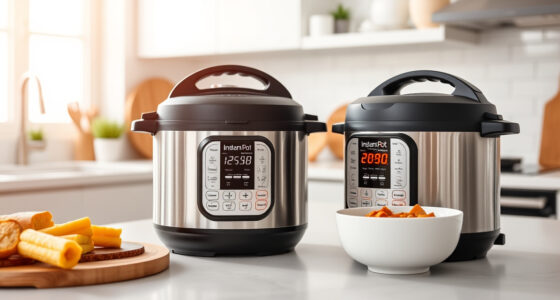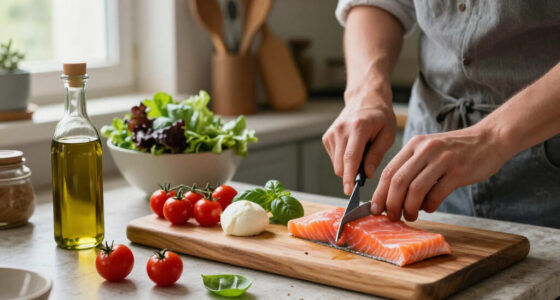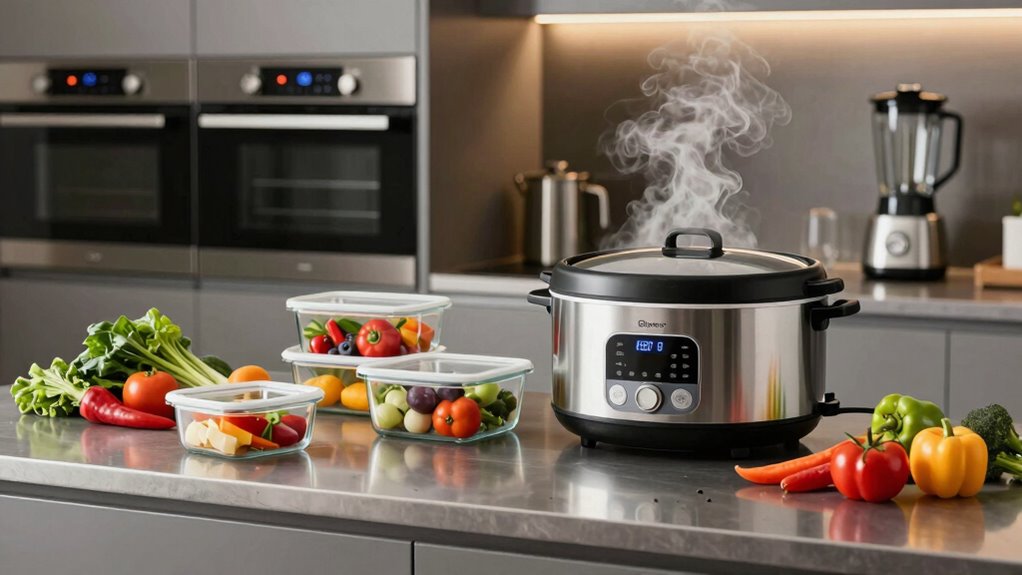

To keep your appliances working efficiently, plan your batch cooking around proper maintenance and smart storage. Use quality, dishwasher-safe containers, and label meals to prevent spoilage. Regularly clean your appliances to avoid breakdowns and boost energy efficiency. Organize your fridge and freezer to reduce strain on your appliances and make meal prep smoother. Implementing these strategies helps extend appliance life and saves you time. Keep going to discover more tips for a streamlined, long-lasting batch-cook system.

Get kitchen staples and gadgets delivered free with Prime
- Fast, free delivery on millions of items
- Prime Video, Amazon Music and more included
- Member-only deals all year
Key Takeaways
- Regularly clean and maintain appliances to ensure optimal performance and longevity.
- Use energy-efficient appliances to reduce strain and lower utility costs.
- Store ingredients properly to minimize appliance workload and prevent spoilage.
- Plan batch cooking sessions to optimize appliance use and avoid overloading.
- Organize kitchen storage to streamline access and reduce unnecessary appliance operation.
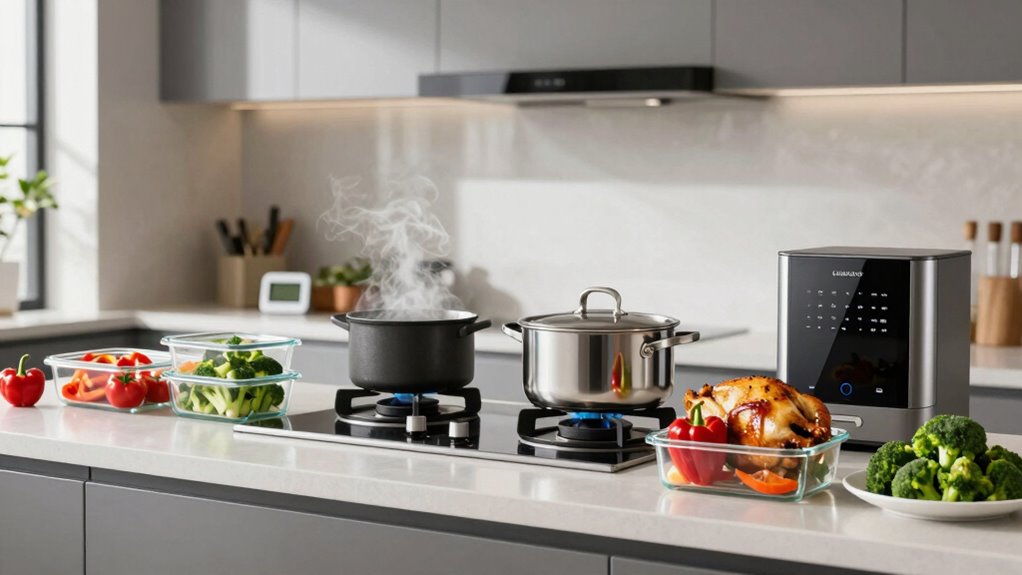
Have you ever felt overwhelmed by daily meal prep? The endless cycle of shopping, chopping, cooking, and cleaning can drain your energy and time. That’s where a batch-cook plan can transform your routine. Instead of scrambling every day, you prepare large quantities of meals in one go, then portion them out for the week ahead. This approach not only saves you time but also ensures you eat healthier, home-cooked food even on your busiest days. To make this work smoothly, you need good storage tips. Invest in quality containers that are microwave- and dishwasher-safe, and opt for sizes that suit your portions. Label each container with the date and meal contents, so you always know what’s inside and how fresh it is. When you store your cooked meals properly, you prevent spoilage and waste, and keep your appliances running efficiently. Proper storage isn’t just about containers; it’s also about organizing your fridge and freezer. Keep similar items together, and don’t overcrowd your compartments. Cold air needs space to circulate, so you don’t want to cram everything in tightly. Use clear containers so you can easily see what’s inside, minimizing the time spent rummaging through your fridge. When you’re planning your batch cook, think about how long each dish lasts and how to store leftovers safely. Most cooked meals can stay fresh for three to four days in the fridge, or longer if frozen. Freezing is a game-changer because it extends your meal options without sacrificing quality. Wrap foods tightly to prevent freezer burn and label everything with dates. This simple step helps you keep track of what needs to be eaten first and prevents food waste. Additionally, understanding the importance of proper appliance maintenance can help you avoid breakdowns and ensure your kitchen tools work effectively. Regularly cleaning your appliances also prolongs their lifespan and ensures they work efficiently, saving you money in the long run. Incorporating smart storage solutions can further streamline your meal prep process and keep your kitchen organized. Being aware of appliance energy efficiency can also help you reduce your energy consumption while maintaining peak performance. Choosing energy-efficient appliances can contribute significantly to lowering your overall utility bills. Understanding how appliance performance impacts your kitchen routine can help you select tools that are both effective and durable. By integrating a strategic batch-cook plan with smart storage tips, you create a system that works for you—not against you. You’ll spend less time in the kitchen during the week, enjoy more consistent meals, and reduce stress around meal planning. With a little preparation and organization, your appliances will serve you better, turning what once felt like a chore into a simple, manageable routine.
dishwasher safe food storage containers
As an affiliate, we earn on qualifying purchases.
As an affiliate, we earn on qualifying purchases.
Frequently Asked Questions
How Do I Start Implementing a Batch-Cook Plan Effectively?
Start by creating a simple meal planning schedule that outlines your weekly dishes. Then, set aside time for ingredient prep—washing, chopping, and portioning—so everything’s ready to cook. Use your appliances efficiently by batch-cooking multiple meals at once, which saves time and energy. Keep track of what works best, adjust your plan as needed, and stay consistent to make meal planning and ingredient prep a seamless part of your routine.
What Are the Best Appliances for Batch Cooking?
The best appliances for batch cooking include slow cookers, pressure cookers, and large-capacity ovens or stovetops. These tools simplify meal prep and allow you to cook large quantities efficiently. Focus on ingredient selection that suits your recipes; choose versatile ingredients like grains, vegetables, and proteins. Using these appliances and thoughtful ingredient choices, you can streamline your batch-cook process, save time, and enjoy homemade meals all week.
How Can I Prevent Appliances From Overworking During Batch Cooking?
Think of your appliances like dancers in a well-choreographed routine—overworking can lead to missteps. To prevent this, prioritize appliance maintenance and keep your kitchen organized. Regularly clean and service your equipment, avoiding overloads and giving each appliance enough time to rest. By maintaining a tidy, organized space, you help prevent strain on appliances, ensuring they work efficiently without burnout, making your batch cooking smoother and more enjoyable.
What Safety Precautions Should I Consider When Batch Cooking?
When batch cooking, prioritize food safety by washing hands thoroughly and keeping everything sanitized. Make certain your appliances are well-maintained; check cords and seals to prevent hazards. Use correct temperature settings to avoid undercooked or overcooked food. Never overload appliances, which can cause overheating. Keep a fire extinguisher nearby, and always monitor cooking processes. These safety precautions help protect you while maintaining appliance longevity and food integrity.
How Do I Store and Reheat Batch-Cooked Meals Properly?
Getting your meal prep game on point is like hitting two birds with one stone. Store your batch-cooked meals in airtight containers to keep them fresh, and label them with dates. For reheating, use the microwave or stove, ensuring food reaches 165°F for safety. Follow storage tips to prevent spoilage, and always reheat thoroughly to preserve flavor and prevent bacteria. This way, your meals stay delicious and safe to enjoy.
energy-efficient kitchen appliances
As an affiliate, we earn on qualifying purchases.
As an affiliate, we earn on qualifying purchases.
Conclusion
By following this batch-cook plan, you’ll save time and energy, making weeknight dinners stress-free. Did you know that meal prepping can cut grocery costs by up to 20%? When your appliances work efficiently, you maximize their lifespan and your effort. Stick to this strategy, and you’ll enjoy more free evenings and healthier meals. It’s a simple change that can transform your cooking routine, giving you more control and less chaos in your kitchen.
reusable microwave-safe meal prep containers
As an affiliate, we earn on qualifying purchases.
As an affiliate, we earn on qualifying purchases.
fridge organization storage bins
As an affiliate, we earn on qualifying purchases.
As an affiliate, we earn on qualifying purchases.
Halloween Picks
halloween
As an affiliate, we earn on qualifying purchases.