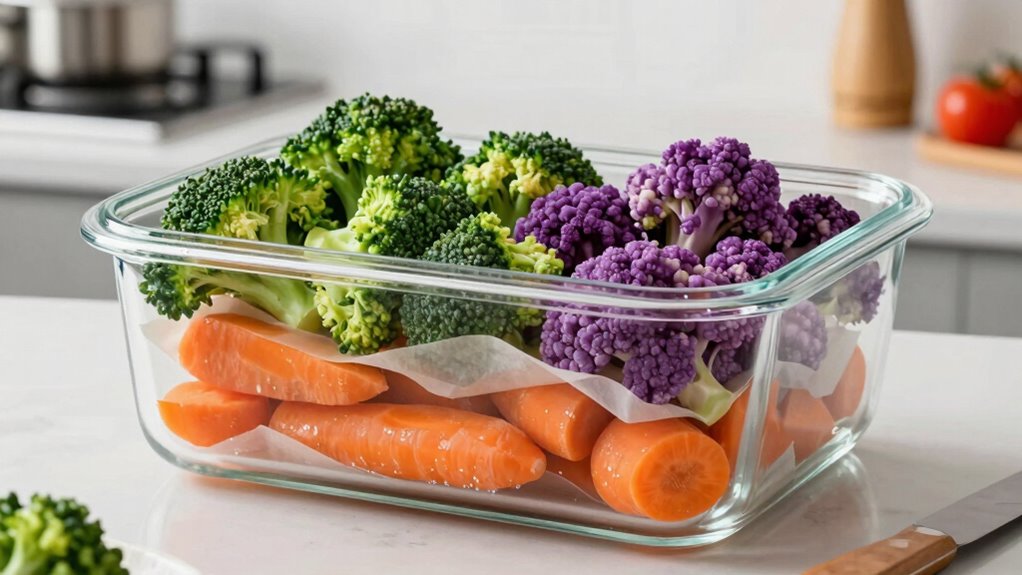
To prevent soggy vegetables during meal prep, store them in airtight containers and dry them thoroughly before refrigerating. Use paper towels or absorptive materials in your containers to wick away excess moisture, and keep leafy greens wrapped in dry paper towels. Good airflow and proper humidity control also help preserve crispness. If vegetables get limp, quick revive techniques like soaking in cold water or blanching can restore crunch. Keep these tips in mind, and you’ll learn more to keep veggies fresh longer.
Key Takeaways
- Use airtight containers and dry vegetables thoroughly before storing to prevent excess moisture and sogginess.
- Wrap leafy greens in paper towels to absorb moisture and maintain crispness during storage.
- Incorporate breathable materials or perforated containers to allow airflow and reduce humidity buildup.
- Avoid washing vegetables before storage; wash only before use to extend freshness and prevent sogginess.
- Revive wilted veggies with cold water, ice baths, or brief blanching to restore crunch and freshness.
Why Fresh Vegetables Make Meal Prep Better

Have you ever noticed how fresh vegetables add more flavor and crunch to your meals? When you start with fresh produce, you preserve their natural flavor retention, making every bite more vibrant. Fresh vegetables also better maintain their nutrients, ensuring you get the maximum health benefits from your meal prep. By choosing fresh produce, you avoid the loss of essential vitamins and minerals that occurs when vegetables sit too long or are stored improperly. This not only boosts the taste but also makes your meals more nourishing. Proper storage techniques help keep vegetables fresh longer, so you don’t sacrifice quality or health. Ultimately, starting with fresh vegetables enhances both the flavor and nutritional value of your meal prep, making your meals tastier and more nutritious.
Common Storage Mistakes That Make Veggies Limp
Even when you start with fresh vegetables, poor storage habits can quickly turn them limp and unappetizing. One common mistake is neglecting proper airflow, which traps moisture and causes veggies to spoil faster. Overcrowding containers also leads to sogginess, as vegetables crush each other and release excess moisture. Avoid storing vegetables next to strong-smelling foods that can interfere with their flavor infusions. Additionally, skip the pickling techniques meant for preservation; instead, use proper storage to maintain crispness. Improper temperature control can accelerate deterioration, so keep veggies in the right environment. Ensuring proper air quality in your storage area can also help extend the freshness of your vegetables. Proper temperature regulation can make a significant difference in keeping vegetables fresh longer. Using appropriate storage containers designed for vegetables can help maintain optimal humidity and airflow, preventing sogginess. Investing in ventilated containers can further enhance airflow and keep produce crisp. Incorporating humidity control measures can also significantly improve freshness and prevent spoilage. By steering clear of these pitfalls, you keep your vegetables fresh, vibrant, and ready for meal prep without sogginess or flavor loss.
How Washing and Drying Keep Vegetables Crispy

Washing and drying vegetables properly is essential for keeping them crisp and fresh. Rinsing removes dirt and bacteria, while thorough drying prevents excess moisture that causes sogginess. Using blanching techniques before drying can also help preserve texture by halting enzyme activity. Vegetable blanching briefly immerses vegetables in boiling water, then cools them quickly, locking in crunch. Proper drying methods include air drying or using a clean towel to absorb moisture. Additionally, controlling color temperature adjustments during preparation can optimize visual appeal and freshness. Implementing proper storage techniques after drying also prolongs freshness and maintains crispness, especially when combined with innovative cooling methods that help reduce spoilage. Incorporating techniques such as precise temperature control during storage further enhances vegetable longevity and texture.
Best Containers and Storage Tips for Fresh Veggies
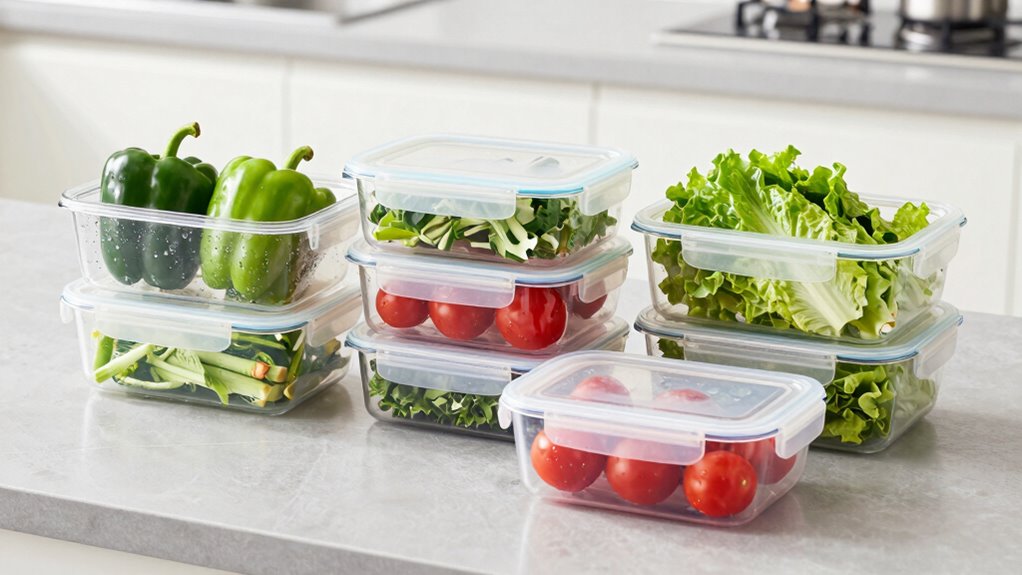
Using airtight containers helps keep your vegetables fresh longer by preventing moisture loss and exposure to air. Make certain your veggies are properly dried before storing to avoid spoilage, and keep them at the right temperature—usually cool and consistent—for maximum freshness. Additionally, selecting smart storage solutions designed for produce can further extend their shelf life. These simple tips ensure your produce stays crisp and ready to use, and understanding proper storage techniques can make a significant difference in maintaining quality. Incorporating specialized containers with adjustable vents can also help regulate humidity and airflow, further preserving freshness and reducing spoilage caused by improper ventilation. Employing proper temperature management is also crucial to prevent premature spoilage and maintain nutrient content.
Airtight Container Benefits
Have you ever noticed how quickly fresh veggies spoil without proper storage? Airtight containers are your best defense. They lock in freshness, prevent moisture loss, and keep out air that causes spoilage. The benefits of using these containers include maintaining the veggies’ crunch and color longer. Plus, their container durability means they withstand daily use without cracking or breaking. When choosing the right container, look for ones with secure seals and sturdy walls. Properly sealed, they prevent cross-contamination and keep odors contained. This means you can store a variety of vegetables together without worry. Investing in high-quality airtight containers simplifies meal prep and reduces waste. Overall, they’re an essential tool for keeping your veggies fresh, crisp, and vibrant longer.
Proper Vegetable Drying
Proper vegetable drying is key to extending their freshness and preventing spoilage, especially after you’ve stored them in airtight containers. To achieve this, start with vegetable dehydration by thoroughly drying your veggies before storage. Use a clean kitchen towel or a salad spinner to remove excess moisture, which helps control moisture levels inside your containers. Proper moisture control prevents sogginess and mold growth, keeping vegetables crisp and fresh longer. If you notice some veggies are particularly moist, consider air drying them for a few minutes or using a paper towel to absorb remaining water. Avoid overpacking containers with wet produce, as trapped moisture accelerates spoilage. Focusing on proper drying techniques ensures your vegetables stay fresh and crunchy, making meal prep more efficient and enjoyable. Additionally, understanding moisture management is essential for preventing spoilage and maintaining optimal freshness during storage. Employing dehydration methods can further enhance vegetable longevity and quality. Incorporating proper storage containers can also significantly reduce moisture buildup and help preserve your vegetables’ texture. Being aware of food safety practices ensures your stored vegetables remain healthy and free from bacteria or mold.
Optimal Storage Temperature
Maintaining the right storage temperature is essential to keep your vegetables fresh and vibrant for as long as possible. The ideal storage temperature for most veggies is between 32°F and 40°F, which helps slow down spoilage. Equally important is controlling refrigerator humidity; high humidity prevents vegetables from drying out, while low humidity slows mold growth. To maximize freshness, use containers that promote proper airflow and moisture control. Keep leafy greens in crisper drawers set to high humidity, and store root vegetables in a cooler, low-humidity area. Avoid overcrowding your fridge, which can cause temperature fluctuations. Regularly check your fridge’s temperature with a thermometer to ensure consistency. Properly managing temperature and humidity is key to prolonging veggie freshness without sogginess. Additionally, choosing the right air quality considerations for your storage environment can help reduce spoilage caused by airborne contaminants. Incorporating proper airflow techniques can further enhance storage conditions, preventing excess moisture buildup that leads to sogginess. Ensuring proper ventilation can also help maintain optimal humidity levels and keep vegetables crisp. Moreover, monitoring temperature stability helps prevent unexpected fluctuations that can accelerate spoilage.
Using Paper Towels and Absorbers to Prevent Sogginess
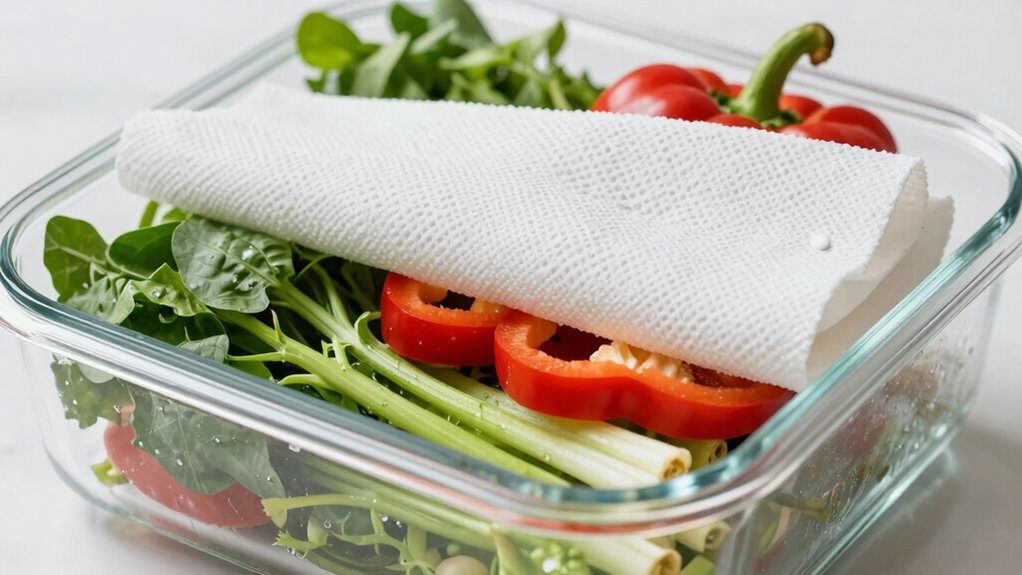
To keep your meals fresh and prevent sogginess, placing a paper towel or absorptive material inside the storage container is highly effective. Paper towels absorb excess moisture that causes vegetables to become soggy, maintaining their crispness. When packing your vegetables, lay a paper towel at the bottom or directly on top of the produce. You can also use absorptive materials like specialized veggie pads or cloth towels that wick away moisture. These materials create a barrier that prevents excess water from settling and spoiling your vegetables. Be sure to change the paper towels regularly, especially if they become damp. This simple trick helps preserve texture and extends freshness, making your meal prep more reliable and enjoyable. Additionally, selecting containers with proper ventilation can help reduce condensation buildup and further keep vegetables crisp.
How to Revive Wilted Vegetables Before Eating

Wilted vegetables can often be restored to a crisp, fresh state with simple methods. One effective trick is to rehydrate them using cold water or ice baths. For leafy greens, try vegetable blanching in boiling water for a few seconds, then cooling quickly in ice water to revive their texture. Incorporate pickling techniques by soaking wilted vegetables in a vinegar solution; this not only refreshes them but also adds flavor. Additionally, trimming and storing vegetables properly helps prevent further wilting. Remember, proper storage keeps vegetables crisp longer. To deepen your approach, consider these tips:
- Use ice water baths to shock and firm up greens
- Apply vegetable blanching for delicate vegetables
- Experiment with pickling solutions for revival
- Trim damaged parts before storage
- Maintain ideal temperature and humidity levels
Quick Tips to Keep Vegetables Fresh All Week
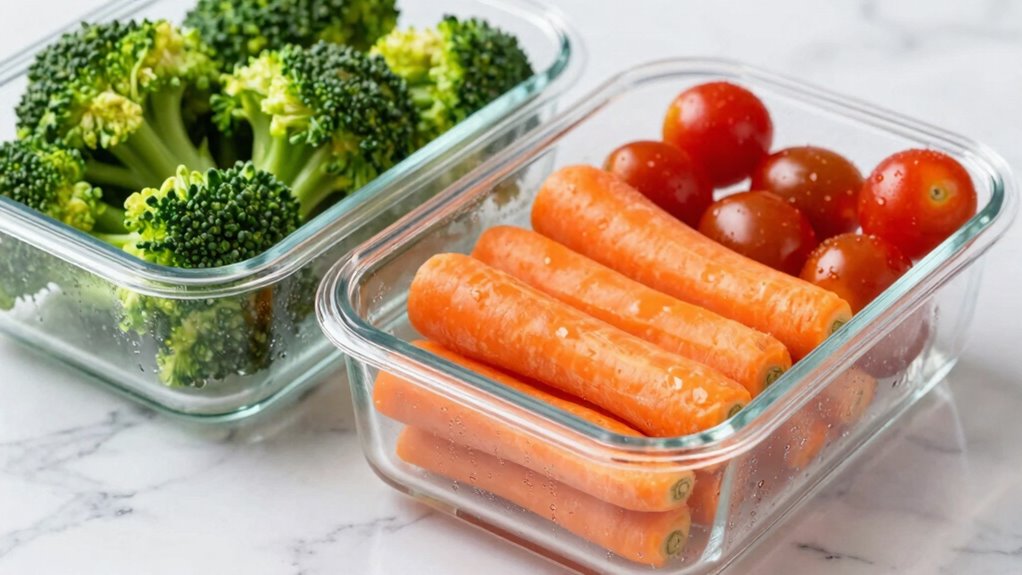
To keep your vegetables fresh all week, you need to store them properly and avoid excess moisture. Using airtight containers helps prevent spoilage, while keeping vegetables dry slows down wilting. Pay attention to these simple tips, and your produce will stay crisp longer.
Store Vegetables Properly
Keeping vegetables fresh all week starts with proper storage. When you store them correctly, you preserve their vibrant color and maximize flavor retention, ensuring every bite tastes fresh. To do this effectively:
- Keep leafy greens in a damp paper towel to maintain crispness.
- Store root vegetables in a cool, dark place for longer shelf life.
- Use perforated bags to allow airflow and prevent moisture buildup.
- Avoid washing vegetables before storage; moisture accelerates spoilage.
- Keep ethylene-sensitive veggies away from fruits that emit ripening gases.
These tips help prevent premature spoilage, maintain the vegetables’ natural appearance, and lock in their flavor. Proper storage isn’t just about keeping produce; it’s about preserving the quality so your meal prep stays fresh and tasty all week.
Use Airtight Containers
Using airtight containers is one of the easiest ways to keep your vegetables fresh throughout the week. They create a sealed environment that prevents moisture loss and exposure to air, which can cause vegetables to spoil faster. For fresh vegetable storage, choose containers that fit your produce without crushing or leaving too much space. This helps maintain ideal humidity levels and reduces the risk of sogginess. Make sure the lids seal tightly every time you pack your vegetables. Label containers with dates to track freshness and use the oldest first. Airtight containers also prevent odors from spreading, keeping your fridge smelling clean. By investing in quality containers and ensuring they’re sealed properly, you’ll extend the life of your vegetables and enjoy fresher, crunchier produce all week long.
Keep Vegetables Dry
Moisture is one of the main factors that causes vegetables to spoil quickly, so it’s essential to keep them dry after washing. Wet leafy greens can become slimy, while root vegetables may rot faster if stored damp. To prevent this, thoroughly dry your vegetables before storage. Use paper towels or a clean cloth to remove excess moisture. Store leafy greens in a breathable container with a paper towel to absorb moisture, and keep root vegetables in a cool, dry place. Avoid washing vegetables until just before use to prevent unnecessary moisture buildup. Proper drying helps maintain freshness, reduces spoilage, and extends shelf life.
- Wrap leafy greens loosely in paper towels
- Store root vegetables in a mesh bag or perforated container
- Keep vegetables in a cool, dark, dry place
- Avoid washing until right before eating
- Check for excess moisture regularly
Frequently Asked Questions
Can Specific Vegetables Tolerate Longer Storage Without Sogginess?
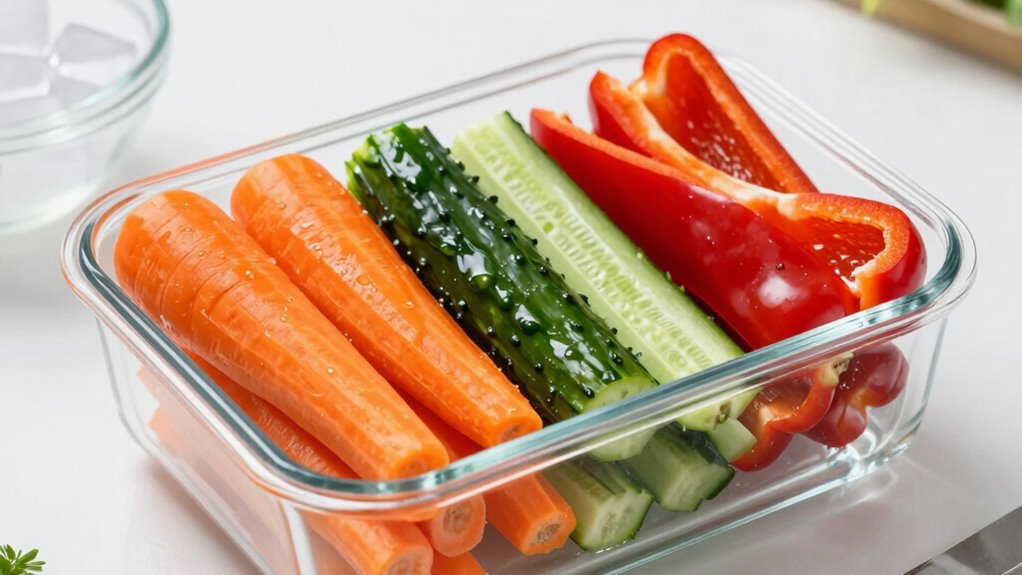
Certain vegetables, like carrots and bell peppers, tolerate longer storage without sogginess. To keep them fresh, use crisper drawer techniques and store them in airtight containers. These methods help maintain ideal humidity and prevent moisture buildup. You’ll find that these vegetables stay crisp and fresh longer, making your meal prep easier and more efficient. Proper storage ensures your vegetables won’t turn soggy too quickly, saving you time and reducing waste.
How Does Temperature Affect Vegetable Freshness During Storage?
Your vegetables’ freshness hinges on temperature stability. If temperature fluctuations are wild, your produce wilts and rots faster than you can blink! Keep your storage environment cool and consistent; even a slight rise in temperature accelerates spoilage. Proper refrigeration slows down decay, while frequent temperature shifts speed it up. So, maintain a steady, cool environment to keep your veggies crisp and fresh, avoiding sogginess and waste.
Are There Natural Preservatives That Keep Veggies Crisp Longer?
Yes, you can use natural preservatives to keep veggies crisp longer. Freshness techniques like soaking in lemon water or vinegar help preserve texture without chemicals. Preservative options such as honey or seaweed extracts also work naturally to maintain crunch. You should store vegetables properly, using airtight containers and appropriate humidity levels, to maximize these freshness techniques and keep your veggies crisp and delicious longer.
What’s the Ideal Shelf Life for Prepped Vegetables?
Time, like a thief in the night, steals freshness from your prepped vegetables. Generally, you should consume refrigerated veggies within 3 to 7 days, following proper refrigeration guidelines to maintain crispness. For longer storage, freezing techniques can extend their life up to 8-12 months. Keep your veggies fresh by storing them in airtight containers and avoiding moisture buildup. Proper handling guarantees your produce stays vibrant and nutritious longer.
How Can I Tell if Vegetables Are Still Good After Storage?
You can tell if vegetables are still good by checking visual freshness indicators like vibrant color and firm texture. Smell should be fresh and earthy; if it’s sour or off, discard them. Feel their texture—if they’re slimy or overly soft, it’s time to toss them. Trust your senses: fresh vegetables look bright, smell clean, and feel crisp. If any signs of spoilage appear, it’s best to avoid eating them.
Conclusion
Now that you know the storage secrets pros swear by, your veggies can stay crisp and vibrant longer than ever. But the real game-changer lies just ahead—an unexpected trick that could redefine your meal prep routine entirely. Are you ready to unseal the final step that guarantees fresh, crunchy vegetables every single week? Stay tuned, because what you’re about to discover might just transform the way you save and enjoy your produce forever.