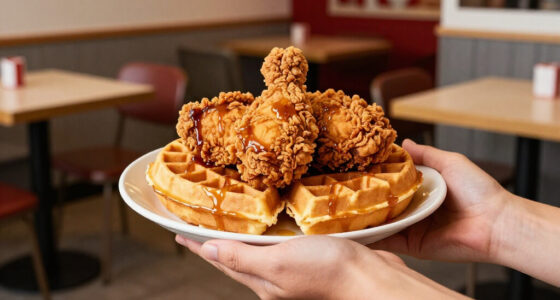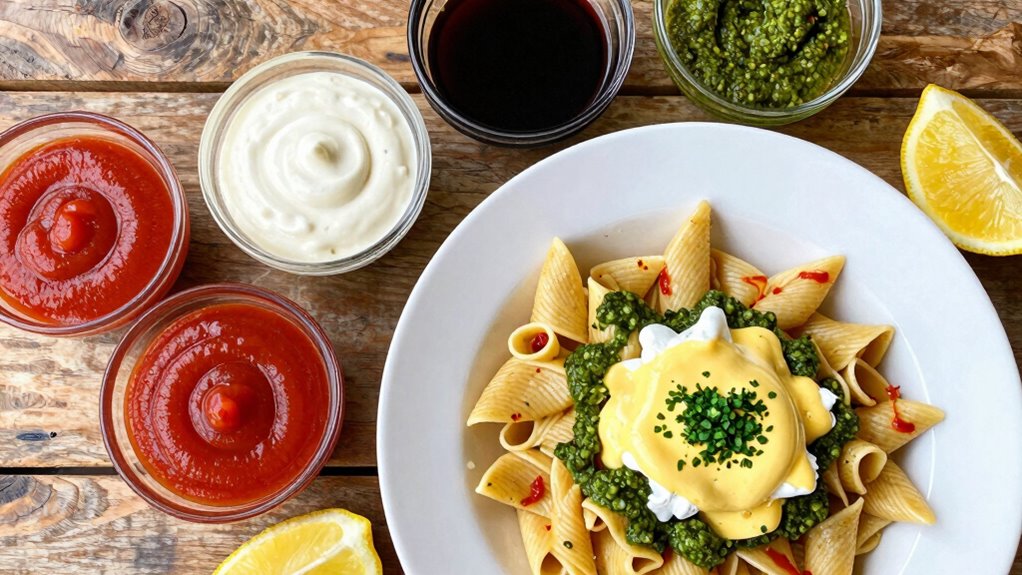

Using sauces and toppings can instantly refresh repeated meals by adding new flavors, textures, and colors. Small tweaks like drizzling a spicy sauce or sprinkling crunchy nuts transform familiar dishes into exciting new experiences. These simple adjustments allow you to explore flavor combinations and create variety without changing core ingredients. By playing with toppings and sauces, you keep your meals lively and satisfying. Stick around to discover more tips on how to keep your meals interesting and delicious.

Get kitchen staples and gadgets delivered free with Prime
- Fast, free delivery on millions of items
- Prime Video, Amazon Music and more included
- Member-only deals all year
Key Takeaways
- Sauces and toppings introduce new flavors and textures, transforming familiar dishes into exciting culinary experiences.
- They enable easy ingredient and flavor profile variations without changing the main recipe.
- Combining contrasting flavors like spicy and sweet enhances complexity and keeps meals interesting.
- Creative use of toppings adds visual appeal and sensory diversity, making dishes feel fresh.
- Small adjustments with sauces and toppings foster playful experimentation, preventing meal boredom over time.
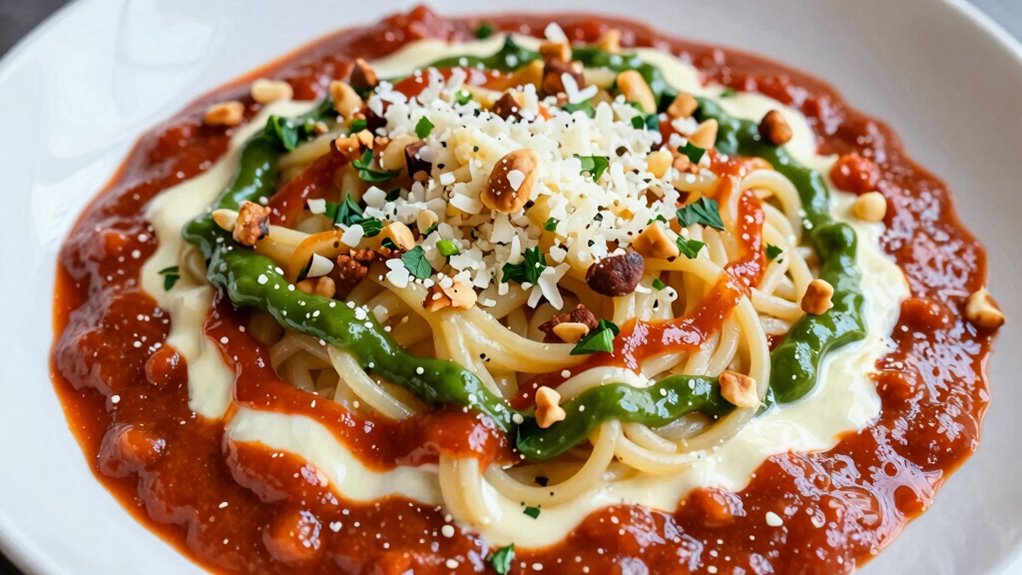
When you find yourself eating the same meals repeatedly, adding the right sauces and toppings can make all the difference. These small adjustments create fresh flavor combinations, transforming an ordinary dish into something exciting and new. It’s like giving your meals a makeover without changing the core ingredients. By experimenting with different sauces, you introduce new tastes—spicy, sweet, tangy, or creamy—that can completely alter the dish’s character. Toppings, too, provide an easy way to add texture, color, and flavor, making each bite more interesting. The key is to think of sauces and toppings as tools for creative variation, allowing you to explore different ingredient variations that suit your palate.
Small tweaks with sauces and toppings can refresh your meals and keep flavors exciting.
Flavor combinations are at the heart of this approach. For example, a basic grilled chicken can be elevated with a drizzle of tzatziki or a splash of hot sauce, adding layers of flavor that weren’t there before. A simple pasta can gain complexity with a dollop of pesto or a sprinkle of grated cheese and fresh herbs. The beauty lies in mixing and matching—sometimes pairing spicy with sweet, or creamy with crunchy—to create a balanced profile that keeps your taste buds engaged. You don’t need a whole new recipe; just a few different sauces or toppings can make the familiar feel fresh again. Additionally, understanding flavor pairing principles can help you create more harmonious and surprising flavor combinations. Exploring the science of flavor combinations can further enhance your ability to craft delicious and balanced meals. Recognizing these ingredient interactions allows for more deliberate and effective experimentation. Embracing ingredient versatility can also inspire you to try new combinations and discover unexpected favorites.
Ingredient variations are equally important. Instead of sticking to the same vegetables or proteins every time, you can swap in different options to keep things interesting. For instance, if you usually top your salads with croutons, try adding roasted nuts or crunchy seeds instead. Want to change up your burgers? Switch from classic ketchup to a tangy barbecue sauce or a spicy aioli. The versatility of sauces and toppings allows you to incorporate ingredient variations effortlessly, giving each meal a new twist without overhauling your entire plan. This approach not only prevents boredom but also encourages you to explore new flavor territories, especially when you experiment with flavor combinations and ingredient swaps.
Ultimately, the secret to making repeated meals feel fresh is to be playful with your sauces and toppings. They’re your shortcut to exciting flavor combinations and ingredient variations, giving you the power to reinvent simple dishes easily. Whether you’re drizzling, sprinkling, or dolloping, these small touches can turn an everyday meal into a delightful culinary experience every time. So next time you’re stuck in a meal rut, remember that the right sauces and toppings are your best tools for keeping things lively and delicious.
As an affiliate, we earn on qualifying purchases.
Frequently Asked Questions
How Can I Create My Own Unique Sauce Recipes?
To create your own unique sauce recipes, start by experimenting with flavor combinations you love, like sweet and spicy or tangy and savory. Use ingredient substitutions to add variety, such as swapping honey for maple syrup or soy sauce for tamari. Keep a small notebook of successful mixes, and don’t be afraid to tweak each recipe until it perfectly suits your taste. Creativity and a willingness to try new things are key!
What Are Some Healthy Topping Options?
Did you know that adding healthy toppings can boost your meal’s nutritional benefits by up to 30%? You can try ingredient swaps like Greek yogurt instead of sour cream, or sliced avocado for healthy fats. Fresh herbs, chopped nuts, and colorful veggies are also great options. These toppings not only enhance flavor but also provide essential nutrients, making your meals more balanced and satisfying.
How Do Sauces Affect Meal Shelf Life?
Sauces impact meal shelf life by helping preserve flavor and ingredient longevity. When you add a sauce, it can act as a barrier against air and moisture, slowing down spoilage. Properly stored sauces can extend the freshness of your meal, making leftovers last longer. Just make certain you keep them sealed and refrigerated, as this maintains their quality and prevents bacteria growth, keeping your meal tasty and safe for more days.
Which Toppings Work Best With Specific Cuisines?
You’ll be amazed how fusion flavorings and classic combinations transform your dishes! For Italian cuisine, try basil pesto or balsamic glaze; for Mexican, go for salsa or sour cream. Asian dishes shine with soy sauce, hoisin, or sesame seeds. In Indian meals, add chutney or yogurt. The right toppings elevate flavors and make each meal feel exciting, even if you’ve had it before.
How Can I Store Sauces and Toppings Longer?
To store sauces and toppings longer, you should use airtight storage containers to keep them fresh and prevent spoilage. Make sure to label each container with the date you made or opened it, so you can track freshness. Proper ingredient pairing in your containers helps preserve flavors. Keep sauces and toppings refrigerated, and for added longevity, consider freezing them in small portions for quick use later.
As an affiliate, we earn on qualifying purchases.
Conclusion
Next time you find yourself eating the same meal, remember that a splash of sauce or a handful of toppings can transform it completely. Think of a simple pasta turning into a flavorful masterpiece with just a dash of pesto or a sprinkle of cheese. Don’t let familiarity dull your appetite—embrace these small changes and awaken your taste buds. With a little creativity, your favorite dishes will always feel fresh and exciting, even on repeat.
As an affiliate, we earn on qualifying purchases.
As an affiliate, we earn on qualifying purchases.
Halloween Picks
halloween
As an affiliate, we earn on qualifying purchases.