
To keep your dough mixer performing well, regularly clean the beaters, dough hooks, and mixer body with warm, soapy water, making sure to dry everything thoroughly. Avoid excess moisture near electrical parts and inspect for damage or wear. Lubricate moving parts as recommended and run test batches to guarantee proper calibration. Consistent maintenance helps prevent performance drops and extends the life of your machine. Keep going to discover more tips for maintaining your mixer’s peak performance.

Get kitchen staples and gadgets delivered free — and shop member deals
- Fast, free delivery on millions of items
- Access to Prime Big Deal Days deals on October 6–7
- Prime Video, Amazon Music and more included
Key Takeaways
- Regularly clean beaters, dough hooks, and mixer components with warm, soapy water to prevent residue buildup.
- Wipe down the mixer body and electrical parts with a damp cloth, avoiding excess moisture near electrical elements.
- Perform periodic calibration by running test batches and adjusting settings to ensure consistent dough quality.
- Lubricate moving parts with food-grade lubricant and inspect mechanical components for wear or damage.
- Follow manufacturer guidelines for maintenance, keep parts dry, and conduct regular inspections to prolong mixer lifespan.
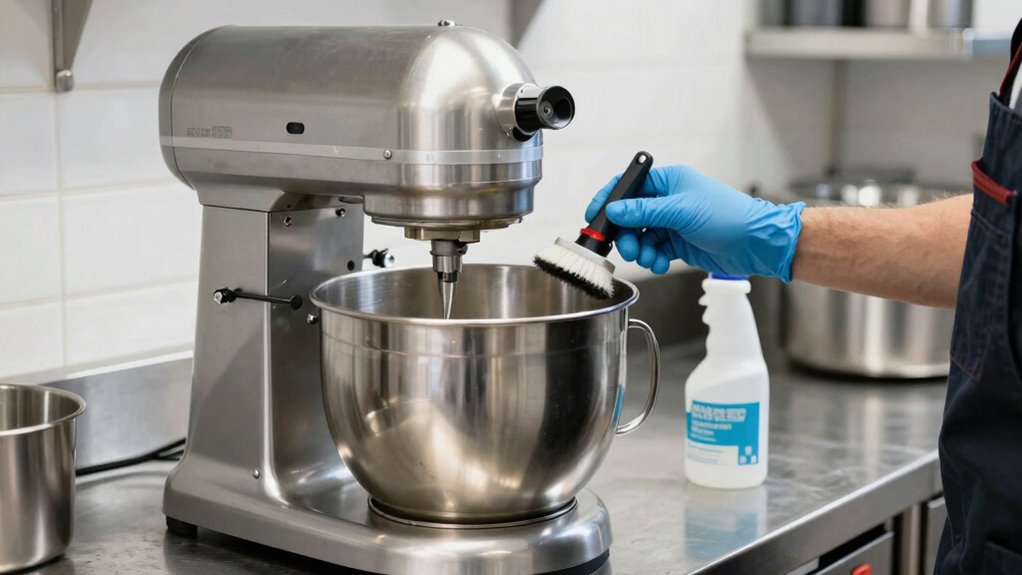
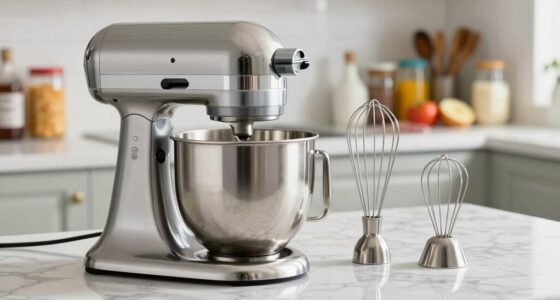
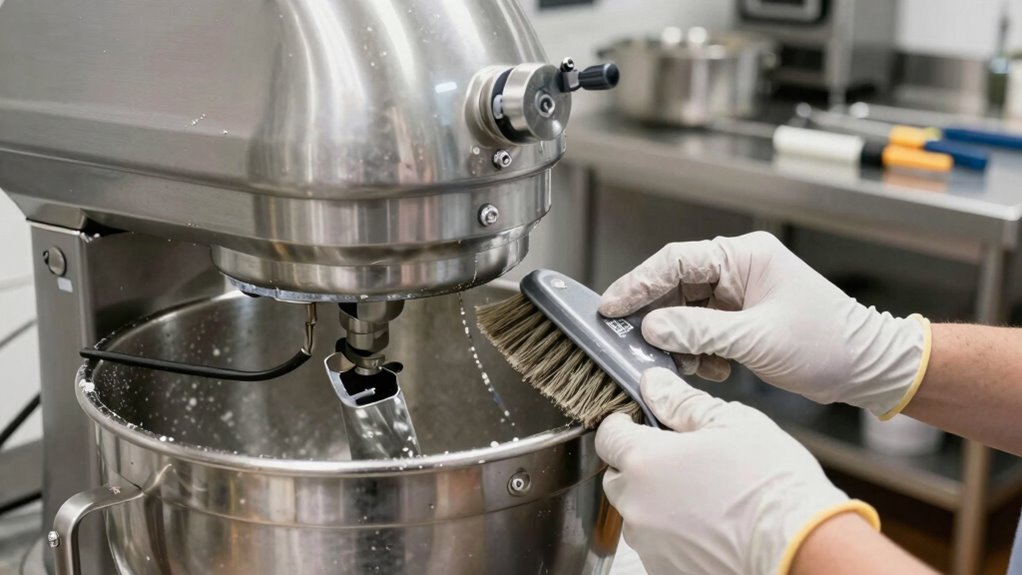
Cleaning and maintaining your dough mixer is essential to guarantee it operates efficiently and lasts longer. Regular upkeep prevents buildup of flour, dough residues, and grease that can compromise its performance over time. Start by disconnecting the mixer from the power supply, then carefully remove the beater or dough hook. Wash these parts with warm, soapy water, ensuring you scrub away any stuck dough or residue. Rinse thoroughly and dry completely before reattaching. This simple step keeps your mixer clean and reduces the risk of contamination or equipment malfunction.
Regularly clean and dry mixer parts to prevent contamination and ensure optimal performance.
Next, focus on the mixer’s body and motor housing. Wipe down surfaces with a damp cloth, avoiding excess moisture that might seep into electrical components. Pay special attention to the area around the attachments and the mixing bowl, as flour dust and dough bits tend to accumulate there. Keeping these areas clean helps maintain smooth operation and prevents clogging or overheating. Regular inspection of the power cord and switches is also crucial to ensure there are no frayed wires or damage that could pose safety hazards.
A key aspect of maintaining your dough mixer’s performance involves ensuring proper mixer calibration. Over time, the settings might drift, affecting the dough’s dough consistency and overall quality. Periodically check the calibration by running test batches of dough and observing the texture. If the dough appears too sticky or too dry, it could indicate the need for recalibration. Adjust the mixer’s speed or mixing time according to the manufacturer’s instructions to keep the dough consistency just right. Proper calibration not only guarantees uniform results but also reduces strain on the motor, extending its lifespan.
Lubrication is another critical maintenance step. Some mixers have grease points or moving parts that require regular lubrication to operate smoothly. Consult your user manual to identify these areas and apply food-grade lubricant as recommended. This reduces wear and tear, keeping the mixer running quietly and efficiently. Additionally, check the belts, gears, and other mechanical parts periodically for signs of wear. Replacing worn parts early prevents breakdowns and costly repairs down the line. Regular maintenance practices help ensure optimal performance and longevity of your dough mixer.
dough mixer beater cleaning brush
As an affiliate, we earn on qualifying purchases.
As an affiliate, we earn on qualifying purchases.
Frequently Asked Questions
How Often Should I Replace Mixer Parts?
You should replace mixer parts based on their part replacement intervals and signs of wear. Regularly check for issues and perform mixer lubrication to keep everything running smoothly. Typically, key components like gears or blades need replacement every 6 to 12 months, but this varies. Always follow your manufacturer’s guidelines, and don’t ignore unusual noises or decreased performance—these are signs it’s time for part replacement to maintain peak mixer performance.
Can I Use Water to Clean All Mixer Components?
You shouldn’t use water to clean all mixer components—doing so could turn your machine into a rusting, malfunctioning disaster! Water cleaning is great for removable parts like bowls and beaters, but avoid getting the motor or electrical components wet. For thorough component maintenance, use a damp cloth for non-electrical parts and specialized cleaning solutions where needed. Never submerge or soak parts that aren’t designed for water!
What Are Signs of Motor Failure in Dough Mixers?
You’ll notice motor failure signs like frequent overheating or the mixer shutting down unexpectedly. Motor overheating is common when the motor runs continuously without breaks, causing damage over time. Bearing wear, indicated by grinding noises or increased vibration, also signals trouble. If you see these signs, it’s essential to inspect and service your dough mixer promptly to prevent complete motor failure and keep it running smoothly.
Are There Specific Cleaning Products Recommended for Mixers?
You should use cleaning products that are compatible with your mixer’s surfaces and parts. Check your cleaning schedule to guarantee regular maintenance, and use mild, non-abrasive cleaners that won’t damage components. Avoid harsh chemicals that could corrode or weaken the machinery. Always follow the manufacturer’s recommendations for product compatibility, and rinse thoroughly to prevent residue buildup, which can affect performance over time.
How Do I Troubleshoot Unusual Noises During Operation?
Imagine your mixer singing a jarring tune—that’s your cue to troubleshoot. First, identify the noise source—are gears grinding or belts squealing? Use lubrication tips to oil moving parts, reducing friction that causes unusual sounds. Check for loose or worn components, tighten or replace as needed. Regularly inspecting and lubricating your mixer keeps it running smoothly, preventing noise from escalating into costly repairs and ensuring consistent, reliable performance.
As an affiliate, we earn on qualifying purchases.
Conclusion
By regularly cleaning and maintaining your dough mixer, you’re not just preserving its performance—you’re extending its life and ensuring every batch is perfect. Think of your mixer as a trusted companion; neglect it, and it falters. But give it proper care, and it’ll serve you faithfully, kneading your way to bakery-quality results. Remember, a well-maintained mixer isn’t just equipment—it’s the secret ingredient to your success. So, keep it clean, keep it running, and let your baking dreams rise!
As an affiliate, we earn on qualifying purchases.
As an affiliate, we earn on qualifying purchases.
NFL season / tailgating Picks
team gear
As an affiliate, we earn on qualifying purchases.