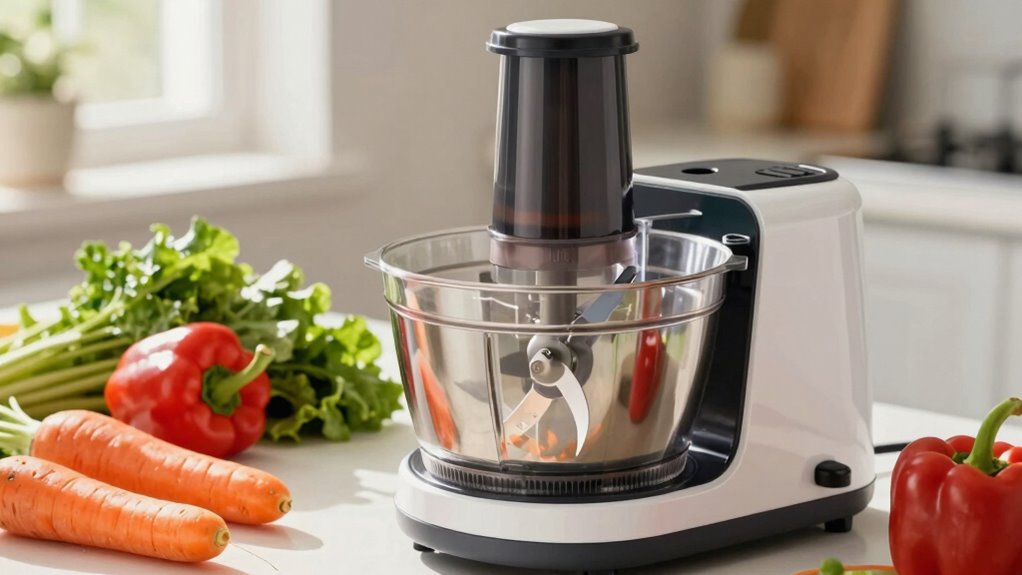
To avoid ruining your food, always unplug your processor before attaching or removing the blades, and make sure they’re properly aligned and securely locked in place. Clean the blades immediately after use to keep them sharp and prevent food buildup. Use a cloth or paper towel to handle the blades safely, and store them out of reach of children. Practicing these safety and maintenance tips will help you get perfect results—and there’s more to learn to perfect your process.
Key Takeaways
- Always unplug the processor before attaching or removing blades to prevent accidents and damage.
- Ensure the blade is properly aligned and securely clicked into place before processing.
- Clean blades immediately after use to maintain sharpness and prevent food residue buildup.
- Use the correct processing speed and pulse functions to avoid over-processing or uneven results.
- Store blades safely out of children’s reach and handle with care during assembly and disassembly.
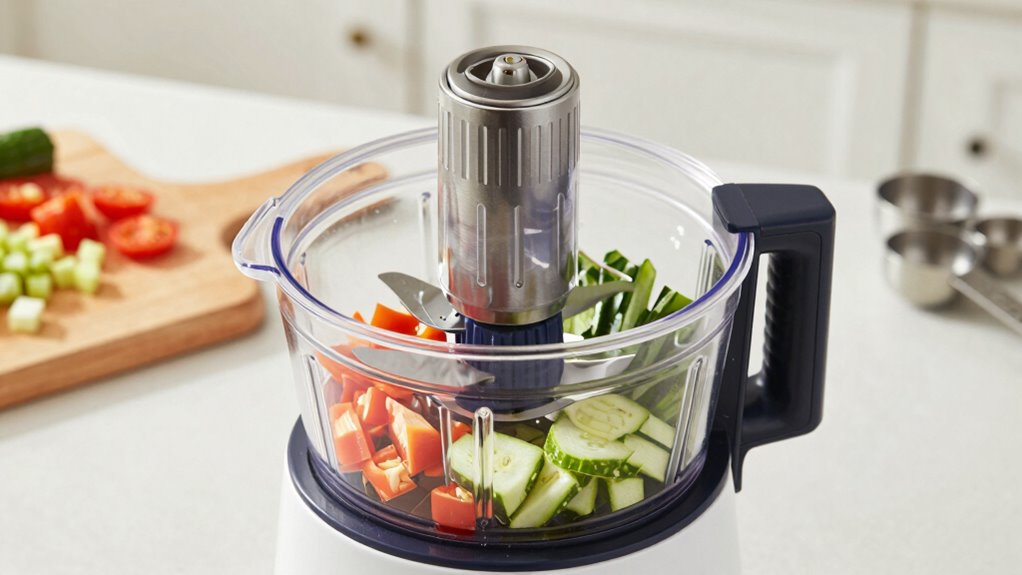
Starting with a food processor can be overwhelming, especially if you’re new to it. One of the first things you need to understand is how to handle the blade assembly properly. The blade assembly is a vital component because it’s responsible for chopping, slicing, or pureeing your ingredients. Always make certain the processor is unplugged before attaching or removing the blade to prevent accidents. When installing the blade, align it carefully with the central post and press down firmly until it clicks into place. If your model has a locking mechanism, make sure it’s securely engaged before you start processing. After use, carefully remove the blade by gripping its edges with a cloth or paper towel—never touch the sharp blades directly with your fingers. Cleaning the blade assembly immediately after use keeps it sharp and prevents food from drying on it, which can be difficult to remove later. Additionally, essential oils for cleaning can be used to safely disinfect and deodorize the blade and other parts of your food processor.
Another common mistake is neglecting cord storage. Many new users overlook the importance of properly storing the cord, which can lead to a cluttered kitchen and potential safety hazards. Most food processors come with a designated cord storage compartment or hooks built into the base. Always wind the cord neatly and secure it in its designated space after unplugging the appliance. This not only keeps your countertop tidy but also minimizes the risk of accidentally pulling the cord or knocking the processor over. Proper cord storage extends the lifespan of the cord and prevents wear and tear, which could lead to electrical problems down the line. If your model doesn’t have a built-in storage feature, consider using a cord wrap or a Velcro strap to keep it organized.
Getting familiar with these basics—correctly handling the blade assembly and practicing good cord management—sets a solid foundation for safe and effective use. When you follow manufacturer instructions for assembly and disassembly, you reduce the risk of damaging delicate parts or misplacing essential components. Remember, the blade is extremely sharp, so always handle it with care and store it safely out of reach of children. Proper cord storage prevents accidents and keeps your workspace clean, making your food processing experience more enjoyable and less stressful. As you become more comfortable with your food processor, these small habits will become second nature, helping you avoid common beginner mistakes and ensuring your appliances last longer.

Cuisinart Mini-Prep Plus Food Processor, 24-Ounce Mini Food Processor to Chop Herbs, Vegetables, and Hard Cheese, 24-Ounce Work Bowl, Reversible Stainless Steel Blade, DLC-2ABC, Brushed Chrome
SUPERIOR FUNCTION: The Cuisinart Mini-Prep Plus Food Processor offers an efficient 250-watt motor and patented reversible stainless steel...
As an affiliate, we earn on qualifying purchases.
Frequently Asked Questions
Can I Use My Food Processor for Hot Ingredients?
You can use your food processor for hot ingredients, but you need to prioritize food processor safety. Always let hot ingredients cool slightly before processing, and avoid filling the bowl too full to prevent splattering. Use the pulse function for better control and keep the lid securely in place. Never process boiling liquids directly, as they can cause burns or damage your appliance. Safety first guarantees your food stays intact and your processor lasts longer.
How Do I Clean the Blades Without Damaging Them?
To clean your food processor blades without damaging them, you should use gentle cleaning techniques focused on blade maintenance. Carefully detach the blades and rinse them with warm, soapy water immediately after use. Use a soft brush or sponge to scrub away residue, avoiding abrasive materials that can dull or scratch the blades. Dry thoroughly before storing. This guarantees your blades stay sharp and safe for future use.
Is It Safe to Overload the Food Processor?
Overloading your food processor is like trying to fit too many books in a small bag; it’s unsafe and can damage the machine. To guarantee overloading safety, always follow the manufacturer’s capacity guidelines. Avoid overstuffing ingredients, and make certain the blades have enough space to operate properly. Proper blade maintenance, like cleaning and inspecting regularly, helps your processor run smoothly and prevents motor strain or damage from overworking it.
What Should I Do if the Processor Won’T Turn On?
If your food processor won’t turn on, start by checking the power button troubleshooting to make certain it’s pressed firmly. Then, verify the electrical outlet check by plugging another device into the same outlet to see if it works. If the outlet is fine but the processor still won’t turn on, unplug it, inspect the cord for damage, and consider resetting the circuit breaker. If issues persist, consult the user manual or contact a technician.
How Long Can I Operate the Food Processor Continuously?
You should operate your food processor continuously for about 1 minute at a time. If you notice the motor overheating, turn it off and let it cool down for a few minutes before restarting. Avoid power cycling repeatedly, as it can strain the motor. Always follow your manufacturer’s guidelines, and don’t push the appliance beyond recommended durations to prevent damage and guarantee safe, efficient operation.
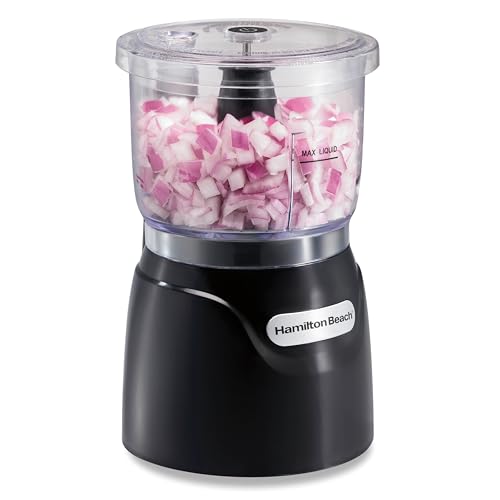
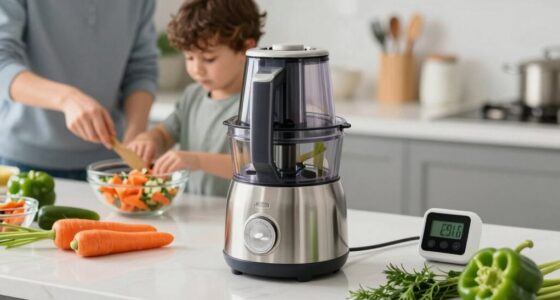
Hamilton Beach Electric Vegetable Chopper & Mini Food Processor, 3-Cup, 350 Watts, for Dicing, Mincing, and Puree, Black (72850)
Simply stack and press to chop: The patented stack & press design makes it easy to assemble and...
As an affiliate, we earn on qualifying purchases.
Conclusion
Remember, even the best chefs make mistakes early on—it’s part of learning. I once overfilled my processor and ended up cleaning a messy kitchen, much like a painter spilling paint on a masterpiece. But each slip taught me what not to do and brought me closer to mastery. So don’t fear mistakes; see them as stepping stones. With patience and practice, you’ll turn your food processor into a helpful tool, not a source of frustration.

Ninja Food Processor, Professional Plus, 1000 Peak Watts, 4 Functions for Chopping, Slicing, Purees & Dough with 9-Cup Processor Bowl, 3 Blades, Food Chute & Pusher, Silver, BN601
POWERFUL PERFORMANCE: Equipped with a 1000-peak-watt motor, this Ninja food processor effortlessly handles tough ingredients, ensuring smooth and...
As an affiliate, we earn on qualifying purchases.
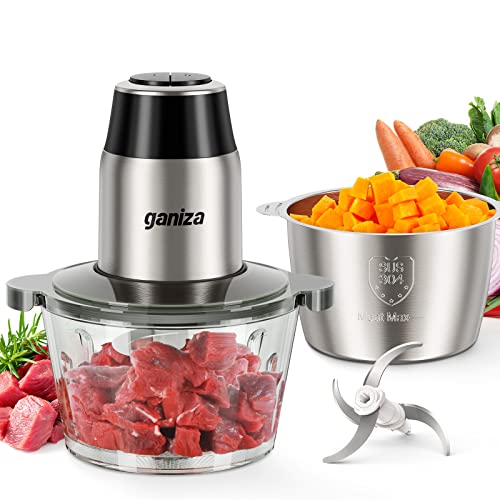
GANIZA Food Processors, Electric Food Chopper with Meat Grinder & Vegetable Chopper - 2 Bowls (8 Cup+8 Cup) with Powerful 450W Copper Motor - Includes 2 Sets of Bi-Level Blades for Fruits/Meat/Nuts
【Indispensable Kitchen Helper】GANIZA BPA-FREE food processor features 2 sets of blades and paired bowls (8-Cup glass bowl and...
As an affiliate, we earn on qualifying purchases.