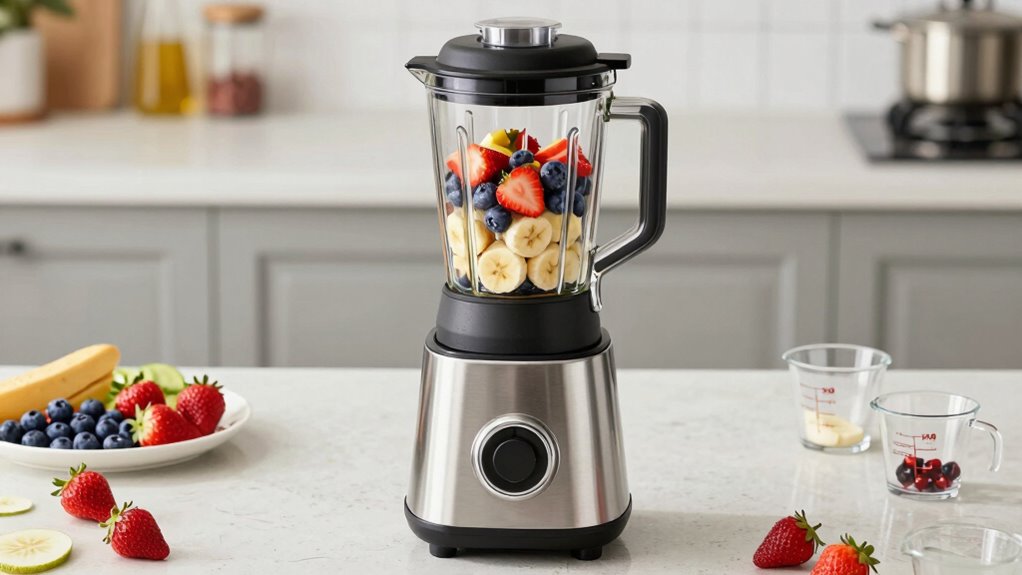

To avoid ruining food and damaging your high-speed blender, start by cutting ingredients into small, uniform pieces for even blending. Always add liquids first to create a vortex that helps ingredients move smoothly. Never overfill the jar—leave space at the top to prevent leaks. Use the correct speed for different textures, and never open the lid during operation. If you keep these tips in mind, you’ll blend like a pro—learn more to perfect your technique.
Key Takeaways
- Always cut ingredients into small, uniform pieces to ensure even blending and reduce motor strain.
- Add liquids first to create a vortex that pulls ingredients toward the blades for smoother results.
- Avoid overfilling the jar; leave space to prevent leaks and ensure proper mixing.
- Use appropriate speed settings based on ingredient toughness to prevent overprocessing or damage.
- Clean blades safely with a brush after unplugging the blender, avoiding damage and injury.
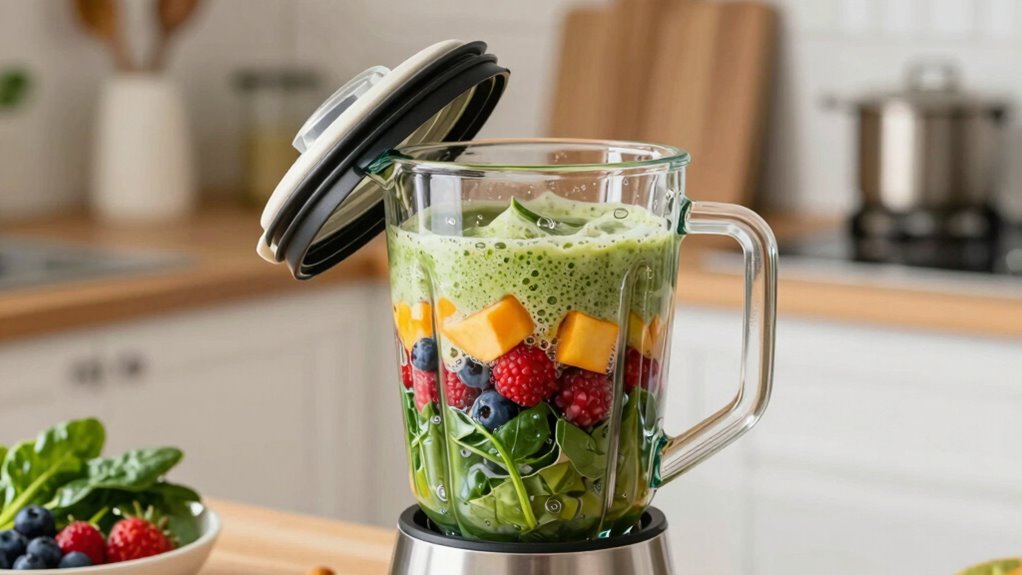
Starting with a high-speed blender can be exciting, but beginners often make common mistakes that can affect performance and results. One of the most important aspects to focus on from the start is blender safety. High-speed blenders are powerful tools, and mishandling them can lead to accidents or damage. Always guarantee the lid is securely in place before turning on the machine. Never open the lid while the blender is running, as splashes or sudden spills can occur. Keep fingers, utensils, or any objects away from the blade area when the blender is operating to prevent injuries or jamming. Also, be cautious when cleaning the blades—use a brush or sponge, and unplug the device beforehand to avoid accidental activation. By respecting blender safety, you protect yourself and extend the life of your appliance.
Another critical step is ingredient prep. Many beginners overlook this part, which can cause poor blending or strain the motor. Proper ingredient prep means cutting fruits and vegetables into smaller, uniform pieces. This not only helps the blender process everything evenly but also reduces stress on the motor, especially when blending tougher ingredients like nuts or fibrous greens. Removing seeds, pits, or stems beforehand prevents potential damage to the blades or motor and results in a smoother texture. Adding liquids first is another helpful tip—pouring in juice, milk, or water before solid ingredients creates a vortex that pulls everything toward the blades, making blending more efficient. Also, be mindful of overfilling the jar; filling it beyond the maximum capacity can lead to leaks or uneven blending. Always leave some space at the top for ingredients to move freely.
To further ensure optimal performance, understanding the mechanics of blending can help you troubleshoot issues and choose the right speed settings for different ingredients. Getting into the habit of prepping ingredients properly and prioritizing blender safety sets a strong foundation for successful blending. It’s tempting to toss everything in and hit the button, but careful ingredient prep prevents clogs, overworking the motor, or ruining your food. It also ensures your smoothies and sauces have the right texture. Keep in mind that high-speed blenders generate a lot of power quickly, so handling them with respect and care is essential. Follow these basic safety rules and prep routines, and you’ll enjoy seamless blending experiences, better-tasting results, and a longer-lasting appliance. Starting right means you’ll avoid common pitfalls and get the most out of your high-speed blender from day one.
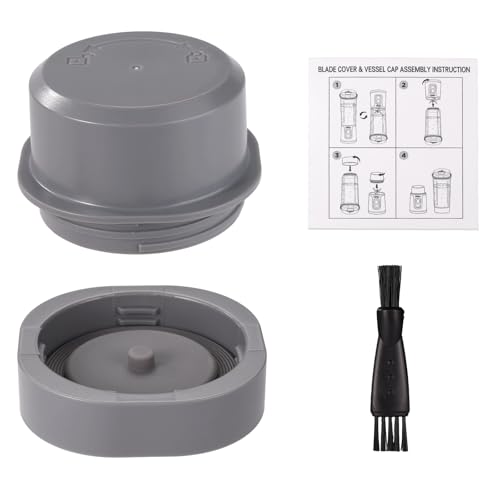
Sinbana Blade Cover and Vessel Cap Replacement for Ninja Blast Portable Blender, Leakproof Cups Replacement Parts with Cleaning Brush for BC100 & BC151 Series (Gray)
Complete Set: You will receive 1 blade cap, 1 container cap, 1 cleaning brush, and 1 manual, which…
As an affiliate, we earn on qualifying purchases.
As an affiliate, we earn on qualifying purchases.
Frequently Asked Questions
Can I Blend Hot Liquids Without Damaging the Blender?
Yes, you can blend hot liquids safely if you follow proper blender safety tips. Always leave some space in the lid for steam to escape, and start blending at a low speed before increasing. Use a heat-resistant blender and avoid overfilling to prevent splattering. Cooling hot liquids slightly before blending can also protect your blender and guarantee safe operation. Following these steps helps prevent damage and keeps you safe.
How Do I Clean a High-Speed Blender Properly?
They say a clean blender is a happy blender, and you should take that to heart. To clean your high-speed blender, fill it halfway with warm water and a drop of dish soap. Run it on high for a few seconds, then rinse thoroughly. Use cleaning accessories like a brush or sponge to scrub stubborn spots. Regular blender maintenance keeps your machine in top shape and ready for your next blend.
What Should I Do if the Blender Motor Overheats?
If your blender motor overheats, stop using it immediately to prevent damage. To handle this, implement overheating prevention by turning off the blender and unplugging it to allow the motor to cool down. Use cooling techniques like placing the blender in a well-ventilated area or gently cooling it with a damp cloth around the motor base. Avoid continuous use, and give it time to recover before blending again.
Are There Foods I Shouldn’T Blend Together?
While blending safety, you’ll want to avoid certain food combinations, like hot liquids with ice, as they can cause splattering or damage. Also, hard items like nuts or seeds should be blended separately to prevent overworking your blender. Fruits and dairy usually mix well, but avoid blending overly fibrous or tough ingredients together with delicate foods to maintain smooth texture and prevent motor strain. Always consider food compatibility for ideal results.
How Do I Prevent Leaks During Blending?
To prevent leaks during blending, always guarantee the blender lid is securely in place, checking for a proper fit. Make sure the blending container material is compatible with the ingredients you’re using, especially if you’re blending hot liquids or sticky foods. Avoid overfilling the container, as this increases spill risk. Proper blender lid safety and using the right container material help keep your blend contained and your kitchen mess-free.

Spring Chef Dough Blender For Baking, Heavy Duty Dough Cutter Tool, Stainless Steel Pastry Cutter Tool with Sharp & Sturdy Blades, Pastry Blender for Easy Mixing, Dishwasher Safe – XL Size – Black
Better Than Your Grandma's Dough Blender- High Quality pastry tool for cutting cold butter into flour or sugar…
As an affiliate, we earn on qualifying purchases.
As an affiliate, we earn on qualifying purchases.
Conclusion
So, as you start blending, remember these tips—it’s funny how often we stumble into the same mistakes. It’s almost like the blender’s whispering, “Watch out!” But don’t worry, each mishap is just a step closer to mastering it. Before you know it, you’ll be creating delicious smoothies effortlessly. Sometimes, the universe nudges us in the right direction—just like your newfound knowledge, guiding you to blend smarter, not harder. Happy blending!

25 Pack Cord Ends Bell Stopper with Lid Lock, Plastic Toggle Clip for Shoelace Clothes Trousers Pants Windbreaker Hoodie Drawstrings Rope Paracord Cord Ends Caps Cord Lock Accessories
Product Sytle: Bell Stopper Cord Lock Assorted.
As an affiliate, we earn on qualifying purchases.
As an affiliate, we earn on qualifying purchases.

BLACK+DECKER Countertop Blender with 6-Cup Glass Jar, 10-Speed Settings, Black, BL2010BG
12 SPEED SETTINGS WITH PULSE: Find the right consistency for everything you make with a range of blending…
As an affiliate, we earn on qualifying purchases.
As an affiliate, we earn on qualifying purchases.