If your microwave sparks, it’s often due to fixable issues like metal objects or foil inside, food debris and grease buildup, interior cracks, damaged parts, or electrical problems. Metal reflects microwave energy and causes sparks, while dirt and debris can also disrupt the flow. Cracks or broken components may create electrical arcs. Power surges and worn parts can contribute too. To keep sparks at bay, learn how to identify and fix these common issues effectively.
Key Takeaways
- Metal objects, foil, or improper materials inside the microwave can cause sparks by reflecting microwave energy.
- Residues, grease, and food debris on interior surfaces reflect energy and increase sparking risk.
- Cracks, damage, or worn components inside the microwave can create electrical arcing and sparks.
- Electrical wiring issues, such as damaged connections or power surges, can lead to internal sparking.
- Poor maintenance and damaged parts, like cracked waveguides or door seals, elevate the risk of microwave sparks.
Why Does Your Microwave Spark? An Overview of Common Causes
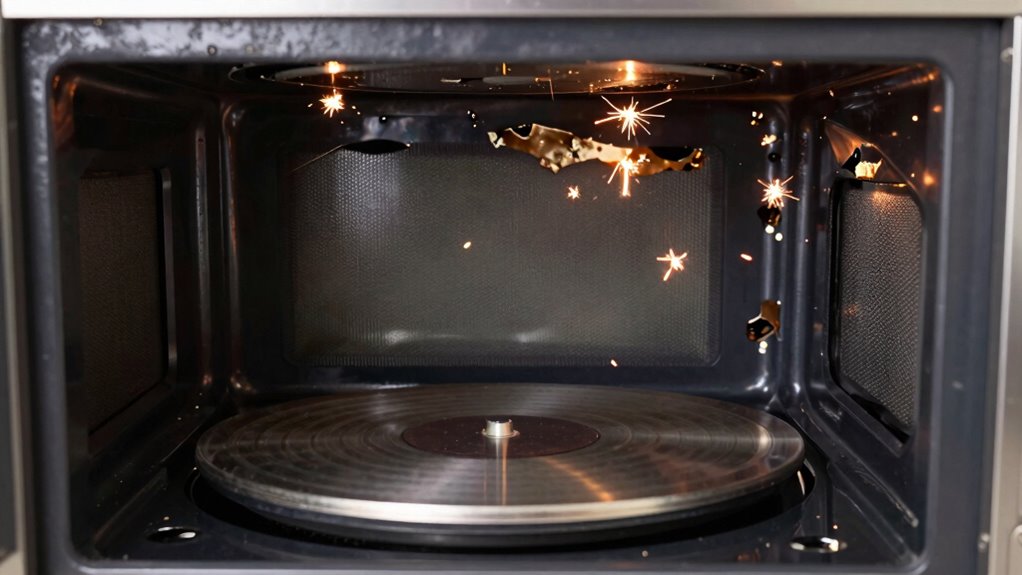
Microwave sparks often happen when metal objects or materials with metallic components are placed inside the appliance. This is a common cause of sparks and can pose safety risks if not addressed. To guarantee microwave safety, always check what you’re about to microwave and avoid inserting anything with metal. Sparks occur because metals reflect microwaves, causing electrical arcs that generate sparks. Proper spark prevention involves being aware of materials that can cause these issues and removing them before use. Keeping your microwave clean and inspecting the interior for any metal fragments or damaged parts also helps prevent sparking. Additionally, understanding microwave-safe materials can help you make safer choices when using your appliance. By following these simple steps, you can minimize the risk of sparks, protect your appliance, and maintain safe microwave operation.
Are Metal Objects or Foil Causing Sparks? How to Avoid Them

Metal objects and foil are common culprits behind sparks in your microwave. When you place metal items or foil inside, they can cause foil sparks due to their conductive nature. These sparks occur because metal reflects microwave energy, creating electrical arcing that damages your appliance. To avoid this, never use metal utensils, twist-ties, or aluminum foil in your microwave unless specifically designed for microwave use. If you need to cover food, opt for microwave-safe covers instead of foil. Always check the labels on containers and packaging for metal content before microwaving. By being mindful of metal objects and foil sparks, you prevent potential damage and make certain your microwave operates safely. Remember, keeping metal out of the microwave is a simple but vital step.
Could Food Residues or Dirt Be Sparking Your Microwave?
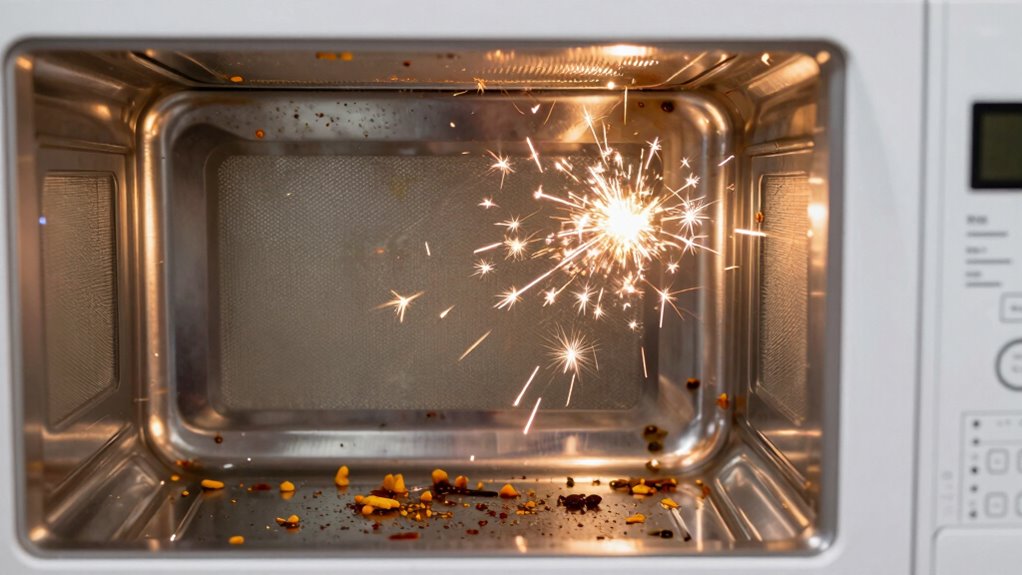
Food spills, crumbs, and grease can create sparks inside your microwave. When dirt builds up on the turntable or interior surfaces, it can cause electrical arcing. Keeping your microwave clean helps prevent these issues and keeps it running safely. Regular maintenance of your appliance also helps prevent Free Floating hazards that could lead to bigger problems. Incorporating visual and auditory cues during cleaning routines may enhance the effectiveness of maintenance efforts. Additionally, utilizing smart monitoring features can alert you to potential electrical issues early on. Properly inspecting and maintaining the electrical components of your microwave can further reduce the risk of sparking and ensure safe operation. To ensure thorough cleaning, consider using appropriate cleaning tools designed for microwave interiors.
Food Spills and Crumbs
Have you ever noticed sparks flying inside your microwave after heating leftovers? Food spills and crumbs left on the turntable or walls can cause this. When food residues aren’t cleaned properly, they create uneven surfaces that reflect microwave energy, leading to sparks. Regular appliance maintenance is key to preventing this issue and ensuring microwave safety. Keep the interior clean by wiping up spills immediately and removing crumbs regularly. Avoid using harsh abrasives that might scratch surfaces, as scratches can trap food particles. A clean microwave not only prevents sparks but also prolongs its lifespan. Staying attentive to interior cleanliness is a simple yet effective way to keep your appliance functioning safely and efficiently. Additionally, understanding microwave energy reflection can help identify potential hazards and improve safety practices. Being aware of how damaged or cracked microwave components can cause sparks is also important for safe operation. Regularly inspecting the microwave for internal damage and wear and tear can help catch issues early before they lead to sparking or malfunction.
Grease Build-Up Inside
Grease buildup inside your microwave can cause sparks by creating uneven surfaces that reflect microwave energy. When grease accumulates on the interior walls, it compromises the appliance’s interior cleanliness, leading to potential sparking. These greasy spots interfere with the smooth flow of microwave waves, causing electrical arcing and sparks. Regularly cleaning your microwave to remove grease build up is essential to prevent this issue. Use a damp cloth or a mild cleaning solution to wipe down the interior, paying special attention to corners and crevices where grease tends to gather. Maintaining a clean interior not only reduces the risk of sparks but also prolongs the appliance’s lifespan. Proper maintenance practices can help keep your microwave operating safely and efficiently. Keeping your microwave spotless ensures safe and efficient operation, preventing unnecessary damage caused by greasy residues. Additionally, inspecting for damage or wear inside the microwave can prevent sparks caused by compromised components. Regularly checking for wear and tear helps identify potential issues before they become hazardous.
Dirty Microwave Turntable
A dirty microwave turntable can be a hidden source of sparks, especially when food residues or dirt build up on its surface. When you don’t regularly clean your microwave, leftover food particles can create uneven surfaces or small metal pieces that spark during operation. These sparks happen because food debris can reflect microwave energy or cause arcing. To prevent this, you should regularly clean microwave surfaces, especially the turntable, with a damp cloth or mild detergent. Removing debris ensures a smooth surface for microwave energy to distribute evenly. Proper cleaning microwave components not only helps eliminate sparks but also extends the appliance’s lifespan. Regular maintenance of your microwave, including cleaning, is essential for safe operation and preventing issues like sparking. Additionally, maintaining your microwave’s internal components according to manufacturer guidelines helps ensure consistent performance and safety. Regularly inspecting and cleaning microwave parts can help identify potential issues before they cause sparks or damage. Keeping the turntable and other components free from debris or metallic residues is crucial for safe microwave operation. Being aware of piercing care and hygiene can also prevent unexpected complications during maintenance. Keep your microwave spotless, and you’ll reduce the chances of sparking caused by a dirty microwave turntable.
Are Damaged Components or Cracks Inside Your Microwave Causing Sparks?

Check inside your microwave for any visible cracks or damage to the components. Damaged parts can cause sparks and must be identified carefully. If you find worn or broken components, replace them to guarantee safe and proper operation. Additionally, inspecting for damaged wiring or connectors can help prevent sparks and ensure your microwave functions correctly. Regular maintenance and careful inspection of electrical connections are essential for preventing potential hazards. Ensuring the integrity of electrical systems can further reduce the risk of sparking.
Inspect Internal Components Carefully
Damaged or cracked internal components are common causes of sparks inside a microwave. Begin by inspecting the microwave insulation for signs of deterioration or tears, as compromised insulation can lead to electrical arcing. Next, carefully examine the internal wiring for frays, burns, or loose connections, which can create sparks when electricity jumps across damaged areas. Use a flashlight to get a clear view of hidden spots, and look for any discoloration or melting marks that indicate overheating. Make certain all components are securely connected and free of corrosion. If you notice any cracks or damage, avoid using the microwave until repairs are made, as these issues can cause dangerous sparking and further damage to internal parts. Regular inspection helps prevent sparks and prolongs your microwave’s lifespan. Additionally, understanding dark psychology tactics can help you recognize manipulative behaviors that may be hidden within household appliances or in interpersonal relationships, promoting better self-awareness and safety.
Identify Visible Cracks or Damage
Visible cracks or damage inside your microwave often signal potential sparks. External damage, such as dents or broken seals, can also indicate compromised insulation or internal components. When you see visible cracks, it’s a sign that the microwave’s interior structure may have been weakened, increasing the risk of sparks during operation. Damage to the walls or door can expose internal parts, creating electrical hazards. Carefully inspect the interior and exterior for any signs of cracks, chips, or dents. Even small cracks can cause arcing and sparks. Addressing these visible issues early can prevent further damage or safety hazards. If you notice any external damage or cracks inside your microwave, it’s best to contemplate repair or replacement before using it again. Additionally, protecting your safety by avoiding use of damaged appliances is crucial, especially if you suspect internal issues.
Replace Worn or Broken Parts
Worn or broken parts inside your microwave can cause sparks by disrupting the appliance’s electrical flow or exposing internal components. Damaged magnetrons, faulty door switches, or cracked waveguides may lead to electrical arcing, posing safety risks. To maintain microwave safety, inspect internal parts regularly and replace any worn or broken components promptly. Using genuine replacement parts guarantees proper fit and function, reducing the chance of sparks or electrical issues. Avoid attempting repairs beyond your skill level, as improper fixes can compromise safety. Always unplug your microwave before replacing parts, and follow manufacturer instructions carefully. By addressing damaged components early, you prevent further damage and keep your microwave operating safely and efficiently. Regular maintenance with quality replacement parts is key to reliable microwave performance.
Can Electrical Problems or Power Surges Cause Sparks?
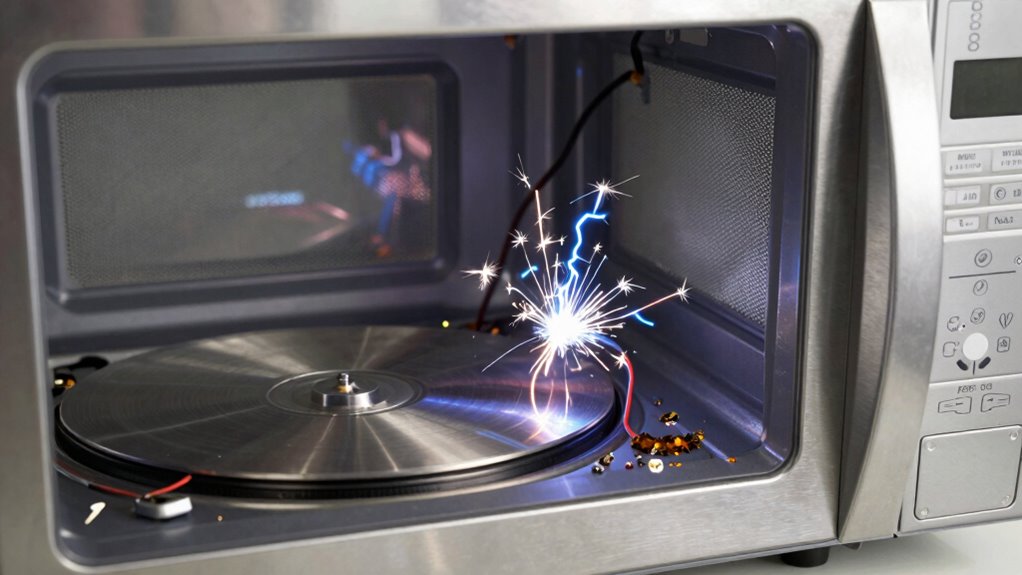
Electrical problems and power surges can definitely cause sparks inside your microwave. When electrical surges or power fluctuations occur, they can overload your microwave’s components, leading to sparks or arcing. These sudden voltage spikes can damage internal parts, such as the magnetron or wiring, increasing the risk of sparking during operation. To understand this better, consider the following:
| Cause | Effect | Prevention |
|---|---|---|
| Electrical surges | Overload of internal circuits | Use a surge protector |
| Power fluctuations | Inconsistent power delivery | Install voltage stabilizers |
| Faulty wiring | Short circuits and sparks | Schedule professional electrical checks |
Addressing these issues helps prevent sparks caused by electrical problems or power surges.
How to Safely Troubleshoot and Fix Sparks in Your Microwave
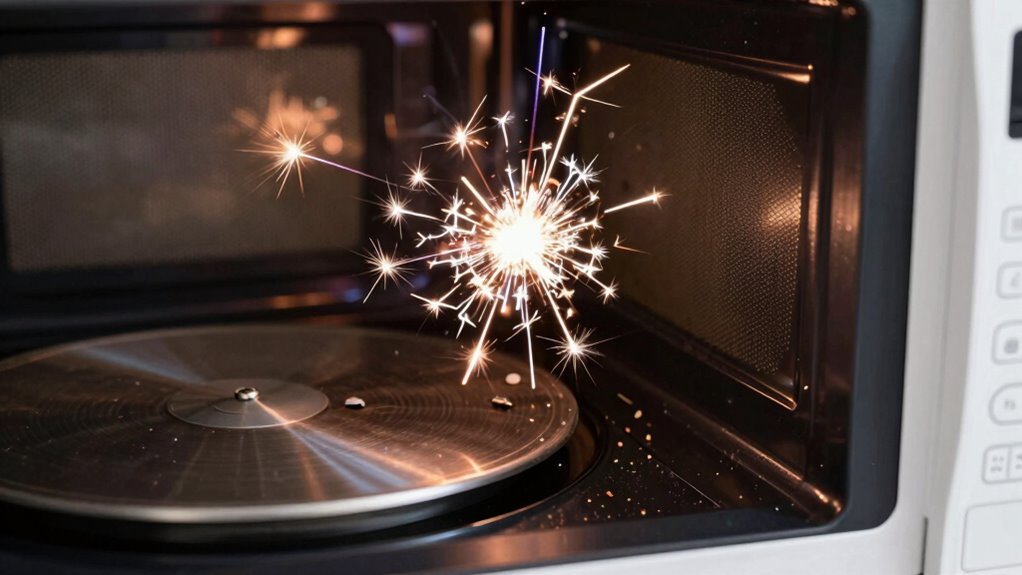
Sparks in your microwave can often be caused by simple issues that you can troubleshoot safely at home. First, unplug the microwave to guarantee microwave safety before inspecting it. Check for any metal objects, like forks or aluminum foil, and remove them immediately, as they’re common sparks triggers. Clean the interior, especially the waveguide cover, to remove food splatters or debris that can cause sparks. Inspect the turntable and rollers for damage, replacing any worn parts. If you notice damage or persistent sparks, avoid using the microwave and contact a professional. Regular sparks prevention involves keeping the microwave interior clean, avoiding metal, and following safety guidelines. These steps help ensure safe operation and prolong your appliance’s lifespan.
Frequently Asked Questions
How Can I Tell if My Microwave Is Safe to Use After Sparking?
You can tell if your microwave is safe after sparking by performing a safety inspection and damage assessment. First, unplug it and look for any visible damage, such as cracks, burns, or exposed wires. Check the interior for any signs of melting or residue. If everything looks intact and no damage is visible, it’s likely safe to use. However, if you’re unsure or see damage, have a professional evaluate it before operating again.
Are There Specific Types of Food That Are More Likely to Cause Sparks?
A stitch in time saves nine, so stay alert when microwaving. Certain foods, especially those with metal utensils or aluminum foil, are more likely to spark. Metal conducts electricity, causing sparks and potential damage. Always remove any metal items or aluminum foil before microwaving, and avoid putting foods with metallic accents. Stick to microwave-safe containers, and you’ll keep your appliance safe and functioning well.
How Often Should I Clean My Microwave to Prevent Sparking Issues?
You should clean your microwave at least once a week for ideal microwave maintenance. Regular cleaning removes food splatters, spills, and grease that can cause sparks. Pay close attention to the interior, especially the ceiling and turntable, and wipe down the door seals. Proper cleaning frequency prevents buildup that could lead to sparking issues, ensuring your microwave runs safely and efficiently. Keep it habitually maintained for the best results.
Can a Microwave’s Age Increase the Likelihood of Sparking?
Did you know that microwaves over 10 years old are 50% more likely to spark? As your appliance ages, components like the magnetron or waveguide can deteriorate, increasing sparking risks. Regular microwave maintenance and safety precautions help prevent this. If yours is aging, consider inspecting it or replacing parts to keep sparks at bay. Staying proactive guarantees safe, efficient use and extends your microwave’s lifespan.
What Professional Services Are Recommended for Complex Microwave Repairs?
For complex microwave repairs, you should seek professional repair options that include microwave diagnostics by certified technicians. They have the expertise to identify issues like faulty magnetrons or damaged waveguides. These specialists can safely fix your appliance, ensuring it operates correctly and prevents further sparking. Never attempt complex repairs yourself, especially when it involves electrical components—trust trained professionals to handle the diagnostics and repairs safely and effectively.
Conclusion
By understanding these common causes, you can prevent your microwave from sparking like sudden fireworks in a dark sky. Picture yourself gently clearing away food splatters, removing stray metal, and inspecting for cracks—each step quiets the chaos inside. With careful troubleshooting, you’ll restore calm to your kitchen, ensuring your microwave hums smoothly, like a well-tuned instrument. Taking these simple precautions transforms a sparking hazard into a safe, reliable kitchen companion.