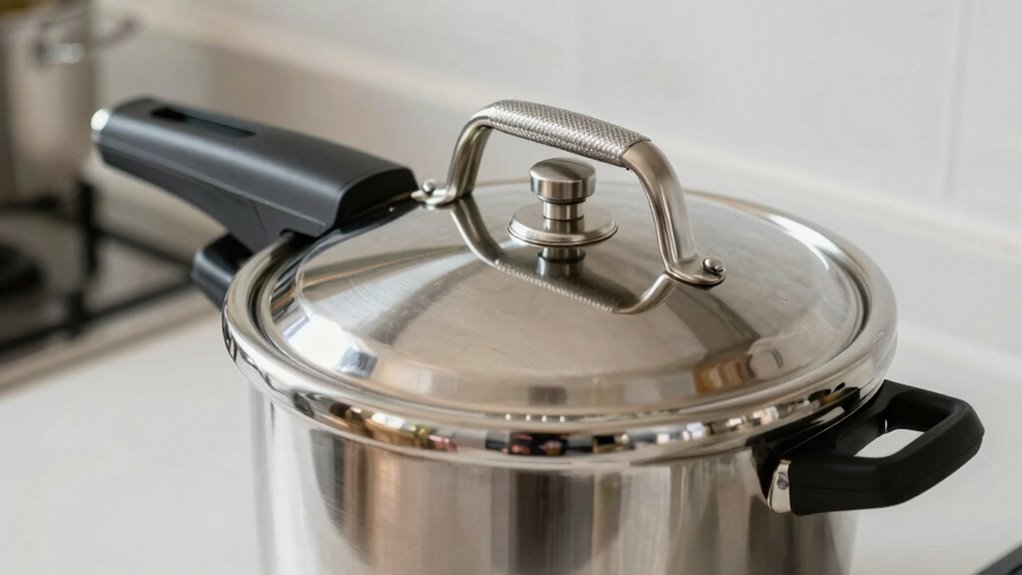

If your pressure cooker lid is stuck, avoid forcing it open to prevent damage or injury. First, turn off the heat and let it cool naturally until all pressure has fully released, indicated by steam subsiding and the safety mechanism disengaging. Use gloves and gentle tools to pry or adjust the lid if necessary, but always prioritize safety. If you want to learn more about safe removal techniques and tips, keep exploring helpful strategies to protect your cooker and yourself.

Get kitchen staples and gadgets delivered free — and shop member deals
- Fast, free delivery on millions of items
- Access to Prime Big Deal Days deals on October 6–7
- Prime Video, Amazon Music and more included
Key Takeaways
- Turn off heat and let the pressure release naturally, avoiding forcing the lid open while steam or pressure remains.
- Inspect and clean the vent and sealing components to ensure proper pressure release and prevent blockages.
- Use protective gloves and gentle pry tools, like plastic spatulas, to carefully loosen a stuck lid without damage.
- Confirm all pressure has fully subsided, indicated by steam stopping and the pressure indicator dropping, before attempting to open.
- Regularly maintain the gasket and hinges, and avoid forcing the lid, to ensure safe and easy opening in future uses.
pressure cooker lid removal tool
As an affiliate, we earn on qualifying purchases.
As an affiliate, we earn on qualifying purchases.
Why Is My Pressure Cooker Lid Stuck? Common Causes Explained
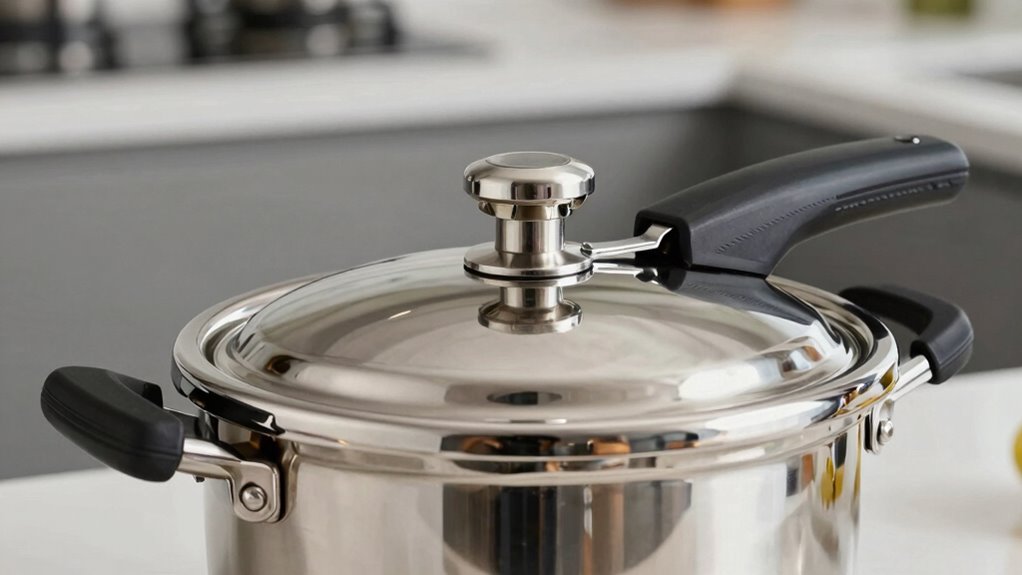
If your pressure cooker lid is stuck, several common causes could be to blame. One major reason is pressure build-up inside the cooker, which can make the lid difficult to open if it hasn’t fully released. Sealing issues are also a frequent culprit; if the gasket isn’t properly aligned or damaged, it can create a vacuum seal that keeps the lid stuck. Sometimes, food debris or residue obstructs the sealing ring, preventing proper pressure release. Additionally, overfilling the cooker or cooking at too high a temperature can cause excessive pressure buildup, making opening unsafe. These factors often lead to a tight seal that doesn’t easily release, so understanding these causes helps you troubleshoot without forcing the lid and risking injury.
pressure cooker gasket replacement
As an affiliate, we earn on qualifying purchases.
As an affiliate, we earn on qualifying purchases.
How Can I Safely Check for Steam Buildup and Release It?
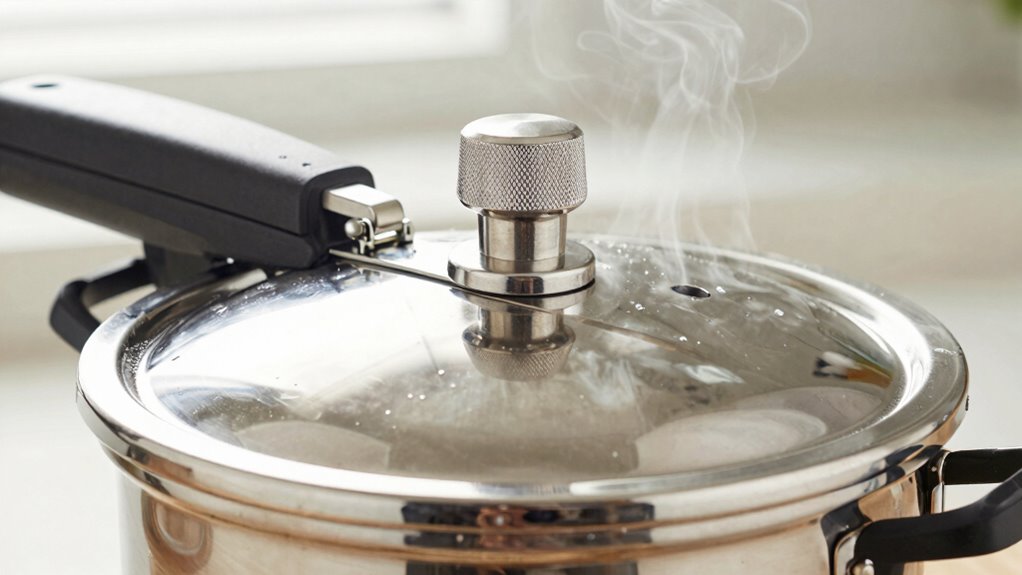
Before trying to open your pressure cooker, identify the steam release points and make certain they’re clear. Check for any blockages carefully to avoid sudden releases, and always wear protective gear to stay safe. Taking these steps helps you release steam safely and prevents accidents. Additionally, understanding the importance of free floating mechanisms can assist in troubleshooting issues without forcing the lid. Being aware of the pressure build-up process can help you better gauge when it’s safe to open the cooker. Recognizing signs of ear wax odor or other unusual smells can also alert you to potential safety concerns or health issues related to your cooking environment. Monitoring safety mechanisms can further prevent mishaps during operation, especially since some models incorporate automatic pressure release features for added security.
Identify Steam Release Points
To safely check for steam buildup in your pressure cooker, start by identifying the designated steam release points, typically the pressure release valve or vent. These are the areas designed for controlled steam escape, preventing dangerous pressure levels. Before opening or handling your cooker, ensure it’s turned off and cooled slightly to avoid burns. Follow safety precautions by inspecting these points visually for any blockages or obstructions. Make sure the release valve moves freely and isn’t clogged with food debris. Never attempt to disassemble or force these points open. Confirm that the steam release points are functioning properly, and listen for a consistent hissing sound, indicating steady steam release. Proper identification and maintenance of these points are essential for safe pressure cooking. Additionally, regular inspection and cleaning of the pressure release components can help prevent malfunctions and ensure safe operation. Being aware of pressure regulation mechanisms can further improve your safety during pressure cooking. Checking the venting system regularly ensures that the cooker maintains safe pressure levels and functions correctly. Ensuring the safety mechanisms are in working order adds an extra layer of security to the process. It’s also beneficial to familiarize yourself with your specific pressure cooker model’s user manual to understand its unique safety features and procedures.
Check for Blockages Safely
Ensuring there are no blockages in your pressure cooker’s steam release points is essential for safe operation. To check safely, first put on safety gloves to protect your hands from hot steam. Use proper venting techniques by gradually releasing pressure and observing the steam flow. Look for signs of blockage, such as uneven or no steam escaping.
- Remove the lid carefully, keeping your hands protected with gloves
- Inspect the steam vent and pressure release valve for debris or buildup
- Gently clear any obstructions with a non-metallic brush or toothpick, avoiding force
Always vent slowly and cautiously, never rush the process. If you notice persistent blockages, consider professional servicing before attempting to use the cooker again. Proper venting techniques ensure safety and prevent lid sticking issues.
Use Protective Gear
When checking for steam buildup and releasing pressure, always wear protective gear to keep yourself safe from hot steam and splashes. Safety precautions are essential because releasing pressure can suddenly release hot liquid or steam. Put on heat-resistant gloves to protect your hands, and wear safety goggles to shield your eyes from potential splashes. An apron or long sleeves can help prevent burns from hot steam or liquid. Using protective gear ensures you handle the process confidently and safely, reducing the risk of injury. Before opening the valve, ensure the pressure has dropped and you’re fully protected. Remember, safety precautions aren’t optional—they’re crucial when working with steam and pressure cookers to prevent burns and accidents.
As an affiliate, we earn on qualifying purchases.
How to Use Natural Cooling to Release Pressure and Open the Lid
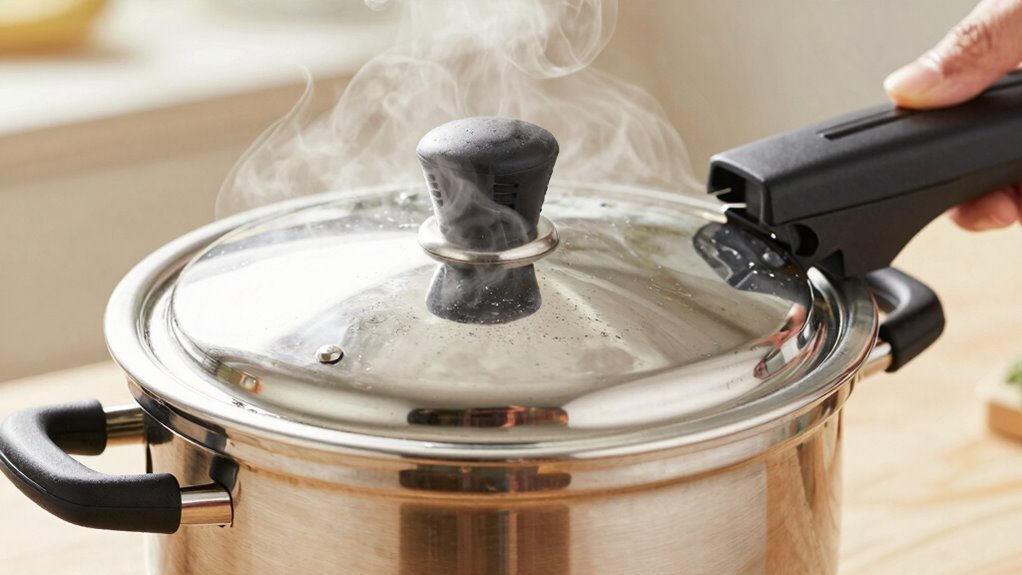
Once you’ve finished cooking, turn off the heat and let the pressure decrease naturally. You should wait until the steam subsides completely before attempting to open the lid. Never force it open while steam or pressure remains inside. Ensuring all safety procedures are followed helps prevent accidents and keeps you safe during the process. Additionally, understanding modern safety features in pressure cookers can aid in more secure operation. Being familiar with pressure release mechanisms can further ensure you handle the device safely and effectively. Recognizing the pressure buildup process can also help you anticipate when it’s safe to open the lid. Familiarity with pressure regulation helps you better manage the release process and avoid mishaps.
Allow Natural Pressure Release
If your pressure cooker lid is stuck, allowing it to cool naturally is often the safest way to release pressure. As it cools, the pressure buildup inside diminishes, making the lid easier to open. While waiting, you can observe a few signs:
- Steam gradually escaping from the valve without force
- The gauge needle moving toward zero
- The cooker’s temperature dropping visibly
- The pressure release process can vary depending on the model and amount of food inside, so patience is essential. Understanding connected home fitness principles emphasizes the importance of a gradual, safe approach to managing pressure.
During this process, it’s important to inspect the gasket for any signs of damage or warping, ensuring it seals properly next time. Patience is key; rushing can damage components or cause accidents. Once the pressure fully subsides and the cooker cools, you should be able to open the lid safely without forcing it. Understanding pressure release methods can help you handle stuck lids more confidently and safely.
Wait for Steam to Subside
Allow the pressure cooker to cool naturally by letting it sit undisturbed until the steam begins to subside. This process guarantees a safe pressure release, reducing the risk of accidents. As the cooker cools, steam safety remains a priority—avoid opening or forcing the lid while steam is still escaping. You’ll notice the hissing sound diminishing as the pressure drops. Wait patiently until the pressure indicator signals that it’s safe to open. During this time, don’t attempt to speed up the process by releasing additional pressure manually. Natural cooling is the safest way to let the steam subside, preventing burns or damage. Understanding pressure release is key to safe operation. Once the pressure has fully released and no more steam escapes, you can confidently proceed to open the lid without risking safety. Additionally, pressure regulation mechanisms ensure the cooker maintains safe levels during cooling.
Avoid Forcing the Lid
To prevent accidents or damage, never force the lid open while the pressure cooker is still releasing steam or under pressure. Instead, use natural cooling methods to safely release pressure and open the lid. As the pressure drops, you’ll notice the steam subsiding, the float valve lowering, and the cooker feeling less tense. Imagine the gentle release of heat, the soft hissing fading, and the cooker easing to a cooler, safer temperature. Proper pressure release is essential for pressure cooker safety and maintaining lid integrity. By allowing this process to happen naturally, you avoid damaging the lid or compromising its seals. Remember, patience ensures safe lid removal and prolongs the lifespan of your pressure cooker. Natural cooling techniques help prevent sudden pressure release, reducing the risk of accidents. Using pressure regulation methods ensures a controlled and safe depressurization process, especially when you understand the importance of topical authority in maintaining safety standards.
pressure cooker vent cleaning kit
As an affiliate, we earn on qualifying purchases.
As an affiliate, we earn on qualifying purchases.
What Are the Steps to Gently Realign or Unlock a Jammed Lid?
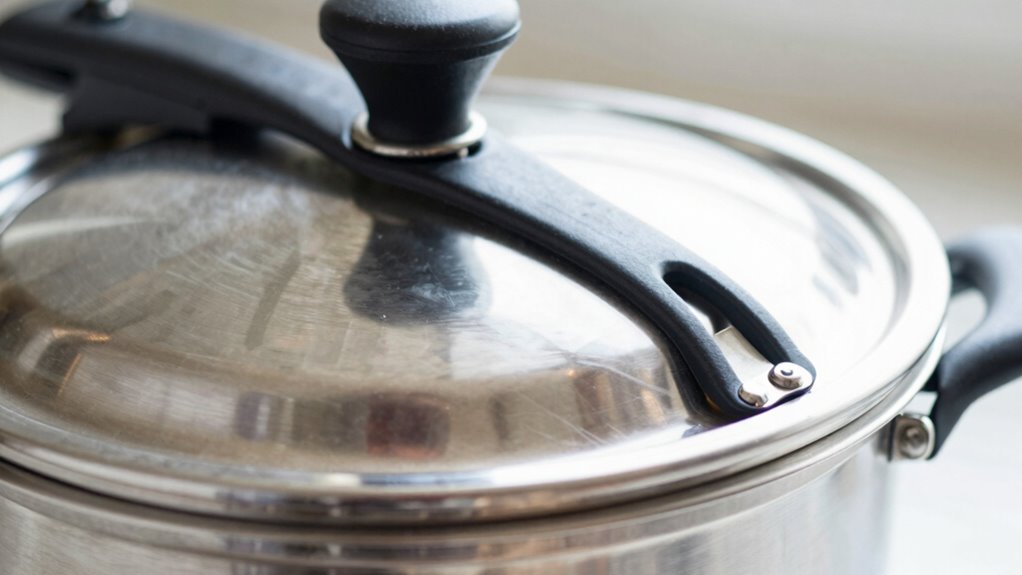
When a pressure cooker lid becomes jammed, it’s important to handle it carefully to avoid damage or injury. Start by checking the lid’s alignment with the cooker body, ensuring it’s properly positioned. If it’s misaligned, gently adjust the lid by realigning the hinge. Carefully inspect the hinge adjustment to see if it’s bent or out of place. If needed, gently tighten or loosen the hinge screws, but avoid forcing them. Sometimes, a slight tilt or shift can free the lid. Be patient and avoid applying excessive force. Taking these gentle steps helps realign the lid safely, reducing the risk of damage or injury while ensuring proper sealing and pressure release.
Which Tools and Techniques Can Help Open a Stuck Pressure Cooker Lid?

What tools and techniques can you use to open a stuck pressure cooker lid? First, ensure your safety gloves are on to protect your hands. You might try using pry tools—flat, thin tools designed to gently lift the lid without damage. Carefully insert the pry tool between the lid and the cooker, applying even pressure to loosen the seal. Visualize these options:
- A plastic or silicone spatula to gently pry without scratching.
- A flat screwdriver wrapped with a cloth for added grip and protection.
- A rubber mallet to gently tap around the lid edge, encouraging it to release.
These tools help you avoid forcing, reducing the risk of damage or injury. Remember, patience and gentle techniques are key to safely opening a stuck pressure cooker lid.
What Precautions Should I Take to Avoid Damage and Stay Safe?
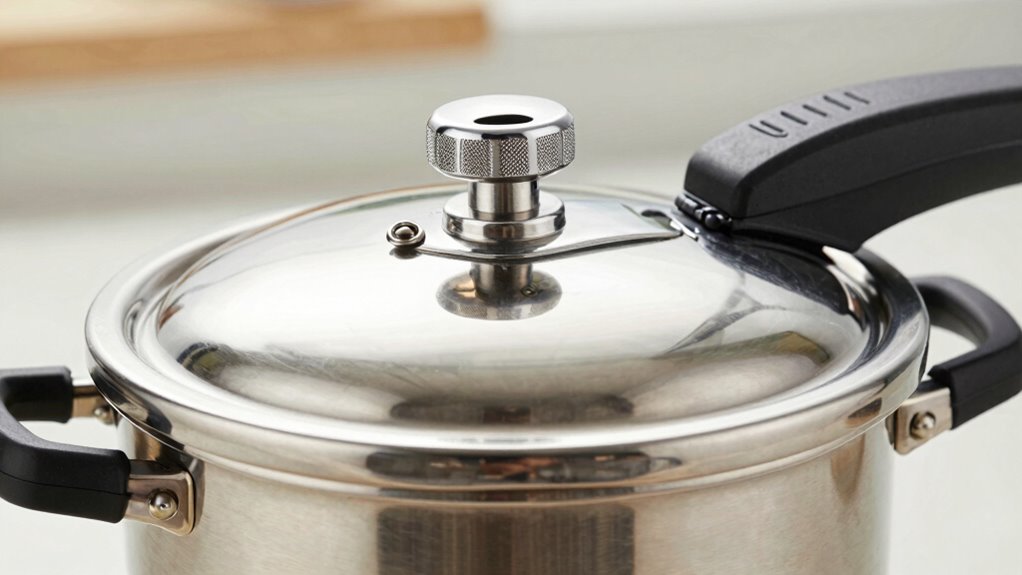
Since forcing the lid can cause damage or injury, taking proper precautions is essential before attempting to open a stuck pressure cooker. First, confirm the cooker has fully depressurized to avoid accidents. Handle external damage carefully; avoid applying excessive force that could worsen issues. Regularly inspect and maintain seals to prevent leaks or sticking.
Here’s a quick checklist:
| Precaution | Why it’s important |
|---|---|
| Check for external damage | Prevent worsening damage or leaks |
| Ensure complete depressurization | Avoid sudden releases or injuries |
| Maintain seals regularly | Keep lid secure and functioning properly |
| Use gentle techniques | Minimize risk of damage or harm |
Troubleshooting Persistent Lid Issues: When to Call a Professional

Even after taking all the recommended precautions, you might still find yourself unable to open a pressure cooker lid due to persistent issues. If gentle methods and proper pressure release don’t work, it’s time to call a professional. They can perform thorough pressure cooker maintenance and lid seal inspection, guaranteeing safety and functionality. Imagine:
- A technician carefully examining the lid and gasket for damage
- Using specialized tools to release stubborn pressure or realign parts
- Conducting detailed inspections to identify hidden issues that aren’t obvious
Persistent lid problems could indicate a faulty seal or internal damage that’s unsafe to ignore. Avoid forcing the lid, which can cause further damage or safety hazards. Trust the experts to handle complex repairs and ensure your pressure cooker is safe to use again.
Tips to Keep Your Pressure Cooker Lid Easy to Open in the Future
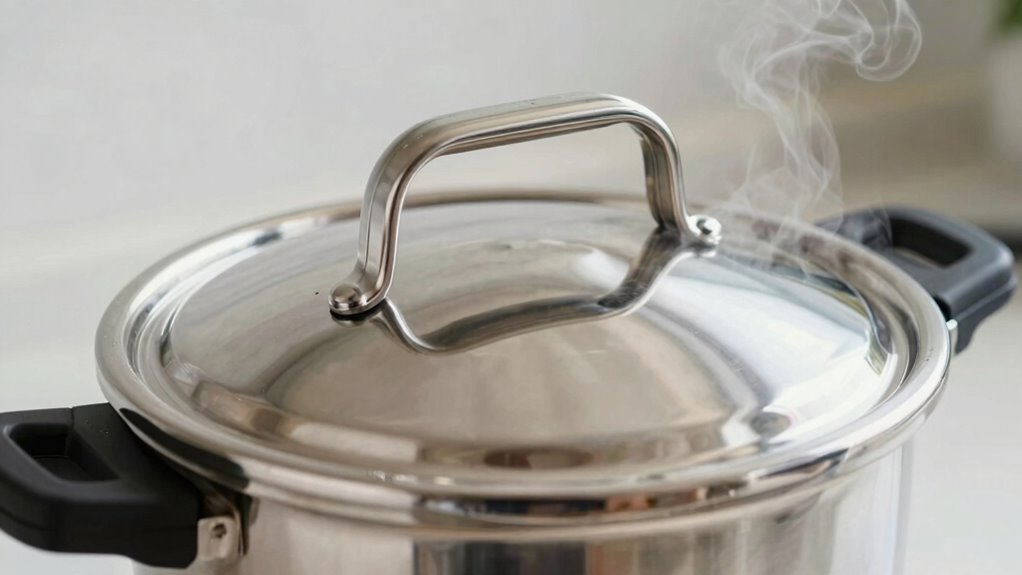
To keep your pressure cooker lid easy to open in the future, regular maintenance is essential. Start by routinely inspecting the lid for dirt, food debris, or corrosion, which can hinder proper sealing and release. Pay special attention to the gasket; inspect it for cracks, tears, or deformations, and replace it if any damage is found. Clean the gasket and lid thoroughly with warm, soapy water, ensuring no residue interferes with sealing or opening. Lubricate the gasket lightly with a food-grade silicone lubricant to maintain flexibility. Proper lid maintenance, including gasket inspection and cleaning, prevents buildup that can cause it to stick, making opening smoother and safer over time. Consistent upkeep is key to avoiding future lid issues.
Frequently Asked Questions
Can a Stuck Lid Cause Pressure Cooker Safety Hazards?
A stuck lid can indeed cause safety hazards, especially if there’s lid deformation or gasket damage. When the lid won’t release, pressure might still be trapped, risking explosion or burns. You should carefully inspect for signs of deformation or gasket damage, and avoid forcing the lid open. Proper maintenance and gentle handling help prevent these hazards, ensuring you use your pressure cooker safely and effectively.
Is It Safe to Force Open a Stuck Pressure Cooker Lid?
No, you should never force open a stuck pressure cooker lid. Instead, perform a manual release to safely release pressure first. Check that the lid is properly aligned, as misalignment can cause it to stick. By ensuring the pressure is fully released and the lid is correctly aligned, you prevent accidents and damage. Forcing it can be dangerous, so always follow proper release and alignment procedures.
How Long Should I Wait Before Trying to Open a Stubborn Lid?
You should wait at least 10-15 minutes during the natural release period before trying to open a stubborn lid. This waiting period allows the pressure to decrease safely, reducing the risk of accidents. Resist the urge to force the lid open immediately after cooking. Give it time, and make certain the pressure indicator shows it’s safe to open. Patience is key to avoiding injury or damage.
Are There Specific Models More Prone to Lid Jamming?
Certain pressure cooker models may more often face frustrating failures, especially those with model-specific issues or manufacturing defects. These problems can cause lids to lock or jam unexpectedly. You should be cautious with popular brands or cheaper models, as they sometimes suffer from design flaws. To prevent problems, always follow manufacturer instructions closely and inspect for defects before use. Recognizing these risks helps you handle lid jams safely and avoid damage or injury.
What Signs Indicate a Pressure Cooker Needs Professional Repair?
You should consider professional repair if the pressure indicator stays stuck, even after venting, or if you notice gasket wear like cracks or tears. These signs suggest the cooker isn’t sealing properly or maintaining pressure safely. Avoid trying to fix it yourself if issues persist, as improper repair can be dangerous. A professional can diagnose and fix problems, ensuring your pressure cooker operates safely and efficiently.
Conclusion
To keep your pressure cooker lid easy to open, stay attentive, stay patient, stay cautious. Regularly check for steam buildup, gently release pressure, and avoid forcing the lid. Use the right tools and techniques, and remember safety always comes first. With proper care, troubleshooting, and a little patience, you’ll prevent jams and enjoy safe, hassle-free cooking every time. Keep these tips in mind, and open your pressure cooker with confidence and ease.
Halloween Picks
halloween
As an affiliate, we earn on qualifying purchases.