
If your pressure cooker isn’t building pressure, start by checking if the sealing ring and lid fit properly—look for cracks or debris. Make sure you’re not overfilling with liquids or food, and that the ingredients aren’t blocking vents. Inspect the pressure valve for obstructions, and confirm the cooker is fully assembled and locked correctly. Also, examine the gasket for damage or leaks. Following these steps can solve most issues—stay tuned to learn more.
Key Takeaways
- Ensure the sealing ring and lid are properly fitted, intact, and securely locked.
- Verify the correct amount of liquid and food, avoiding overfilling or blocking vents.
- Inspect the pressure valve and steam release for blockages or debris.
- Confirm the cooker is fully assembled, with all parts properly aligned and engaged.
- Check the gasket for damage, proper seating, and any leaks around the lid.
Check the Sealing Ring and Lid for Proper Fit
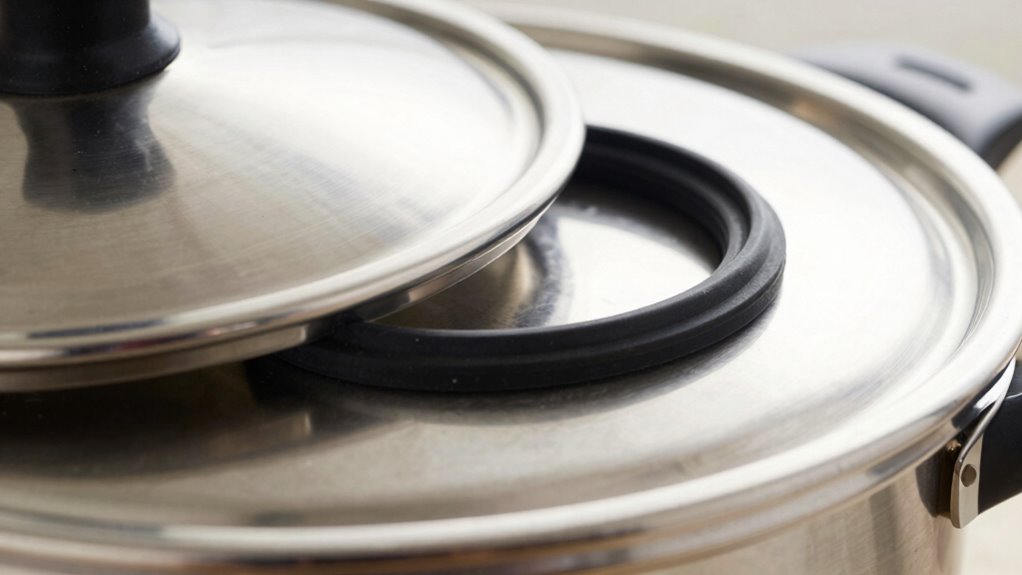
If your pressure cooker isn’t building pressure, the first step is to examine the sealing ring and lid for proper fit. A loose or damaged sealing ring can prevent the cooker from reaching the necessary pressure, so check that it sits snugly in place. Remove the lid and inspect the sealing ring for cracks, tears,, or debris that might compromise the seal. Ensure the lid fit is secure and properly aligned; a misaligned lid can cause pressure leaks. Clean the sealing ring and lid gasket thoroughly to remove any residue that could interfere with a tight seal. Confirm the sealing ring is correctly positioned before closing the lid. Proper maintenance of the sealing components is essential for consistent performance. Addressing these issues often restores the proper pressure-building function of your cooker. Additionally, verifying the sealing mechanism is functioning correctly can help prevent pressure leaks during operation. Regular inspections of the pressure release valve can also prevent buildup issues and ensure safe operation. Ensuring that the gasket material is in good condition is essential for maintaining a reliable seal and optimal pressure. Performing routine checks on all sealing parts can help identify potential problems before they affect pressure performance.
Verify the Correct Amount of Liquid and Food in the Cooker
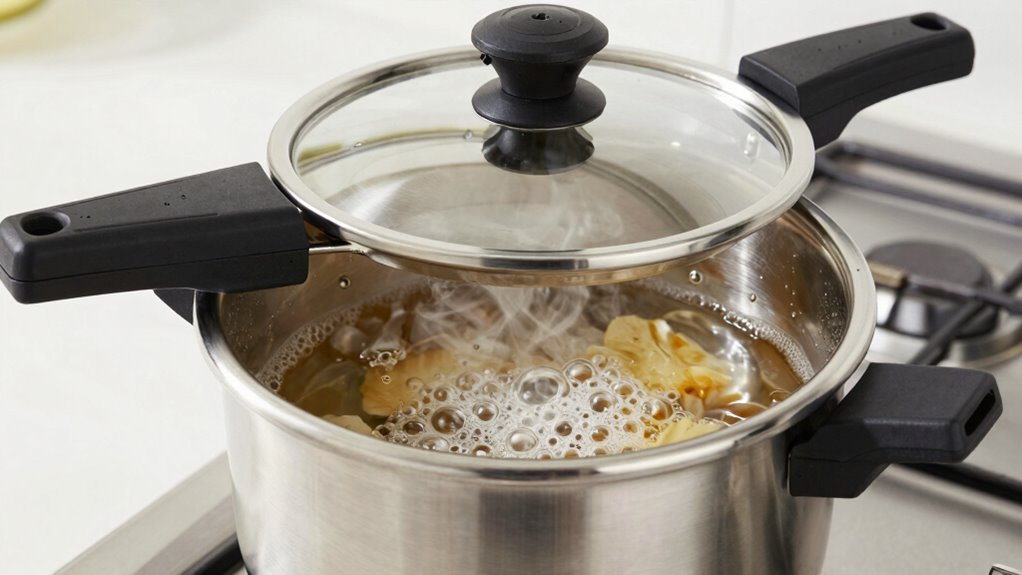
Ensuring the correct amount of liquid and food in your pressure cooker is essential for building and maintaining pressure. Use the liquid measurement guidelines provided with your model to avoid overfilling or underfilling. Typically, you need at least the minimum amount of liquid specified to create enough steam for pressure buildup. Proper food placement also matters; don’t overload the cooker, and keep foods below the maximum fill line. If there’s too much food or not enough liquid, pressure may struggle to build. Check that the ingredients are arranged evenly and aren’t blocking the steam vents. Refer to the necessary cookies to ensure your settings support optimal operation. Additionally, paying attention to the pressure release valve can help identify if the cooker is functioning correctly. Be mindful of the liquid-to-food ratio, as it directly impacts the pressure formation process. Ensuring the proper sealing of the lid also helps maintain consistent pressure levels. To prevent pressure issues, regularly inspect the steam vent for blockages or debris. Adjust the amount of liquid and food accordingly to guarantee efficient pressure formation and consistent cooking results.
Inspect the Pressure Valve and Steam Release for Blockages
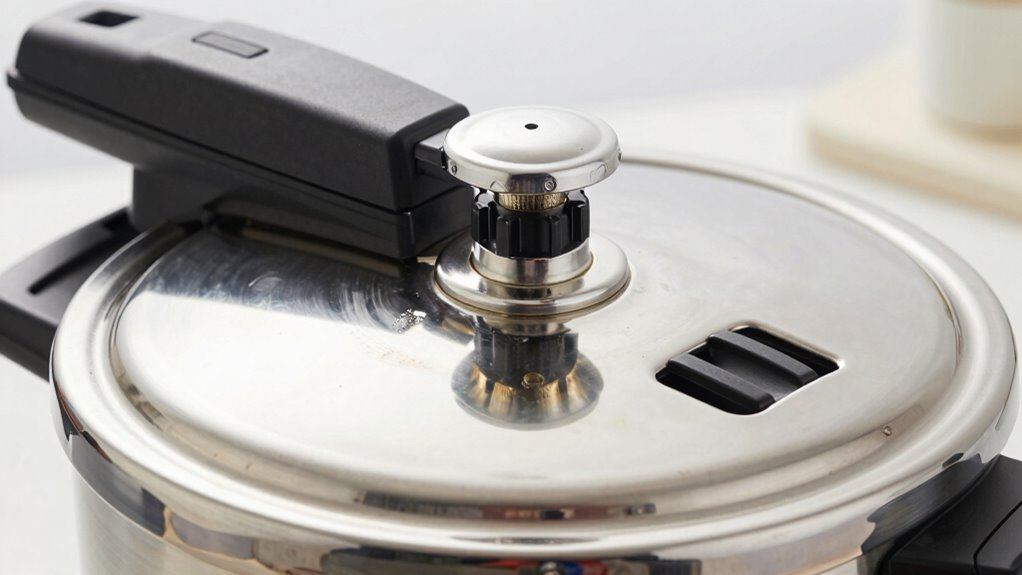
A common reason pressure doesn’t build is a blockage in the pressure valve or steam release. Over time, food particles, debris, or mineral buildup can cause a valve blockage, preventing steam from escaping or building pressure properly. Start by carefully removing the pressure valve and inspecting the steam release for any obstructions. Use a small brush or toothpick to clear out any debris that might be blocking the valve or steam release opening. Confirm the valve moves freely and isn’t stuck in a closed position. If you notice corrosion or damage, replace the valve. Regular maintenance of pressure cooker components helps prevent common issues and prolongs the appliance’s lifespan. Additionally, ensuring proper venting and sealing can improve overall performance and safety. Properly inspecting and maintaining these parts is essential for safe pressure buildup and reliable operation. For optimal performance, always refer to the manufacturer’s instructions for cleaning and upkeep of your pressure cooker.
Ensure the Cooker Is Fully Assembled and Locked Properly
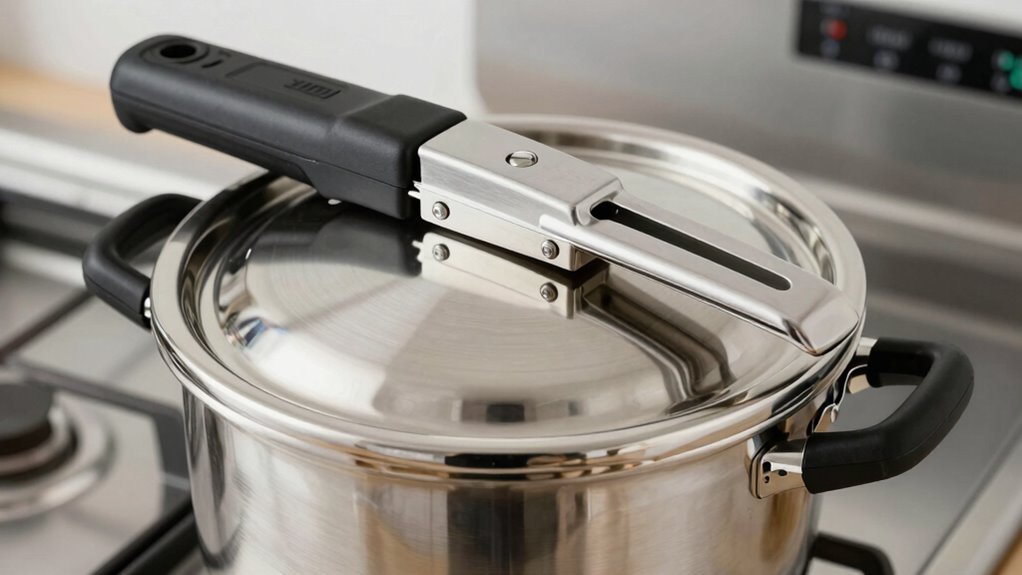
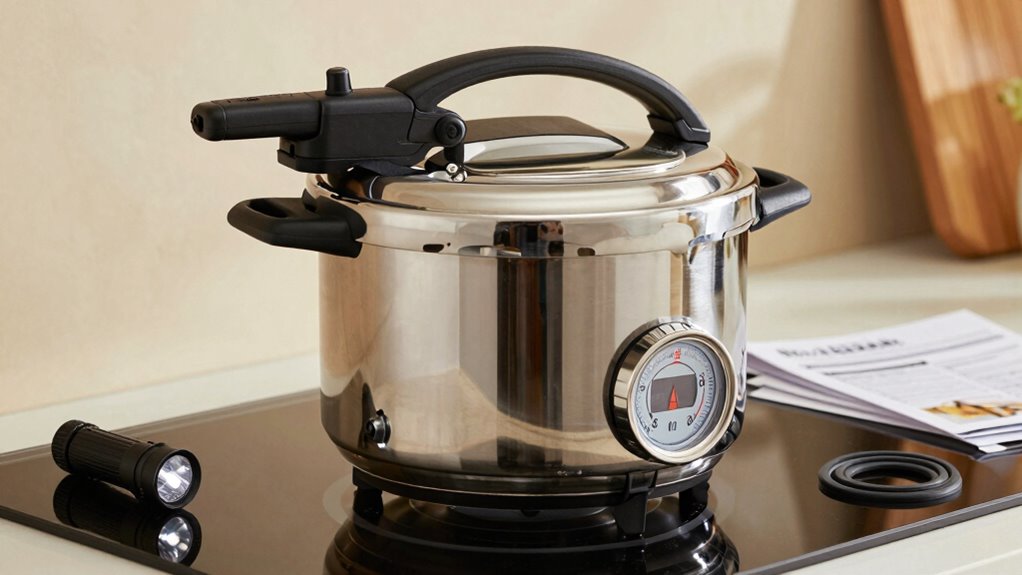
Before your pressure cooker can build pressure effectively, you need to make sure it’s fully assembled and securely locked. Check that all parts, including the lid, gasket, and pressure valve, are in place and properly aligned. An incorrectly locked lid can prevent pressure from building, leading to longer cooking times or failure to reach pressure. Follow safety tips by guaranteeing the latch clicks into place and the locking mechanism is engaged. Also, verify that the pressure indicator shows the correct position, indicating a secure seal. If your cooker isn’t fully locked, it won’t pressurize, it can compromise safety and efficiency. Ensuring the proper assembly and locking of your pressure cooker is essential for safe and efficient operation. Additionally, consulting your pressure cooker’s user manual can provide specific instructions for proper locking procedures. To further ensure safety, regularly inspecting the gasket and pressure valve for wear and proper function can prevent common issues. Performing preventive maintenance on your cooker helps identify potential problems before they affect performance. Being aware of common safety features can help you troubleshoot issues quickly and avoid hazards. Taking these steps ensures your cooker operates efficiently and safely, helping you avoid common issues and achieve perfect results every time.
Look for Leaks and Inspect the Gasket for Damage
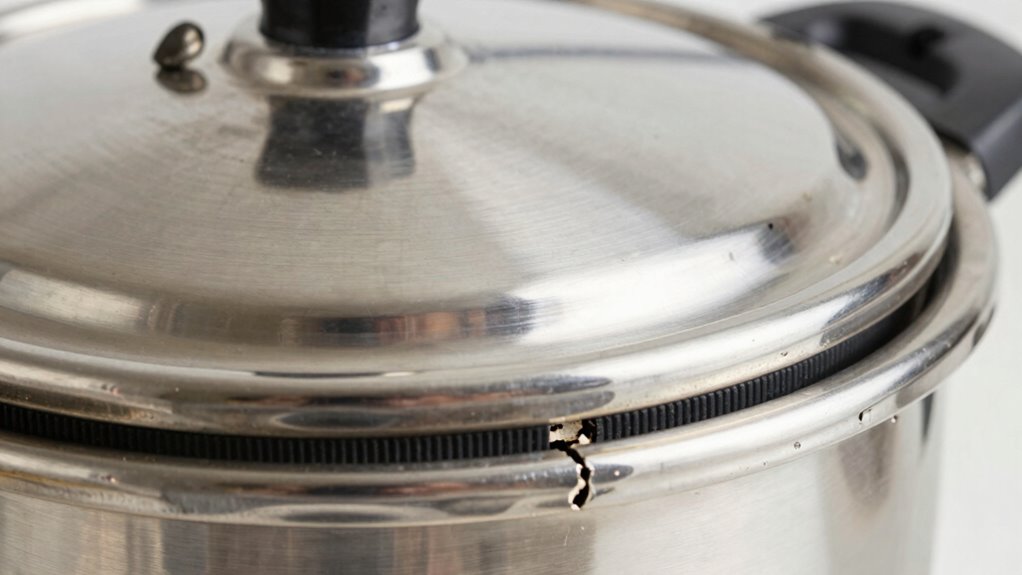
If your pressure cooker isn’t building pressure, leaks might be the culprit. Start by carefully inspecting the gasket for damage or cracks, as sealing issues often cause pressure loss. Look for any signs of wear, hardening, or deformation, which can compromise the seal. Check around the lid and the sealing ring for leaks when the cooker is pressurized—sometimes a small tear or misalignment is all it takes. Make certain the gasket is seated properly and free of debris or food residue that could prevent a tight seal. Damaged gaskets should be replaced immediately to restore proper sealing. Addressing gasket damage and sealing issues helps your pressure cooker maintain the necessary pressure for safe and efficient cooking. Regular maintenance and inspection can prevent many common pressure-building problems before they occur.
Frequently Asked Questions
How Often Should I Replace the Pressure Cooker’s Gasket?
You should replace your pressure cooker’s gasket every 1 to 2 years, depending on usage and condition. Regular gasket maintenance helps guarantee a proper seal and safe operation. Inspect the gasket regularly for cracks, stiffness, or deformations. If you notice any issues, it’s time for a replacement. Following the recommended replacement schedule keeps your pressure cooker functioning efficiently and prevents pressure leaks, making your cooking safer and more reliable.
Can Hard Water Deposits Affect Pressure Buildup?
Hard water deposits can definitely affect pressure buildup. Imagine you’re cooking and notice it takes longer for your cooker to reach pressure—this could be due to mineral buildup from water hardness. Mineral deposits can clog the vent or valve, preventing proper pressure buildup. Regularly descale your pressure cooker and use soft water when possible. This helps maintain peak performance and prevents pressure issues caused by mineral buildup.
What Is the Ideal Pressure Level for My Cooker?
You should aim for an ideal pressure level of 10 to 15 psi in your pressure cooker. To maintain this, make sure the steam vent is clear and functioning correctly. If the pressure isn’t building, check for blockages or debris around the vent, as they can prevent pressure buildup and cause the pressure release to activate prematurely. Regularly inspecting these parts helps keep your cooker operating at the right pressure.
How Do I Reset the Pressure Cooker if It Won’T Build Pressure?
Did you know that over 60% of pressure cooker issues stem from improper resets? To reset your cooker, first release all pressure safely by using the pressure release method. Then, open the steam vent to ensure it’s clear of any blockages. Close the vent securely, and turn the cooker off and on again. This reinitializes the system, allowing it to build pressure properly.
Are There Safety Features That Prevent Pressure Buildup?
Yes, your pressure cooker has safety mechanisms designed to prevent unsafe pressure buildup. These include built-in pressure release valves that automatically vent excess steam if pressure gets too high. You should regularly check these safety features to guarantee they’re functioning properly. If the pressure release valve is blocked or damaged, it can interfere with pressure buildup, so cleaning or replacing it is essential for safe operation.
Conclusion
By gently walking through these five checks, you’ll often find yourself back on the right path. Sometimes, a small detail might be the quiet obstacle between you and perfectly cooked meals. With a little patience and a careful eye, you’ll uncover the subtle hints that make all the difference. Remember, patience and a gentle touch can turn even the most stubborn pressure cooker into your trusted kitchen companion once again.