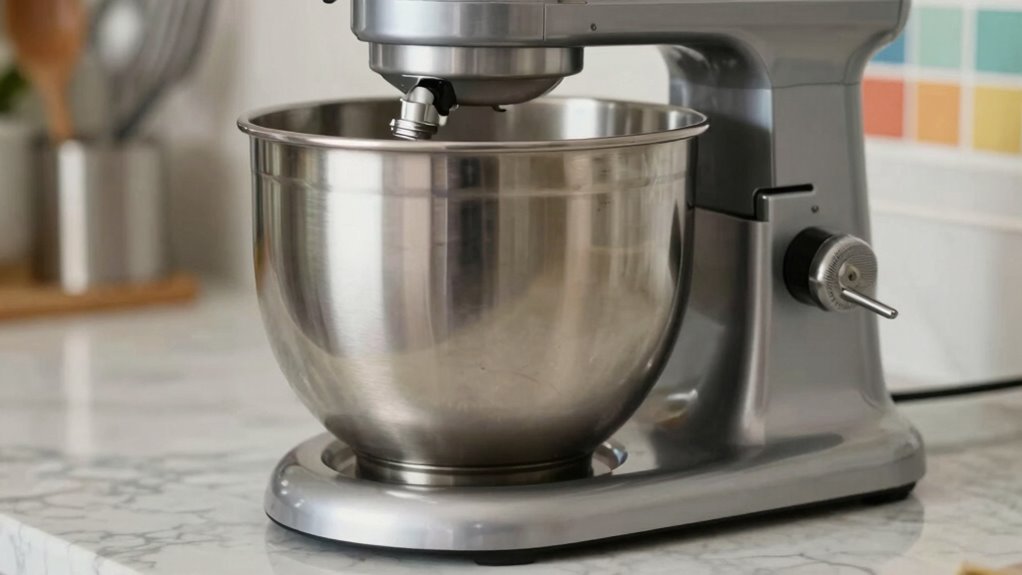
Your stand mixer tends to walk on the counter mostly because of unstable design, slippery surfaces, or excessive vibrations from overloading or improper use. Lightweight bases, weak attachments, or mismatched accessories make it easier for your mixer to shift or wobble. Smooth countertops like glass or tile also reduce grip, increasing movement. To stop this, verify your mixer is stable and secure. Keep exploring to discover more ways to prevent your mixer from wandering during use.
Key Takeaways
- Insufficient grip on smooth surfaces causes the mixer to slide during operation.
- Vibrations from the motor and lightweight bases lead to instability and wandering.
- Overloading or uneven loads generate excessive vibrations, pushing the mixer across the counter.
- Improper attachment, loose fittings, or worn feet increase wobbling and movement.
- Lack of non-slip pads or textured surfaces reduces friction, making the mixer more prone to walking.
Why Does My Stand Mixer Keep Moving on the Counter?

If your stand mixer keeps sliding around on the counter, it’s often because of insufficient stability or grip. Motor vibrations from the mixer’s motor can cause it to shake and shift, especially if the base isn’t secure. Without a good countertop grip, these vibrations amplify, making the mixer move more than it should. Smooth or slippery surfaces make it easier for the mixer to slide, even during light mixing tasks. Over time, repeated vibrations can loosen the mixer’s footing, worsening the problem. To prevent this, ensure your countertop provides enough traction or add grip pads under the mixer’s feet. Addressing motor vibrations and improving the grip between the mixer and the counter are key to keeping your appliance steady during use. Understanding surface friction can help you choose space-efficient solutions to keep your kitchen organized and functional. Additionally, selecting appropriate accessories like non-slip mats can further enhance stability and reduce movement during operation. Using anti-vibration pads beneath the mixer can also absorb some of the motor vibrations, helping it stay put more effectively. Incorporating non-slip materials can significantly improve the overall stability of your mixer on various surfaces.
Design Features That Make Mixers Wobble
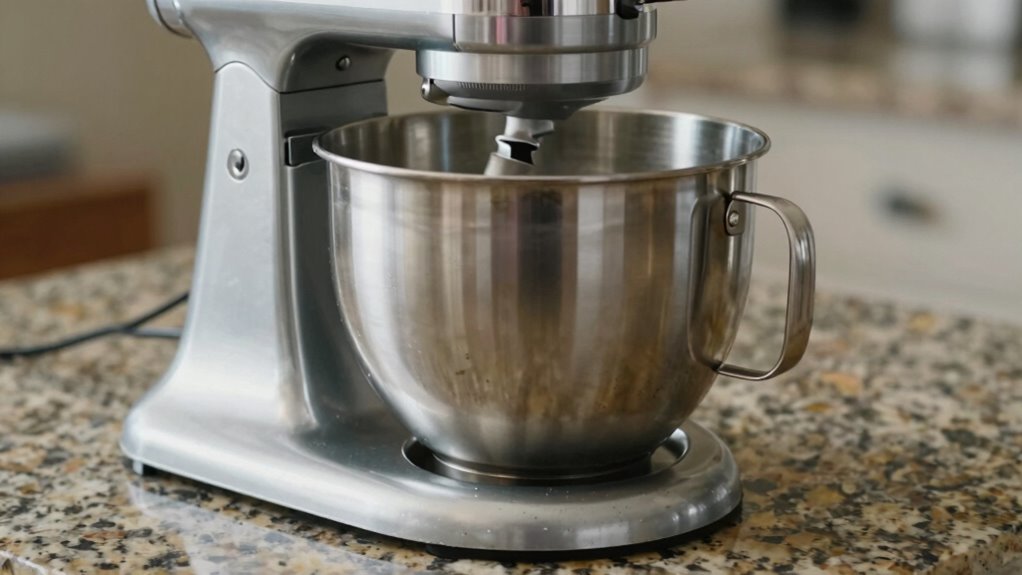
Certain design features in stand mixers can make them more prone to wobbling during use. For example, a lightweight or narrow base reduces stability, especially when mixing heavy or thick ingredients. Mixers with lower motor horsepower may struggle to maintain steady operation, causing unintended movement. Additionally, if the mixing head isn’t securely locked or the attachments aren’t properly aligned, vibrations increase, leading to wobbling. Your mixing techniques also matter—overloading the bowl or using inconsistent speeds can amplify instability. To minimize wobble, choose a mixer with a sturdy, wide base and sufficient motor horsepower. Properly locking components and adjusting your mixing methods can further reduce movement, ensuring safer, more efficient operation. Innovative cloud servers can also provide advanced monitoring and control features to optimize appliance stability and safety. Incorporating ergonomic design principles can improve user handling and reduce unintended movement during operation. Ensuring that the base design provides maximum stability is essential for reducing wobbling during intensive mixing tasks. Additionally, selecting a mixer with enhanced motor support can help maintain smooth, steadier operation under heavy loads.
How Countertop Material Affects Mixer Stability
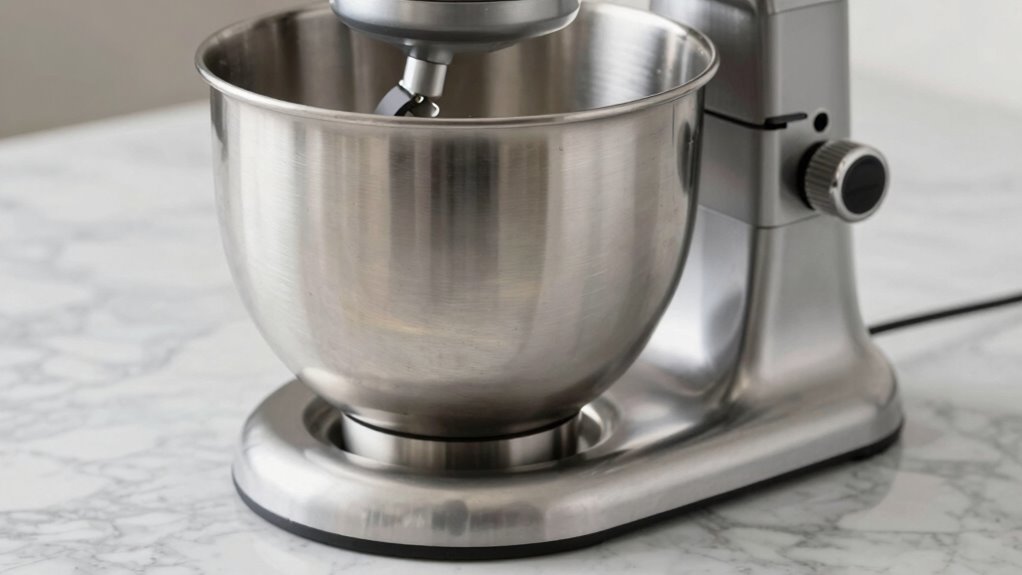
The surface your stand mixer sits on plays a crucial role in its stability. A smooth, hard countertop like polished granite or tile can cause the mixer to slide or walk more easily, especially if it lacks grip pads. Conversely, textured surfaces, such as butcher block or matte stone, provide better traction, keeping the mixer steady. Your choice of countertop material also affects kitchen decor, so selecting a surface that balances aesthetics with function is key. If your countertop is glossy or highly reflective, it may look stunning but compromise stability. To prevent movement, consider adding non-slip mats or rubber feet. Ultimately, the material’s texture and finish directly influence how securely your mixer stays in place during use. Additionally, understanding countertop surface properties can help you choose the best setup for both style and safety. Recognizing how material texture and finish impact grip can lead to more informed decisions to enhance stability. Being aware of surface friction can further aid in selecting the most suitable countertop for your mixer. Moreover, the grain direction of certain materials can influence how well your mixer stays put during vigorous mixing.
How Overloading or Underloading Causes Movement
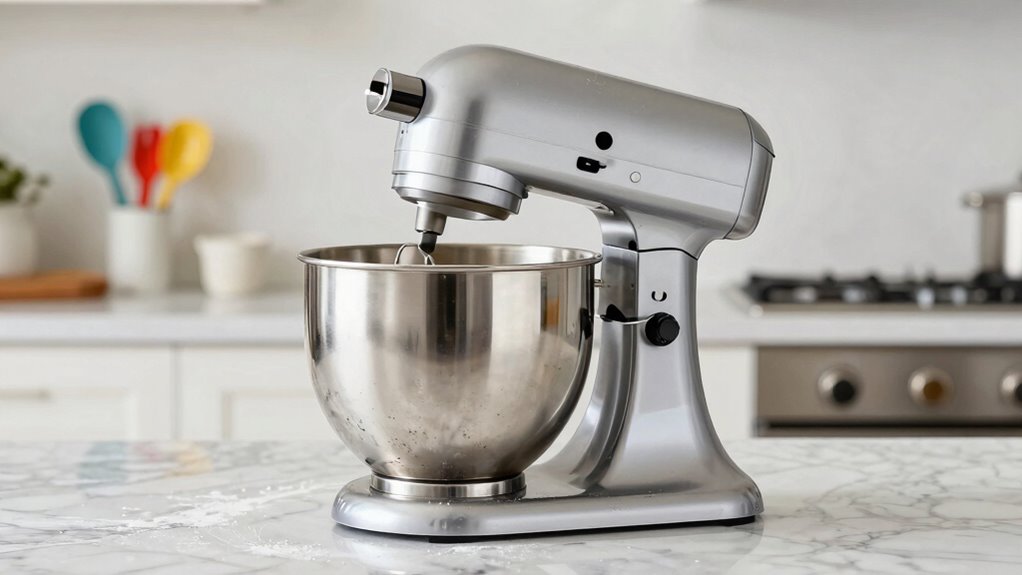
Overloading your stand mixer can cause it to walk or vibrate excessively because the motor struggles to handle the weight, creating uneven forces that push the machine around. When you add too much batter or thick dough, the mixing speed and power capacity become overwhelmed, forcing the machine to work harder than designed. This imbalance can make your mixer lurch across the counter or shake violently. Proper load management ensures stability, even at high speeds. Additionally, sizing and load‑planning tools can help you determine the appropriate mixer size for your needs, preventing overloading or underloading situations that lead to movement. Load distribution is also essential to maintain consistent mixing and avoid unnecessary vibrations. Ensuring your mixer is placed on a stable surface can further minimize movement and vibrations during operation. Underloading, on the other hand, can cause similar issues because the mixer isn’t balanced properly, leading to uneven vibrations. To achieve optimal vibration reduction, using anti-slip mats or placing the mixer on a level, non-slip surface can make a significant difference in stability during use.
Simple Techniques to Keep Your Mixer Steady
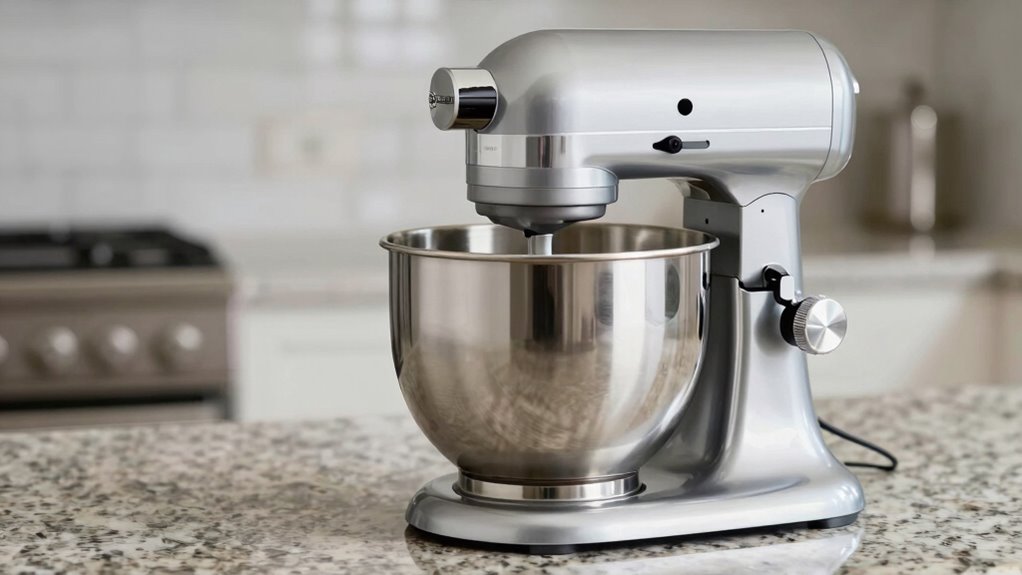
To prevent your stand mixer from walking or vibrating, you can implement simple yet effective techniques that improve stability during use. Adjust the mixer height so it sits level on your countertop, reducing wobbling caused by uneven placement. Keep the power cord tucked securely behind the mixer to prevent it from tugging or pulling during operation. Using a non-slip mat underneath the mixer also provides extra grip. Here’s a quick guide:
| Technique | Benefit | Tip |
|---|---|---|
| Correct mixer height | Stability and reduced movement | Adjust to level position |
| Secure the power cord | Prevents tugging and shifting | Tuck behind or use clips |
| Use a non-slip mat | Keeps mixer from sliding | Place under the base |
| Consider stability factors | Ensures safer, more efficient mixing | Choose appropriate placement |
Additionally, ensuring the countertop surface is clean and dry can enhance grip and prevent slipping during mixing. Regularly checking the mixer’s feet or base for wear or unevenness can also help maintain stability. Incorporating proper maintenance practices can further improve overall stability and prolong the life of your mixer. Implementing these tips guarantees your mixer stays steady during your baking sessions.
Choosing a Stable Stand Mixer and Accessories

When selecting a stand mixer, make sure it has a stable base made from sturdy materials like metal or thick plastic. Check that your accessories fit securely to prevent wobbling or slipping during use. Choosing a model with these features helps guarantee your mixer stays steady and performs reliably. Additionally, consider the ventilation considerations to ensure your mixer remains cool during prolonged use, preventing overheating and maintaining safety.
Stable Base Materials
Choosing the right materials for your stand mixer’s base is essential to prevent it from walking during use. The countertop materials you select directly impact base stability. Opt for surfaces that grip firmly, like textured stone or rubberized mats, to keep your mixer steady. Avoid smooth, slippery surfaces such as glass or polished wood that increase the risk of slipping. Consider using a weighted base or adding non-slip pads to enhance stability.
- Feel confident in your setup, knowing your mixer won’t slip mid-batch
- Enjoy consistent mixing without constant readjustments
- Minimize noise and vibration, making baking more relaxing
Compatible Accessory Fit
Ensuring your stand mixer and its accessories fit securely is essential for preventing movement during operation. Proper attachment compatibility means selecting accessories designed for your mixer model, reducing the risk of slipping or wobbling. When accessories fit well, they maintain better stability, which minimizes the chances of the mixer “walking” on the counter. Check that the attachment locks firmly into place and matches the manufacturer’s specifications. Avoid generic or incompatible parts that may seem similar but lack proper fit. A secure, compatible attachment ensures smooth operation and prevents unnecessary strain on the motor or base. By prioritizing accessory stability and compatibility, you create a safer, more efficient mixing experience and reduce the likelihood of your mixer moving unexpectedly during use.
Common Mistakes That Make Your Mixer Wander
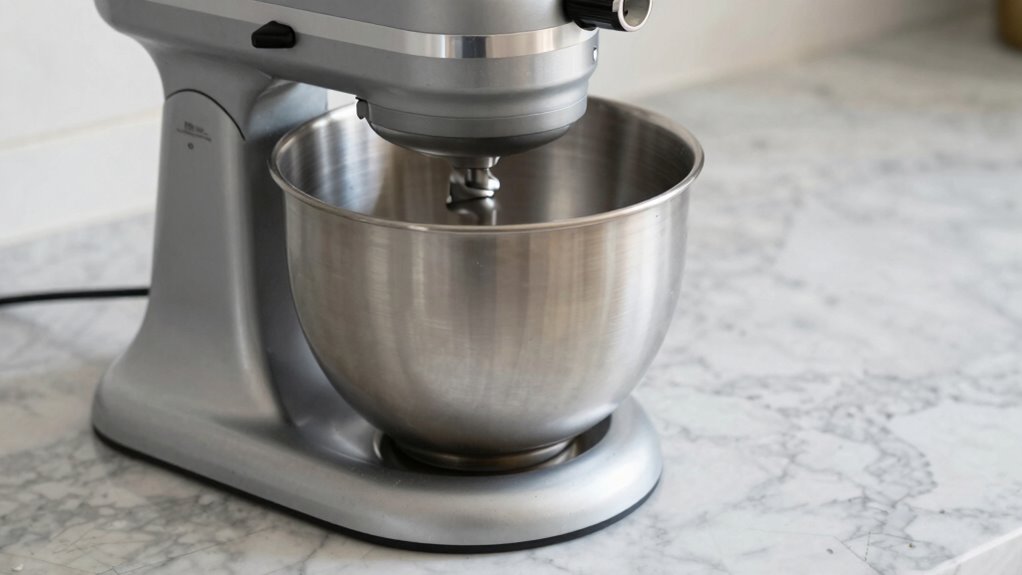
One common mistake that causes your stand mixer to wander is not securing the mixing bowl properly. When the bowl isn’t locked in place, even slight movements can send the mixer rocking. Additionally, setting the wrong mixing speed can contribute to instability—too high, and the force can push it around; too low, and ingredients don’t blend smoothly, causing uneven loads. Poor ingredient consistency, like large chunks or sticky mixtures, can also throw off balance, making the mixer work harder than necessary.
Be mindful of these issues:
- Using inconsistent mixing speed settings
- Neglecting to lock the mixing bowl securely
- Adding ingredients that are too large or sticky
Addressing these mistakes helps keep your mixer steady and prevents unnecessary wandering.
Troubleshooting Tips When Your Mixer Moves During Use

When your stand mixer moves unexpectedly during use, it’s often a sign that something isn’t set up correctly or that there’s an issue with the surface or attachments. Excessive mixer vibration can cause instability, so check that your mixer is on a flat, sturdy countertop. Improving the countertop grip is key; consider placing a rubberized mat or non-slip pad underneath to reduce sliding. Make sure the mixer’s feet are clean and intact, as worn or uneven feet can contribute to movement. Also, ensure that attachments are securely locked in place, as loose attachments can increase vibration. Addressing these factors helps stabilize your mixer, minimizes movement, and makes your baking experience safer and more efficient.
When and How to Upgrade or Improve Your Mixer Setup
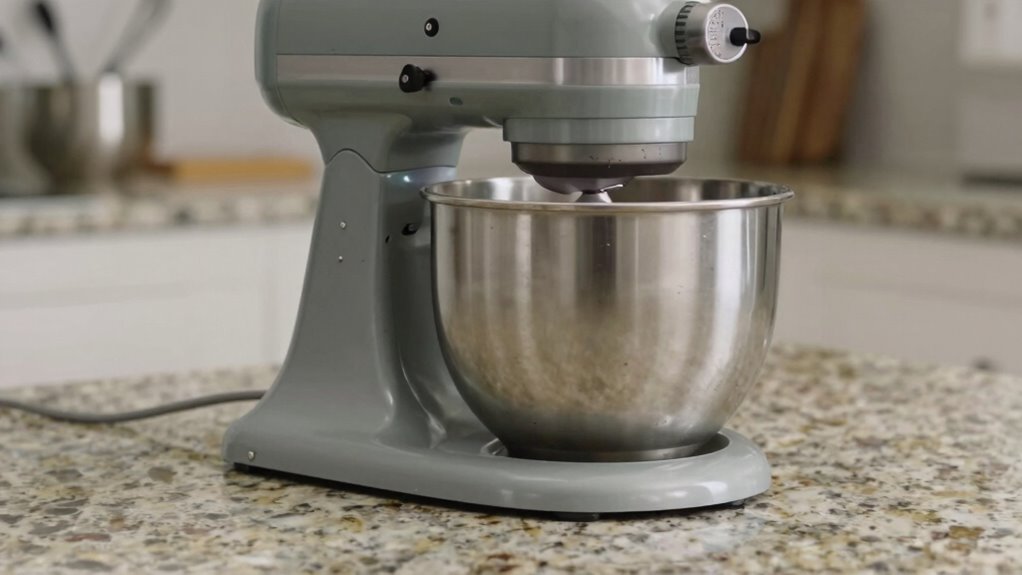
If your mixer still moves despite basic fixes, it might be time to upgrade accessories or secure the base better. Choosing a stable surface and adding anti-slip pads can make a big difference. Consider these improvements to keep your mixer steady and prevent future walking.
Upgrading Mixer Accessories
Upgrading your mixer accessories can considerably enhance its performance and versatility, but knowing the right time to do so makes all the difference. When you consider new mixer attachments, you’re expanding what your stand mixer can do—baking, kneading, whipping, and more. Upgrading isn’t just about functionality; it’s about transforming your baking experience.
Think about:
- Choosing the right mixer attachments to match your culinary needs and dreams.
- Implementing power cord management to prevent clutter and ensure safety during operation.
- Ensuring compatibility with your mixer model for seamless upgrades.
Securing the Base
Ever notice your stand mixer wobbling or walking across the countertop during heavy mixing tasks? Securing its base can make a huge difference. You can upgrade by adding grip pads or non-slip mats to prevent slipping. Consider attachment options like stabilizers or clamps to keep the mixer steady. Storage solutions also help; placing your mixer on a dedicated, stable spot minimizes movement. Use a sturdy, level surface to enhance stability. Here’s a quick comparison:
| Method | Effectiveness | Ease of Use | Flexibility |
|---|---|---|---|
| Grip pads | High | Easy | Limited |
| Non-slip mats | High | Easy | Flexible |
| Clamps & stabilizers | Very high | Moderate | Moderate |
| Dedicated storage | Consistent | Easy | Versatile |
Securing your base keeps everything safe and your mixing smooth.
Choosing the Right Surface
Choosing the right surface for your stand mixer is essential to guarantee stability and prevent wobbling during heavy mixing tasks. The surface texture and countertop durability play a pivotal role in keeping your mixer steady. A smooth, sturdy surface minimizes vibrations, while a worn or uneven countertop can cause slipping and movement. When upgrading or improving your setup, consider these key points:
- Ensure the countertop is made of durable material that withstands heavy use
- Choose a surface with a non-slip texture to grip the mixer firmly
- Avoid surfaces that are uneven or prone to shifting during operation
Investing in a solid, textured surface gives you confidence, allowing you to focus on your baking rather than stabilizing your mixer. Proper surface choice can transform your baking experience and eliminate those frustrating walks.
Frequently Asked Questions
Can the Shape of My Kitchen Counter Influence Mixer Movement?
Yes, your kitchen counter shape can influence your mixer’s movement. Countertop textures, like smooth or slick surfaces, can reduce the mixer’s grip, making it more likely to walk or slide. Conversely, textured countertops provide better grip, helping keep your mixer steady during use. To prevent movement, consider adding a rubber mat or non-slip pad, which enhances the mixer grip regardless of counter shape or surface.
Do Specific Types of Mixing Tasks Cause More Stability Issues?
Certain mixing tasks can cause stability issues, especially if you use high mixing speed on uneven or slick counter surfaces. Heavy ingredients like dough or thick batters increase the mixer’s weight, making it more prone to walking if your counter isn’t stable. Keep the mixer on a flat, non-slip surface and reduce the mixing speed when handling dense mixtures to prevent it from moving around.
How Does the Weight Distribution of Ingredients Affect Mixer Wobbling?
When it comes to your mixer wobbling, you’ve got to get the weight distribution right. If ingredients are unevenly placed or too heavy on one side, it’s like trying to walk a tightrope—your mixer becomes unstable. Balance ingredient placement carefully, ensuring weight is evenly distributed, especially during heavy mixes. This way, you’ll keep your mixer steady, avoiding unnecessary walking on the counter and making your baking session smoother.
Are There Safety Concerns if My Mixer Shifts During Operation?
If your mixer shifts during operation, safety could be a concern, especially if it tips or falls. To prevent this, make certain you’re using the right countertop materials, like non-slip mats, and secure the mixer properly. Be cautious with heavy or unevenly distributed ingredients, and double-check that your mixer attachments are firmly in place. Staying attentive minimizes risks and keeps your baking safe and enjoyable.
Can Using a Different Mixing Bowl Reduce the Walking Problem?
Yes, using a different mixing bowl can help reduce the walking problem. Choosing a bowl with better stability and ensuring your counter surface has enough friction makes a big difference. If your current bowl is lightweight or smooth, switching to a heavier or textured one can improve stability. This simple change helps prevent slipping and keeps your mixer steady during operation. Don’t underestimate how much a better fit can make your mixing safer and easier.
Conclusion
To keep your stand mixer steady, pay attention to its design, your countertop, and how you load it. Avoid rushing into the first model you see—sometimes, a little upgrade makes all the difference. Remember, a stable setup isn’t just about convenience; it’s about safety and getting perfect results every time. Don’t let your mixer walk away with your patience—stay proactive and keep it grounded, so you get the job done right the first time.