This checklist is for home cooks who want to make pizza from scratch and choose useful gear without getting lost in options. Start with your oven, the kinds of dough you make, and how much room you have to store larger tools. Your cooking setup matters more than collecting every accessory.

Get kitchen staples and gadgets delivered free with Prime
- Fast, free delivery on millions of items
- Prime Video, Amazon Music and more included
- Member-only deals all year
The sections follow the path from dough preparation to baking and serving: mixer guidance first, then the baking surface, peel, thermometer, and cutter. The proofing box rounds things out for cooks who want more control over where dough rests. Each slot has a distinct job, so you can prioritize what fits your routine.
Use the look-for points to compare dimensions, materials, and compatibility with your oven and workspace. Check product details before buying, especially for fit and care instructions. You can begin with the tools that address your biggest bottleneck and add the rest as your pizza-making habits take shape. Build your checklist around your kitchen, not an idealized setup.
Pizza Stone
The baking surface is a central part of your setup because it needs to fit your oven and give you a workable area for pizza. This pick is a pre-seasoned steel measuring 16 by 14.25 inches and 1/4 inch thick, so check those dimensions against your oven interior, rack, and storage space before buying. Confirm the fit first; a surface that cannot sit securely in your oven will not serve its purpose.
A common mistake is to shop by the word “stone” in the category rather than compare the actual material and product dimensions. This pick is steel, so read its care and use instructions instead of assuming stone-care practices apply. Also consider how you will move and store a substantial baking surface, and make sure you can handle it safely when preparing your oven. Follow the product’s care guidance for seasoning and cleaning.
Measure the usable width and depth of the oven, including any obstructions that affect placement. Check that the surface leaves appropriate clearance and can rest on the rack you intend to use. The listed 16-by-14.25-inch footprint is the key sizing reference; compare it with your oven and the pizza size you plan to make. Think through storage too, since a rigid surface needs a suitable place between uses.
What to look for:
- Oven interior and rack dimensions compared with the 16-by-14.25-inch footprint
- Product material and its specific care instructions
- Listed thickness of 1/4 inch and whether it suits your setup
- A safe way to place, move, and store the surface
- Clearance around the surface inside your oven
Pizza Steel for Oven, Pre-Seasoned, 16 x 14.25 inches, 1/4 inch Thick

This pre-seasoned 16 x 14.25-inch pizza steel provides even heat distribution for perfect crusts. Suitable for oven, grill, or BBQ, it can also be used for baking bread, sourdough, and flatbreads, delivering restaurant-quality results at home.
Pros:
- Provides even heat for consistent crusts
- Versatile for oven, grill, and BBQ use
- Pre-seasoned with natural nonstick surface
- Durable and made in the USA
Cons:
- Heavy and may be difficult to handle
- Requires hand washing for maintenance
- Pre-seasoning may need reapplication over time
Best for: cooks whose oven and storage fit its dimensions
Not ideal for: kitchens without room for a large rigid surface
Bottom line: Measure your oven and storage space, then follow the steel’s product-specific care instructions.
Pizza Peel
A peel gives you a broad surface for handling pizza as it moves between preparation and the oven, and it can also serve as a board. This Ooni pick is a 16-inch bamboo pizza peel described as a wooden serving board and pizza spatula. Check the 16-inch size against the pizzas you make and the room available beside your oven.
One frequent mistake is choosing a peel based only on its stated width. The overall shape and handle need to work in your kitchen, and the peel needs to fit through the route to the oven without awkward turns. Review the listed dimensions and product-care guidance, including how to clean and dry the bamboo. A serving-board use can be handy, but make sure the surface is practical for both tasks in your routine. Consider the full shape, not just the headline measurement.
Before buying, measure the oven opening or other access point and the counter space where you will build or transfer pizzas. Compare those measurements with the peel’s complete dimensions and handle length as provided by the seller. Also consider where it will hang or rest when not in use. Leave room to maneuver so loading and serving feel manageable, particularly if your kitchen has a compact layout.
What to look for:
- Complete peel dimensions, including handle length
- Fit through the oven access route and around nearby counters
- A width that suits your usual pizza size
- Bamboo care and cleaning instructions
- A convenient place to store the peel between uses
Ooni 16” Bamboo Pizza Peel – Wooden Serving Board and Pizza Spatula
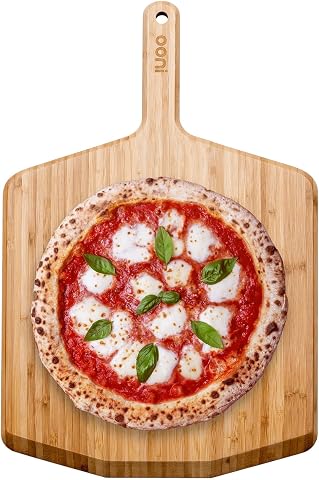
This 16-inch bamboo pizza peel serves as a lightweight, durable tool for launching pizzas up to 16 inches wide and doubles as a serving and slicing board. Its moisture-resistant surface helps prevent dough sticking, making pizza preparation and serving easier.
Pros:
- Lightweight and durable design
- Dual-purpose as a serving and slicing board
- Moisture-resistant bamboo surface
Cons:
- Requires light flouring for best use
- Limited to specific Ooni pizza ovens
Best for: cooks who want a wooden transfer and serving surface
Not ideal for: small kitchens with little room to maneuver or store it
Bottom line: Compare the full dimensions with your oven route, pizza size, and storage spot.
Pizza Dough Mixer
A mixer can make dough preparation more convenient, but it is not essential for homemade pizza. Before choosing one, think about how often you make dough, how many batches you prepare, and whether you want a machine that handles other kitchen tasks. For occasional pizza nights, hand mixing and kneading may be enough; frequent batches can make a mixer worth considering. Match the tool to your routine before making room for it.
Common buying mistakes include focusing only on capacity or assuming every mixer handles stiff dough equally well. Check the manufacturer’s guidance for dough use, bowl capacity, and included attachments, and consider where the machine will live between uses. A mixer that is cumbersome to move or clean may be less useful than a simpler approach. Check dough guidance carefully, especially if you make larger batches.
For fit, measure counter or storage space and account for the bowl and attachments. If you plan to make small batches, look for a setup that can work with modest quantities; if you prepare several pizzas at once, compare usable capacity with your batch size. Since this slot has no specific pick, treat mixer selection as optional and let your dough volume decide. There is no required mixer for making pizza at home.
What to look for:
- Manufacturer guidance for mixing and kneading dough
- Bowl capacity suited to your usual batch size
- Attachments included and available for your intended use
- Dimensions and weight that suit your counter or storage
- Cleanup requirements for the bowl and attachments
Pizza Cutter
A dedicated cutter helps portion a finished pizza at the table. The OXO Good Grips pick has a 4-inch blade, so consider whether that size and the overall tool feel suit the pizzas you usually make. Blade size and handling are practical details to check before adding it to a drawer.
A common buying mistake is assuming that a larger-looking blade automatically means easier cutting, or overlooking how the handle feels in use. Check the product information for grip, cleaning instructions, and any care limitations. If several people will use the cutter, think about whether its handling is comfortable for them and whether it can be stored safely. Read the care details so cleanup is straightforward after pizza night.
For fit, consider how the cutter will sit in your utensil drawer or other storage spot and whether the blade dimensions suit the pizza size you make. The listed 4-inch blade gives you a concrete measurement to compare with your preferences. If you already have a cutter, check whether this design adds something useful to your setup rather than duplicating a tool you like. Choose for your serving habits, including how many slices you typically need.
What to look for:
- The 4-inch blade size and overall dimensions
- Handle shape and grip as described by the product listing
- Cleaning and care instructions
- Safe drawer or utensil storage
- Suitability for the pizza sizes you usually serve
OXO Good Grips Pizza Wheel Cutter with 4-Inch Blade
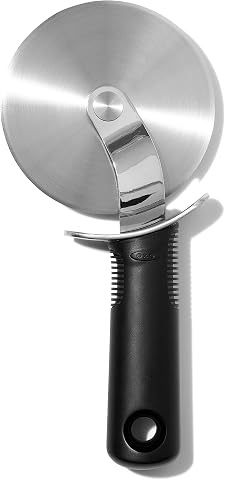
This pizza wheel cutter features a large stainless steel blade suitable for cutting through deep dish or thick-crust pizza. It has a non-slip handle for comfortable grip and a thumb guard for safety.
Pros:
- Large stainless steel blade for efficient cutting
- Non-slip handle provides a comfortable grip
- Thumb guard enhances safety
- BPA-free and dishwasher safe for convenience
Cons:
- May require frequent cleaning of the blade for sticky toppings
Best for: home cooks who want a dedicated pizza wheel
Not ideal for: kitchens where an existing cutter already works well
Bottom line: Check the blade size, handling details, and care instructions against your serving routine.
Pizza Oven Thermometer
An infrared thermometer gun lets you take a surface temperature reading without relying on guesswork. The Ooni pick is a digital infrared thermometer gun described as instant read, so consider whether this measurement style fits the way you manage your oven. Know what you want to measure and consult the product instructions for proper use.
A common mistake is treating a thermometer’s reading as a substitute for understanding where and how it measures. Review the manufacturer’s directions, including aiming distance and any stated limitations, and follow its guidance for interpreting readings. Check what is included and how the device is powered or stored. Read the operating instructions before relying on a reading during cooking.
Think about the oven setup and the surfaces you intend to check, then compare those needs with the thermometer’s stated measurement range and use guidance. Keep the device somewhere accessible but protected from heat and spills, following the storage directions. If you use a conventional oven, confirm that the tool’s stated range and method apply to the temperatures and surfaces you expect to monitor. Check compatibility with your oven before choosing this thermometer.
What to look for:
- Stated measurement range and operating guidance
- Instructions for aiming and reading surfaces
- Suitability for the oven and surfaces you plan to check
- Power requirements and included items
- Storage guidance and protection from heat or spills
Ooni Digital Infrared Thermometer Gun – Instant Read Digital Thermometer with LC

This infrared thermometer provides quick and accurate surface temperature readings for indoor and outdoor cooking, including barbecue and pizza ovens. It features a backlit LCD display, adjustable emissivity, and laser guidance for precise measurements, making it a versatile kitchen accessory.
Pros:
- Provides fast and accurate temperature readings within 300 milliseconds.
- Adjustable emissivity for measuring different materials.
- Backlit LCD display makes it easy to read in any lighting condition.
- Laser guidance enhances measurement precision.
Cons:
- Requires batteries (included), which may need replacement over time.
- Limited to surface temperature measurements, not internal temperatures.
- Designed primarily for cooking and baking, less suitable for industrial use.
Best for: cooks who want to check oven surface temperature
Not ideal for: anyone whose oven or needs fall outside its stated guidance
Bottom line: Confirm the thermometer’s range and instructions suit your oven before use.
Pizza Proofing Box
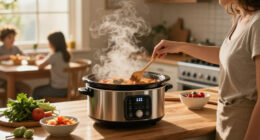
A proofing box can provide a dedicated place for dough to rest, and this Brod & Taylor pick is described as a folding proofer and slow cooker. Consider whether you want a tool for proofing as part of your pizza routine and whether its additional function is useful to you. Think about how you will use it before allocating storage space.
A common mistake is buying a specialized appliance without checking its dimensions, setup, and operating instructions. Look at the product information for interior capacity and the kinds of containers or dough batches it accommodates. Since the pick folds, check how it is set up for use and how much room it needs when open. Read care and cleaning guidance for the surfaces that contact dough. Compare the usable interior with your typical batch.
Measure both the space where the unit will operate and the space where you will keep it folded away. Confirm that bowls or containers you already use fit within the stated interior dimensions, and consult product guidance for temperature settings and intended use. If you make several batches, consider whether the usable area supports your workflow. Plan for open and folded storage so the unit fits into your kitchen between pizza sessions.
What to look for:
- Usable interior dimensions and capacity for your dough batches
- Setup dimensions when open and storage dimensions when folded
- Compatibility with bowls or containers you already own
- Operating and temperature guidance for proofing
- Care instructions for surfaces that contact dough
BroD & Taylor Folding Proofer & Slow Cooker

The BroD & Taylor Folding Proofer creates a warm, controllable environment for perfect dough proofing and can also function as a slow cooker for stews, yogurt, kombucha, and more. It folds down to just 2.75 inches for easy storage and includes an optional accessory shelf for handling multiple batches.
Pros:
- Precise temperature and optional humidity control for consistent proofing
- Compact folding design saves countertop and cabinet space
- Dual functionality as a slow cooker expands cooking options
- Optional accessory shelf allows multiple batches or trays
Cons:
- Only two temperature settings limit fine‑tuning
- Capacity may be small for large families or big loaves
- No built‑in timer mentioned
Best for: cooks who want a dedicated proofing setup
Not ideal for: kitchens without room to operate and store the unit
Bottom line: Check the interior capacity and both open and folded dimensions before choosing.
Start with the items that solve an immediate need: confirm the baking surface fits your oven, then decide whether a peel or cutter would make handling and serving easier. Add a thermometer if checking oven surface temperature suits your method. Consider the optional mixer and proofing box after you know your usual batch size and dough routine. Prioritize fit and frequency of use as you build the checklist.
Homemade pizza gear can come together gradually. Measure your kitchen, read each product’s care and compatibility details, and choose tools that support the way you actually cook. Even a small, well-chosen setup can make pizza night feel more organized. Start with the essentials for you, then enjoy refining your process one bake at a time.
Black Friday Picks

KitchenAid Classic Series 4.5-Quart Tilt-Head Stand Mixer, Onyx Black
As an affiliate, we earn on qualifying purchases.