
TL;DR

Get kitchen staples and gadgets delivered free — and shop member deals
- Fast, free delivery on millions of items
- Access to Prime Big Deal Days deals on October 6–7
- Prime Video, Amazon Music and more included
A BTU calculator helps you determine the exact cooling capacity needed for your space. Proper sizing prevents energy waste, uneven cooling, and comfort issues. It’s a quick, easy step to smarter cooling choices.
Ever turned on your AC and felt it was either too cold or never quite cooled the room? That’s usually because it’s not the right size. Picking a unit that’s too big or too small wastes energy, costs more, and leaves you uncomfortable. A simple BTU calculator changes that. It helps you find the perfect fit—fast.
In this guide, you’ll learn how to use a BTU calculator, what factors to consider, and how to avoid common sizing mistakes. We’ll make it straightforward, so you can cool smartly, save money, and stay comfy all summer long.
Use a BTU calculator for a quick, accurate starting point—don’t guess based on room size alone.
Adjust your BTU estimate for sun exposure, occupancy, appliances, and ceiling height.
Avoid oversizing to prevent short cycling and humidity issues; undersizing leads to constant running and poor cooling.
Inverter ACs can adapt their output, making them more efficient and better at maintaining comfort.
Professional load calculations are best for complex spaces or whole-home systems.
What is a BTU calculator and why does it matter?
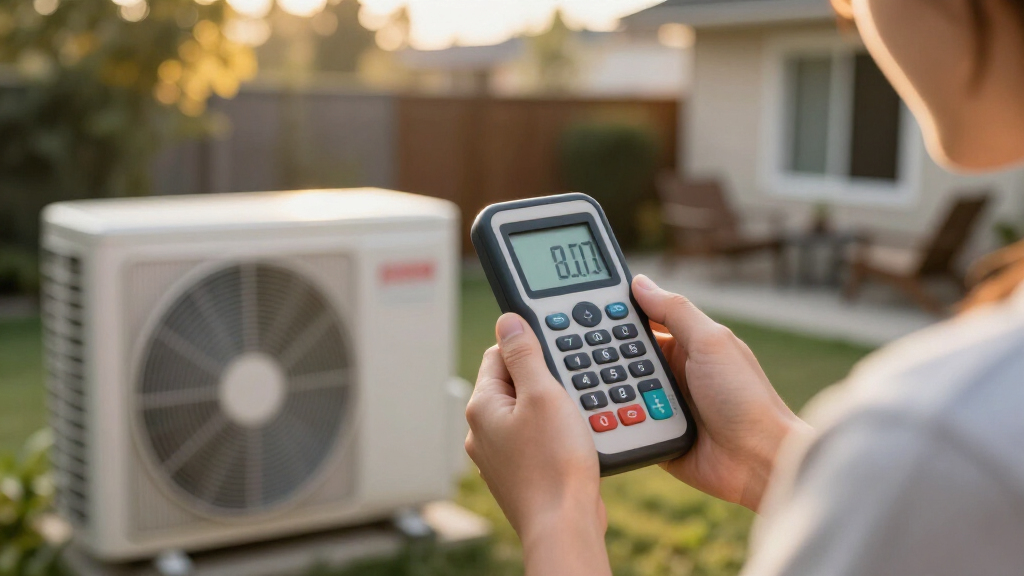
A BTU calculator estimates the cooling capacity you need based on your room’s size, shape, and surroundings. Think of it as a quick recipe for choosing the right air conditioner. Using the wrong size can make your space either too chilly and dry or warm and humid.
When you select the correct BTU, it ensures your air conditioner can remove enough heat and humidity efficiently. An undersized unit will struggle to cool the space, leading to longer run times and increased energy bills. Conversely, an oversized unit will cool the room too quickly, shutting off before removing enough humidity, which can leave your space feeling damp or clammy. Proper sizing also impacts the longevity of your unit—an ill-fitting size causes unnecessary wear and tear from frequent cycling. Therefore, understanding and applying the right BTU rating is crucial for achieving optimal comfort, energy efficiency, and equipment durability. It’s about finding a balance: enough cooling power without waste or discomfort, which ultimately saves you money and enhances your daily comfort.
As an affiliate, we earn on qualifying purchases.
How to use a BTU calculator in 3 simple steps
- Measure your room: length, width, and height. For example, a 12-foot by 15-foot room with 8-foot ceilings has a floor area of 180 sq ft.
- Input these measurements into the calculator. It will suggest a BTU range based on your room size and other factors.
- Adjust for conditions: add about 10% for sun exposure, a busy kitchen, or many occupants. Reduce capacity slightly for shaded or insulated rooms.
This process takes less than a minute and gives you a reliable starting point. Accurate measurements and considering additional factors ensure your calculation aligns closely with real-world needs, preventing costly oversights or undersizing that can lead to discomfort or increased energy costs. Remember, small errors in measurement can significantly impact the BTU recommendation, so take your time and double-check your figures.
As an affiliate, we earn on qualifying purchases.
Compare common room sizes and their BTU needs
| Room Size | Approximate BTU Needed |
|---|---|
| 100–150 sq ft | 5,000 BTU |
| 150–250 sq ft | 6,000 BTU |
| 250–300 sq ft | 7,000 BTU |
| 300–350 sq ft | 8,000 BTU |
| 350–400 sq ft | 9,000 BTU |
| 400–450 sq ft | 10,000 BTU |
| 450–550 sq ft | 12,000 BTU |
| 550–700 sq ft | 14,000 BTU |
| 700–1,000 sq ft | 18,000 BTU |
| 1,000–1,200 sq ft | 21,000–24,000 BTU |
For instance, a living room measuring 20×15 feet (300 sq ft) typically needs around 8,000 BTU. If your room gets lots of sun or has high ceilings, bump that number up. Understanding these general guidelines helps you quickly narrow down your options, but always consider specific conditions that might require adjustments. This knowledge is vital because it helps you avoid the common mistake of underestimating or overestimating your needs, which can lead to discomfort, higher energy bills, or inefficient operation. By familiarizing yourself with these typical BTU requirements, you can make more informed choices, ensuring your cooling system is neither too weak nor unnecessarily powerful, both of which compromise comfort and efficiency.
portable air conditioner with remote
As an affiliate, we earn on qualifying purchases.
As an affiliate, we earn on qualifying purchases.
What factors can change your BTU needs? Think beyond square footage
A room’s size isn’t the only thing that affects cooling capacity. Sun exposure, ceiling height, occupancy, and appliances all play a role. For example, a south-facing sunroom with large windows and high ceilings will need more BTUs than a shaded bedroom with standard height.
When ceilings are taller than standard (8 feet), you should increase your BTU estimate by roughly 25% to account for the larger volume of air that needs cooling. High ceilings mean more space to cool, and if ignored, your AC will struggle to maintain comfort. Similarly, rooms with many occupants or appliances like stoves and computers generate additional heat, which can significantly raise the cooling load. Overlooking these factors may lead to selecting an undersized unit that can’t keep up with the heat load, causing the system to run constantly and wear out faster. Conversely, ignoring these variables might tempt you to oversize, which can cause short cycling and humidity problems. Using a BTU calculator that considers these variables ensures you select a system capable of handling real-world conditions, balancing efficiency with effective cooling. This comprehensive approach helps prevent costly energy waste and ensures your space remains consistently comfortable, even during peak heat or high occupancy periods.
smart thermostat compatible with AC
As an affiliate, we earn on qualifying purchases.
As an affiliate, we earn on qualifying purchases.
Why oversizing or undersizing ruins your comfort and wallet
Choosing a unit that’s too big means it cools the room too fast, shutting off before removing enough humidity. That leaves the space feeling damp and clammy. Plus, it cycles on and off more often, wasting energy and wearing out faster. This short cycling also prevents the unit from dehumidifying properly, which is vital for comfort and health, especially in humid climates. Over time, this rapid cycling can cause mechanical stress, reducing the lifespan of your system and increasing repair costs. On the other hand, an undersized AC runs constantly, trying to reach the set temperature but never quite getting there. This continuous operation leads to higher energy bills, increased wear, and a less comfortable environment because the temperature fluctuates more noticeably. For example, installing a 12,000 BTU unit in a 400 sq ft room might cause short, inefficient cycles, while a 6,000 BTU unit in the same space will struggle to keep the temperature stable during peak heat. Proper sizing avoids these issues by ensuring your system operates efficiently, maintains consistent temperatures, and reduces unnecessary stress on components, ultimately saving you money and providing a more comfortable environment.
Smart tips for choosing the right AC size
- Use a BTU calculator with your room’s measurements and conditions.
- Adjust the recommended capacity based on sun, occupancy, and appliances.
- Pick a unit close to the calculated BTU but avoid going much higher or lower.
- Consider inverter models for better efficiency and temperature stability.
- Consult a professional for complex spaces or if in doubt.
For example, if your calculator suggests 8,000 BTU, don’t just buy the next size up. Instead, look for an AC around 8,000 BTU, possibly 9,000 if your room is very sunny or has high ceilings. This approach ensures you get efficient cooling without unnecessary energy consumption or equipment wear. Proper sizing also reduces the risk of short cycling and humidity problems, which can compromise comfort and increase maintenance costs. Balancing capacity with your specific needs means your system will perform optimally, last longer, and save you money over time. Remember, a slightly conservative estimate tailored to your conditions often yields the best long-term results, combining efficiency with comfort.
Frequently Asked Questions
How do I know if my room needs more or fewer BTUs?
Consider factors like sunlight, ceiling height, number of occupants, and appliances. Use a BTU calculator that accounts for these, or adjust the base capacity by about 10–20% accordingly.Can I just buy the biggest unit I find?
No. Oversized units cycle too quickly, don’t dehumidify well, and waste energy. It’s better to match the capacity closely to your room’s actual needs.How accurate is an online BTU calculator?
It provides a reliable starting point, especially when you input detailed room info. For complex spaces or whole houses, a professional load calculation offers better precision.What happens if I underestimate my BTU needs?
The AC will run constantly, struggle to cool the space, and increase energy bills. Comfort suffers, and the unit wears out faster.Should I consider efficiency ratings along with BTU size?
Absolutely. A well-sized, energy-efficient model reduces your electricity costs and lessens environmental impact. Look for units with good SEER or EER ratings.Conclusion
Choosing the right air conditioner size isn’t just about matching square footage. It’s about smartly balancing all the factors—sun, height, occupancy, and heat sources—to find your perfect fit. A quick BTU calculator is your best friend in making that choice.
Remember, the goal isn’t just cool air—it’s efficient, comfortable, and budget-friendly cooling. When you pick the right size, you turn your space into a cool oasis, not a money drain.
Air Conditioner BTU Calculator
Estimate a right-size cooling range from room area, ceiling height, sun exposure, and occupancy.
Your estimate fits a compact room unit. Compare 6,000 BTU air conditioners sized for smaller rooms.
See compact AC matchesYour estimate lands in the mid-size range. Compare 8,000 BTU window air conditioners for bedrooms or offices.
See mid-size AC matchesYour estimate needs a larger-capacity unit. Compare 12,000 BTU air conditioners and confirm room conditions before buying.
See larger AC matchesEstimate only. Check product specs, local rates, and site conditions before buying or planning around these numbers.
Evergreen bestsellers Picks
bestsellers
As an affiliate, we earn on qualifying purchases.