TL;DR

Get kitchen staples and gadgets delivered free with Prime
- Fast, free delivery on millions of items
- Prime Video, Amazon Music and more included
- Member-only deals all year
A Good Housekeeping report on kitchen design in 2027 identifies five trends based on interviews with design professionals: darker colors, layered materials, long-lasting choices, integrated cooking technology and treating the kitchen as a starting point for whole-home design. The trends are expert observations, not survey results or proof that every homeowner is adopting them.
Good Housekeeping’s 2027 kitchen design report identifies five directions its interviewed designers say are gaining traction: darker colors, layered finishes, durable materials, integrated technology and planning the kitchen as a starting point for the wider home. The report, based on expert interviews rather than market-wide data, points to a shift away from kitchens designed mainly around uniform finishes and standalone room planning.
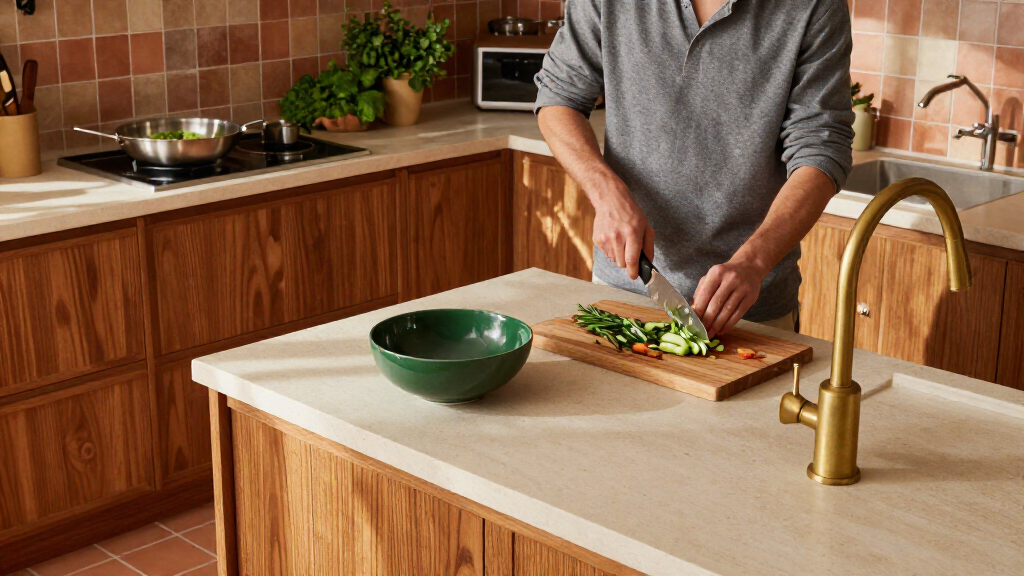
The report’s first two trends concern the look and working character of the kitchen. Designer Kristin Harrison, a Miele Master and founder of Georgia & Hunt Design House, says clients are moving beyond white and cream toward more individualized color choices. Meanwhile, designer Leyden Lewis describes a preference for layered spaces that combine cabinet finishes, warm wood, stone and metal instead of matching every surface.
That layered approach also includes practical details, Lewis says, such as built-in cutting boards and workstation sinks. He characterizes the goal as a kitchen that can support cooking and tolerate everyday mess while remaining inviting and personal. The report presents these as design requests observed by the interviewed professionals, not as quantified findings about all renovation projects.
The other three trends focus on longevity, technology and how kitchens connect to adjacent rooms. Designer Mick De Giulio says homeowners are considering authentic materials, craftsmanship and appliance performance with the long term in mind. Lewis points to cooking features such as oven cameras, guided or automated recipes, and combination steam and speed ovens. De Giulio also says kitchen materials, circulation and views are increasingly considered early in whole-home planning, particularly in open layouts.
How Kitchens Shape Home Projects
Together, the five directions suggest that design decisions are being considered across appearance, cooking function and the wider floor plan, rather than as a finish-only refresh. For homeowners, that can affect choices made before installation: a layered scheme requires coordinating different materials, while whole-home planning can influence where the kitchen sits and how people move between it and adjoining spaces.
The report also raises a practical trade-off. De Giulio’s “futureproofing” approach favors materials and products intended to last, but the article acknowledges that this may mean a higher upfront investment. Whether that cost pays off for a particular household depends on product quality, maintenance, use and how long the owners keep the space; the report does not provide cost comparisons or a financial return estimate.
Technology may also shape renovation priorities, but the report emphasizes design integration as well as capability. Lewis says the challenge is to incorporate smart cooking functions without losing a kitchen’s warm, human feel. That is relevant to buyers weighing advanced appliances against budgets, ease of use and the visual character of the room.
Products Worth Considering

Le Creuset Signature 6.5-Quart Deep Round Dutch Oven with Light Gold Crucible Knob, Enameled Cast Iron, Bleu Riviera

Ninja Foodi Dual Zone Smart XL Air Fryer, 10 Qt, 6-in-1, Black (DZ550)

Ninja HyperHeat 9-in-1 Pressure Cooker, 6.5 qt, Stone Purple (PC201SP)
As an affiliate, we earn on qualifying purchases.
Design Choices Beyond White Cabinets
The report frames these trends against a change in what designers and clients consider a neutral kitchen. Harrison says white and cream have long been the safer choices, but she sees greater interest in customized palettes. Her comments describe her professional experience; they do not establish that neutral kitchens have disappeared or that darker colors now dominate sales.
Similarly, the move toward mixed finishes is presented as part of a broader appetite for less uniform interiors. Lewis connects that look with kitchens designed for active cooking, not only for display. De Giulio’s comments extend the same planning mindset to materials and appliances, describing choices intended to remain useful as lifestyles change.
For open-plan homes, De Giulio says the kitchen can guide decisions about materials, spatial planning, views and circulation from the beginning of a project. The article does not offer a market timeline, consumer poll or sales data to measure how widely these approaches are spreading. Its evidence is the views of the design professionals interviewed by Good Housekeeping.
““The safe bet has always been white or cream, but there is a yearning for something that looks much more customized now.””
— Kristin Harrison, Miele Master and founder of Georgia & Hunt Design House
How Broadly the Trends Apply
The report does not quantify how many homeowners are adopting these choices, compare them with previous years or provide data on renovation spending, appliance sales or project costs. Its claims are expert observations from the designers interviewed, so the extent of adoption across regions, budgets and housing types remains unclear.
It is also not yet clear which ideas will prove durable and which may give way to other styles. The report offers no independent forecast or follow-up evidence confirming that the five directions will become dominant in 2027. Individual decisions will depend on factors the article does not assess, including a household’s budget, cooking habits, existing home and maintenance preferences.
What Homeowners Can Watch
As 2027 approaches, homeowners and design professionals can compare these recommendations with local project costs, product availability and their own needs. For a planned renovation, the report’s themes can serve as questions rather than a checklist: whether a more personal palette suits the room, whether mixed finishes support everyday work, and whether investing in durable materials or connected appliances makes sense for the household.
Good Housekeeping’s article does not announce a new standard or policy, and it names no upcoming industry milestone that would confirm the trends. Their reach will become clearer through further design reporting and market evidence, including adoption in completed projects and appliance offerings. For now, the report establishes what its interviewed designers are seeing and expecting, while broader uptake remains unmeasured.
Key Questions
What are the five kitchen design trends identified for 2027?
The Good Housekeeping report lists darker color palettes, layered finishes, long-lasting materials and craftsmanship, integrated cooking technology, and planning the kitchen as a starting point for the wider home.
Does the report show that these trends are popular with most homeowners?
No. The report is based on interviews with design professionals and provides no survey or market data measuring how many homeowners are adopting the ideas.
What does a layered kitchen look like?
Designer Leyden Lewis describes combining cabinet finishes and pairing warm wood with stone and metal. He also points to functional details such as workstation sinks and built-in cutting boards.
What does “futureproofing” mean in the report?
Designer Mick De Giulio uses the idea to describe choosing authentic materials, craftsmanship and performance-focused products intended to remain useful and visually relevant as lifestyles change. The report notes that this approach may require a higher initial investment.
What remains uncertain about the 2027 trends?
The report does not establish their market-wide adoption, cost or staying power. It records expert observations and expectations, not confirmed outcomes for the year.
Source: goodhousekeeping.com