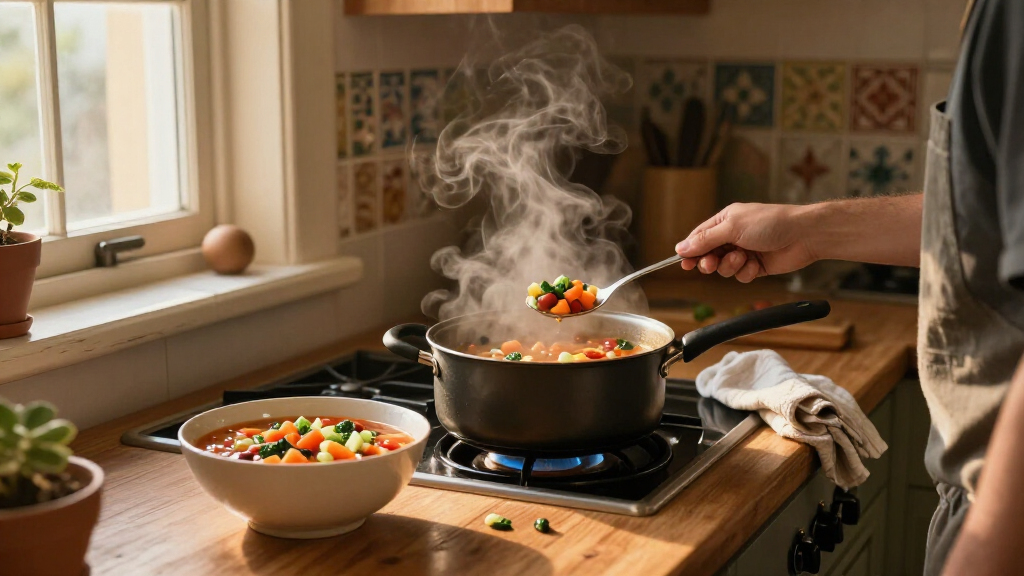

🔍 Read the full analysis: Sunday Pot Of Minestrone: The Vegetable Soup That Feeds The Week on Mad Tasting

Get kitchen staples and gadgets delivered free — and shop member deals
- Fast, free delivery on millions of items
- Access to Prime Big Deal Days deals on October 6–7
- Prime Video, Amazon Music and more included
TL;DR
A Sunday pot of minestrone can provide four to six meals, with leftovers refrigerated for four to five days or frozen for about three months, according to Mad Tasting. The source recommends cooking pasta separately, cooling the soup promptly and building flavor with a slow-cooked onion, carrot and celery base.
Mad Tasting’s minestrone guide sets out a Sunday cooking method designed to provide several meals through the week: slowly cook an onion, carrot and celery base, simmer it with beans and vegetables, and store pasta separately so it does not absorb the broth. The source says the soup can be refrigerated for four to five days or frozen for about three months, provided it is cooled and stored properly.
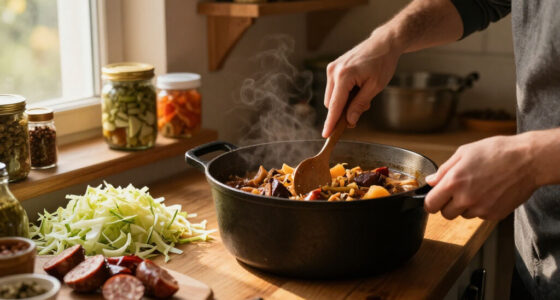
The guide describes minestrone as a thick vegetable soup built from a soffritto: onion, carrot and celery softened slowly in olive oil. Beans and seasonal vegetables add substance; pasta or rice may be served with it. Mad Tasting recommends allowing 15 to 20 minutes for the base to soften without browning, then adding ingredients in stages according to how long they need to cook.
Its method adds garlic and firmer vegetables first, followed by beans and tomato, then water or light vegetable stock. A Parmigiano-Reggiano rind simmers in the broth for added flavor. Tender vegetables and greens go in near the end. The guide suggests cooking pasta in a separate pot and combining it with the soup only when serving.
For leftovers, the source gives a refrigerator window of four to five days and a freezer window of about three months. It advises transferring the soup to shallow containers within two hours of cooking, keeping pasta separate, and reheating only the amount needed until steaming hot throughout. It gives about 165°F as a thermometer check for reheating.
Sunday Pot of Minestrone: The Soup That Feeds the Week
One slow Sunday session at the stove yields four to six meals. A soffritto base of onion, carrot and celery, seasonal vegetables, beans — and one golden rule: the pasta never goes into the pot.
“Cook the pasta separately. Always.”
— Mad TastingOne Pot, Five Stages
Mad Tasting’s sequence layers ingredients by cooking time — 15 to 20 minutes of slow soffritto first, then everything in stages, with tender greens last. Much of the simmer is hands-off.
Soffritto Base
Onion, carrot and celery softened slowly in olive oil — 15–20 min, no browning.
Garlic & Firm Veg
Garlic and firmer vegetables go in first, since they need the longest cooking.
Beans & Tomato
Beans and tomato join the pot, plus water or light vegetable stock.
Simmer & Rind
A Parmigiano-Reggiano rind simmers in the broth for added depth of flavor.
Greens Last
Tender vegetables and greens go in near the end. Pasta cooks in a separate pot.
Why This Pot Feeds a Week
Keep Pasta Out of the Pot
Pasta left in soup keeps absorbing broth, turning bloated and soft while thickening the liquid into starch. Stored separately, it goes into individual bowls at serving — and portions freeze cleanly without it.
Better on Day Two
The guide notes the soup may taste fuller after a day, as beans soften and thicken the broth — a culinary observation rather than a measured result. The slow, unbrowned soffritto is the flavor anchor.
Cucina Povera Cooking
From minestra, Italian for soup — a more substantial version. Mad Tasting frames it as resourceful home cooking: no fixed ingredient list, just garden produce and pantry staples like beans.
Store It Right, Eat All Week
Mad Tasting’s storage windows are general guidance — they depend on how quickly the soup cools, refrigerator temperature and careful handling. Follow local food-safety advice, and discard soup with an uncertain storage history.
Chill, Store, Reheat
| Stage | Mad Tasting Guidance | Key Detail |
|---|---|---|
| Cooling | Transfer soup to shallow containers within two hours of cooking | Shallow containers speed the chill |
| Refrigerating | Store in airtight containers; keep pasta in a separate container | 4–5 day window |
| Freezing | Freeze portions intended for later use, without pasta | ~3 month window |
| Reheating | Reheat only the amount needed, until steaming hot throughout | ~165°F thermometer check |
| Serving | Add cooked pasta to each bowl at serving time | Protects broth and pasta texture |
“Minestrone Is a Seasonal Template, Not a Fixed Recipe.”
Regional styles show the flexibility: pesto finishes the soup in Liguria, Tuscan versions may be served over day-old bread, and southern pots lean on tomatoes and summer zucchini. The soffritto, beans and seasonal produce are what anchor the dish.
Spring
Fresh peas and spring garden produce
Summer
Zucchini, tomatoes and tender greens
Autumn
Hardy squash and late-season beans
Winter
Squash or cabbage from the pantry
Quick Answers
Q. How long does minestrone keep?
Refrigerate in airtight containers for 4–5 days, or freeze for about 3 months — cooling it promptly and keeping pasta separate.
Q. Why cook the pasta separately?
Pasta left in soup keeps absorbing broth, turning bloated and soft. Add it to each bowl when serving.
Q. What vegetables go into minestrone?
Whatever is in season: peas in spring, zucchini in summer, squash or cabbage in winter. No single prescribed list.
Q. How should leftovers be reheated?
Move soup to shallow containers within two hours; reheat only what you’ll eat, until steaming hot — about 165°F on a thermometer.
A Sunday Pot for Weekday Meals
The practical appeal is that one cooking session can supply meals across several days. Mad Tasting estimates that a pot can yield four to six meals, while its method section says a standard Dutch oven can produce roughly 10 to 12 servings. The source does not specify the pot size or serving size behind those estimates, so they are best treated as planning guidance rather than a guaranteed yield.
Keeping pasta out of the stored soup addresses a common texture problem: pasta continues absorbing liquid as it sits. Stored separately, it can be added to individual bowls, leaving the broth less starchy and the pasta less soft. That approach also makes it easier to freeze portions of soup without pasta.
The method is adaptable to what is available. Mad Tasting cites peas in spring, zucchini in summer, and squash or cabbage in winter. For readers trying to reduce weekday cooking, the central point is a repeatable sequence and safe handling of the finished pot.
A Regional, Seasonal Italian Soup
Minestrone takes its name from minestra, Italian for soup, and refers to a more substantial version. Mad Tasting frames it as part of cucina povera, or resourceful home cooking that uses available garden produce and pantry ingredients. It says there is no single fixed ingredient list; the soffritto, beans and use of seasonal produce are the elements that anchor its version of the dish.
The guide gives regional examples to explain that flexibility: pesto may finish minestrone in Liguria, while Tuscan versions may be served with day-old bread. Southern versions may use tomatoes and summer zucchini. These examples are background from the source, not a claim that every household in each region follows one formula.
For a Sunday preparation, Mad Tasting estimates about 90 minutes of cooking, much of it hands-off after the pot begins to simmer. It says the soup may taste fuller after a day as beans soften and thicken the broth, though that is a culinary observation rather than a measured result.
““Cook the pasta separately. Always.””
— Mad Tasting
Yield and Storage Conditions
The source does not identify a publication date, provide a tested recipe with precise quantities for every ingredient, or explain the pot size and serving assumptions behind its yield estimates. Its storage periods are general guidance and may depend on how quickly the soup cools, refrigerator temperature and handling. It also does not provide a separate freezing and thawing protocol.
Mad Tasting says to cool the soup in shallow containers within two hours, refrigerate it in airtight containers and reheat portions until hot throughout. The article does not report independent food-safety testing of those instructions. Readers should follow local food-safety guidance and discard soup if its storage history is uncertain.
Prepare, Chill and Reheat
The next step for anyone following the guide is to choose vegetables, cook the base slowly, and simmer the soup before cooling it in shallow containers. Keep cooked pasta in a separate container, refrigerate portions promptly and add pasta to bowls when serving. Freeze portions intended for later use and reheat only what will be eaten, until steaming hot throughout.
The source presents this as a recurring weekly routine, not a scheduled event with a later announcement or milestone. It does not provide updates or report a formal test of the method, so the stated yields and storage windows remain its guidance.
Key Questions
How long does minestrone keep?
Mad Tasting says to refrigerate it in airtight containers for four to five days, or freeze it for about three months. The source advises cooling it promptly and storing pasta separately.
Why cook the pasta separately?
Pasta left in the soup continues absorbing broth as it sits, which can make it bloated and soft. Add it to each bowl when serving, according to the guide.
What vegetables can go into minestrone?
The source treats the soup as seasonal: it suggests peas in spring, zucchini in summer, and squash or cabbage in winter. It does not prescribe a single ingredient list.
How should leftover soup be cooled and reheated?
Mad Tasting advises moving soup into shallow containers within two hours of cooking and reheating only the portion needed until steaming hot throughout. It gives about 165°F as a thermometer check.
Source: Mad Tasting
Fall Picks
fall essentials
As an affiliate, we earn on qualifying purchases.