
To use a home freeze dryer effectively for long-term storage, set the vacuum pressure between 0.1 to 0.5 millibars during primary drying to enable sublimation. Maintain this stage for 20 to 40 hours, checking the food’s firmness before progressing. During secondary drying, slightly increase the temperature and extend for 4 to 8 hours to reduce residual moisture below 1%. Fine-tuning these settings guarantees your food stays fresh for 10 to 25 years—there’s more to learn on how to perfect each step.

Get kitchen staples and gadgets delivered free with Prime
- Fast, free delivery on millions of items
- Prime Video, Amazon Music and more included
- Member-only deals all year
Key Takeaways
- Maintain vacuum pressure between 0.1 to 0.5 millibars during primary drying for effective sublimation.
- Allow 20-40 hours for primary drying, adjusting based on food thickness and moisture content.
- Conduct periodic checks to ensure foods become firm and brittle before transitioning to secondary drying.
- Increase temperature slightly and extend vacuum in secondary drying for 4-8 hours to reduce residual moisture below 1%.
- Monitor and adjust settings to ensure proper drying, preserving flavor, nutrients, and extending shelf life to 10-25 years.
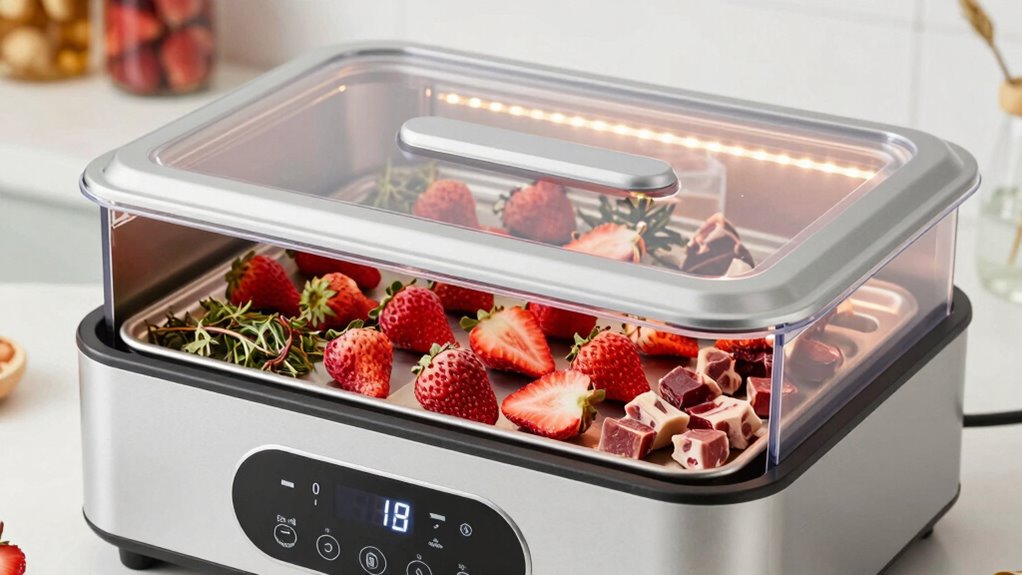
A home freeze dryer offers an efficient way to preserve food for the long term, making it easier to stockpile meals and ingredients without sacrificing quality. When you operate it correctly, you can considerably extend the shelf life of your food, ensuring it stays nutritious and tasty for years. Achieving ideal preservation depends on managing specific settings, particularly the vacuum pressure and timing of each stage in the drying process.
First, understanding how vacuum pressure impacts your freeze drying is essential. During the primary drying phase, you want to lower the chamber’s pressure to around 0.1 to 0.5 millibars. This intense vacuum allows sublimation, where ice turns directly into vapor without passing through the liquid stage. Maintaining the right vacuum pressure guarantees that moisture is removed efficiently, which directly influences the shelf life of your stored food. If the pressure isn’t low enough, residual moisture can remain, leading to mold or spoilage over time. Conversely, if the vacuum is too aggressive, it might damage delicate foods or cause uneven drying. You’ll need to monitor and adjust the vacuum levels carefully, depending on the food type and texture.
Timing is equally essential. The primary drying phase typically takes between 20 to 40 hours, but this can vary based on food thickness and water content. You’ll want to check for dryness periodically; foods should feel fully firm and brittle before moving to the next stage. During secondary drying, you increase the temperature slightly and reduce the vacuum pressure further to remove any remaining moisture. This step can take an additional 4 to 8 hours. Proper timing here guarantees that the food reaches a moisture content below 1%, which is essential for maximizing shelf life. Additionally, understanding drying parameters and how they influence the process can help improve results over time.
Following these precise settings and timings helps prevent spoilage and extends the longevity of your food. Properly dried items, stored in airtight containers, can last 10 to 25 years, depending on storage conditions. The key is consistent monitoring and adjusting your freeze dryer’s parameters based on the food’s specific needs. When you get these settings right, you’ll find that your preserved foods maintain their flavor, texture, and nutritional value for a long time. This not only makes your long-term food storage more reliable but also more cost-effective, giving you peace of mind knowing your supplies will last.
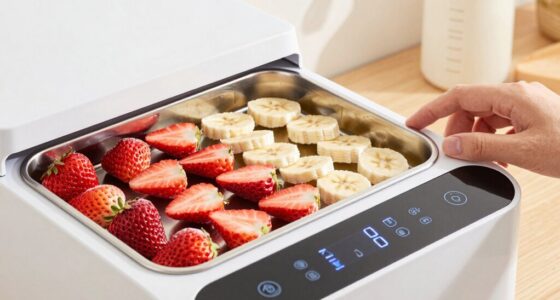
home freeze dryer for long-term food storage
As an affiliate, we earn on qualifying purchases.
As an affiliate, we earn on qualifying purchases.
Frequently Asked Questions
How Often Should I Clean and Maintain My Home Freeze Dryer?
You should clean and maintain your home freeze dryer after every batch to ensure ideal performance. Follow a regular maintenance schedule, including cleaning the chamber, removing ice buildup, and checking seals and filters weekly or after each use. Cleaning frequency depends on how often you run it, but staying consistent prevents issues and prolongs the appliance’s life. Always refer to your manufacturer’s guidelines for specific cleaning and maintenance instructions.
Can I Freeze-Dry Liquids or Sauces With My Home Freeze Dryer?
Like a modern-day alchemist, you can freeze-dry liquids and sauces with your home freeze dryer. It’s perfect for liquid preservation and sauce dehydration, transforming runny ingredients into lightweight, shelf-stable powders. Just pour your sauces into trays and guarantee they’re spread thin. Keep the temperature and vacuum settings in check, and you’ll turn liquids into easy-to-store, flavorful powders—saving space and extending their shelf life effortlessly.
What Is the Maximum Storage Duration for Freeze-Dried Foods?
You can expect a maximum shelf life of 25 to 30 years for your freeze-dried foods if stored properly. The storage stability depends on keeping them in airtight, dark, and cool conditions, which minimizes moisture and light exposure. Proper packaging, like vacuum-sealed bags or mylar pouches, also helps maintain their quality over time. Regularly check your stored items to assure they stay in excellent condition and enjoy long-term food security.
Are There Foods That Don’T Freeze-Dry Well at Home?
Some foods don’t freeze-dry well at home, especially those with high moisture content or delicate fruit textures. Fruits like berries or peaches can sometimes turn mushy or lose their shape if not dried properly. Foods with tough textures, such as root vegetables, may not freeze-dry evenly. To get the best results, choose foods with moderate moisture content and firm textures, and verify your freeze dryer settings are correctly adjusted for each type.
How Do I Troubleshoot Common Issues During the Freeze-Drying Process?
If you encounter issues during freeze-drying, first check your equipment calibration to make certain temperatures and vacuum levels are accurate. Use moisture detection tools to monitor residual humidity; if moisture remains, extend the drying time or adjust settings. Make sure your food is properly prepped and evenly frozen. Regularly inspect seals and vacuum integrity, and clean your dryer to prevent malfunctions, guaranteeing consistent, high-quality results.
As an affiliate, we earn on qualifying purchases.
Conclusion
With the right settings and timing, your home freeze dryer can transform everyday food into an everlasting treasure trove—more durable than the most fortified vaults. You’ll enjoy long-term storage without sacrificing flavor or nutrients, making your pantry an unstoppable fortress of sustenance. Trust these proven techniques, and you’ll master the art of food preservation with the precision of a culinary scientist. Prepare to amaze yourself—your food storage game will reach legendary status!
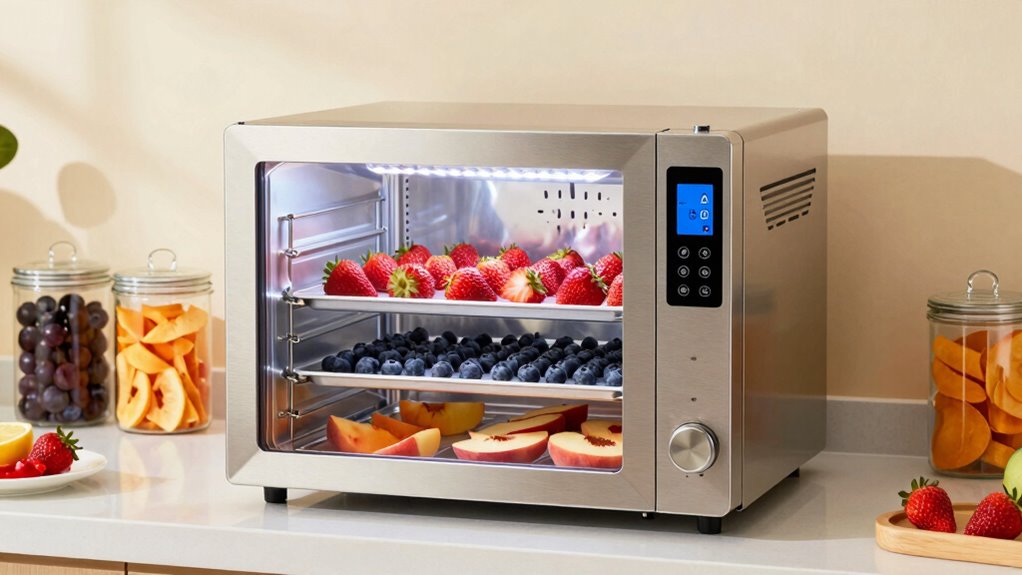
food dehydration and freeze drying machine
As an affiliate, we earn on qualifying purchases.
As an affiliate, we earn on qualifying purchases.
airtight storage containers for freeze dried food
As an affiliate, we earn on qualifying purchases.
As an affiliate, we earn on qualifying purchases.
Halloween Picks
halloween
As an affiliate, we earn on qualifying purchases.