Freezer burn happens when air reaches your frozen food, causing dehydration and rough patches that affect texture and flavor. It’s caused by moisture loss and improper sealing, often visible as gray patches, ice crystals, or dry spots. To prevent it, use airtight containers, vacuum seal, and wrap food tightly. Keep your freezer at 0°F and avoid overloading. If you want to learn more about avoiding freezer burn and keeping your food fresh, keep exploring the tips below.

Get kitchen staples and gadgets delivered free — and shop member deals
- Fast, free delivery on millions of items
- Access to Prime Big Deal Days deals on October 6–7
- Prime Video, Amazon Music and more included
Key Takeaways
- Freezer burn occurs when air contacts frozen food, causing dehydration and dry patches.
- It results from moisture migration and inadequate sealing during storage.
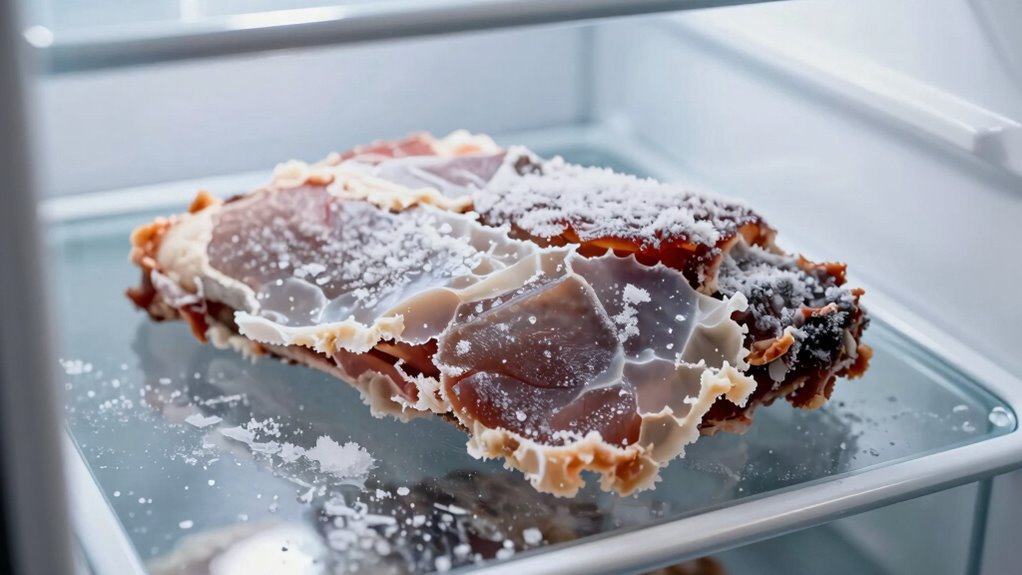
- Signs include gray patches, ice crystals, tough texture, and dry spots on food.
- Prevent freezer burn by using airtight packaging, vacuum sealing, and maintaining consistent temperature.
- Proper storage, minimal door opening, and timely use extend freezer life and preserve food quality.
airtight food storage containers
As an affiliate, we earn on qualifying purchases.
As an affiliate, we earn on qualifying purchases.
What Is Freezer Burn and How Does It Affect Food?
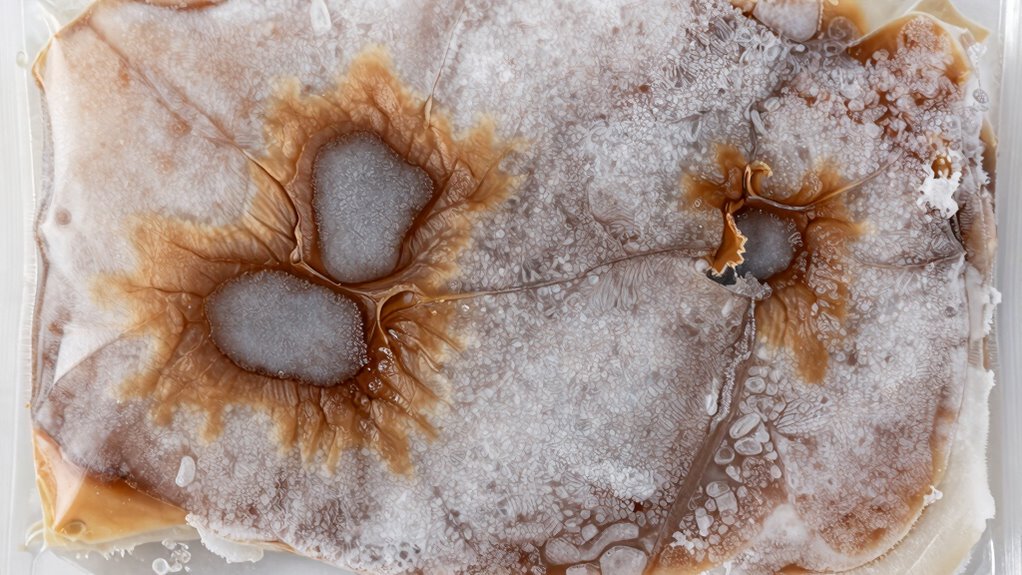
Have you ever noticed dry, gray patches on frozen food? That’s a sign of freezer burn. It occurs when air reaches the food’s surface, causing dehydration. This exposure changes the food texture, making it tough, leathery, or rubbery. While it doesn’t make the food unsafe to eat, freezer burn can markedly affect taste and quality. Nutritional loss can also happen, as exposure to air may degrade some vitamins and nutrients, especially in fruits and vegetables. The overall effect diminishes the food’s appeal, leaving it less flavorful and less nutritious. Recognizing freezer burn helps you understand why food’s appearance, texture, and nutritional value degrade over time. Proper storage techniques can prevent these changes and keep your frozen foods fresh longer. Halal storage practices can help ensure your frozen foods remain safe and high-quality. Additionally, understanding freezer temperature control can further reduce the risk of freezer burn and preserve food integrity. Maintaining consistent temperature control is crucial because fluctuations can accelerate freezer burn and affect food quality. Implementing airtight packaging techniques is essential to limit air exposure and maintain food quality over extended storage periods. Using reliable temperature monitoring devices can help maintain optimal freezer conditions and prevent freezer burn from occurring.
As an affiliate, we earn on qualifying purchases.
What Causes Freezer Burn and How Can You Detect It?
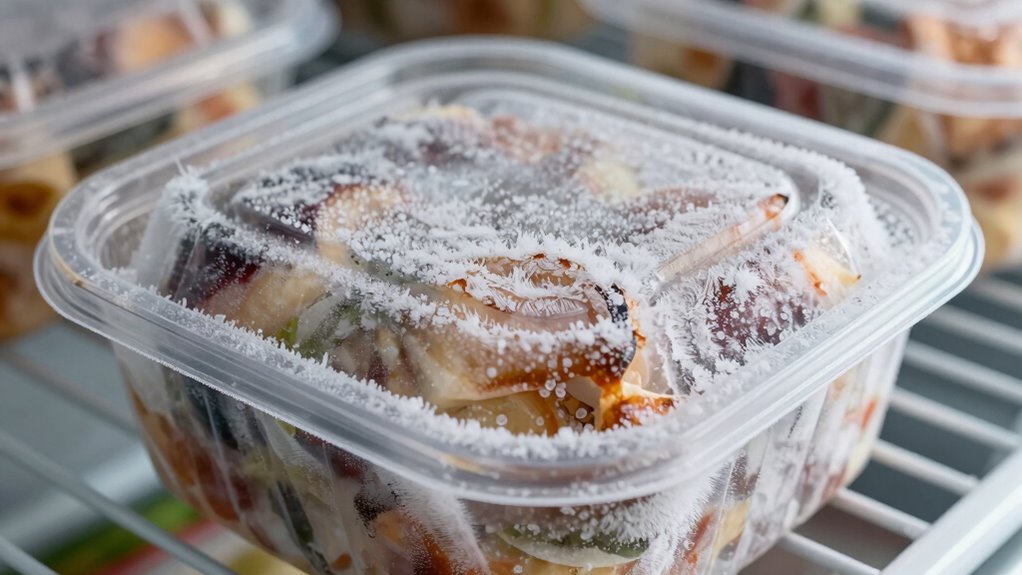
Freezer burn happens when air comes into contact with your food’s surface, leading to dehydration and ice crystal formation. This process, driven by moisture migration, causes the texture and flavor to deteriorate. You can detect freezer burn through visual and textural clues, such as discolored patches, dry spots, or a leathery surface. You can also observe moisture migration as a sign of improper storage. To identify it quickly, look for:
- Discolored areas that appear gray or brown.
- Dry, tough patches that feel different from the rest of the food.
- Ice crystals forming on or inside the packaging, indicating moisture loss.
Additionally, understanding the importance of proper storage techniques, such as using airtight packaging, helps prevent moisture migration and freezer burn. Properly sealing your food minimizes exposure to air, which is a key factor in freezer burn development, and helps preserve the quality of your stored items. Using vacuum sealing methods can significantly reduce the risk of freezer burn and extend the shelf life of your food. Recognizing these indicators helps you prevent eating compromised food.
As an affiliate, we earn on qualifying purchases.
How Can You Tell if Food Has Freezer Burn?

You can tell food has freezer burn when you notice visual and textural changes that indicate moisture loss. During a visual inspection, look for grayish or pale patches, ice crystals, or dry, leathery spots on the surface of your food. These areas often appear dull and spotty compared to the rest of the item. Additionally, the texture may feel rough, dry, or rubbery when touched. Smell detection also helps; freezer-burned food may have a stale, off, or slightly musty odor. If you notice any of these signs, it’s likely that the food has experienced freezer burn. While it doesn’t necessarily make the food unsafe, these indicators suggest diminished quality and flavor. Regularly checking your frozen items helps you identify freezer burn early. Understanding proper storage techniques and utilizing smart appliance features such as temperature controls can also help prevent freezer burn and preserve food quality over time. Proper sealing and minimizing air exposure are crucial to prevent moisture loss, ensuring your food stays fresh longer.
As an affiliate, we earn on qualifying purchases.
How to Prevent Freezer Burn With Proper Packaging
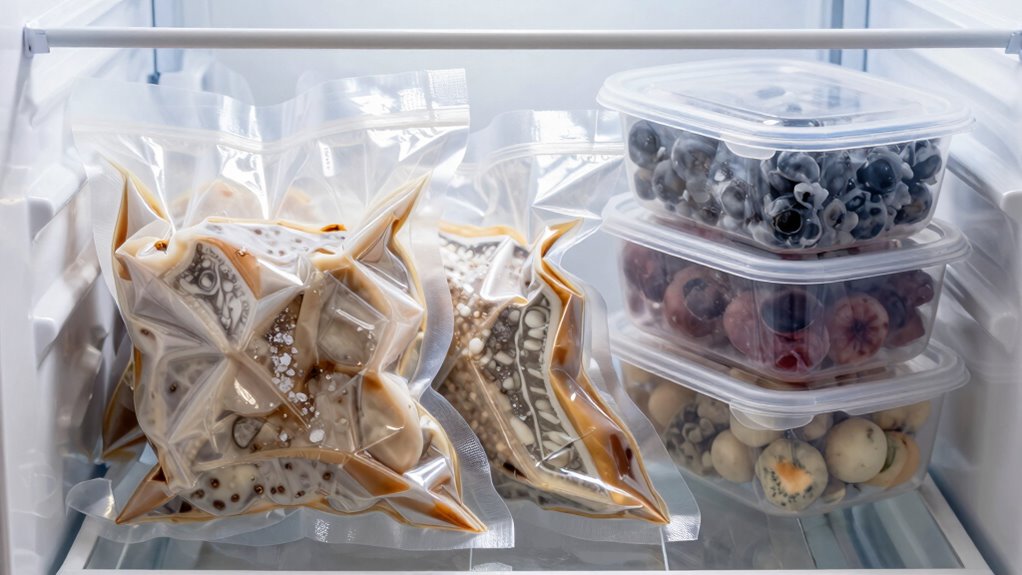
Proper packaging is essential for preventing freezer burn and preserving the quality of your food. To do this effectively, focus on airtight containers and vacuum sealing, which remove air and create a barrier against moisture loss. Here are three ways to guarantee your food stays fresh:
- Use airtight containers that seal tightly, preventing air from reaching your food.
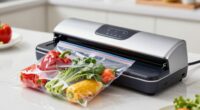
- Invest in a vacuum sealer to remove excess air and extend storage life.
- Wrap items with durable, moisture-resistant materials before placing them in containers or bags. Additionally, choosing food preservation techniques can further enhance your efforts to prevent freezer burn and keep food fresh longer. Incorporating proper packaging methods into your routine can significantly reduce the risk of moisture loss and freezer burn, ensuring your food maintains its flavor and texture. Properly packaging techniques also help maintain the nutritional value of your food over time. Regular practice and visual and auditory cues can improve your packaging skills, leading to better food preservation outcomes.
How Long Can Frozen Foods Last Before Freezer Burn Sets In?
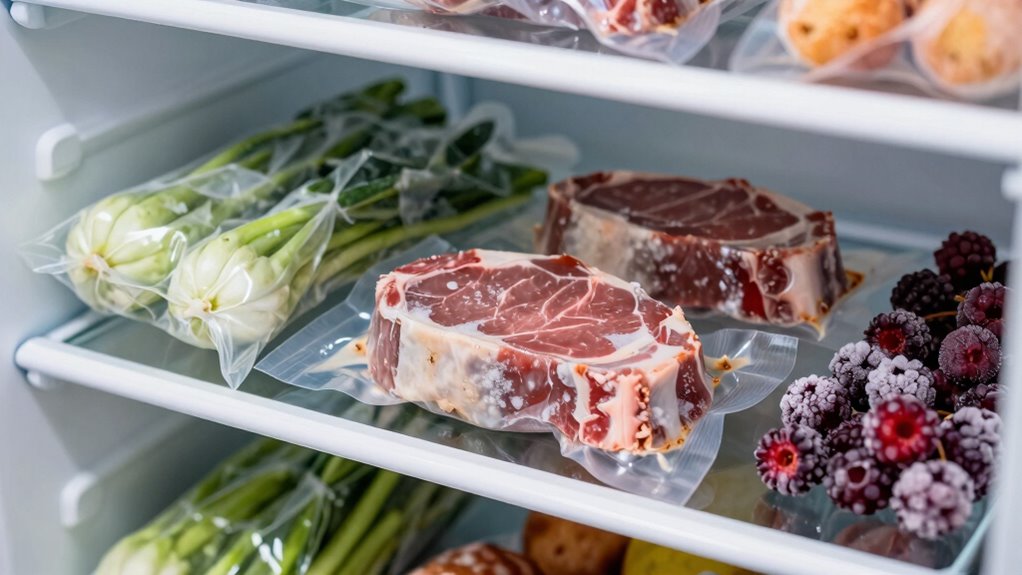
Understanding how long frozen foods stay good before freezer burn occurs helps you plan your meals and storage more effectively. Typically, the storage duration varies depending on the type of food and freezer temperatures. Most foods remain at quality for 3 to 12 months if kept at 0°F (-18°C), but this isn’t a guarantee against freezer burn. Higher freezer temperatures or inconsistent freezing can shorten this period, leading to ice crystals and dehydration. Lean meats and seafood usually last 3 to 6 months, while vegetables and cooked dishes can last up to a year. To maximize freshness, keep your freezer at a consistent 0°F and avoid frequent door openings. Proper packaging and timely consumption are key to preventing freezer burn during this storage window. Additionally, freezer temperature consistency plays a crucial role in maintaining food quality and preventing dehydration. Proper packaging materials, like vacuum sealing or airtight containers, also help protect foods from moisture loss.
Easy Ways to Thaw and Use Frozen Foods Without Damage
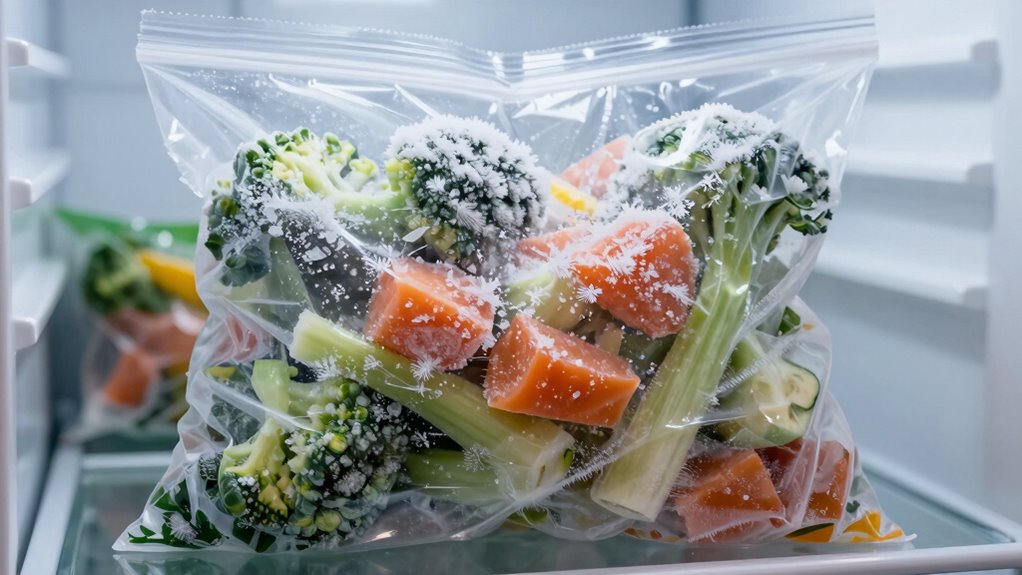
Choosing the right thawing method can help you preserve your food’s quality and prevent freezer burn. You might opt for thawing in the refrigerator, using cold water, or the microwave, depending on your needs. Keep these tips in mind to use your frozen foods safely and effectively. Additionally, understanding air quality can help you maintain a healthier environment while managing your food storage and preparation.
Thawing Methods Overview
Wondering how to thaw frozen foods without compromising their quality? Proper thawing preserves flavor, texture, and safety. Here are three easy methods:
- Refrigeration: Place foods in airtight storage containers and thaw slowly at a controlled temperature. This minimizes freezer burn and keeps food safe. Maintaining a consistent thawing temperature helps reduce bacterial growth and preserves food integrity.
- Cold Water Submersion: Seal foods tightly in waterproof containers and immerse in cold water, changing it every 30 minutes. This speeds up thawing while maintaining temperature control.
- Microwave: Use the defrost setting to quickly thaw foods. Be sure to transfer them immediately to cooking or refrigeration to prevent bacteria growth.
- Utilizing proper storage techniques can greatly reduce the risk of freezer burn and preserve food quality over time.
Choosing the right method depends on your timeline and the food type. Proper storage containers and temperature control are key to avoiding damage and ensuring quality.
Proper Usage Tips
To keep your frozen foods in top shape, it’s important to thaw and use them properly. Always transfer items to airtight containers or resealable bags to prevent freezer burn and maintain freshness. When thawing, opt for the refrigerator for slow, even defrosting—this minimizes moisture loss and preserves texture. Avoid refreezing foods that have been thawed at room temperature, as this can cause spoilage. Proper labeling is essential; mark packages with dates to track storage time and prevent using outdated items. If you need quick thawing, use cold water or microwave methods, but follow safety guidelines. Handling foods carefully and storing them correctly ensures ideal quality and reduces the risk of freezer burn, saving you money and waste.
When Should You Discard Frozen Food Due to Freezer Burn?
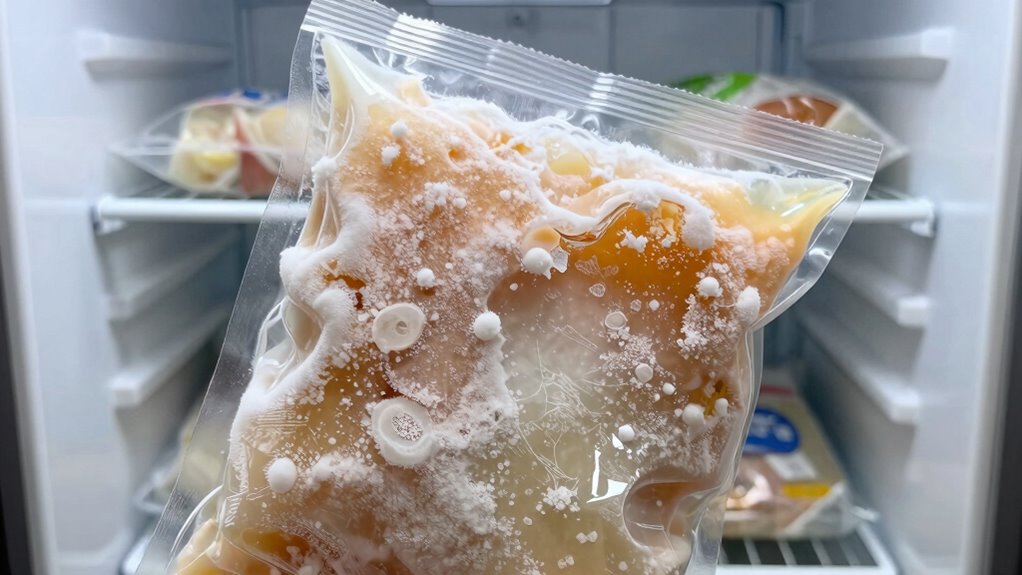
Freezer burn isn’t necessarily a sign that your food is unsafe to eat, but it does indicate quality loss. You should consider discarding frozen food when it shows significant signs of freezer burn that affect texture and flavor. First, check the expiration dates; if they’ve passed, your food might be best discarded for safety reasons. Second, rely on smell indicators—if your food has a sour or off odor, it’s a clear sign it’s no longer good. Third, evaluate the extent of freezer burn; large, dry, discolored patches mean the food has degraded too much. Remember, while freezer burn doesn’t pose health risks, these cues help you decide when to let go and prevent wasting food that no longer meets your standards.
Quick Tips to Keep Your Frozen Food Fresh and Tasty
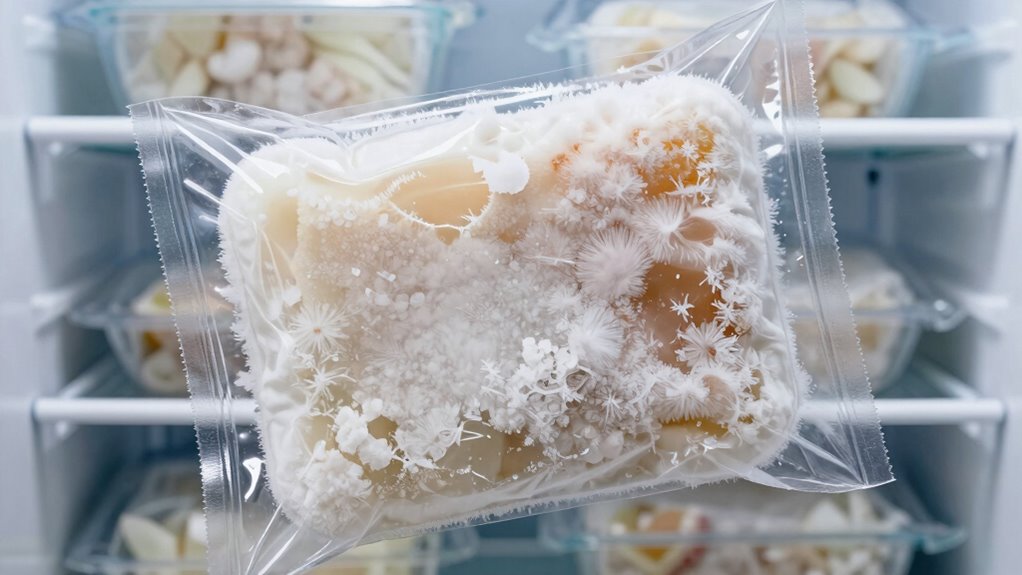
Keeping your frozen food fresh and tasty requires some simple but effective strategies. First, use proper storage containers that seal tightly to prevent air exposure, which causes freezer burn. Invest in high-quality, airtight containers or freezer bags designed for freezing. Label your packages with clear labeling techniques, including the date and contents, so you use older items first and avoid freezer mismanagement. Wrap foods tightly with plastic wrap or aluminum foil before placing them in containers for extra protection. Maintain a consistent freezer temperature of 0°F (-18°C) to slow down quality loss. Avoid overloading your freezer, which hampers air circulation. By following these tips, you’ll maximize the freshness of your frozen foods and reduce waste.
Frequently Asked Questions
Can Freezer Burn Affect Food Safety or Only Quality?
Freezer burn primarily affects the quality of your food, causing dehydration and texture changes, but it doesn’t usually impact food safety. You can still eat freezer-burned items, though the quality degradation might make them less appealing. However, if the food shows signs of spoilage, like bad odor or discoloration, it could pose a food safety risk. Always trust your senses and discard questionable items to stay safe.
Does the Type of Food Influence Its Susceptibility to Freezer Burn?
Different food types with higher moisture content, like fruits, vegetables, and meats, are more susceptible to freezer burn. Foods with low moisture, such as bread or baked goods, tend to resist it better. Your food’s susceptibility depends on its moisture content and how well it’s packaged. To prevent freezer burn, always use airtight containers or wrap foods tightly, especially when storing high-moisture items that are more prone to dehydration.
Are There Specific Storage Temperature Guidelines to Prevent Freezer Burn?
You should keep your freezer at 0°F (-18°C) to prevent freezer burn through proper temperature control. Maintaining this temperature consistently helps slow down the formation of ice crystals that cause dehydration. Also, monitor storage duration; try to use or consume frozen foods within recommended timeframes to avoid freezer burn caused by prolonged storage. Proper packaging combined with temperature control keeps your food fresh and free from freezer burn longer.
Can Freezer Burn Be Completely Eliminated Once It Occurs?
Freezer burn can’t be completely eliminated once it occurs, but you can use restoration techniques like trimming affected areas and rehydrating your food to improve texture and taste. Prevention strategies, such as proper packaging, maintaining consistent temperatures, and avoiding temperature fluctuations, are your best bet to avoid freezer burn altogether. By following these tips, you’ll keep your food fresh longer and minimize the chances of freezer burn happening in the first place.
How Does Freezer Burn Impact Nutritional Value of Food?
Freezer burn can cause some nutritional degradation, leading to vitamin loss in your food. When you notice freezer burn, the exposed areas may lose nutrients over time because the damaged cells can’t retain moisture and nutrients properly. While the overall nutritional impact isn’t drastic for most foods, it’s best to consume items with freezer burn sooner to maximize vitamin preservation and enjoy the full nutritional benefits.
Conclusion
By understanding freezer burn, you hold the power to protect your precious foods from icy villains. Think of proper packaging and timely use as your shield, keeping your meals vibrant and full of life. Don’t let freezer burn steal the joy from your frozen treasures—act wisely, and your freezer will be a treasure chest of deliciousness. With these tips, your food stays fresh, your kitchen stays happy, and every bite feels like a warm hug from home.
Fall Picks
fall essentials
As an affiliate, we earn on qualifying purchases.