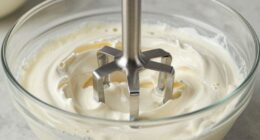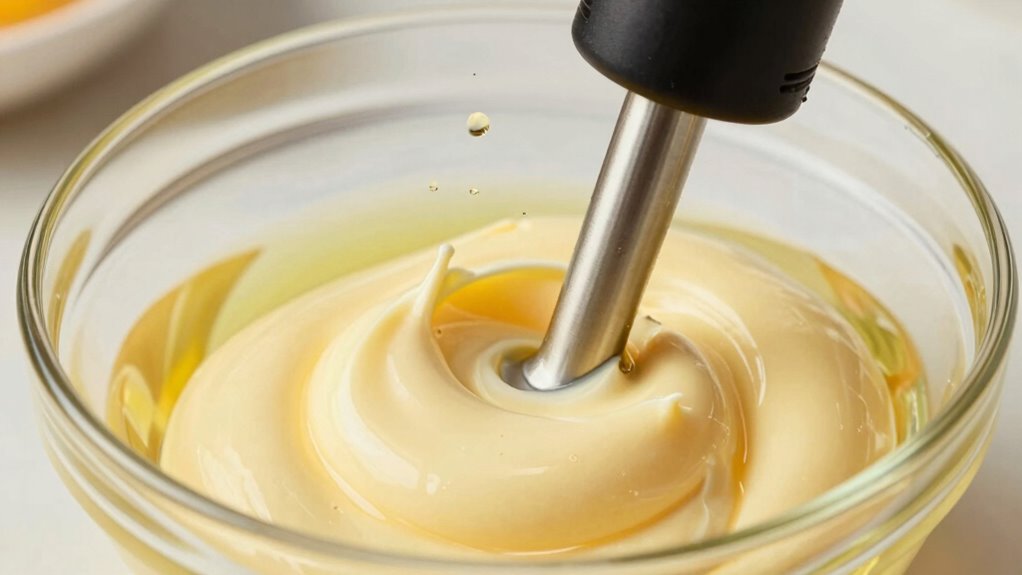

If your mayonnaise won’t emulsify, don’t panic—grab your immersion blender. To rescue it, keep the mixture steady and blend gently just below the surface for about 10 seconds. This quick action helps bring the separation back together. Make sure your ingredients are at room temperature and the blender is clean. Want more tips to troubleshoot or prevent this from happening again? Keep exploring for the full guide.
Key Takeaways
- Gather a clean immersion blender, container, spatula, and ingredients before beginning the rescue process.
- Ensure the mayonnaise mixture is stable and at room temperature for effective blending.
- Submerge the blender just below the surface and blend in gentle circles for 10 seconds.
- Stop immediately once the mixture thickens and appears uniform, avoiding over-blending.
- Adjust flavor or add small amounts of water or oil if needed after the rescue to perfect consistency.
How to Recognize a Broken Mayonnaise Before Rescue
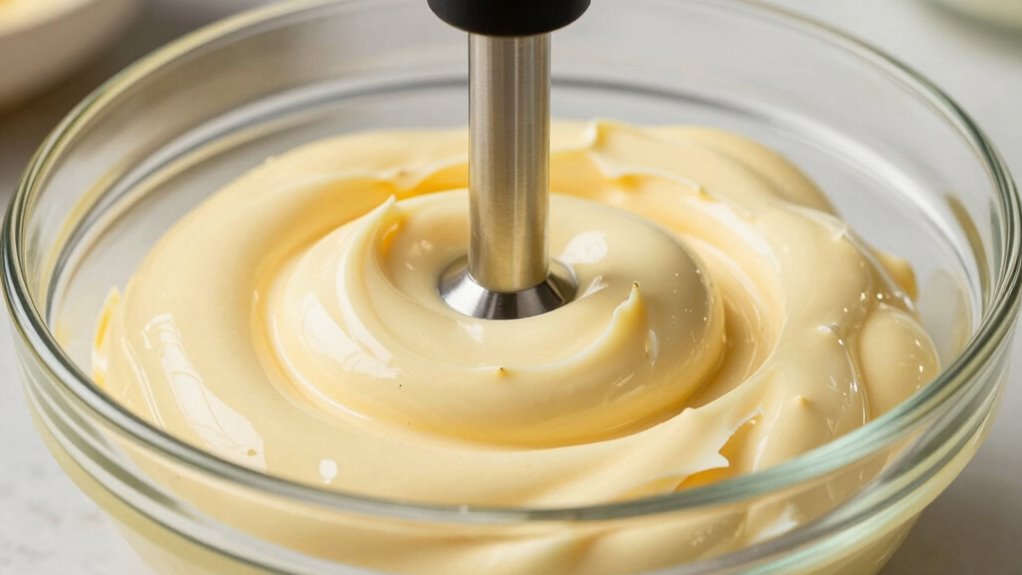
Sometimes, your mayonnaise refuses to thicken or emulsify, making it obvious that it’s broken. You’ll notice a watery or curdled appearance, with oil separating from the rest. Recognizing a broken mayonnaise involves checking emulsion stability—when the mixture fails to hold together, it’s a clear sign. Ingredient sensitivity can also play a role; if you’ve added ingredients like lemon juice or vinegar too quickly or in large amounts, the emulsion may break. Additionally, temperature issues can cause separation, so if your ingredients aren’t at room temperature, expect trouble. A broken mayo won’t have that creamy, smooth texture you want. Instead, it’ll look lumpy or thin, indicating it’s time for a rescue before the situation worsens. Understanding the importance of contrast ratio can help you better judge the visual quality of your mayonnaise, especially when trying to salvage a broken emulsion. Proper emulsion stability techniques are essential to prevent and fix these issues effectively.
What Tools Will Help Rescue Your Mayonnaise? (Including Immersion Blender)
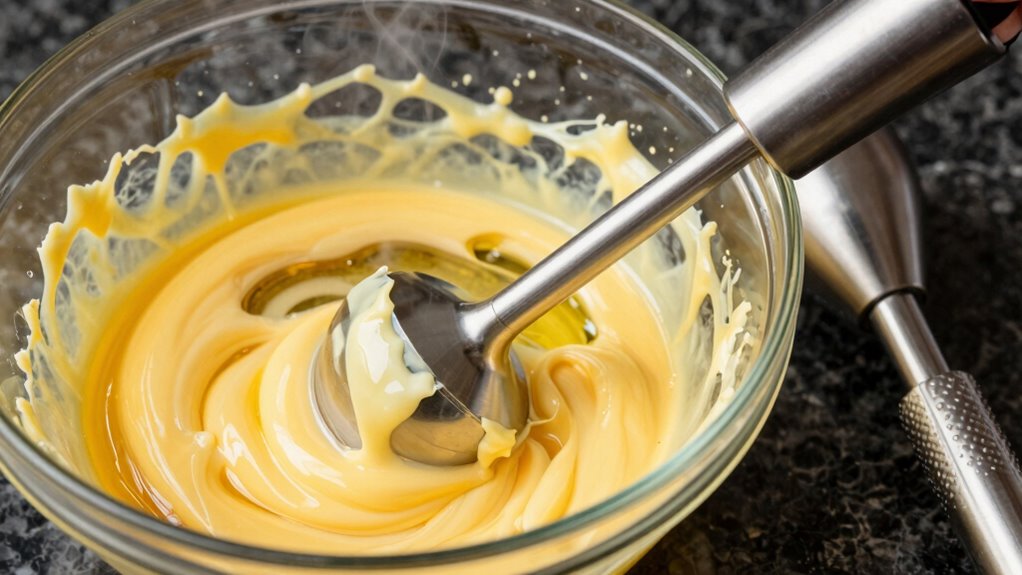
When your mayonnaise breaks, having the right tools on hand can make all the difference in rescuing it. A sturdy whisk can sometimes re-establish the mayonnaise’s consistency by manually encouraging emulsification chemistry. However, an immersion blender is your most effective tool; it quickly restores proper emulsification by blending ingredients seamlessly, ensuring a stable mayonnaise. A spatula or spoon is handy for scraping down sides and mixing by hand if needed. Using the immersion blender engages the emulsification process instantly, helping you regain the desired mayonnaise consistency with minimal effort. By understanding the emulsification chemistry behind mayonnaise, you’ll recognize how these tools help rebind the oil and water phases, transforming a broken mixture into smooth, creamy perfection.
Step-By-Step Guide to Rescuing Your Mayonnaise With an Immersion Blender

Start by gathering your immersion blender and a clean container. Then, blend carefully and quickly to incorporate the oil and stabilize the emulsion. Prompt, controlled action is key to rescuing your mayonnaise successfully.
Gather Your Tools
Have your tools ready before you begin rescuing your mayonnaise. Keep kitchen safety in mind by ensuring your immersion blender is clean and in good working condition to prevent accidents. Gather the necessary equipment: your immersion blender, a tall, sturdy container, and a spatula for scraping. Proper ingredient storage is key—make sure your ingredients are fresh and at the right temperature to help the emulsion form quickly. Check that the blender’s cord is intact and that you have a stable workspace. Having everything prepared minimizes mess and frustration during the rescue process. Clear your countertops and keep a towel nearby for cleanup. Additionally, understanding emulsion stability can help you better troubleshoot and prevent future mayo mishaps. Once your tools are set, you’re ready to move swiftly and confidently, increasing your chances of a successful mayonnaise rescue.
Blend Carefully and Quickly
With your tools in place, it’s time to carefully and quickly blend your mayonnaise to rescue the emulsion. Hold the immersion blender steady and start blending just below the surface, moving in gentle circles. This helps avoid texture issues like separation or runny consistency. Keep the blender on until the mixture thickens and appears uniform, usually within 10-15 seconds. Once it reaches the desired texture, stop blending immediately to prevent over-processing. Taste your mayonnaise and make flavor adjustments if needed—adding a pinch of salt, lemon juice, or other seasonings. Remember, swift and gentle blending is key to restoring a smooth, creamy consistency and achieving the perfect flavor. This quick step ensures your mayonnaise looks and tastes just right. Understanding emulsion stability can help you troubleshoot and prevent future issues. Being familiar with emulsion breakdown can empower you to identify and fix problems early in the process. Additionally, developing a good blending technique ensures consistent results and reduces the risk of mayonnaise failure.
Why Does Mayonnaise Fail to Emulsify? Common Causes Explained

When mayonnaise fails to emulsify properly, several common causes can be be at fault. First, the mayonnaise texture may be too thick or cold, hindering the emulsification chemistry needed for a smooth blend. Second, adding oil too quickly or in large amounts can overwhelm the mixture, preventing proper integration. Third, using ingredients at incompatible temperatures—such as hot or warm liquids—disrupts the delicate balance needed for a stable emulsion. These issues often lead to a broken or separated mayonnaise. Understanding these causes helps you troubleshoot effectively. By controlling temperature, adding oil gradually, and ensuring the right consistency, you improve your chances of achieving the perfect mayonnaise texture through proper emulsification chemistry. Additionally, ensuring proper air purifier maintenance can help keep your kitchen environment free of airborne contaminants that might affect ingredient quality. Proper ingredient temperature management is also crucial, as using ingredients at inconsistent temperatures can destabilize the emulsion process. Moreover, employing techniques like emulsification chemistry awareness can help you better predict and prevent failure during preparation. Using the right oil type is also essential, as some oils emulsify more easily than others, affecting the final texture and stability of your mayonnaise. Being mindful of ingredient freshness can also prevent issues related to spoilage or altered properties that interfere with emulsification.
How to Prevent Mayonnaise Breakage in the First Place
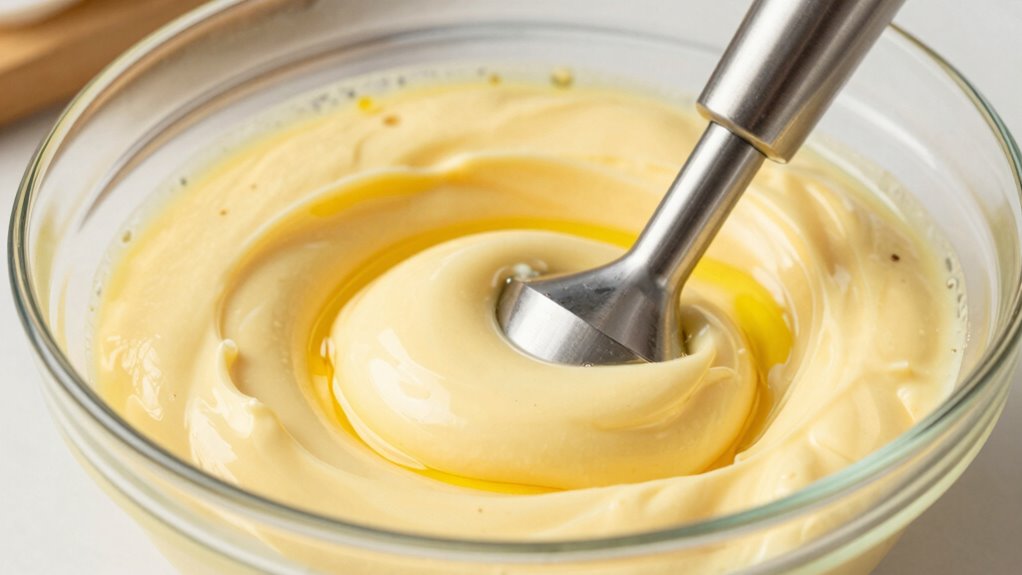
To prevent mayonnaise from breaking, start by using ingredients at the right temperatures. Cold eggs and oil promote better oil stability and easier emulsification. Room temperature eggs blend more smoothly, ensuring a stable emulsion, while slightly warmed oil flows better, preventing separation. High-quality eggs with intact yolks provide better binding and consistency. Here’s a quick comparison:
| Ingredient | Ideal Temperature | Effect on Mayonnaise |
|---|---|---|
| Egg quality | Room temperature | Enhances stability |
| Oil (light) | Slightly warm | Improves flow and mix |
| Oil stability | Controlled temperature | Prevents separation |
| Egg freshness | Fresh | Ensures proper emulsification |
Pay attention to ingredient quality and temperature; it’s the best way to avoid breakage from the start. Maintaining proper ingredient temperature control is essential for achieving a smooth and stable mayonnaise. Additionally, using proper mixing techniques can further help maintain emulsion stability throughout the process.
Which Ingredients Affect Emulsification and How to Adjust
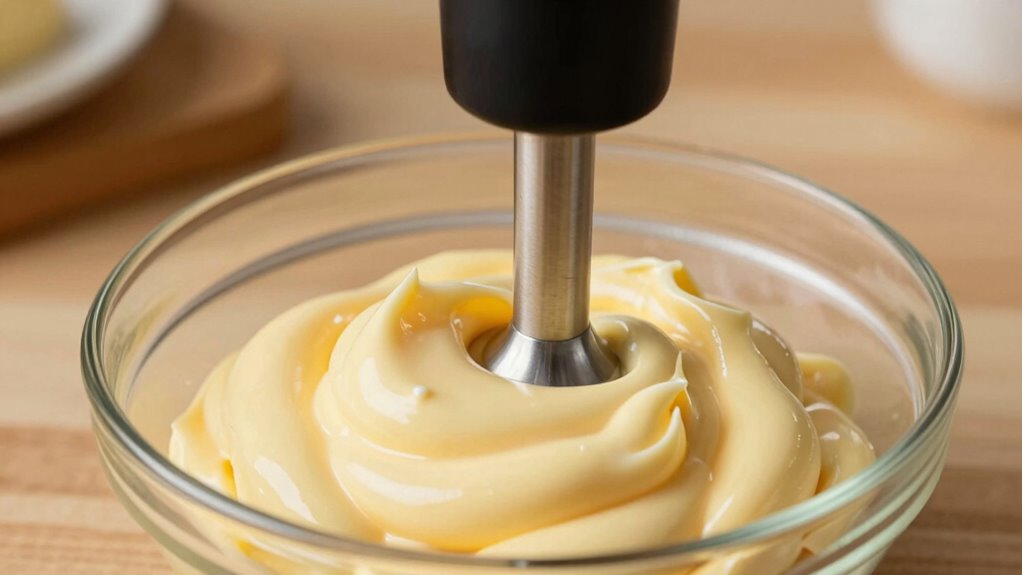
The ingredients you choose directly influence how well your mayonnaise emulsifies. Adjusting the oil-to-water ratio can help create a stable mixture, while using fresh eggs guarantees better binding. Additionally, adding the right amount of acidic ingredients like lemon juice or vinegar can improve emulsification and flavor. For optimal results, understanding the emulsification process can guide you in making adjustments that lead to a perfect consistency.
Oil-to-Water Ratio
Have you ever wondered how the oil-to-water ratio impacts mayonnaise’s ability to emulsify properly? The key is maintaining the right balance. If your oil ratio is too high, the mixture becomes heavy and struggles to blend smoothly. Too much water content, and the emulsion can break easily. To get it right, consider these tips:
- Use a gradual oil addition to control the oil ratio and prevent breaking.
- Keep water content consistent to support stable emulsification.
- Adjust the oil-to-water ratio based on ingredient types; lean toward more water if your mixture refuses to emulsify.
- Monitoring emulsification stability can help you fine-tune your technique for a perfect result.
Understanding how these elements interact helps you create a stable, creamy mayonnaise every time. Proper control of oil and water content is essential for successful emulsification.
Egg Freshness Impact
Egg freshness plays a significant role in how well your mayonnaise emulsifies. Fresh eggs have better egg quality, meaning their proteins and lecithin are more intact, which is essential for emulsification chemistry. Older eggs tend to have weakened proteins that can make forming a stable emulsion more difficult. When you use fresh eggs, their robust proteins help trap oil droplets more effectively, resulting in a smoother, more stable mayonnaise. If your mayonnaise isn’t emulsifying well, consider checking the age of your eggs. Using very fresh eggs can improve the bonding process between the water and oil phases. Remember, the integrity of egg proteins directly influences how well your ingredients combine, so fresh eggs are your best bet for successful emulsification. Additionally, understanding protein structure can help you better grasp why fresh eggs perform better in emulsification tasks. Proper handling techniques prevent protein denaturation, ensuring optimal emulsification.
Acidic Ingredient Role
Acidic ingredients play a crucial role in stabilizing mayonnaise emulsions by lowering the pH and strengthening the interaction between proteins and oil droplets. They help prevent separation and improve texture. To optimize your mayo, consider these factors:
- Choose the right acidic ingredient: Lemon juice, vinegar, or citric acid enhance flavor and promote better emulsion stability.
- Adjust acidity level: More acid can strengthen the emulsion but may alter taste; find the balance for flavor enhancement.
- Add acid gradually: Incorporate it slowly while blending to ensure even distribution and maximum stabilization.
Troubleshooting Common Mayonnaise Problems Beyond Emulsification
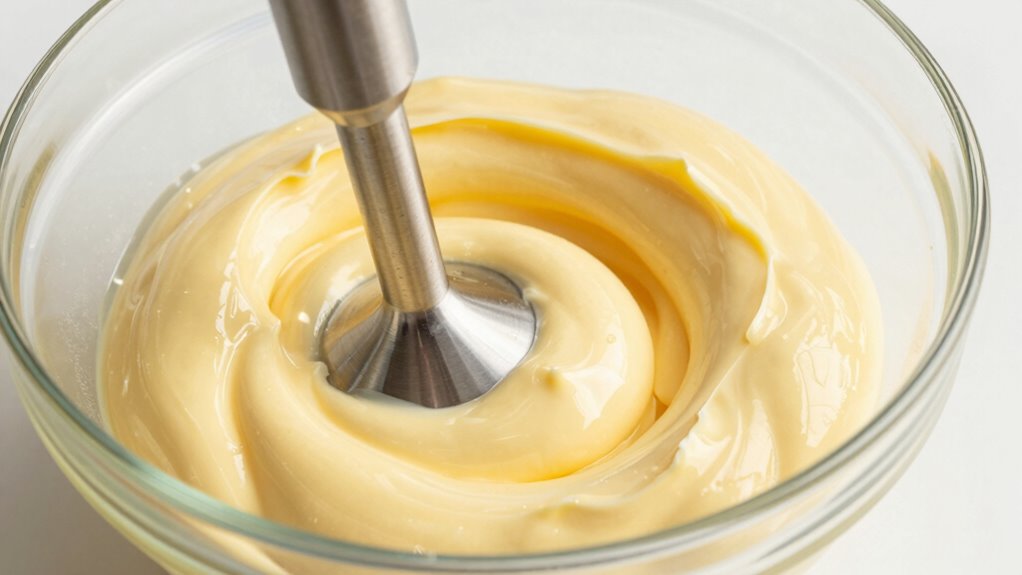
Even when your mayonnaise emulsifies perfectly, issues can still arise that affect its texture, flavor, or stability. If your mayonnaise turns out too thin or too thick, adjusting the mayonnaise consistency is key. Adding a small amount of oil gradually can help thicken it, while thinning with a bit of water or lemon juice can improve spreadability. For flavor variations, you might find your mayo too bland or overpowering; balancing this involves tweaking ingredients like salt, acid, or spices. Sometimes, a tangy or garlicky flavor can dominate unexpectedly. To fix this, incorporate gentle flavor adjustments—like a touch more lemon or herbs—to achieve your desired profile. Maintaining the right mayonnaise texture is essential for achieving the perfect consistency and flavor. Troubleshooting these common issues guarantees your mayonnaise remains smooth, flavorful, and versatile.
Can You Rescue Vegan or Flavored Mayonnaise? Tips and Variations
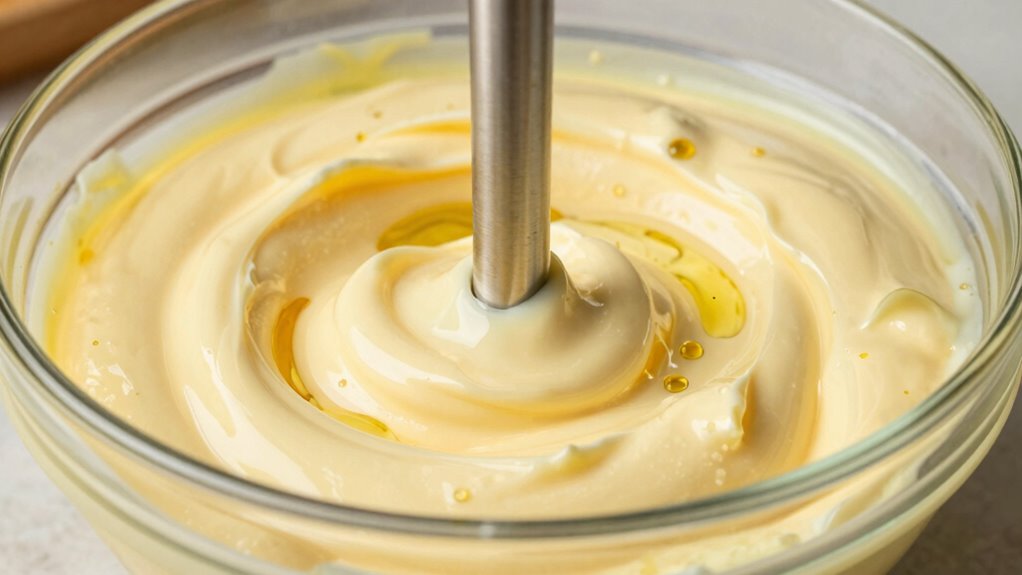
When your vegan or flavored mayonnaise doesn’t turn out quite right, it’s often possible to rescue it with some simple adjustments. First, consider adding a vegan substitute like aquafaba or a splash of plant-based milk to help re-emulsify the mixture. Second, incorporate flavor infusions—such as lemon juice, garlic, or herbs—to enhance taste and mask any inconsistencies. Third, if the texture remains off, blend in a small amount of silken tofu or mashed avocado to thicken and stabilize the mayo. Additionally, understanding emulsification techniques can help you prevent separation in the future. Knowing proper stabilization methods can improve your success rate with vegan and flavored mayonnaises. Exploring emulsion stability principles can further refine your process and prevent issues down the line. Applying proper mixing speeds during preparation can also significantly influence the final texture and consistency. These tweaks can help salvage your vegan or flavored mayonnaise, making it creamy and flavorful again. With a few quick adjustments, you can turn a failed batch into a delicious condiment perfect for sandwiches, dips, or salads.
When Should You Start Over? Signs That Rescue Isn’t Working
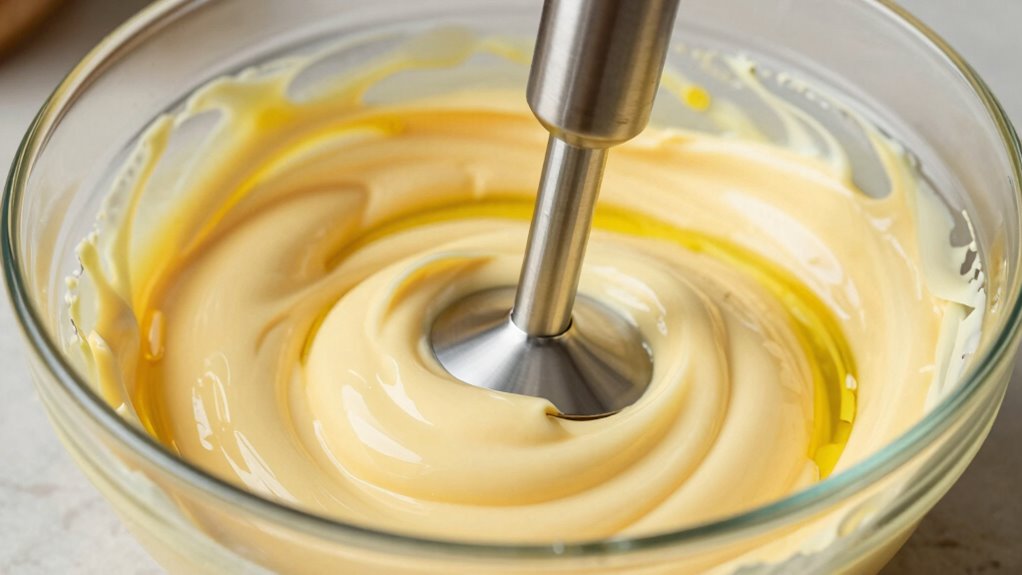
While attempting to rescue your mayonnaise can sometimes save a batch, there are clear signs that your efforts may be futile. If you notice persistent separation, no matter how long you blend or add more oil, it’s likely an emulsification failure. Similarly, if the mixture remains thin and runny despite your efforts, ingredient stability might be compromised. When your mayonnaise refuses to thicken or hold together, it’s time to contemplate starting over.
| Sign | What it Means | Action Needed |
|---|---|---|
| No thickening after blending | Emulsification failure | Restart with fresh ingredients |
| Persistent separation | Ingredient stability issues | Begin anew |
| Watery texture | Insufficient emulsification | Start over |
| No change after adding oil | Breakdown of emulsion | Restart process |
| Unstable consistency | Failed emulsification attempt | Consider starting fresh |
Final Tips for Perfect, Fail-Safe Homemade Mayonnaise
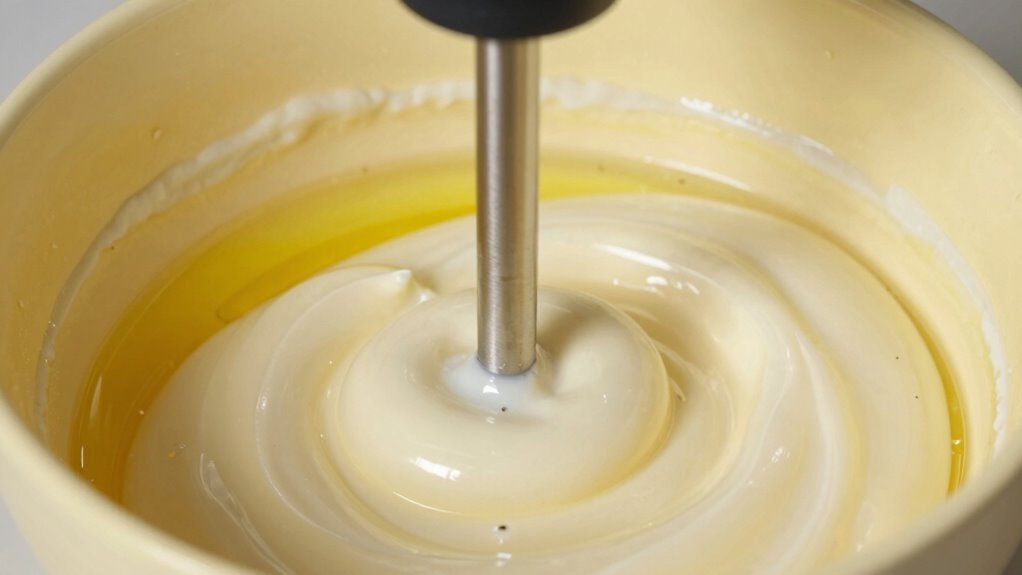
To guarantee your mayonnaise turns out perfectly every time, start with fresh eggs and keep your ingredients at the right temperature. You should add the oil slowly, in a steady stream, to help the mixture emulsify properly. Following these simple tips can make all the difference between success and failure in your homemade mayonnaise.
Use Fresh Eggs
Using the freshest eggs you can find is essential for making successful homemade mayonnaise. Egg freshness impacts emulsification tips because fresh eggs have a higher quality yolk and whites, which help create a stable emulsion. To guarantee your eggs are fresh:
- Check the date on the carton—use eggs within their expiration window.
- Conduct the float test: place an egg in water; if it sinks, it’s fresh.
- Crack the egg into a bowl—fresh eggs have firm whites and centered yolks.
Using fresh eggs minimizes the risk of broken emulsification and helps your mayonnaise come together smoothly. Egg freshness directly influences the stability of the mixture, making it easier to achieve that perfect, creamy texture every time.
Maintain Proper Temperature
Maintaining the right temperature is crucial for ensuring your mayonnaise emulsifies properly. Temperature control helps keep the ingredients stable, preventing separation or failure to combine. For best results, use room temperature eggs and oil, as cold ingredients can hinder emulsification. If your kitchen is warm, chill your mixing bowl and utensils beforehand. Conversely, if it’s too cold, gently warm your ingredients to around 70°F (21°C). Consistent temperature supports ingredient stability, making the emulsion process smoother. Avoid adding ingredients straight from the fridge or exposing them to temperature fluctuations during mixing. Keeping everything at a stable, moderate temperature minimizes the risk of broken or failed mayonnaise. Proper temperature management is a simple yet essential step toward achieving a creamy, successful homemade mayonnaise.
Add Oil Gradually
Adding oil too quickly is a common mistake that can cause your mayonnaise to break or fail to emulsify properly. To guarantee a smooth emulsification process, you need to incorporate the oil gradually. Here’s how to do it effectively:
- Start with a few drops at a time, whisking constantly, to allow the oil incorporation to build gradually.
- Once the mixture begins to thicken, increase the flow to a thin, steady stream, maintaining constant movement.
- Keep a close eye on the consistency; if it appears too loose, pause and whisk vigorously before adding more oil.
Frequently Asked Questions
Can I Use a Regular Blender Instead of an Immersion Blender?
Yes, you can use a regular blender instead of an immersion blender, but keep in mind the differences between blender vs immersion. A regular blender can work as an equipment alternative, but it might be less precise and harder to control for small batches like mayonnaise. Use the pulse setting and start slow to avoid splattering. Stay attentive and blend carefully to achieve a smooth emulsion without overprocessing.
How Long Should I Blend to Successfully Rescue Broken Mayonnaise?
To successfully rescue broken mayonnaise, blend for about 10-15 seconds using your immersion blender as part of the rescue method. Keep the blender steady and start at the bottom, then slowly lift it while blending. If it isn’t coming together, add a teaspoon of water or oil and blend again for a few seconds. The key is to blend just long enough to re-emulsify without overmixing.
Is It Possible to Recover Mayonnaise Made With Different Oils?
Yes, you can recover mayonnaise made with different oils, but expect flavor adjustments. Oil variations impact texture and taste, so if you switch from neutral to more robust oils, your mayo might taste different. To blend successfully, add a small amount of your new oil gradually while blending with an immersion blender. This method helps achieve a stable emulsion, despite the oil differences, ensuring your mayo remains creamy and flavorful.
Can I Save Mayonnaise That Has Developed a Strange Odor or Taste?
If your mayonnaise has a strange odor or taste, it’s best to discard it due to spoilage. You can’t reliably restore flavor once it’s spoiled, and consuming spoiled mayo can cause illness. To prevent this, store mayonnaise properly and check for signs of spoilage regularly. Always prioritize safety over trying to salvage it, as flavor restoration isn’t effective once mayonnaise has gone bad.
What Are the Best Storage Practices to Prevent Mayonnaise Breakage?
To prevent mayonnaise breakage, store it in a proper container with a tight lid, ideally made of glass or non-reactive material. Keep it refrigerated at a consistent temperature between 35-40°F (2-4°C) to slow bacterial growth and maintain freshness. Avoid leaving it out at room temperature for extended periods, as temperature fluctuations can cause separation. Proper storage guarantees your mayonnaise stays smooth and emulsified longer.
Conclusion
Remember, even when your mayonnaise breaks, you’re not out of options. With patience and the right tools, like an immersion blender, you can often rescue it—proving that sometimes, the quickest fix isn’t just a hack but a reminder that persistence pays off. Trust the process, learn from each attempt, and you’ll master perfect mayo every time. After all, even broken emulsions can be turned into success stories with a little know-how.