When steam gets trapped inside containers, it creates a humid environment that speeds up food spoilage. The moisture encourages bacteria and mold to grow faster, making your food go bad sooner. Sealed containers or using hot food immediately can trap steam, preventing proper cooling and moisture escape. To keep food fresh longer, you need to manage moisture buildup. If you want to understand what really causes this, keep exploring the details below.
Key Takeaways
- Trapped steam increases humidity, creating ideal conditions for bacteria and mold growth.
- Moist environments hinder food cooling, accelerating spoilage processes.
- Sealed containers prevent moisture escape, maintaining high humidity levels inside.
- Hot food releases water vapor that condenses, promoting microbial activity.
- Excess moisture in sealed containers shortens food shelf life by fostering spoilage microbes.

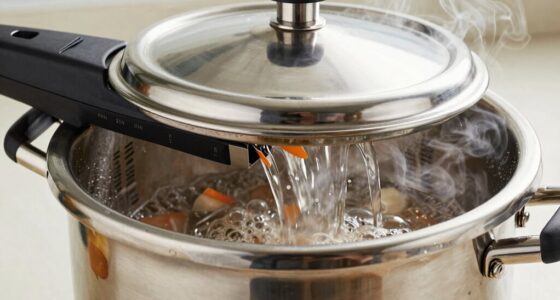
Have you ever noticed how leftovers spoil faster when stored in sealed containers? The reason lies in the way steam gets trapped inside. When you put hot food into a container, moisture from the food turns into steam. If this steam can’t escape, it creates a humid environment that accelerates spoilage. This excess moisture promotes bacterial growth and mold, which means your food doesn’t stay fresh as long as you’d like. To prevent this, it’s essential to understand how food moisture and container material influence the preservation process.
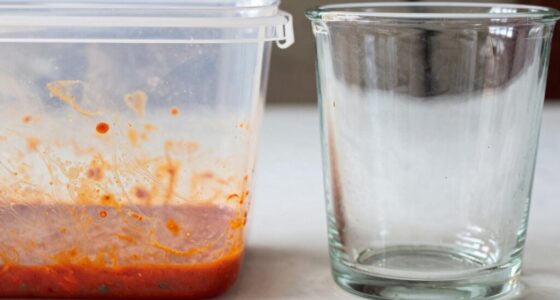
Food moisture plays a key role here. When hot or freshly cooked food is stored, it releases water vapor. If the container is completely airtight and doesn’t allow steam to escape, the moisture builds up inside. This trapped moisture creates a humid environment that speeds up the breakdown of food. Instead of cooling down and stabilizing, the food remains in a moist, warm zone ideal for bacteria and mold. That’s why leftovers stored this way tend to spoil considerably faster than they would if they were stored with some ventilation. Additionally, using vented containers can help regulate moisture levels and extend freshness.
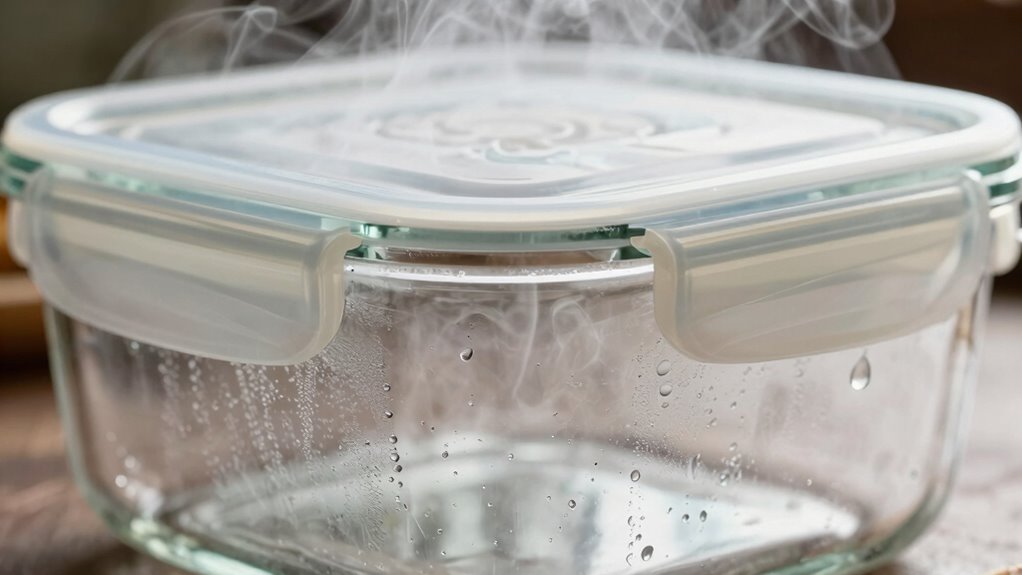
Container material considerably impacts how well your food stays fresh. Different materials handle moisture differently. For example, glass containers often have tight-fitting lids, which can trap steam if you store hot food directly in them. While glass is non-reactive and doesn’t add any unwanted flavors, it can still trap moisture if you seal it immediately after cooking. Plastic containers, especially those made from certain polymers, may be more prone to trapping steam because their lids can create a tight seal, especially if they’re not vented. On the other hand, containers made of materials like silicone often have vents or are designed to allow some airflow, reducing the risk of trapped steam. Furthermore, the thermal properties of container materials influence how quickly food cools and how moisture is managed during storage. Proper ventilation techniques are also crucial in maintaining food quality over time.
In addition, the humidity level inside the storage environment can significantly impact how long food remains fresh, with lower humidity helping to slow microbial activity. Adjusting the storage temperature can also make a difference, as cooler environments inhibit bacterial growth more effectively. To extend the life of your leftovers, it’s best to let hot food cool down before sealing it in any container. Using containers with vented lids or leaving a small gap for steam to escape can make a big difference. This allows excess moisture to evaporate instead of accumulating inside. Additionally, choosing the right container material for your storage needs can help. Glass or vented plastic containers are good options for hot foods, as they help prevent steam buildup and keep food dry. Ultimately, paying attention to how moisture interacts with both your food and your container material can help you reduce spoilage, save money, and enjoy fresher leftovers longer.
vented food storage containers
As an affiliate, we earn on qualifying purchases.
As an affiliate, we earn on qualifying purchases.
Frequently Asked Questions
How Can I Tell if Steam Is Trapped Inside My Food Container?
You can tell if steam is trapped inside your food container by checking for moisture or condensation on the lid or walls. If you see water droplets or foggy spots, steam is trapped. To guarantee food safety, use containers made of materials that vent properly, like those with vents or adjustable lids, and avoid airtight containers that trap moisture. Regularly inspecting your containers helps prevent spoilage caused by trapped steam.
Does Type of Container Affect Steam Buildup and Food Spoilage?
Ironically, your choice of container can be the biggest culprit in steam buildup and spoilage. Container materials like plastic or glass with poor insulation trap more moisture, especially if the seal isn’t airtight. An airtight seal is essential to prevent steam from escaping and condensing, which accelerates spoilage. So, selecting the right container with a good seal and appropriate material helps keep your food fresher longer by reducing trapped steam.
Can Microwave Heating Increase Steam Trapping Risks?
Microwave heating can increase steam trapping risks if your container design doesn’t allow for proper steam release. When you heat food, steam builds up inside, especially in sealed or poorly vented containers. If the design prevents steam from escaping, pressure increases, which can lead to spoilage or even accidents. To reduce these risks, choose containers with vents or flexible lids that allow steam to escape safely during microwave heating.
Are There Specific Foods More Prone to Damage From Trapped Steam?
Ever wondered which foods are more prone to damage from trapped steam? You might notice that delicate items like salads or baked goods suffer more, especially when their food moisture is high and container design traps steam. These foods are sensitive to excess moisture and heat, which can cause sogginess or spoilage. Proper container design helps vent steam, protecting your food’s texture and freshness, so choose wisely to avoid unnecessary damage.
What Are the Best Methods to Prevent Steam From Accumulating?
To prevent steam from accumulating, you should use proper ventilation techniques like leaving a small gap or using vented lids to allow moisture escape. Additionally, container insulation can help regulate temperature and reduce condensation buildup. When storing food, guarantee containers are not airtight without ventilation, and periodically check for excess moisture. These methods keep steam from trapping, thereby extending your food’s freshness and preventing spoilage caused by excess humidity.
airtight glass food containers with vents
As an affiliate, we earn on qualifying purchases.
As an affiliate, we earn on qualifying purchases.
Conclusion
So, next time you seal that stew with a heroic splash of steam trapped inside, remember you’re creating a tiny, unintentional greenhouse. It’s like inviting a mini tropical rainforest into your fridge—sure, it’s lush, but your leftovers won’t last long amidst the humidity. Instead of prolonging freshness, you’re practically setting up a spa for bacteria. Keep that steam out, and your food might just survive long enough for you to enjoy it without a swamp growing on top.
silicone vented food storage containers
As an affiliate, we earn on qualifying purchases.
As an affiliate, we earn on qualifying purchases.
moisture control food storage containers
As an affiliate, we earn on qualifying purchases.
As an affiliate, we earn on qualifying purchases.