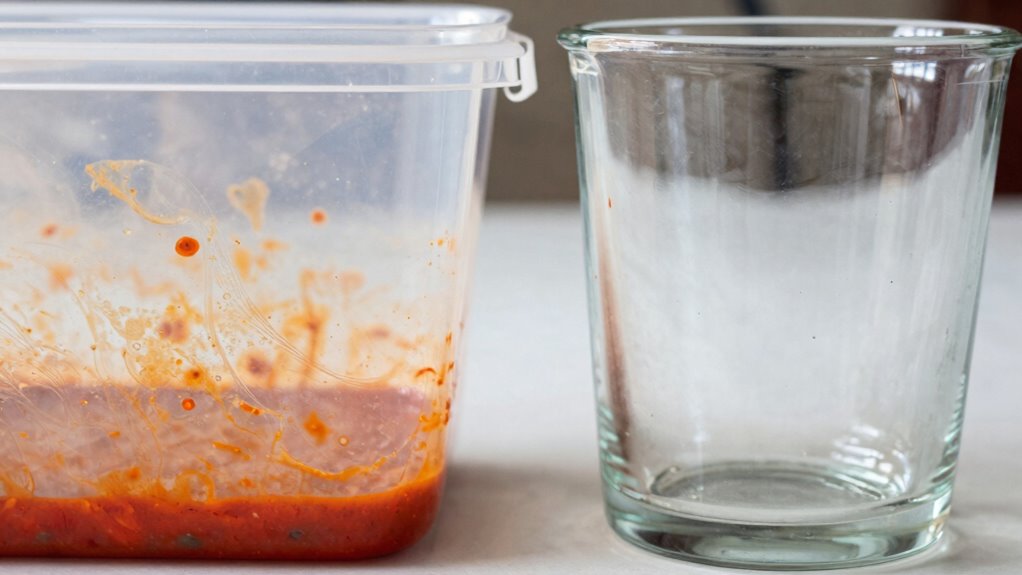

Plastic containers tend to absorb stains and odors over time, especially with colorful or strong-smelling foods, while glass resists stains and keeps smells at bay because it’s non-porous. Proper cleaning, drying, and avoiding long-term storage of pungent foods can prevent buildup in both materials. While glass offers better resistance, plastic is more affordable initially but may need replacing sooner. Keep exploring to discover tips on maintaining your containers for peak freshness.

Get kitchen staples and gadgets delivered free — and shop member deals
- Fast, free delivery on millions of items
- Access to Prime Big Deal Days deals on October 6–7
- Prime Video, Amazon Music and more included
Key Takeaways
- Glass containers are non-porous, resisting stains and odors better than plastic, which can absorb and retain smells over time.
- Plastic may stain or smell from oils, spices, and colored foods, requiring more diligent cleaning and replacement.
- Proper cleaning with hot water, baking soda, or vinegar prevents odor buildup in both materials, but glass is easier to maintain.
- Glass maintains clarity and freshness longer, while plastic’s porous nature makes it more prone to lasting stains and smells.
- Regular inspection and timely replacement are essential for both, though glass generally offers longer durability and odor resistance.
How Do Plastic and Glass Containers Handle Stains and Smells?
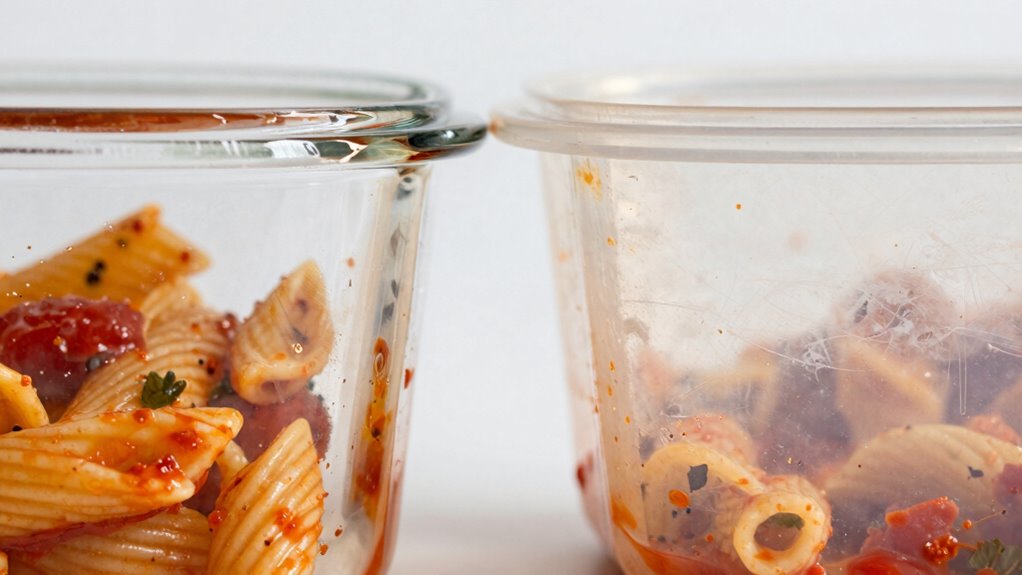
When it comes to handling stains and smells, glass containers generally outperform plastic ones. Glass is non-porous, making container cleaning easier and more effective at removing residues that cause odors or stains. Unlike plastic, which can absorb colors and smells over time, glass maintains its clarity and freshness longer. This characteristic is especially important for long-term freshness, ensuring your stored foods stay tasting and smelling as intended. This material durability means you don’t have to worry about lingering odors or stubborn stains ruining the container’s appearance. Plastic containers, on the other hand, often develop stains and smells due to their porous nature, especially after repeated use with oily or strongly colored foods. Over time, this affects their overall durability and makes thorough cleaning more challenging. The porous nature of plastic can lead to bacteria and mold buildup if not cleaned properly, further complicating odor removal. So, if odor control and stain resistance are priorities, glass containers offer a clear advantage. Additionally, glass’s resistance to thermal behavior ensures it can often handle higher temperatures without warping or degrading, further extending its lifespan. Moreover, glass is less susceptible to chemical degradation, which helps preserve the integrity of the container over prolonged use. Regular use of proper cleaning methods can also significantly reduce odor and stain buildup in both types of containers.
What Causes Stains and Lingering Odors in Food Storage Containers?
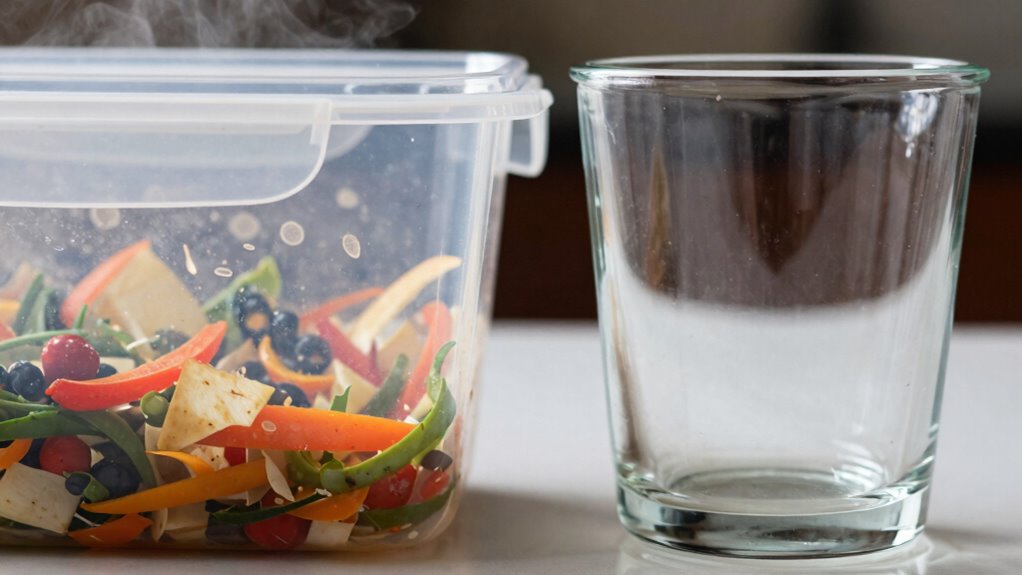
Stains and lingering odors in food storage containers result primarily from the materials’ interactions with certain types of food. The container material plays a key role; plastic is more porous and absorbs colors and smells, while glass resists this. Over time, oils, tomato sauces, and spices can embed into plastic, causing persistent stains and odors. Ineffective cleaning methods, such as insufficient scrubbing or using abrasive tools, can leave residues that trap smells. To prevent this, avoid harsh chemicals that may degrade the material and opt for thorough cleaning. Additionally, some foods like curry or berries are more likely to cause stains. Understanding how your container material reacts helps you choose proper cleaning methods to reduce lasting stains and odors. Color absorption can also vary depending on the type of material used. Proper maintenance techniques, including cleaning frequency and choosing suitable tools, can significantly extend the lifespan of your containers. Regularly inspecting your containers for damage and material compatibility ensures that you maintain their integrity and avoid odor retention. Using electric cleaning devices designed for delicate surfaces can also help maintain the integrity of your containers and prevent odor retention.
How Can You Prevent Stains and Odors in Plastic and Glass Containers?
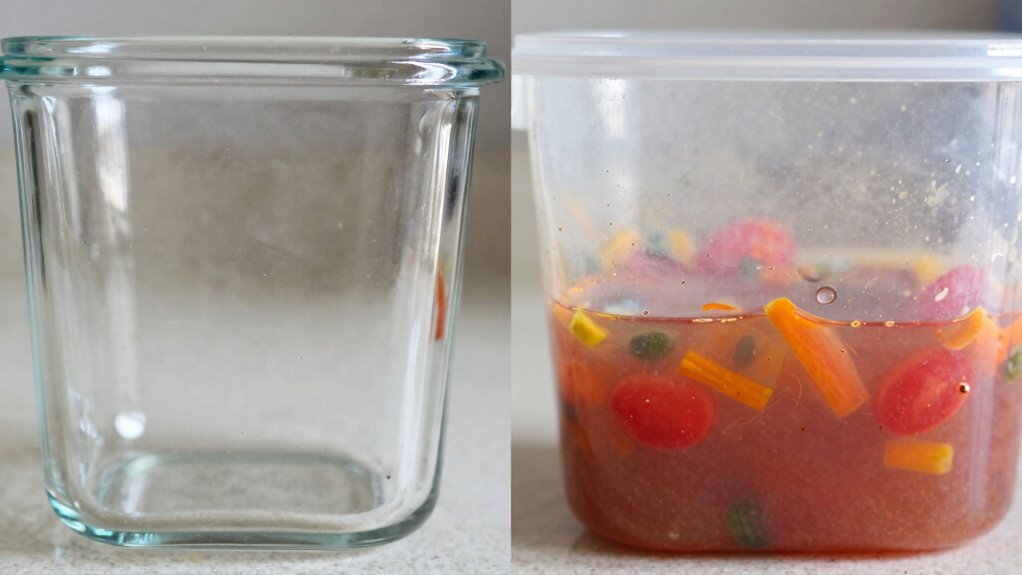
To effectively prevent stains and odors from lingering in your containers, adopting proper cleaning habits is essential. Regular container cleaning removes residue that causes stains and smells, keeping your containers fresh. Use hot, soapy water or a mixture of baking soda and vinegar to eliminate stubborn odors. For plastic containers, avoid abrasive scrubbers that can damage material durability and create spaces for bacteria. Glass containers are more resilient but still benefit from thorough cleaning. Avoid storing strong-smelling foods for long periods, especially in plastic, to prevent odor absorption. Proper drying before sealing helps prevent mold. Additionally, following a proper maintenance routine ensures your containers remain odor-free and stain-resistant over time. Consistently cleaning containers and choosing durable materials help prevent the buildup of stains and odors. Using high-quality storage options can also contribute to maintaining their freshness and longevity. Incorporating correct storage practices can further minimize odor absorption and staining. Ensuring your containers are made from non-porous materials can significantly reduce the likelihood of odors and stains setting in. By maintaining consistent cleaning routines and choosing durable materials, you extend the lifespan of your containers and keep them odor-free and stain-resistant.
Plastic vs. Glass Containers: Which Resists Stains and Odors Better?
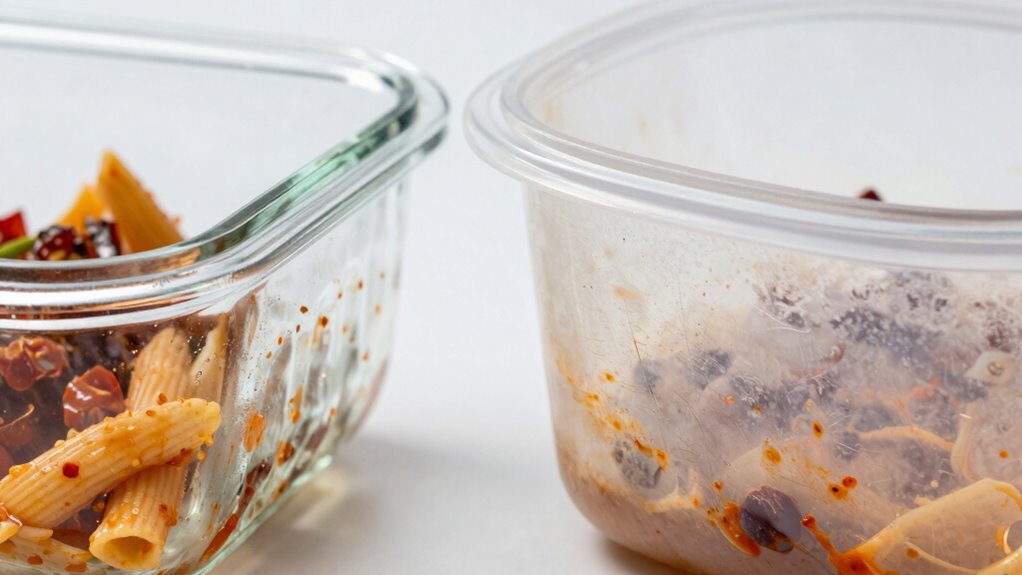
Are plastic or glass containers more resistant to stains and odors? Generally, glass resists stains and odors better because it’s non-porous and easy to clean. Plastic, however, can absorb smells and stain over time, especially with strongly scented or colored foods. To understand which is more effective, consider these factors:
- Environmental impact: Glass is reusable and recyclable with less pollution, while plastic’s production and disposal pose environmental concerns.
- Cost comparison: Initially, plastic is cheaper, but glass lasts longer, making it more economical in the long run.
- Porosity: Glass’s non-porous surface prevents absorption, unlike plastic.
- Resistance to staining and odor retention: Glass outperforms plastic, especially after multiple washes. Additionally, material properties like porosity play a crucial role in stain and odor resistance, and understanding the porosity of materials can help inform better storage choices.
When Should You Replace Your Food Storage Containers for Best Performance?
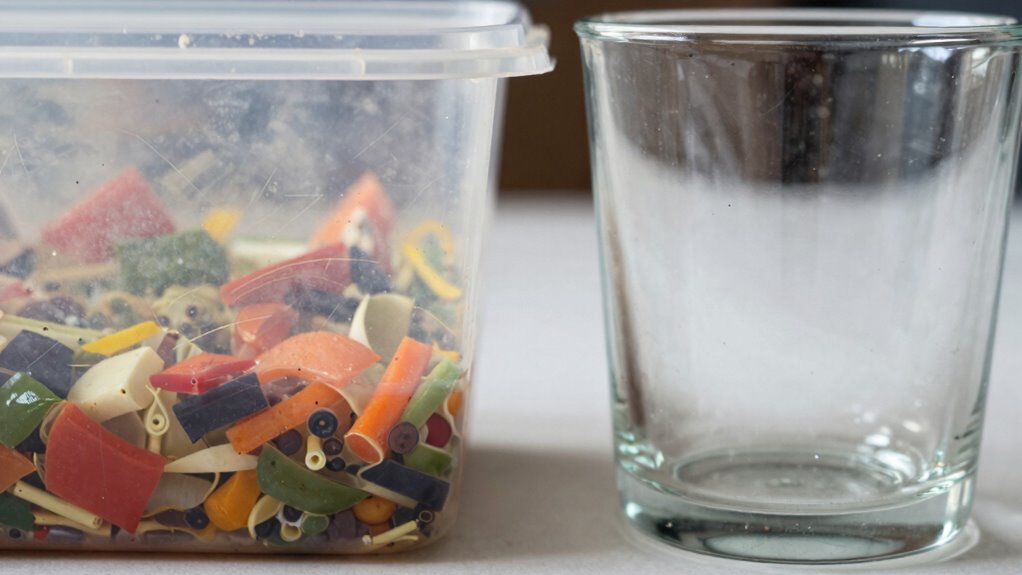
Knowing when to replace your food storage containers guarantees they perform their best and keep your food safe. The container lifespan varies depending on material and usage, but a good rule of thumb is to substitute them when they show signs of damage, such as cracks, warping, or persistent stains and odors. Over time, plastic containers may degrade, affecting their seal and safety, while glass ones can become chipped or broken. Pay attention to container longevity and replacement timing; don’t wait until leaks or contamination occur. Regularly inspect your containers, and replace them promptly to maintain proper food storage and hygiene. Proper maintenance and understanding the signs of deterioration can help prevent food safety issues and prolong the usefulness of your containers. Additionally, selecting food-safe materials can enhance durability and safety. Doing so ensures your containers continue to provide a reliable, safe storage solution, whether plastic or glass.
Frequently Asked Questions
Are There Specific Foods That Stain or Odor-Proof Plastic or Glass Containers Better?
Certain foods, like tomato sauce, curry, and berries, tend to stain plastic containers more, making glass a better choice for stain-proof storage. Strong-smelling foods like garlic or fish can also linger longer in plastic, while glass containers resist odors better. When selecting container materials, consider your food pairing needs—glass is ideal for stain and odor resistance, especially for colorful or aromatic dishes, ensuring your storage stays fresh and clean.
How Do Cleaning Methods Affect the Longevity of Stain and Odor Resistance?
Cleaning frequency and method directly impact the longevity of stain and odor resistance in your containers. Regularly washing your plastic or glass containers prevents buildup of residues that cause stains and smells. Use gentle, non-abrasive cleaners suited for your container material to avoid scratches that can trap odors. For plastic, avoid harsh chemicals, and for glass, thorough rinsing helps maintain clarity and freshness. Consistent cleaning guarantees your containers stay odor- and stain-free longer.
Can Storing Certain Foods in Plastic or Glass Increase Chemical Leaching?
Storing certain foods in plastic or glass can increase chemical leaching, which impacts food safety. Plastic containers, especially those not labeled BPA-free, may release chemicals into your food when exposed to heat or acidic ingredients. Glass is generally safer, but if you store highly acidic foods in it for long periods, it can also cause some leaching. Always choose food-safe containers and avoid heating food in plastic to minimize risks.
Do Temperature Changes Impact the Stain or Odor Retention in Containers?
Think of your containers as delicate instruments that respond to temperature fluctuations like a finely-tuned guitar. When exposed to temperature changes, plastic and glass containers can absorb or release odors and stains more readily. Plastic, being more porous, is especially sensitive to these fluctuations, which can intensify stain or odor retention. Glass is more resilient, but extreme shifts still affect its ability to keep your food fresh and odor-free.
Are Premium or Specialized Containers More Resistant to Stains and Smells?
Premium containers made from high-quality materials or featuring specialized coatings are more resistant to stains and smells. You’ll notice they last longer and stay fresher because these advanced features prevent odors from lingering and stains from setting. When choosing storage options, opt for those with these enhancements, as they offer better durability and maintain their appearance and scent, making your food storage more reliable and hassle-free.
Conclusion
Did you know that over 80% of people struggle with stubborn stains and lingering odors in their food containers? Choosing the right container can make all the difference. Glass resists stains and odors better than plastic, but plastic often offers more convenience. To keep your containers performing their best, replace them when they become heavily stained or retain bad smells. Making informed choices helps you enjoy fresher, cleaner storage every time.
NFL season / tailgating Picks
team gear
As an affiliate, we earn on qualifying purchases.