
The key to frothing beautifully lies in your milk’s composition, temperature, and freshness. Milk with the right balance of fat and protein creates stable, velvety foam, while too much or little fat can hinder bubble formation. Fresh, high-quality milk with ample proteins froths better, and heating it to just the right temperature prevents proteins from denaturing. If you keep these factors in mind, you’ll discover how to achieve perfect foam every time.

Get kitchen staples and gadgets delivered free — and shop member deals
- Fast, free delivery on millions of items
- Access to Prime Big Deal Days deals on October 6–7
- Prime Video, Amazon Music and more included
Key Takeaways
- Milk with optimal protein levels, mainly casein and whey, forms stable networks that trap air for better frothing.
- Proper milk temperature during steaming prevents protein denaturation, ensuring foam stability and structure.
- Milk composition, especially the balance of fat and protein, influences foam creaminess and bubble formation.
- Fresh, high-quality milk has intact proteins and fats, enhancing frothing ability and foam longevity.
- Correct steaming techniques preserve milk’s protein integrity and create consistent, appealing foam.
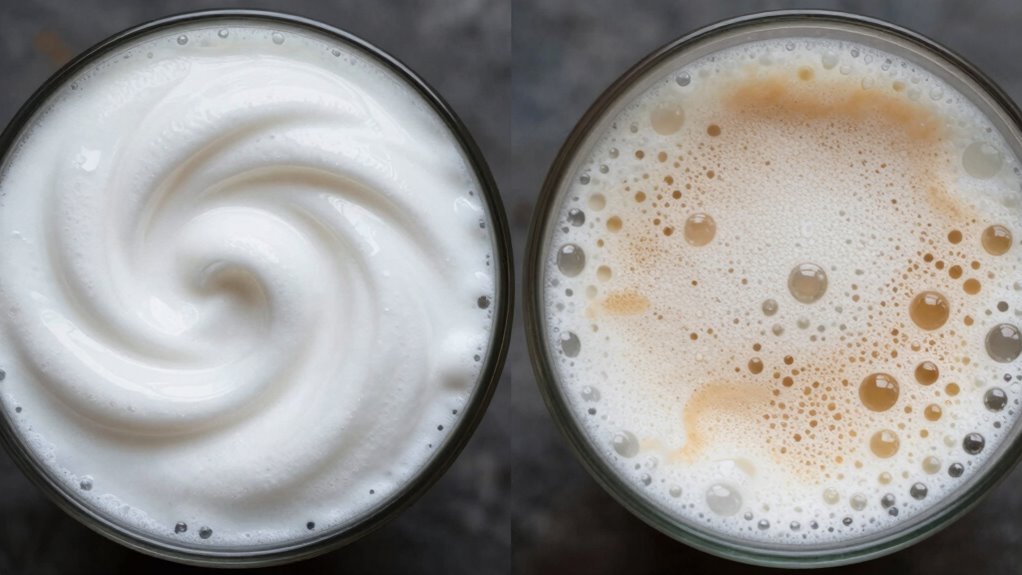
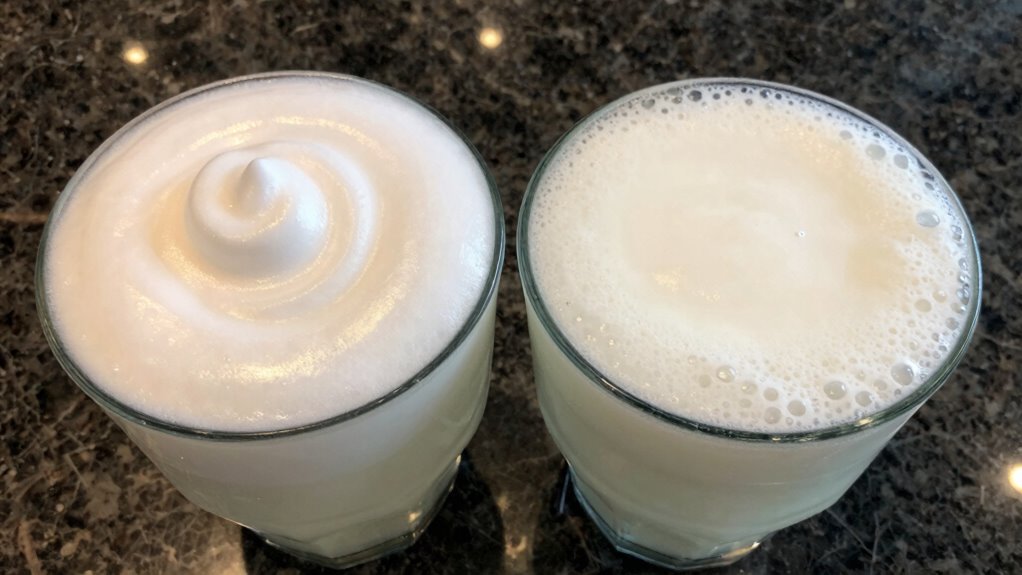
When it comes to crafting the perfect froth on your coffee, you might wonder why some milk transforms into a smooth, velvety foam effortlessly, while others stubbornly refuse to cooperate. The secret lies in the milk’s composition, especially its milk fat and protein content. Milk with the right balance of these elements can produce a rich, stable foam that sits beautifully on your espresso. Milk fat contributes to creaminess and helps create a glossy, luscious texture, but too much fat can make frothing more difficult because it interferes with the formation of fine bubbles. Conversely, skim milk, which has very low fat, tends to produce lighter, airier foam but may lack the creamy mouthfeel many coffee lovers desire.
Protein plays an even more critical role. The proteins in milk, primarily casein and whey, are responsible for creating the structure needed to trap air and form foam. When you steam milk, these proteins unfold and form networks that stabilize the tiny bubbles, giving your froth its characteristic body and longevity. Protein content is especially important because the higher it is, the better the milk can form a stable foam. Milk with higher protein content generally froths better because it can form a more stable foam. Whole milk typically strikes a good balance, offering enough proteins to create a sturdy, velvety foam, while still maintaining a desirable richness. Skim milk, with its higher protein-to-fat ratio, often produces the most voluminous foam, but it can feel less creamy and more airy. Additionally, milk temperature plays a crucial role, as heating milk beyond optimal levels can cause proteins to denature, resulting in poor foam formation.
Proper milk steaming techniques are essential to maximize frothing potential and avoid damaging the delicate proteins responsible for foam stability. Temperature also influences how well milk froths, but the foundational factor remains the milk’s composition. If your milk’s protein content isn’t sufficient, or if the fat is too high or too low, you’ll notice that the foam either collapses quickly or refuses to form at all. That’s why baristas often recommend using fresh, high-quality milk with a balanced profile for the best results. When you’re experimenting, pay attention to the type of milk you’re using. Whole milk tends to give you a good mix of creaminess and foam stability, while skim milk might produce more volume but less richness. Understanding how milk fat and protein content influence frothing helps you troubleshoot and perfect your technique, ensuring that your coffee always has that perfect, inviting foam on top. Moreover, milk freshness can also impact how well it froths, as older milk may have altered protein structures that hinder foam formation.
As an affiliate, we earn on qualifying purchases.
Frequently Asked Questions
Does Milk Temperature Affect Frothing Quality?
Yes, milk temperature affects frothing quality. When milk is too cold, it becomes harder to develop a creamy, smooth texture, while overly hot milk can scorch and create a less stable foam. You should aim for milk around 140°F to 150°F for ideal texture. Use a proper frothing technique, ensuring your milk is evenly heated and aerated, which helps produce a velvety, well-structured foam.
Can the Type of Milk Alter Frothing Results?
Yes, the type of milk can alter your frothing results. Milk flavor and sourcing matter because different varieties, like whole, skim, or plant-based options, have unique protein and fat levels that affect froth stability and texture. For the best foam, choose high-quality, fresh milk from reputable sources, as it’s easier to froth and creates a creamier, more consistent microfoam that enhances your coffee experience.
Is Fresh Milk Better for Frothing Than Aged Milk?
Fresh milk generally froths better than aged milk, because it retains higher protein levels essential for stable foam. Pasteurization and dairy homogenization processes can affect frothing, but fresher milk’s natural proteins and fats create richer, creamier foam. As milk ages, these proteins degrade, making it harder to achieve that perfect froth. So, for the best results, always choose fresh, minimally processed milk to enjoy beautifully frothing coffee.
How Does Fat Content Influence Milk Foam Stability?
Higher fat percentage in milk creates a creamier texture, which helps stabilize foam and makes it last longer. The fat molecules coat air bubbles, preventing them from bursting quickly, resulting in a richer, more stable foam. If you’re aiming for a beautifully frothy drink, choose milk with a higher fat content. Low-fat or skim milk, with less fat, tends to produce lighter, less stable foam that collapses faster.
Do Different Frothing Tools Produce Different Results?
A wise person once said, *”tools make the master.”* Different frothing tools, like steam wands, manual frothers, or electric steamers, indeed produce varying results. You’ll notice differences in milk texture and frothing consistency because each tool applies heat and air differently. For perfect foam, choose tools suited to your skill level and desired milk texture. Experimentation helps you discover which tool gives you the best froth every time.
As an affiliate, we earn on qualifying purchases.
Conclusion
Think of milk frothing like a dance—when your milk and steam are in perfect harmony, they create a beautiful performance of silky foam. I once watched a barista struggle with stubborn milk, like trying to coax a shy dancer onto the stage. But with patience and the right technique, even the shyest milk can perform a stunning froth. Remember, mastering milk frothing takes practice, but once you get it right, your drinks will always steal the show.
As an affiliate, we earn on qualifying purchases.
As an affiliate, we earn on qualifying purchases.
Fall Picks
fall essentials
As an affiliate, we earn on qualifying purchases.