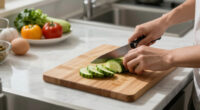
Before buying a chef knife, make sure you check its storage options, blade material, balance, weight, and handle design. Proper storage keeps the blade sharp and safe while protecting you from injuries. Look for high-quality steel and good craftsmanship for durability. Comfort and control come from the right weight and ergonomic handle. Paying attention to these features helps you find a knife that’s safe, effective, and built to last. Keep going to discover more essential tips.

Get kitchen staples and gadgets delivered free with Prime
- Fast, free delivery on millions of items
- Prime Video, Amazon Music and more included
- Member-only deals all year
Key Takeaways
- Ensure the knife has proper storage options like a magnetic strip or sheath for safety and blade preservation.
- Check the blade material for durability, ease of maintenance, and resistance to rust or corrosion.
- Confirm the knife’s balance and weight feel comfortable, reducing fatigue and improving control during use.
- Inspect the handle design for a secure, non-slip grip made from durable, comfortable materials.
- Examine overall craftsmanship, including seamless construction and sharp, even edges for reliable performance.
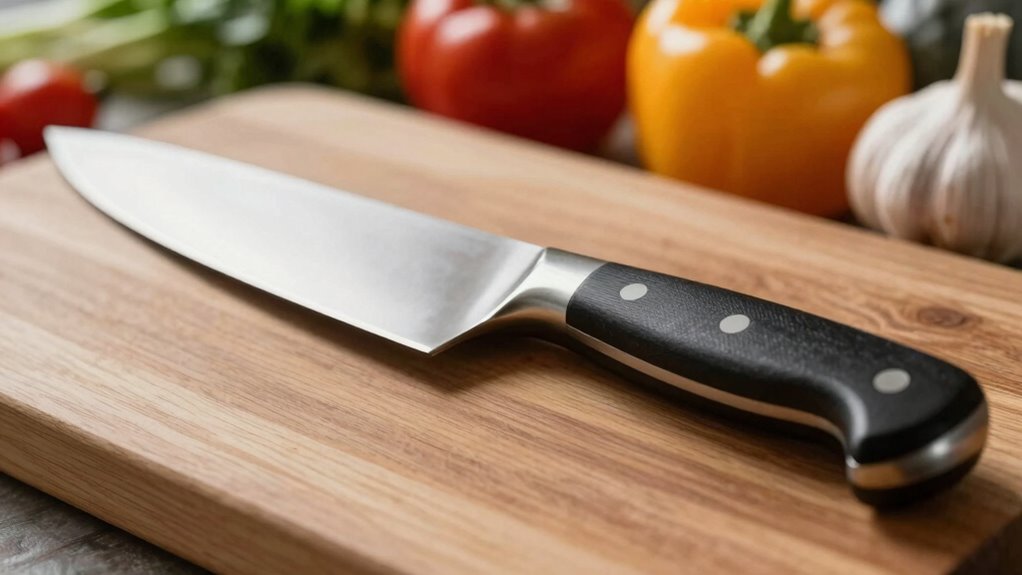
A good chef knife can transform the way you cook, making prep work faster and safer. But before you buy, it’s essential to evaluate the features that truly matter. One of the first things to look at is how you’ll store your knife. Proper knife storage isn’t just about keeping your kitchen organized—it plays a vital role in preserving the blade’s sharpness and preventing accidents. A knife that’s stored loosely in a drawer risks dulling or chipping, and it’s easy to cut yourself when reaching in blindly. Investing in a knife block, magnetic strip, or protective sheath ensures your blade stays sharp longer and that you’re safe when grabbing it.
Proper storage keeps your chef knife sharp, safe, and ready for use.
Next, consider the blade materials. The material your knife’s blade is made from directly impacts its performance, durability, and ease of maintenance. High-quality blades are usually made from stainless steel, which resists rust and corrosion. Some blades are crafted from carbon steel, offering exceptional sharpness and edge retention, but they require more care to prevent staining. Others feature layered or Damascus steel, combining beauty with strength. You don’t want a blade that dulls quickly or chips easily, so understanding the properties of different blade materials helps you choose one that suits your cooking style and maintenance preferences. Proper blade care also extends the life of your knife, making it a good investment. Additionally, choosing blades with the right coating or treatment can further enhance corrosion resistance and ease of cleaning.
Additionally, the balance and weight of the knife are key features to evaluate. A well-balanced knife feels natural in your hand, reducing fatigue during prolonged chopping sessions. If the knife is too heavy, it can cause strain, but if it’s too light, you might lose control. Feel the knife in your hand if possible—comfort and control are essential for safe and efficient cutting. Proper ergonomics in design can make a significant difference in your overall experience.
The handle also plays a significant role. Look for a handle that provides a secure grip and feels comfortable during use. Materials like wood, plastic, or composite each have pros and cons, but the key is that it shouldn’t slip, even if your hands are wet or greasy.
Finally, don’t overlook the overall design and craftsmanship. A well-made chef knife will have a seamless changeover between the blade and handle and should feel solid without any wobbling. The edge should be uniformly sharpened, and the blade should have a good weight distribution. Paying attention to blade quality ensures you’re investing in a durable and reliable tool. These features ensure your knife performs reliably and safely, making your cooking experience more enjoyable and efficient. Remember, don’t rush into buying a chef knife—checking these features ensures you get a tool that’ll serve you well for years.
professional chef knife storage solutions
As an affiliate, we earn on qualifying purchases.
As an affiliate, we earn on qualifying purchases.
Frequently Asked Questions
What Is the Ideal Blade Length for a Chef’s Knife?
The ideal blade length for a chef’s knife is usually 8 inches, offering a perfect balance between control and versatility. When choosing, consider blade material for durability, weight for comfort, and balance for precision. An 8-inch knife suits most tasks, from chopping to slicing, without feeling cumbersome. Your choice should match your hand size and cooking style, ensuring you can work comfortably and efficiently in the kitchen.
How Often Should I Sharpen My Chef Knife?
You should sharpen your chef knife every 1-2 months, depending on how often you cook. Regular knife maintenance keeps your blade in top shape, ensuring precise cuts and safety. Use proper sharpening techniques, like honing with a steel or using a whetstone, to maintain the edge. For frequent use, consider professional sharpening annually to keep your knife performing at its best and extending its lifespan.
Are Ceramic Chef Knives Better Than Steel?
Are ceramic chef knives better than steel? It depends on your needs. Ceramic knives excel in sharpness and hold their edge longer, thanks to their durability, but they’re more brittle and can chip or break easily. Steel knives, on the other hand, offer more flexibility and are easier to sharpen. If you want a lightweight, low-maintenance option, ceramic might be your pick. For versatility and durability, steel’s the way to go.
What Handle Material Offers the Best Grip?
You’ll find that knives with rubber or textured polypropylene handles offer the best grip, especially when your hands are wet. These materials combine handle durability with slip-resistant features, ensuring safety during use. Plus, they often have appealing aesthetic options, so you don’t have to compromise style for functionality. Opt for knives with these handle materials to enjoy a secure grip, long-lasting performance, and a sleek look in your kitchen.
Can I Use a Chef Knife for Slicing Bread?
Yes, you can use a chef knife for bread slicing, but a serrated edge makes the task much easier. Chef knives excel at slicing, but their straight edge can crush soft bread or tear it. For perfect bread slicing, a bread knife with a serrated edge is ideal—it cuts through crust without squashing the soft interior. So, while possible, a serrated bread knife will give you better results.
high carbon stainless steel chef knife
As an affiliate, we earn on qualifying purchases.
As an affiliate, we earn on qualifying purchases.
Conclusion
Now that you know the 9 features to think about, aren’t you ready to choose a chef knife that truly meets your needs? Remember, a great knife isn’t just about looks—it’s about how it feels, performs, and lasts. Why settle for less when the perfect knife can elevate your cooking game? Take your time, weigh these features carefully, and make a purchase that’ll inspire you to cook even more. Are you prepared to find your ideal kitchen companion?
As an affiliate, we earn on qualifying purchases.
As an affiliate, we earn on qualifying purchases.
Halloween Picks
halloween
As an affiliate, we earn on qualifying purchases.