You can master portion control easily by using simple visual cues, like aiming for a palm-sized portion of protein, a fist-sized serving of carbs, and filling half your plate with vegetables. Prepare ingredients in batch and use divided containers to keep portions consistent. Rely on standard measurements initially, then train your eye over time to recognize balanced servings naturally. If you want some straightforward tips to make portioning even simpler, keep going—you’re about to learn more.
Key Takeaways
- Use visual cues like palm-sized proteins and half-plate vegetables to estimate portions effortlessly.
- Prepare ingredients in batch and divide into equal servings to maintain consistency.
- Utilize divided containers to simplify portioning and reduce re-measuring.
- Learn standard serving sizes and nutritional labels to guide intuitive portion choices.
- Focus on balanced, consistent portions rather than exact measurements to make meal prep easier.
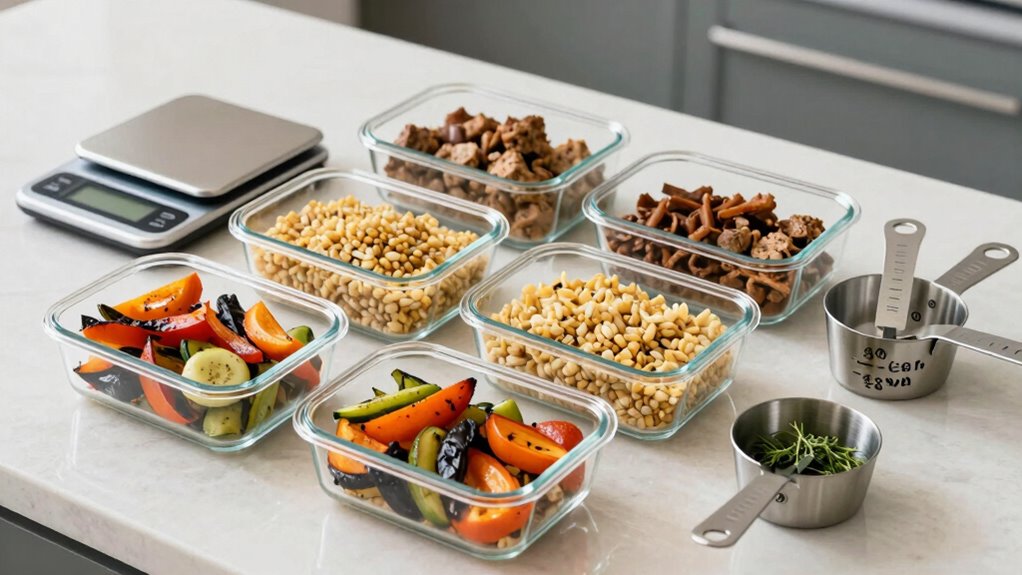
Meal prepping can be a great way to save time and eat healthier, but it often feels like math homework when you try to portion everything perfectly. The key to avoiding that feeling is mastering simple portion control techniques that make meal planning straightforward and stress-free. Instead of obsessing over exact grams or ounces, focus on visual cues and practical strategies that keep your portions consistent without turning it into a complicated calculation.
Start by using standard measuring tools like cups and spoons for your initial meal prep. These tools help you get a rough idea of serving sizes without needing to do complex math. For example, a typical serving of protein is about the size of your palm, and a serving of grains or carbs is roughly the size of your fist. Vegetables tend to be less precise since they’re low in calories, but filling half your plate with greens is a simple way to keep portions in check. By establishing these visual benchmarks, you’ll develop a sense of portion control that feels natural and intuitive, rather than forced or overly precise.
Use visual cues like palm-sized proteins and fist-sized grains for simple, intuitive portion control.
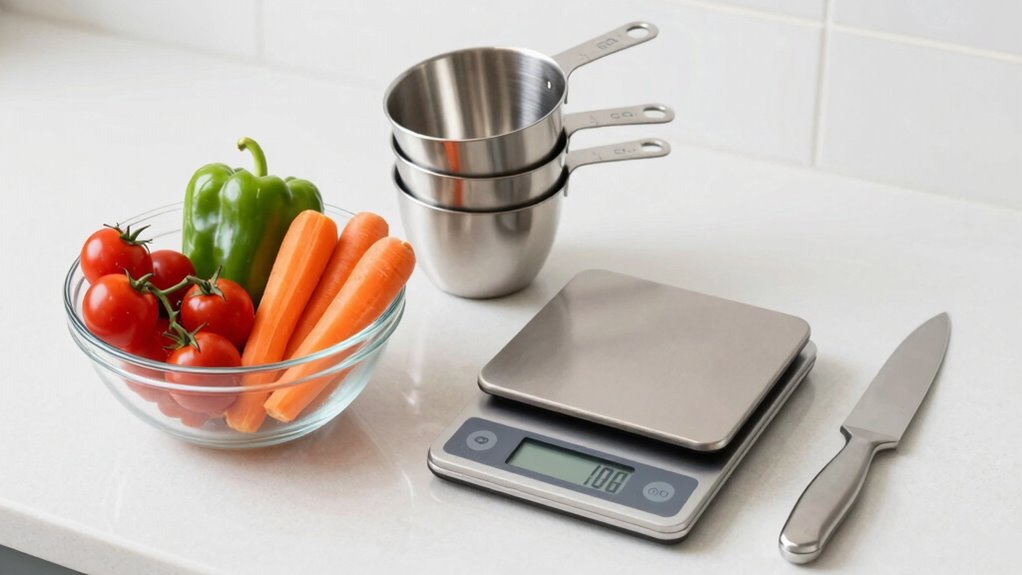
Meal planning plays a big role in making portioning easier. When you plan your meals in advance, you can prepare ingredients in batch sizes that naturally lend themselves to healthy portions. For example, cook a large batch of chicken breasts and divide them into equal portions for the week. Using an everyday kitchen scale can help you portion these out evenly—no need to measure every single piece, just weigh a few portions to get a sense of what a standard serving looks like. Once you get familiar with these weights, you’ll be able to eyeball your portions quickly during future meal prep sessions. Incorporating portion control techniques can further streamline the process and improve your consistency over time. Being mindful of portion sizes not only promotes better health but also reduces food waste, making your meal prep more sustainable. Understanding serving size guidelines can help you make more informed choices without overcomplicating the process. Additionally, familiarizing yourself with standard measurements can help you develop a more instinctive approach to portioning. Developing a good understanding of nutritional labels can also guide you in choosing appropriate portions based on calorie and nutrient information.
Another trick is to use divided containers or meal prep boxes with compartments. These help you portion out different food groups at once, so you don’t have to guess or re-measure each time. They also serve as visual reminders to stick to your planned portions. Over time, your eyes get trained to recognize what a proper portion looks like, reducing the need for constant measuring. Remember, the goal isn’t perfection but consistency. Small adjustments over time will help you find a balance that works without turning your meal prep into a math problem.
In the end, meal prepping doesn’t have to be complicated. When you combine a few simple portion control strategies with smart meal planning, you make healthy eating manageable and even enjoyable. You’ll find that maintaining balanced portions becomes second nature, freeing you from the stress of precise calculations and letting you focus on enjoying your meals.
As an affiliate, we earn on qualifying purchases.
Frequently Asked Questions
What Are Simple Tools for Measuring Portion Sizes?
You can use simple measuring utensils like cups, spoons, and a kitchen scale to accurately measure portion sizes. Keep handy portion charts for quick reference, helping you visualize serving sizes without complex calculations. These tools make it easy to control portions, prevent overeating, and maintain a balanced diet. With a few basic utensils and charts, you’ll find it simple to measure your food accurately and stay on track effortlessly.
How Can I Adjust Portions for Different Dietary Needs?
To adjust portions for different dietary needs, focus on meal plan customization by using flexible ingredient portions. For example, if you’re managing calorie intake, increase vegetables and lean proteins while reducing carbs or fats. Incorporate dietary restriction tips like measuring specific portions or replacing ingredients to meet your nutritional goals. Stay mindful of serving sizes, and don’t hesitate to tweak recipes to suit your individual health requirements, ensuring balanced and personalized meals.
Are There Quick Tips for Estimating Portions Without Scales?
Think of your hand as a trusty guide in intuitive eating—your palm for protein, a cupped hand for carbs, and a fist for veggies. Visual cues like these help you estimate portions quickly, no scales needed. Trust your instincts and observe how much looks and feels right. With practice, you’ll master portioning effortlessly, making your meal prep simple and satisfying without turning it into math homework.
How Do I Store Pre-Portioned Meals Safely?
You store pre-portioned meals safely by using high-quality meal prep containers designed for portion control. Make certain each container is airtight to prevent spoilage and label them with dates. Keep the containers in the refrigerator or freezer depending on when you’ll consume the meal. This method maintains freshness, minimizes cross-contamination, and helps you stick to your portion sizes, making meal prep efficient and stress-free.
What Common Mistakes Should I Avoid When Portioning?
Avoid common mistakes that disrupt your portion control and meal balance. Don’t guess; always use measuring tools for accuracy. Prevent overfilling containers, which leads to inconsistent portions. Don’t forget variety—over-portioning one food group can imbalance your meal. Steer clear of rushing through the process, as it causes careless mistakes. Instead, plan ahead, stay organized, and be mindful—these habits ensure your portions support your health goals.
As an affiliate, we earn on qualifying purchases.
Conclusion
By mastering simple portioning techniques, you can enjoy nutritious meals without the stress of complex calculations. Remember, you don’t need to be perfect—aim for consistency and balance instead. If you worry about wasting food or overeating, trust that mindful servings help you stay on track effortlessly. With a little practice, portioning becomes second nature, making meal prep more enjoyable and sustainable without turning it into math homework.
As an affiliate, we earn on qualifying purchases.
As an affiliate, we earn on qualifying purchases.