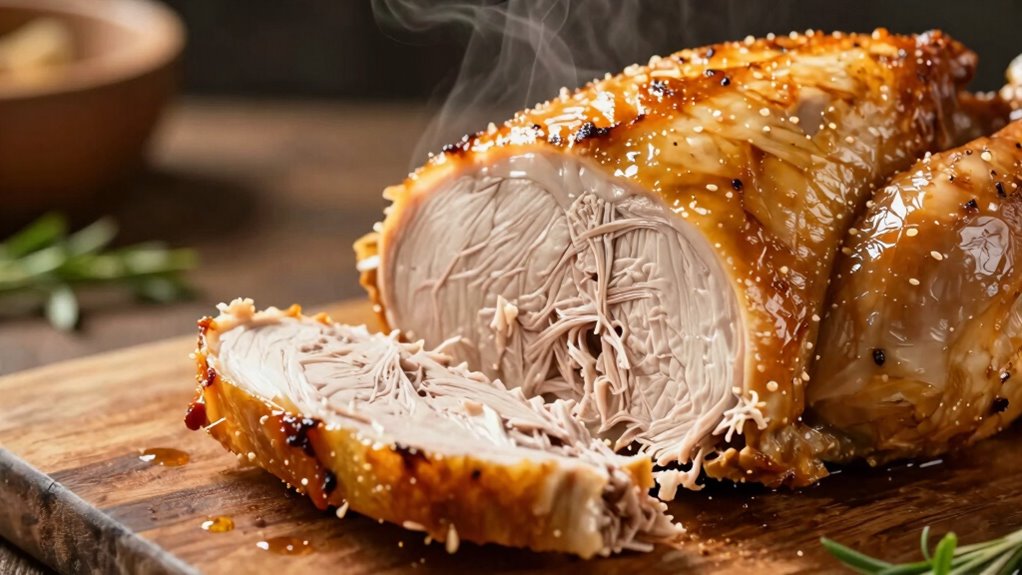

To keep your protein tender when reheating, use gentle, low heat like an oven at 250°F or stovetop with a lid. Cover the dish to trap steam and maintain moisture. Add liquids such as broth or gravy to prevent dryness, and reheat in short intervals to avoid overcooking. Rest the meat afterward to let juices redistribute, ensuring it stays juicy and tender. Follow these tips, and you’ll discover simple ways to preserve perfect texture every time.
Listen free for 30 days with Audible
Thousands of audiobooks and originals — cancel anytime.
As an affiliate, we earn on qualifying purchases.
Key Takeaways
- Reheat tender proteins slowly at low temperatures (250°F or stovetop with lid) to prevent toughness.
- Cover the dish with foil or a damp towel to trap steam and maintain moisture.
- Add broth, gravy, or oil before reheating to keep the protein moist and flavorful.
- Use gentle heat methods like oven or stovetop, avoiding microwave for even, tender reheating.
- Rest the meat after reheating to allow juices to redistribute, ensuring tenderness.
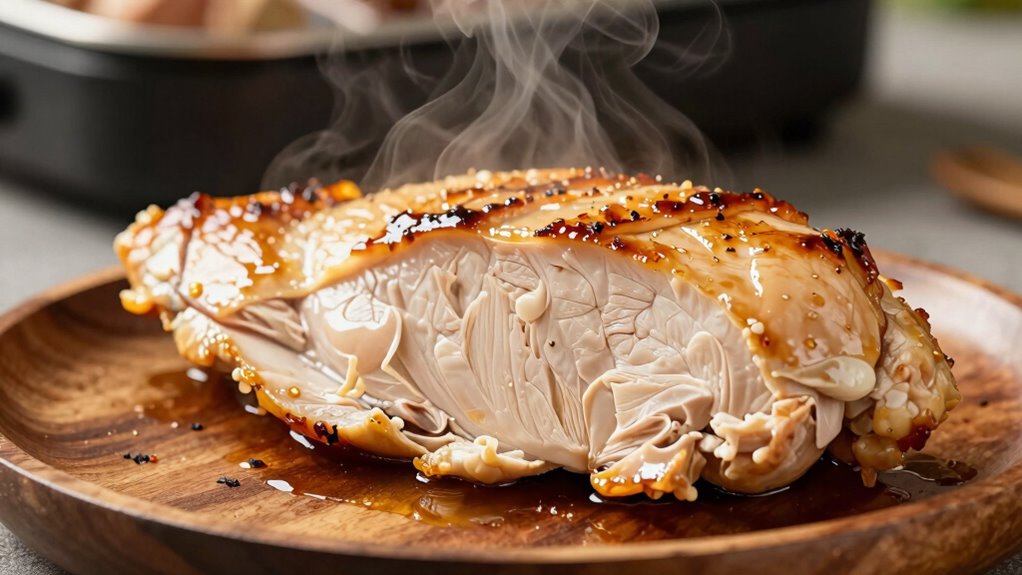
Reheating tender protein requires careful attention to preserve its delicate texture and flavor. When you’re heating up leftovers, the goal is to avoid overcooking, which can lead to toughness and dryness. To do this effectively, you need to focus on two key aspects: flavor preservation and moisture retention. These elements are essential in maintaining the quality of your meat, fish, or poultry, ensuring it stays just as enjoyable as when it was first cooked.
Start by choosing the right reheating method. Gentle heat is your best friend when it comes to tender proteins. Using a microwave can be quick, but it’s easy to overdo it, resulting in uneven heating and dry patches. Instead, opt for stovetop reheating or oven reheating at a low temperature. If you’re using the oven, set it around 250°F (120°C) and cover the protein tightly with foil. This creates a mini-steam environment that helps retain moisture and keeps the protein tender. When reheating on the stovetop, use a skillet with a lid, or add a splash of broth or water to create steam, which helps preserve moisture and flavor.
Choose gentle reheating methods like oven or stovetop with foil or lid to keep proteins moist and tender.
Regardless of your chosen method, don’t rush the process. Slow, gentle reheating prevents the protein from becoming tough. If using a microwave, use the lowest power setting and heat in short intervals—about 20 to 30 seconds—checking frequently to avoid overheating. Cover the dish with microwave-safe plastic wrap or a damp paper towel to trap steam, which helps retain moisture and keeps the protein juicy.
Another trick to enhance flavor preservation is to add a little liquid before reheating. A splash of broth, gravy, or even a bit of oil can help keep the protein moist and flavorful. This extra moisture prevents the fibers from tightening up and becoming chewy. Rest the meat for a few minutes after reheating; this allows the juices to redistribute, resulting in a more tender bite.
As an affiliate, we earn on qualifying purchases.
Frequently Asked Questions
Can I Reheat Protein Multiple Times Without Toughness?
Yes, you can reheat protein multiple times without toughness if you follow proper techniques. To preserve flavor and maintain texture consistency, reheat slowly using gentle heat, like in the oven or stovetop, rather than microwave. Cover the protein to retain moisture and prevent dryness. Avoid over-reheating, as this can cause toughness. By reheating carefully, you’ll keep your protein tender and flavorful, even after multiple rounds.
What’s the Ideal Temperature for Reheating Tender Protein?
You should reheat tender protein at around 165°F (74°C) to preserve flavor and maintain texture. Many believe higher temperatures cause toughness, but gentle reheating actually keeps the meat juicy and tender. Use a thermometer to guarantee precise heat, avoiding overcooking. This method prevents the protein from drying out or becoming tough, so your leftovers stay flavorful and perfectly textured every time.
Does the Type of Protein Affect Reheating Techniques?
Yes, the type of protein influences your reheating techniques. For delicate proteins like fish or poultry, gentle cooking methods such as steaming or low-temperature microwave reheating work best to prevent toughness. Always follow proper storage tips—store leftovers promptly in airtight containers and reheat within a safe time frame. Avoid high heat or direct flames, which can dry out or overcook proteins, making them tough and less enjoyable.
Can I Reheat Protein in the Microwave Without Losing Tenderness?
Yes, you can reheat protein in the microwave without losing tenderness if you use the right cooking methods. To preserve flavor and prevent toughness, reheat at low power, cover the dish, and add a splash of moisture like broth or water. Think of it as gently waking your protein from a nap, ensuring it stays juicy and flavorful rather than drying out or becoming tough.
How Long Should I Reheat Protein to Prevent Toughness?
Reheat your protein for 1-2 minutes in the microwave, checking frequently to guarantee flavor preservation and texture consistency. Use medium power to avoid overheating, which can cause toughness. Turn or stir the food halfway through to ensure even heating. This method helps keep your protein tender and flavorful, preventing it from becoming tough. Always monitor closely, as times may vary based on portion size and microwave wattage.
stovetop covered skillet for reheating
As an affiliate, we earn on qualifying purchases.
As an affiliate, we earn on qualifying purchases.
Conclusion
By following this reheat plan, you’ll transform your leftovers into a tender, juicy masterpiece every time. No more risking dry, tough proteins that could break your heart — or your patience. Instead, you’ll reveal a secret weapon that guarantees your meals stay as delicious and satisfying as freshly cooked. Remember, mastering this simple trick is like wielding a culinary superpower, turning every reheated bite into a moment of pure perfection. Keep practicing, and never settle for less than melt-in-your-mouth greatness!
As an affiliate, we earn on qualifying purchases.
microwave steam cover for leftovers
As an affiliate, we earn on qualifying purchases.
As an affiliate, we earn on qualifying purchases.
Flea & tick season Picks
flea and tick prevention
As an affiliate, we earn on qualifying purchases.