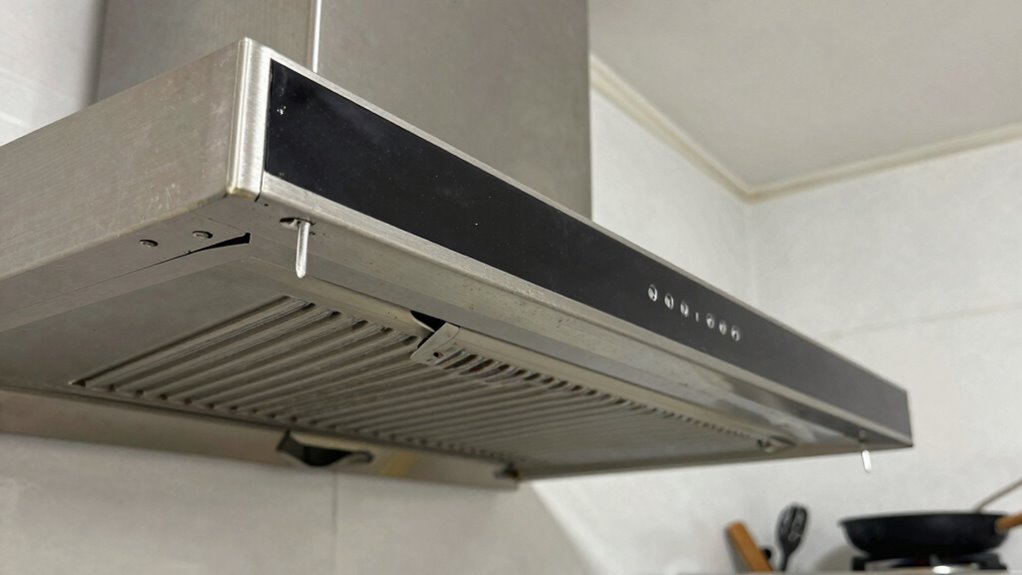

A common mistake people make is not ensuring proper venting outside, which causes lingering smoke, odors, and grease buildup. Installing the range hood too high or too low reduces its effectiveness and safety. Additionally, improper duct size or poor sealing diminishes airflow, while electrical connections that aren’t secure can be dangerous. Positioning the hood correctly above your cooktop and following the manufacturer’s instructions is key. Keep these tips in mind to improve your setup and discover more helpful insights.

Get kitchen staples and gadgets delivered free — and shop member deals
- Fast, free delivery on millions of items
- Access to Prime Big Deal Days deals on October 6–7
- Prime Video, Amazon Music and more included
Key Takeaways
- Failing to confirm proper outside venting, leading to smoke and odors lingering indoors.
- Incorrect mounting height that reduces efficiency or causes safety hazards.
- Neglecting to secure electrical connections according to code, risking malfunctions or safety issues.
- Improper placement, such as not positioning directly above the cooktop, decreasing fumes capture.
- Overlooking duct size and sealing, which impairs airflow and reduces ventilation effectiveness.
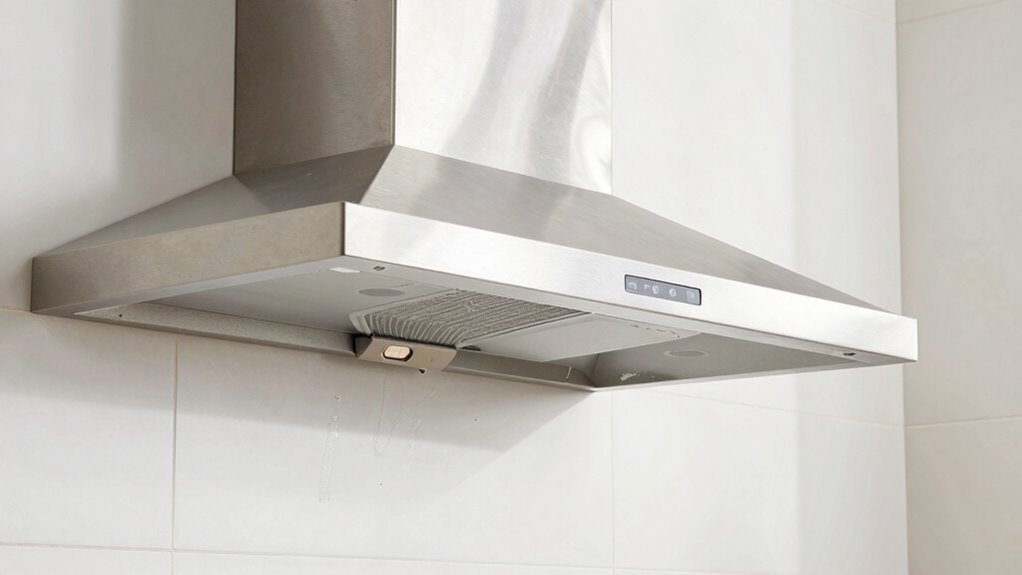
Installing a range hood might seem straightforward, but many people make common setup mistakes that can impact its performance and safety. One of the most frequent errors involves not paying enough attention to ventilation efficiency. When setting up your range hood, it’s vital to confirm it’s properly vented outside, rather than relying on filters alone. Poor venting can lead to smoke, grease, and odors lingering in your kitchen, reducing air quality and making your space less comfortable. Many overlook the importance of choosing the right duct size or fail to seal joints correctly, which can cause leaks and diminish airflow. If your duct is too narrow or obstructed, your hood won’t be able to pull fumes effectively, defeating its purpose and risking the buildup of harmful airborne particles.
Proper venting and sealing are key to your range hood’s safety and performance.
Another common mistake concerns installation safety. You might think that mounting the hood at any height is acceptable, but setting it too high or too low can compromise its efficiency and safety. Installing the hood too high means it won’t effectively capture smoke and fumes, forcing you to turn up the fan to unsafe levels, which could cause noise or damage. Conversely, mounting it too low might obstruct your view or cause accidental bumps, especially if you’re tall or have a small kitchen. It’s essential to follow the manufacturer’s instructions regarding height and clearance to guarantee peak performance. Additionally, understanding the importance of ventilation efficiency can help you optimize your setup for better air quality. Ensuring proper airflow in your kitchen can significantly improve your cooking environment and reduce lingering odors. Properly assessing your kitchen’s layout and airflow patterns can help prevent air circulation issues that diminish your range hood’s effectiveness. Also, a well-planned layout can prevent obstructions that block the vent or airflow pathways, further enhancing performance. Paying attention to proper placement ensures your range hood functions as intended and maximizes its lifespan.
Many people also neglect to verify that the electrical connections are secure and up to code. Skipping this step can lead to electrical hazards or malfunctioning units. You should always double-check that the power supply matches the hood’s requirements and that connections are properly insulated. Failing to do so not only jeopardizes safety but can also void warranties. Additionally, some underestimate the importance of securing the hood firmly to the wall or cabinets. An improperly mounted range hood might shake or come loose over time, which is dangerous and can cause damage or injury.
Finally, some set up their range hood without considering the overall kitchen layout. Proper placement isn’t just about aesthetics; it’s about maximizing ventilation efficiency and safety. Make sure the hood is directly above your cooktop, centered, and aligned to capture rising fumes efficiently. Ignoring these details can lead to poor air circulation and ineffective removal of cooking byproducts, which impacts both your health and the longevity of the appliance. Overall, taking the time to do a careful, correct installation pays off in improved safety, better ventilation, and longer-lasting performance.
As an affiliate, we earn on qualifying purchases.
Frequently Asked Questions
How High Should a Range Hood Be Installed Above the Cooktop?
You should install your range hood 24 to 30 inches above your cooktop for ideal ventilation efficiency and aesthetic appeal. This height allows the hood to effectively capture smoke and fumes while maintaining a sleek look in your kitchen. Keep in mind, the exact height can vary based on your hood’s size and your cooking habits. Proper placement balances functionality with style, ensuring both safety and visual harmony.
Can I Install a Range Hood Without Professional Help?
Like a hero in a bygone era, you can install a range hood yourself, but beware of DIY challenges. While it’s tempting to bypass professionals, you must follow ventilation standards carefully to guarantee safety and efficiency. Properly securing the hood, connecting ductwork, and meeting local codes are essential. If you’re confident in your skills, go for it—just don’t rush and risk compromising your kitchen’s air quality and safety.
What Is the Best Placement for a Range Hood in a Small Kitchen?
You should place your range hood about 24 to 30 inches above your cooktop for effective ventilation performance. This height ensures smoke and odors are efficiently captured while maintaining aesthetic integration with your small kitchen. Make certain the hood isn’t too high, which reduces its effectiveness, or too low, which might interfere with your cooking. Proper placement balances function and style, creating a cleaner, more attractive cooking space.
How Do I Choose the Right Size Range Hood for My Stove?
To guarantee maximum ventilation efficiency and manageable noise levels, you need a range hood that matches your stove’s size. If you choose one too small, fumes escape, and your kitchen suffers. Too large, and it becomes noisy or overkill. Measure your stove’s width carefully—ideally, the hood should extend at least 3 inches beyond each side for perfect fit and performance. Don’t settle for less; your kitchen deserves the right size.
Are There Specific Electrical Requirements for Range Hood Installation?
Yes, there are specific electrical requirements for range hood installation. You need proper electrical wiring that matches your range hood’s voltage and wattage specifications. Check the circuit requirements to guarantee your home’s electrical system can handle the load. Typically, a dedicated circuit is recommended to prevent overloads. Always follow the manufacturer’s instructions and local electrical codes to ensure safe and efficient operation of your range hood.
As an affiliate, we earn on qualifying purchases.
Conclusion
By avoiding these common range hood setup mistakes, you guarantee your kitchen remains a sanctuary of fresh air and clear breathing. Picture your range hood as the vigilant guardian above your stove, quietly whisking away smoke and odors, creating a clean, inviting space. When installed correctly, it becomes more than just an appliance—it transforms your cooking area into a haven of comfort. So, take the time to set it up right, and enjoy the seamless flow of air and ease in your kitchen.
As an affiliate, we earn on qualifying purchases.
range hood electrical wiring kit
As an affiliate, we earn on qualifying purchases.
As an affiliate, we earn on qualifying purchases.
Fall Picks
fall essentials
As an affiliate, we earn on qualifying purchases.